
Washington now pursues Middle East partnerships through narrower security and economic interests rather than requiring Arab states to normalize ties with Israel first. Saudi Arabia’s nuclear deal and Lebanon’s aid conditions illustrate the shift.
US Middle East interests are no longer organized around a single diplomatic precondition. For nearly half a century, Arab governments seeking American support first had to signal progress toward recognizing Israel. The July 22 civil nuclear agreement with Saudi Arabia broke that pattern: Riyadh secured a 30-year, multibillion-dollar arrangement without normalizing relations with Jerusalem.
President Donald Trump later added normalization as a political condition, but the sequence itself exposed a deeper change. Washington now increasingly measures partners through capital, energy, technology, counterterrorism, and defense cooperation rather than through the Israeli-Palestinian file. The interest-by-interest logic appears in Lebanon’s aid conditions, which emphasize Hezbollah’s disarmament over formal recognition of Israel, and in Syria’s sanctions relief, which requires counterterrorism measures and minority protections. These cases show that US Middle East interests have outgrown the normalization-first order that once defined regional diplomacy. Yet the shift offers no new pathway for Palestinian self-determination, leaving Arab states with greater flexibility and Washington with less durable commitments.
How US Middle East interests shifted
For nearly fifty years, Arab countries seeking deeper political and defense ties with the United States had one big hurdle to clear first: make peace, in some fashion, with Israel. That norm was among the many set aside last month in the civil nuclear deal Saudi Arabia signed with the U.S. The 30-year, multibillion-dollar deal was worked out without the condition that Riyadh normalizes relations with Jerusalem, an omission that broke with the earlier framework for the deal and immediately raised alarms in Israel.
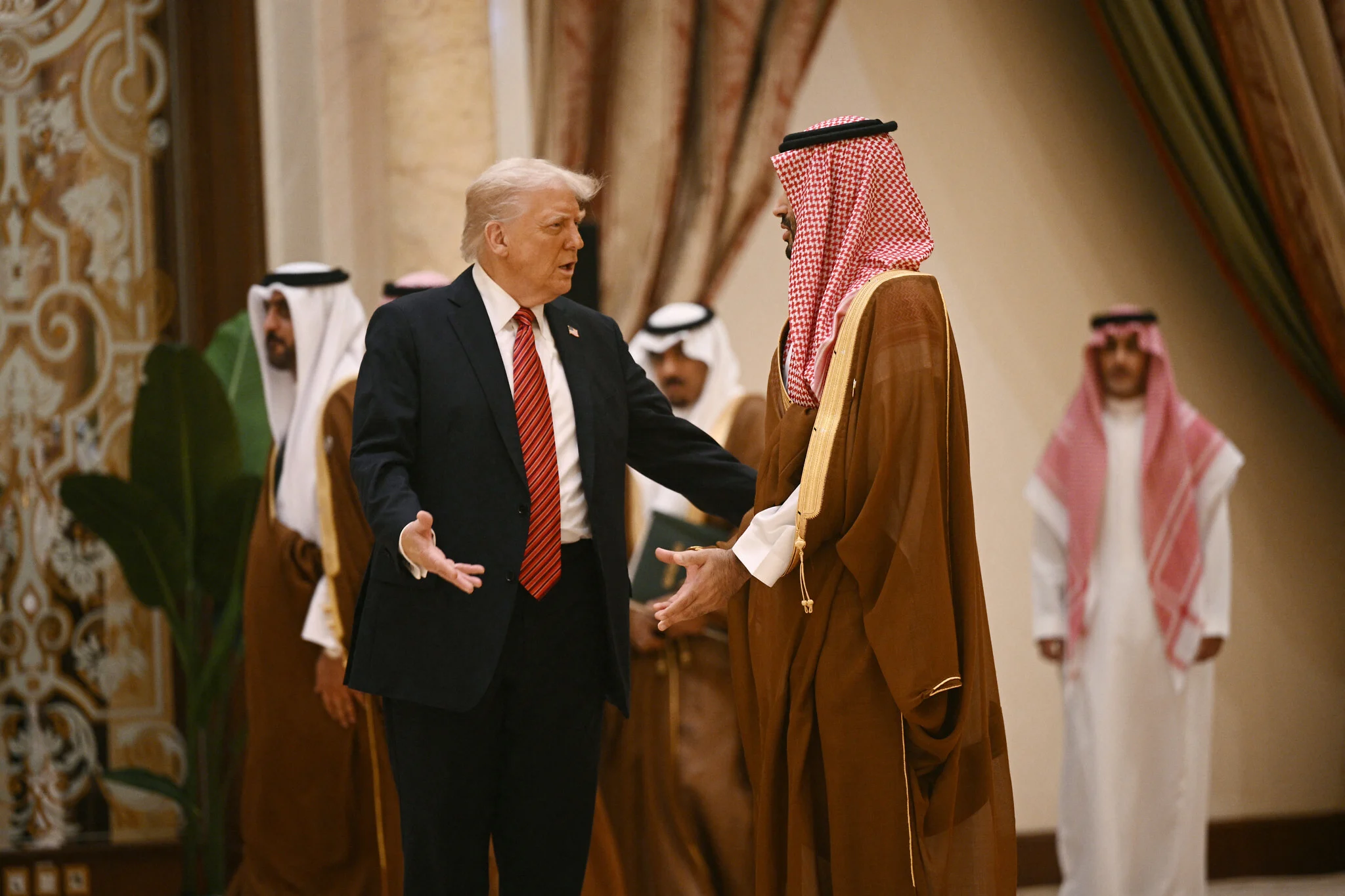
Saudi Deal Exposes a Broken Pattern
President Donald Trump, who had formally approved the written agreement, posted on Truth Social after the deal was announced on July 22 that it was “totally subject to Saudi Arabia joining the Abraham Accords,” the multilateral framework set up in 2020 among Israel and regional powers that formally recognize the Jewish state. As far as the president was concerned, White House Press Secretary Karoline Leavitt told reporters, the deal was contingent on that condition.
So status quo restored? Not really. As Dubai-based political analyst Abdulaziz Alkhamis described it, normalization has shifted “from precondition to invoice”— no longer demanded before bilateral cooperation begins but added afterward as an element of political leverage. Technical negotiations on the nuclear deal, including provisions locking American companies into leading roles, had led to an agreement signed by both sides. By publicly attaching normalization afterwards as a political condition, Trump unwittingly underscored what many Middle East experts see as Washington’s growing willingness to separate bilateral interests from the broader Arab-Israeli file. Saudi Arabia, which has long refused to recognize Israel without a pathway to an independent Palestinian state, has not commented on Trump’s post-signature addition.
Inverting the Old Formula
For decades, making progress with Israel was how the Arab Middle East anted up for better ties in Washington. Moving toward Israel, Alkhamis said, was “the cheapest currency the region had for buying American attention” and gaining access to the superpower’s security assistance, diplomatic support, and political capital.
The pattern started in 1978, when Egyptian President Anwar Sadat and Israeli Prime Minister Menachem Begin signed the Camp David Accord in the White House; Egypt still receives roughly $1.3 billion annually in U.S. military aid because of it. Fourteen years later, the Oslo Accords gave the Palestinians a seat at the diplomatic table after the Palestine Liberation Organization recognized Israel and became the Palestinian Authority.
Jordan followed in 1994, trading peace with Israel for debt forgiveness and status as a Major Non-NATO Ally of the U.S. In 2002, the Arab League offered Israel full normalization, but only after a Palestinian state existed. While Israel pushed back on that condition, that so-called Arab Peace Initiative was still grounded in the assumption that Israel – and its stance toward the Palestinians — sat at the center of the region’s diplomatic architecture.
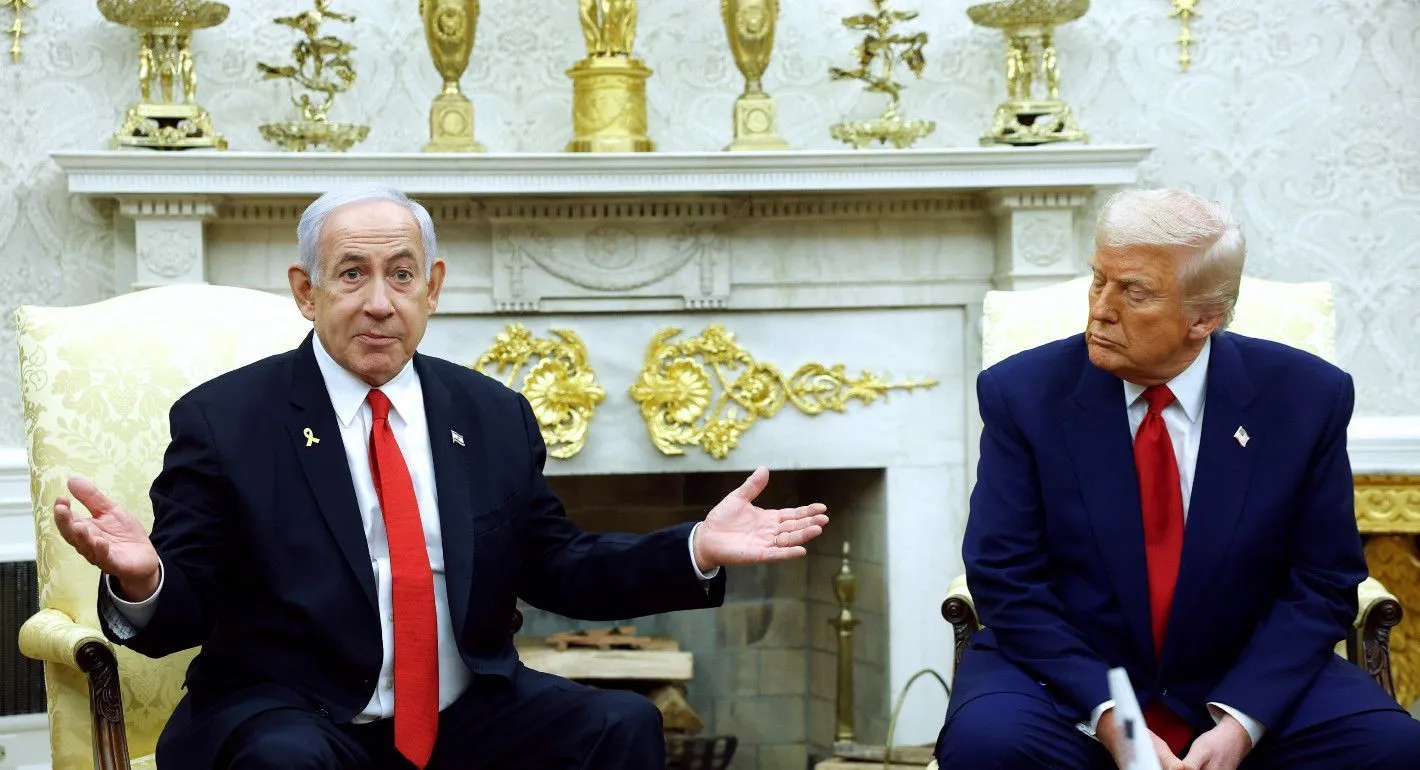
Old Terms Loosen Beyond Saudi Arabia
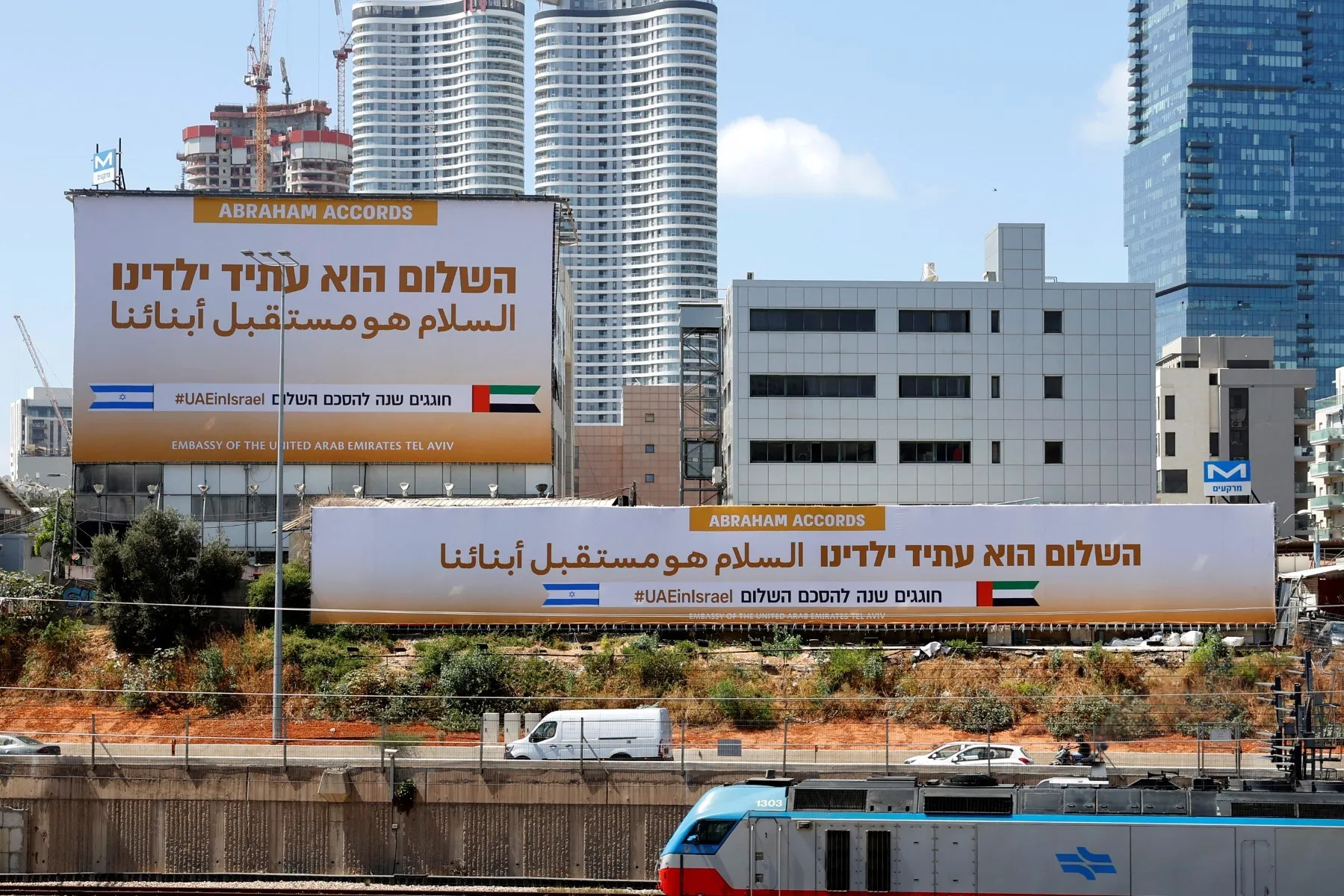
That framework began loosening in 2020, when the UAE, Bahrain, and Morocco normalize ties with Israel under the first Trump administration’s Abraham Accords without assurances on the establishment of a Palestinian state. Since then, Alkhamis said, the old framework had been not simply weakened, but “inverted.” Rather than conditioning ties on whether governments are moving closer to Israel, he said, Washington is increasingly judging partners on narrower strategic and frequently economic interests: what they can invest, what business opportunities they are open to, how they can provide more energy security, better regional security and deeper defense cooperation.
Off the Israel Track
In that light, the nuclear deal with Saudi Arabia is no departure. While relations with Israel still figure largely in U.S. relations with Arab states, they are no longer the sole starting point for U.S. ties. The June 2025 executive order lifting U.S. sanctions on Syria conditioned relief on counterterrorism cooperation and minority protections, not on a formal settlement with Israel, including only a general call for the new government to take “concrete steps toward normalizing ties with Israel.”
That new balance seemed to reflect what Mustafa Allouch, a former member of Lebanon’s parliament, said was Washington’s pursuit of “stable relations and pragmatic relations” with Syria and Lebanon based on their own circumstances rather than primarily through the lens of Israel.
State-Building Gains Ground Over Recognition
In Lebanon, that has meant the U.S. focusing less on the country’s formal ties with Israel than on strengthening the Lebanese state and implementing arrangements to dismantle the military infrastructure of Hezbollah, which the United States and the European Union have designated as a terrorist group. Washington has reformulated its conditions for aid to the Lebanese Armed Forces in the coming fiscal year to stress progress in disarming Hezbollah. While that is clearly in the interest of Israel – which has made plain its doubts that the LAF can pull it off – Washington is casting its ties to Lebanon in terms of state authority and security-sector performance rather making normalization with Israel a precondition in itself.
Lebanon may ultimately become a more consequential test of this evolving approach than Saudi Arabia, Alkhamis argued. If Washington’s strategy of strengthening the Lebanese state’s monopoly on force succeeds, he said, it would suggest that state-building and institutional capacity, not normalization alone, can increasingly organize American engagement in the region.
This shift also reflects Lebanon’s own weakened position, said Allouch, the former MP. “Lebanon has lost its leverage as a state,” he said, pointing out that a government unable to fully control armed groups inevitably loses influence over its political and economic future. Beirut seeks a stronger relationship with Washington not simply to confront Hezbollah, he added, but because American support gives Lebanon greater leverage to protect its sovereignty.
But does the approach outlined in the Abraham Accords — and demonstrated in last year’s AI investment deals with the Gulf states, the Saudi agreement and the new stance in Lebanon – represent a structural shift in Middle East policy? Critics of Trump see it more as a reflection of his transactional approach to foreign policy, visible elsewhere in his dealings with Ukraine and NATO. But the pattern isn’t confined to the White House. The Senate’s defense bill for the coming year imposes the same Hezbollah-disarmament conditions on Lebanon aid, suggesting Congress, not just the president, has adopted the narrower, interest-by-interest logic. Whether that logic outlasts this administration remains an open question.
The Palestinians Left Behind
Changing relations with Israel in Washington has not meant rising support for Palestinians. If Israel is no longer the organizing principle of U.S. Middle East policy, one might expect Washington to engage Palestinians more on their own political aspirations or governance challenges. Instead, the opposite has largely occurred. As congressional debates over Israel have grown more contentious, they have not been matched by a coherent effort to redefine America’s relationship with the Palestinians.
What would Palestinians actually need to see change for their situation to improve? Nothing in the current shift suggests Washington is asking that question. The old framework never centered Palestinian self-determination either, but it treated statehood as leverage for others’ normalization, not a goal in itself. Even the appearance of leverage is gone: Palestinians no longer sit at the center of a bargain other states are negotiating around.
That disconnect is visible beyond Washington as well. Allouch observed that while many Arab governments are now seeking stable relations and even “mutual benefits” with Israel, the unresolved question of Palestinian self-determination remains. The weakening of normalization as the organizing principle of U.S. regional policy has not produced a new framework for addressing Palestinian aspirations, leaving them increasingly disconnected from the diplomatic bargains reshaping the region.
Will US Middle East interests endure?
Israel remains America’s closest regional ally, and military cooperation between the two remains extraordinarily deep. One central goal of the Abraham Accords is to promote broader recognition of Israel by its Arab neighbors. But many of those countries no longer see a need to define their value to Washington primarily in that way. Syria’s sanctions relief, Lebanon’s narrower security relationship, and Saudi Arabia’s nuclear deal all point to versions of the same story: while normalization is still very much part of the equation for Washington, it’s no longer a precondition for relations across a broad range of other joint interests.
This shift creates new opportunities for the region, and new risks for Israel. Countries can increasingly engage Washington on their own terms rather than through the lens of their stance toward Israel. But relationships built around the United States’ immediate strategic interests are inherently less durable than those anchored in a broader regional framework. A country valued for counterterrorism, maritime security, or competition with Iran today may find its importance fade as American priorities change.
The framework organized around normalization with Israel constrained governments in the region, but it also gave them a clearer sense of what Washington wanted. The broader approach now emerging offers greater flexibility but a far more complex and dynamic equation. “For thirty years the region was asked to prove its usefulness to Washington through Israel. It is now proving it through capital, energy, technology, and the ability to keep sea lanes open,” Alkhamis said. “That is a more honest transaction and, for anyone who actually cares about stability, a more durable one.”
While many observers in the Middle East see a shift in how the U.S. pursues its own interests in region, it doesn’t necessarily suggest that Washington is less committed to supporting Israel than it ever was. For now, the question remains open whether the United States is restructuring its policy toward a rapidly transforming Middle East or just taking a more pragmatic tack toward well-established ends.