
Dr Neil Quilliam
Clashes between the Syrian government and the SDF and deadlocked talks with Israel threaten to drag Syria into renewed conflict. The EU should step in with a longer-term approach.
Syria is at risk of becoming US President Donald Trump’s first outright major foreign policy failure. Tensions between the Syrian government and Kurdish-led Syrian Democratic Forces (SDF) – both US partners – recently broke out into open fighting in Aleppo. Meanwhile, US-brokered security talks between the Syrian government and Israel are faltering.
If the US can’t resolve these two issues, Syrians will pay the price. But while Trump’s approach to diplomacy excels at creating moments that command attention, he has rarely supported processes that turn these openings into durable agreements.
Instead, Trump would benefit from Europe’s expertise and experience to develop, oversee and implement a detailed plan. European states should step up, show the US their true value and help Syria step back from the brink of renewed conflict.
Trump’s headline diplomacy
Trump has embraced former Al-Qaeda member Ahmad al-Sharaa as Syria’s new leader and lifted US sanctions against the country. These moves were in line with the preferences of Saudi Arabia’s crown prince Mohammed bin Salman and the Arab Gulf states. They also confirmed Trump’s image as a risk taker and drove a small thorn into Israeli prime minister Benjamin Netanyahu’s side.
Those factors might serve Trump’s instinct for headline diplomacy. But they have not led to a plan or process to address Syria’s most pressing issues, including the status of the SDF and Syria-Israel security arrangements.Moreover, the team that manages US Middle East diplomacy is small. US ambassador to Turkey and Special Envoy to Syria Tom Barrack has acted as the principal mediator, with US Special Envoy to the Middle East Steve Witkoff and Donald Trump’s son-in-law Jared Kushner in close attendance.
They can convene leaders, carry messages and issue short communiqués. However, they have not utilized state institutions, such as the State Department, to establish the mechanisms needed to turn general understandings into detailed agreements, budgets, monitoring and dispute resolution.
Government-SDF clashes
As a result, US-brokered agreements in Syria have lacked the institutional scaffolding required for implementation. Progress is intermittent. This is the case for the March 2025 agreement between the Syrian government and the SDF. Under the agreement, the SDF agreed in principle to integrate its institutions into the Syrian state in exchange for the guaranteed rights of all Syrians to representation and participation in the political process.
The deal has not yet been implemented and many of the issues remain unresolved. Damascus wants to absorb SDF fighters as individuals into the army and place them fully under central command, while the SDF insists on integration as cohesive formations with retained identity. More broadly, the SDF advocates for decentralization and local autonomy, positions which the government rejects. Control of oil fields, border crossings and institutions remains contested.
Implementation of the March agreement has relied heavily on the US mediation team’s physical presence in each round of talks; without it, the process loses momentum and backslides. For example, the 4 January meeting between an SDF delegation under Kurdish leader Mazloum Abdi and government officials failed to reach any breakthroughs on military or political integration.
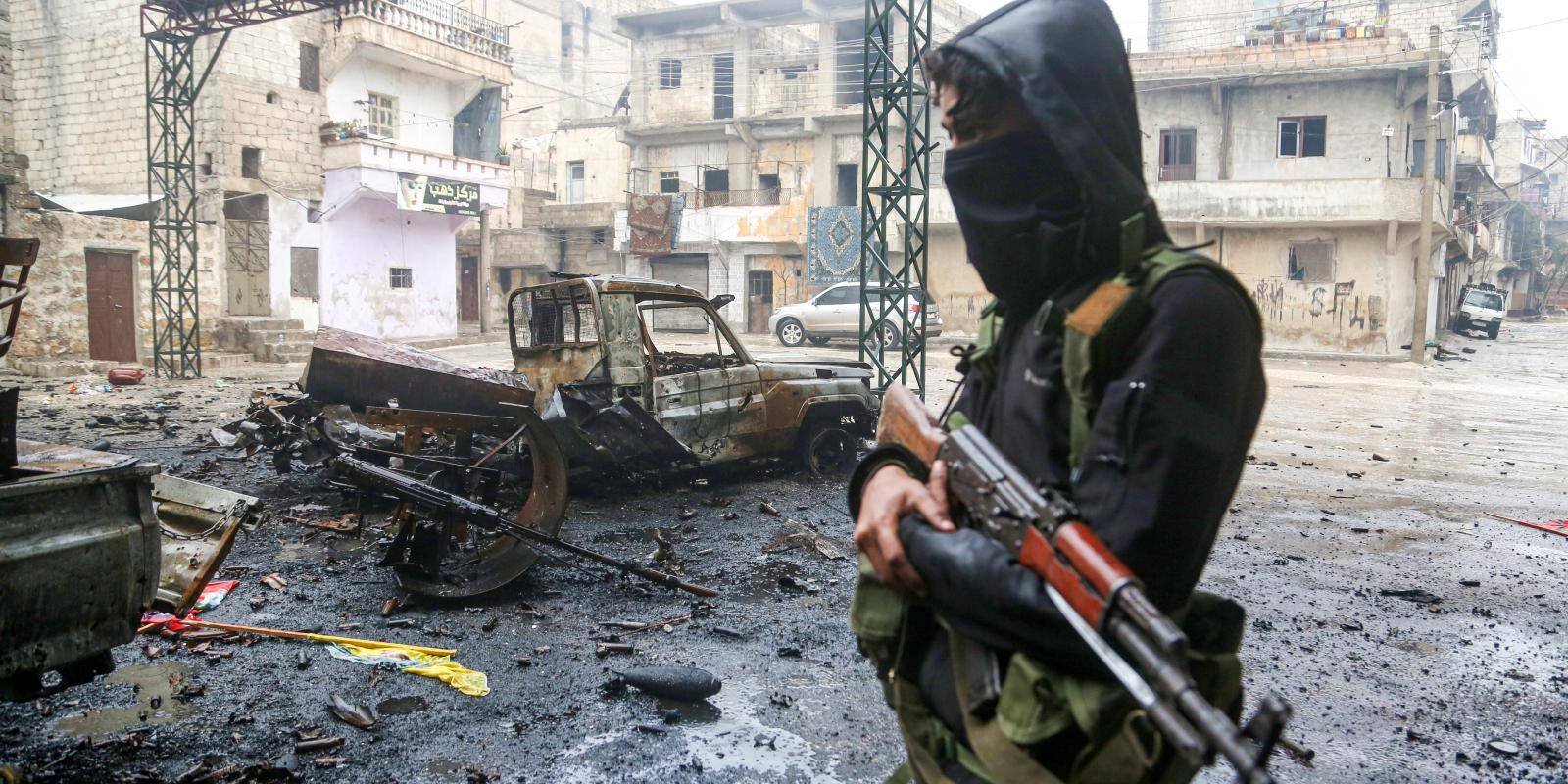
The recent clashes in Aleppo show the consequences of stalled negotiations. On 6 January, government forces launched an offensive into Kurdish-majority neighbourhoods in Aleppo and declared them closed military zones. The offensive reportedly displaced more than 150,000 people, many of whom fled to Afrin and other SDF-controlled areas in northeast Syria. A short ceasefire on 8 January allowed evacuations and withdrawals, but sporadic incidents have since continued, eroding trust and raising the risk of a wider confrontation.
The recent violence rests on the deeper disagreements between Damascus and the SDF that a headline-grabbing approach can’t resolve. It followed months of deadlock over military integration and local governance, with each side accusing the other of violating security arrangements and reinforcing positions. Resolving these fundamental issues requires a structured process that the US has not delivered.
Israel talks deadlocked
A second major unresolved issue is Syria’s conflict with Israel. Trump’s desire to see Syria join the Abraham Accords will never be realised unless territorial disputes are resolved, including the status of the Golan Heights.
Since the fall of the Assad regime in December 2024, Israel has moved forces into the UN-monitored demilitarized buffer zone south of the Golan Heights, occupying positions on the Syrian side of Mount Hermon and intensifying air operations against targets across the country. These actions make reaching a security agreement highly unlikely.
Nevertheless, there have been five rounds of talks. The US mediated the most recent talks between senior Syrian and Israeli officials in Paris on 5–6 January. The meeting focused on security arrangements, the buffer zone and a mechanism for de-escalation. It produced an agreement to establish a joint communication cell under US oversight to share intelligence and coordinate military steps.
Despite this, the core disputes remain unresolved. Syria demands a binding timeline for Israeli withdrawal to pre-December 2024 positions, while Israel insists on security guarantees, including the demilitarization of parts of southwestern Syria and protections for minority communities.
There is also a wider proposal to explore an economic track on both sides of the border. Steps like these can help manage day to day risks. But they are not a substitute for a detailed settlement with clear dates, responsibilities and verification.
Time for the EU to step in
Trump’s short-term approach to diplomacy has fallen short for the same reason. It can unblock initial problems and produce a handshake and a headline but fails to address the more fundamental obstacles.
The EU has the capacity to complement the US approach by providing and overseeing a detailed long-term plan. The bloc is uniquely positioned to lead on Syria due to its institutional experience in conflict resolution and post-conflict stabilization, including in managing sanctions relief, and its willingness to fund and support good governance.
For example, Bosnia and Herzegovina demonstrates the EU’s capacity to sustain peace and support governance in a deeply fractured post-conflict environment. This is the kind of long-term, civilian-led engagement that Syria will require.
Crucially, the EU also has a lot at stake. Prolonged instability in Syria directly affects Europe through increasing irregular migration and heightening counterterrorism risks. Unlike more distant actors, the EU cannot afford disengagement or short-termism.
The EU’s approach should prioritize accountability. Sanctions were lifted in Syria on the explicit condition that the government make progress toward inclusive governance. Damascus has so far failed to do so – the EU should push for this condition to be upheld rather than embrace short-term political expediency.
History also cautions against quick fixes. In Libya and Iraq, short-term, headline-driven approaches produced long-term instability. Syria risks the same outcome if long-term implementation is sacrificed for short-term announcements.
Finally, this is yet another test of the rules-based international order. As unilateral actions, including by the US, increasingly undermine shared norms, the EU has an opportunity to demonstrate consistency. Holding all actors, including Israel, to the same standards is essential if international rules are to retain legitimacy and if trust and progress with Damascus are to be possible.
https://www.chathamhouse.org/2026/01/trumps-syria-policy-risk-unravelling