
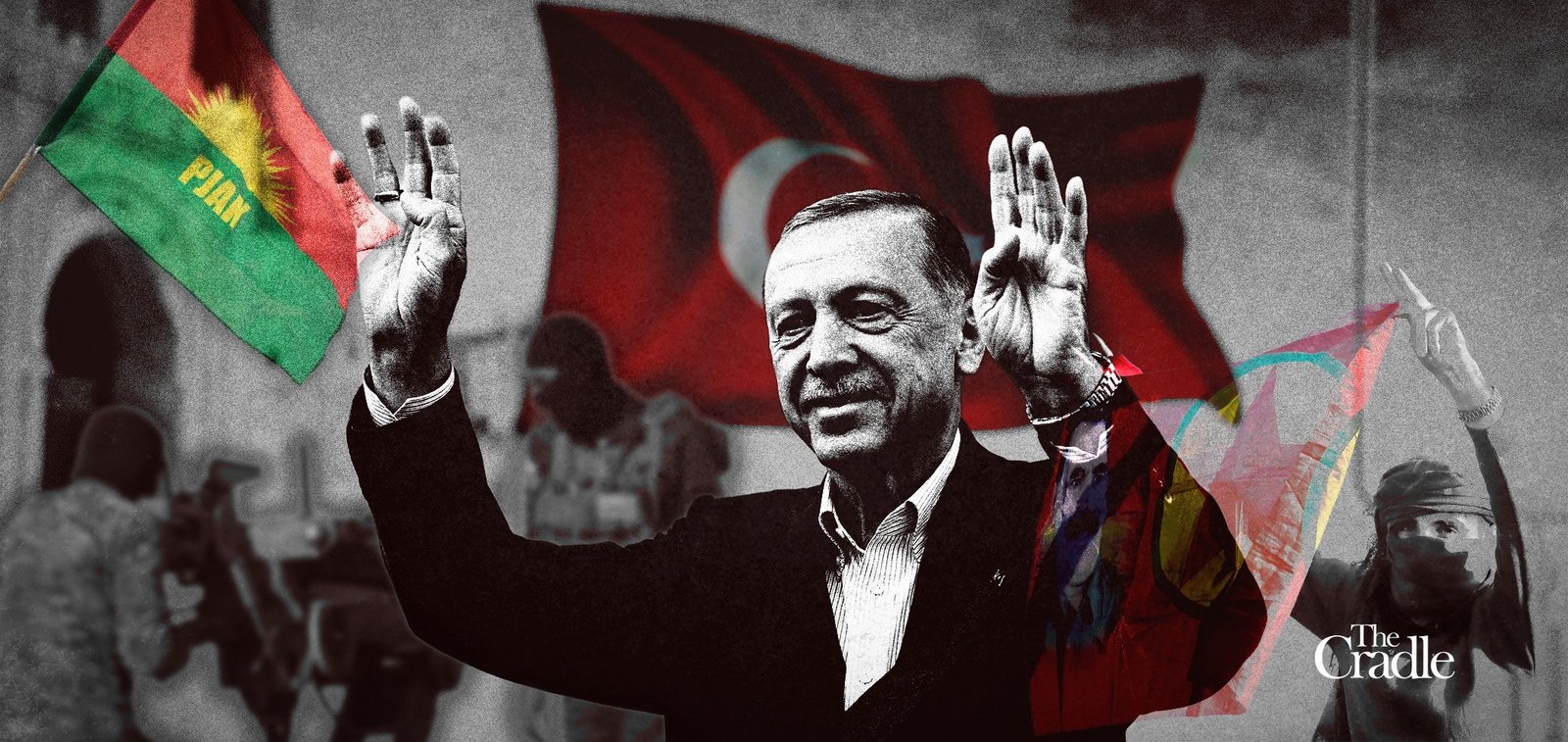
The Kurdish Front shifts toward Iran after PKK disarmament and SDF integration. Iranian experts warn that PJAK, backed by US and Turkish interests, could become the main arena of confrontation with Tehran.
For two decades, Kurdish armed struggle was anchored in the mountains of Turkiye and the plains of northeastern Syria. That geography is now dissolving. As the PKK lays down arms and the SDF folds into the Syrian state, the manpower, doctrine, and logistics accumulated across those theaters are being redirected toward the one border that remains active.
The Kurdish Front is moving east, and Tehran knows it. Iranian analysts describe a deliberate division of labor: peace in Turkiye frees the movement to concentrate on Iran, with the PJAK positioned as the armed core, political parties supplying diplomatic cover, and sympathetic media amplifying each incident. Ankara tolerates the shift because it pushes the Kurdish question away from its own territory, while Washington treats the groups as a pressure instrument rather than a liberation army.
Yet the strategy’s logic is attritional, not decisive. The PJAK lacks popular roots inside Iran and cannot hold terrain without foreign air cover. Its purpose is to disperse Iranian security forces, raise costs, and keep a border zone unsettled. Whether that becomes a durable second front depends less on Kurdish capability than on Tehran’s response. The Kurdish Front may prove containable—or it may become the conflict Iran cannot ignore.
Ocalan’s Call Reshapes the Struggle
Most analysis of Kurdish developments in 2026 has focused on what will happen to fighters and cadres following the Kurdistan Workers’ Party’s (PKK) dissolution in Turkiye and the Syrian Democratic Forces’ (SDF) integration into the Syrian state. As important as that question is, it obscures a wider reconfiguration of Kurdish armed movements and the regional geopolitical map, with Iran moving closer to the center.
Iranian experts on Kurdish affairs believe the reorganization of forces previously engaged in Turkiye and Syria could make the Iranian front the main arena of conflict between Kurdish armed groups and the Islamic Republic. If that assessment proves correct, the PKK leadership, the Kurdistan Free Life Party (PJAK), Turkiye, and the US will each pursue roles shaped by their own interests.
At first glance, Abdullah Ocalan’s historic call for the PKK to dissolve and end its armed struggle in Turkiye marked a historic turn. His later comments on the PJAK, however, suggested that this shift did not necessarily extend to Iran.
According to an official Turkish parliamentary transcript, Ocalan said in November 2025 that the PJAK would remain armed as long as executions continued in Iran, while also endorsing dialogue and an eventual political settlement.
Dr Hassan Sadeghian, a lecturer at the University of Tehran, referring to Ocalan’s messages, says:
“Ocalan has said in his messages that the Shia regime in Iran is on its last legs and that the Turkish state should prepare itself to deliver the final blow to Iran together with Kurdish groups. Therefore, Ocalan is cooperating with Israel, Turkiye, and America to strengthen and prepare the PJAK to confront the Islamic Republic of Iran.”
From this perspective, the PKK’s peace with the Turkish state amounts to a new division of labor, ending armed struggle in Turkiye while allowing it to continue with greater focus in Iran.
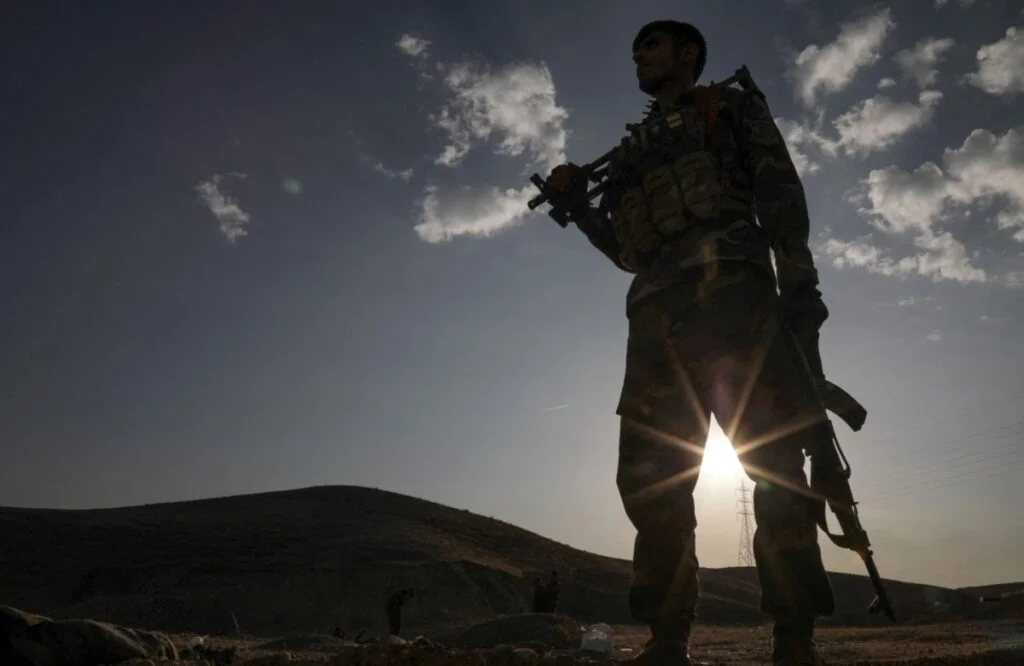
Kurdish Front Shifts Toward Iran
Hooshang Sheikhi, an analyst of Kurdish affairs and lecturer at Islamic Azad University, similarly argues that Ocalan’s thinking on armed struggle has changed over several years and that the peace initiative forms part of a wider project centered on Iran:
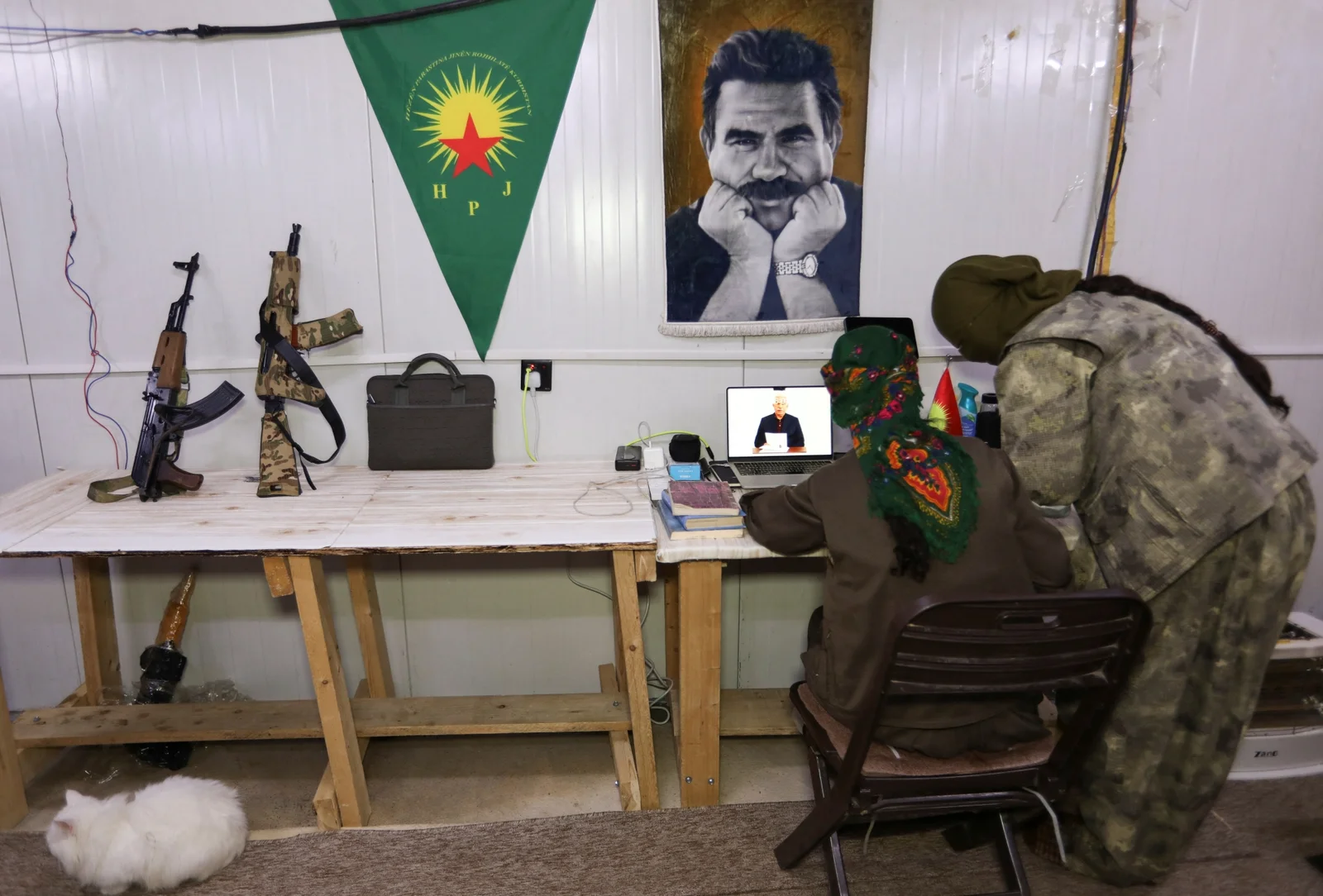
“Ocalan has allied himself with the hard core of power in Turkiye and with extreme nationalist forces in the country such as Devlet Bahceli. He has said that as long as the death penalty exists in Iran, the PJAK’s struggle will continue. The frequent reports and interviews of Zhiar Gol, the Kurdish correspondent for BBC Persian, and his presence in the PJAK’s tunnels near the Iranian border also showed that this group is not on a disarmament path but is strengthening itself using the legacy of the PKK and Abdullah Ocalan.”
In Sheikhi’s reading, the PKK leadership is preserving the PJAK as the armed wing of its movement on the Iranian front. The PJAK itself said in May 2025 that Ocalan’s call did not require it to disarm.
The peace process in Turkiye therefore takes on a wider meaning when viewed through the competing interests of Iran, Turkiye, and the US. The PJAK becomes a potential meeting point for those interests rather than a marginal armed group.
Soheil Farahmand, a researcher on Kurdish affairs, believes that the dissolution of the PKK and integration of the SDF could concentrate Kurdish military capacity on one front:
“What is changing is the geography of the struggle, not its nature. We should wait for America to use the PJAK’s strengthened military and logistical capacities again in the autumn to create unrest and instability on Iran’s western and northwestern borders.”
Ankara’s double-edged Kurdish card
Turkiye appears to be the main beneficiary of the peace process, but its interests on the Iranian front are more complex than those of a straightforward US ally.
Mohammad Motlagh, an expert on Kurdish affairs and former editorial board member of Iran Newspaper, argues that Ankara has repeatedly used Kurdish groups to advance its regional interests.
“Just as Turkiye fought in Syria and paved the way for the presence of America and Israel in that country and for striking the Axis of Resistance in Lebanon, it is using the Kurdish card to contain and weaken Iran.”
He adds that Ankara would not want Kurdish forces to weaken Iran to the point of igniting an uprising in eastern Turkiye. Although Turkish officials publicly reject attacks on Iran, Motlagh alleges that US and European support for the PJAK could not reach the group without some degree of Turkish involvement.
“If the PJAK launches military attacks in western Iran, Turkiye may, under the pretext of maintaining order and its own security, intervene militarily in western Iran and seek to create a buffer zone on Iranian territory similar to what it did in Iraq and Syria. Of course, Iranian officials are fully alert to this.”
Sadeghian goes further, alleging that Ankara is cooperating with Washington and Tel Aviv to redirect Kurdish armed activity toward Iran:
“Turkiye and [Turkish President Recep Tayyip] Erdogan personally introduced themselves 25 years ago as the contractor for the implementation of the American Greater Middle East plan, and they are pursuing cooperation with Israel and America to implement the plan of Kurdish war against Iran. All the weapons of Kurdish groups in Turkiye and Syria that have joined the peace process are reaching the PJAK. Turkiye accepts only Turkish citizens from the PKK, and the terrorist Kurds of Iran, Iraq, and Syria are being integrated into the PJAK.”
Farahmand places greater weight on domestic Turkish politics. He believes President Erdogan wants to amend the constitution and court Kurdish votes to secure another term, and is unlikely to seek a broad, direct confrontation with Iran. Ankara nevertheless welcomes pressure that weakens its regional rival.
“Turkiye wants to move the conflict with the Kurds out of Turkiye and create a buffer zone on its border with Iran in its own favor, and settle the Kurds there so as to reduce the worry of Kurdish nationalism returning to Turkiye.”
In this interpretation, Ankara seeks to shift the Kurdish question toward Iran without allowing a powerful Kurdish entity to emerge on its own border. It could benefit from pressure exerted by the PJAK in the short term while remaining wary of the group’s long-term growth.
Motlagh also points to Turkish Foreign Minister Hakan Fidan’s earlier warning to Tehran about a possible assault by Kurdish groups. During Iran’s January unrest, Turkiye reportedly warned Tehran of attempted crossings from Iraqi Kurdistan. Motlagh argues that even if Erdogan seeks to restrain the PJAK, elements of Turkiye’s security establishment closer to NATO may take a more confrontational approach.
Washington shifts to a war of attrition
Developments in early 2026 demonstrated Washington’s willingness to consider Kurdish armed groups as a pressure tool against Iran. During the US-Israeli war on the Islamic Republic, US President Donald Trump encouraged Iranian Kurdish forces to launch attacks, while Iranian Kurdish parties sought weapons and armored vehicles from US officials. Washington’s messages then shifted, and Trump later ruled out sending those groups into Iran.
Iranian strikes on bases in Iraqi Kurdistan, divisions among the parties, and contradictory US signals helped prevent a coordinated incursion. A Reuters investigation found that Iranian military pressure and threats deterred Kurdish forces on both sides of the border.
Sheikhi points to the Coalition of Political Forces of Iranian Kurdistan, formed by five parties in February 2026 despite longstanding disputes. He interprets their sudden cooperation as evidence of US pressure, although no public evidence establishes that Washington ordered its formation.
The coalition brought together the PJAK, the Kurdistan Democratic Party of Iran (KDPI), the Kurdistan Freedom Party (PAK), the Khabat Organization, and Komala of the Toilers of Kurdistan. Sheikhi says Israeli and US-backed media coverage of the PJAK and PAK during the winter unrest also pointed toward preparations for armed operations inside Iran.
Before the coalition was announced, the PJAK and KDPI had remained divided over strategy, ideology, and control of the Kurdish opposition space. Their agreement did not erase those differences. It did, however, create a common platform at a moment when the war and Iran’s internal unrest had reopened discussion in Washington over the military value of Kurdish parties based across the Iraqi border.
Motlagh believes Washington has shifted from seeking a rapid uprising to building a layered war of attrition:
“In this model, the PJAK forms the armed core, political groups provide diplomatic cover, media outlets shape narratives, and trained PKK and SDF cadres transfer their operational experience to the PJAK. The goal is not to capture Tehran, but to create lasting insecurity, force Iran to disperse its security forces, and increase domestic costs.”
He expects the same approach could return alongside economic pressure and renewed protests. Komala leader Abdullah Mohtadi said in March that tens of thousands of young people would be ready to take up arms if they received US backing. US intelligence assessments cited at the time, however, doubted that Iranian Kurdish groups possessed the numbers or firepower required to sustain a rebellion.
That disparity favors an attritional strategy over an attempt to seize and hold major territory. Small armed units can conduct ambushes, move weapons, exploit unrest, and oblige the Iranian state to reinforce a broad border zone. Political parties and sympathetic media can then amplify each incident beyond its immediate military effect.
The PJAK’s reach and its limits
The PJAK occupies a distinctive position in this reconfiguration. Sheikhi estimates that it has about six times the manpower of other anti-Iranian Kurdish groups, including Komala, the PAK, Khabat, and the KDPI.
“The assassinations of the past two months in Kurdistan and West Azerbaijan provinces, the discovery of large quantities of weapons, especially in western Iran, the execution of ambush operations, and so on are carried out mainly by the PJAK. They claim to be ready to negotiate with Iranian officials, but in practice they pursue terrorist objectives.”
However, the PJAK faces serious constraints, and its capabilities should not be exaggerated, as Motlagh emphasizes:
“These groups are not at all well-regarded in the Kurdish regions of Iran, and the absolute majority of Kurdish people in Iran hate them. More than 500 people in the city of Sanandaj in Iran’s Kurdistan province were martyred in the fight against Kurdish terrorist groups such as the PJAK at the beginning of the victory of the Islamic Revolution. They buried alive some Kurdish people who opposed them, raped Kurdish women, and the Kurds of Iran have very bitter memories of them. For this reason, the PJAK can never become a popular and beloved force in Iran.”
Motlagh also alleges that the UAE bought around 1,000 vehicles for Iranian Kurdish armed groups before the 12-day US-Israeli war on Iran in June 2025, with the vehicles equipped in Syria, Turkiye, and Iraq.
During the unrest that began in December 2025, armed Kurdish groups attempted to cross from Iraq into Iran, and Iranian forces struck opposition bases across the border. Motlagh claims Kurdish fighters reached as far as Karaj and took part in killings during the protests.
He also links violence in West Azerbaijan, Ilam, and Kermanshah to Kurdish groups and says some operatives later moved toward Hamedan, Saveh, and Tehran with support from the Mojahedin-e Khalq (MeK).
The PJAK is best understood as a trained armed core capable of creating localized insecurity under favorable conditions and with external support, rather than as a conventional army. Its more plausible role would be to open an attritional front that compels Tehran to divert security resources from its confrontation with the US and Israel.
Farahmand believes Iran should instead emphasize the limits of Turkiye’s peace process, including uncertainty over Kurdish cultural and social rights and resistance among Turkish nationalists. In his view, exposing the initiative as an electoral project designed to attract Kurdish votes for Erdogan could blunt its appeal beyond Turkiye.
“It is not clear whether Turkiye will recognize the cultural and social rights of the Kurds in this process of social integration. On the other hand, there is not enough acceptance in Turkish society, among its elites, and some hardline parties for peace with Kurdish militant groups, and this gap could work in Iran’s favor.”
Can Tehran Contain the Kurdish Front
Motlagh warns that economic pressure and renewed protests could once again coincide with attempts by Kurdish armed groups to enter Iran. He nevertheless identifies substantial obstacles, including damage to their bases, Iranian intelligence reach in Iraq, and their dependence on US air cover for any sustained advance.
“It is possible that this autumn the previous winter’s scenario will be repeated: economic pressure, protests, and the infiltration of Kurdish terrorist groups. But there are several obstacles: Iran has heavily damaged their bases, has extensive intelligence dominance in Iraq, and these groups cannot advance without the support of American air power. The reason for their failure so far has been exactly this.”
Old Conflict Shifts Toward Iranian Soil
Farahmand also raises the possibility of tactical cooperation between Kurdish and pan-Turkist groups in northwestern Iran. Historical tensions would make such an alliance fragile, although shared hostility toward Tehran could produce temporary coordination during a crisis.
The armed Kurdish struggle in Turkiye and Syria is entering a new phase in 2026, with its center of gravity shifting toward Iran and the PJAK positioned to absorb some of the personnel and capabilities released by the PKK and SDF.
This realignment need not rest on a secret US–Turkish agreement. A temporary convergence of interests may be enough, as regional and foreign powers maneuver for position and seek advantage through the erosion of Iranian power.
Motlagh argues that Iran should formulate its Kurdish policy at the national level rather than leave major decisions to local military bodies.
“A local military executive force should not do the staff work and major decision-making regarding the Kurds, because pan-Turk groups and individuals sympathetic to Turkiye may lead Iran’s policies astray. Decision-making on how to resolve the Kurdish issue must be carried out at the national level.”
For Tehran, the decisive issue is how it interprets this changing environment. Treating the PJAK solely as a local security problem could leave Iran unprepared for a wider campaign supported from abroad. A strategy that combines political engagement, cultural ties, intelligence work, and military deterrence offers a better chance of preventing a durable front from taking shape along its western borders.
The question is whether Iran can neutralize that possibility before it matures, or whether Kurdish peace in Turkiye and Syria will shift the center of an old conflict toward Iranian territory.