
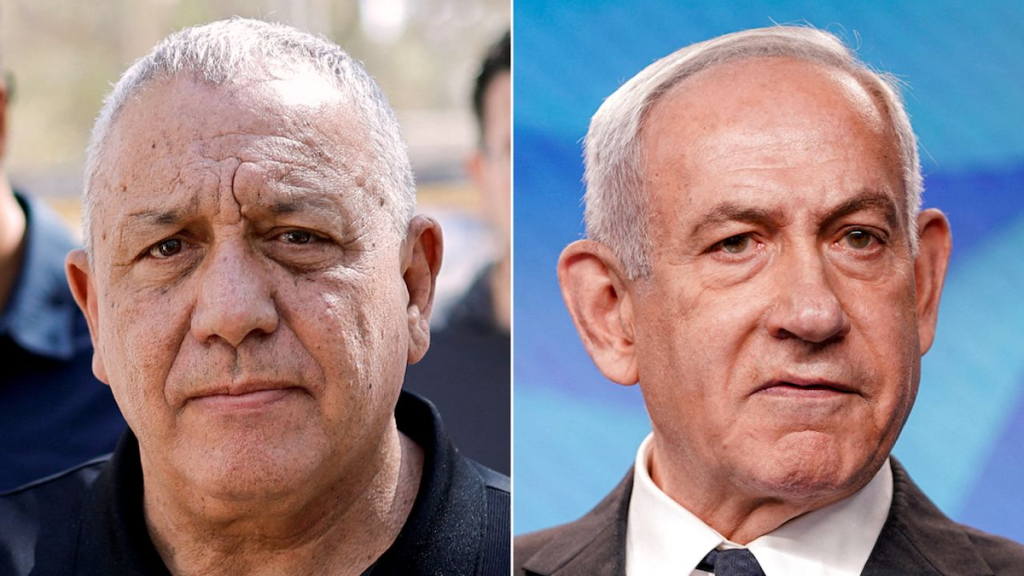
Neither bloc reaches the governing threshold
Israelis turned out in numbers not seen in a generation, and handed both of their would-be prime ministers the same verdict: not enough. On the partial count this morning, neither Benjamin Netanyahu’s bloc nor Gadi Eisenkot’s reaches the 61 seats needed to govern.
Both men have nonetheless claimed the night. Eisenkot told supporters the old era was over and a new one beginning. Netanyahu answered that Likud is the largest party by a wide margin and that the right holds a decisive majority among Jewish and Zionist voters.
Each is describing something real. The result is less a winner and loser than a map of a divided country, and the bargaining that follows will matter more than the ballots themselves.
With roughly 55% of votes counted, the outgoing coalition holds 56 seats, the opposition “change” bloc 49, and the Arab-led parties 15. Likud leads all lists with 27 seats; Eisenkot’s new Yashar party is second with 21.
Behind them sit Naftali Bennett and Yair Lapid’s joint list Together and the Arab-led Joint List at 11 each, Yair Golan’s Democrats and United Torah Judaism at nine and Avigdor Liberman’s Yisrael Beytenu at eight. Shas and Itamar Ben-Gvir’s Otzma Yehudit have seven each, Bezalel Smotrich’s Religious Zionist list six and Ra’am four.
The count has drifted toward Netanyahu overnight. Exit polls on the main channels had the blocs roughly level, with Channel 12 and Kan putting Eisenkot’s side narrowly ahead. The overnight tallies have since moved the coalition up by several seats.
Two things are true at once. Likud remains comfortably Israel’s largest party, as it has been for most of a decade. But 27 seats would be a sharp fall from the 32 it won in 2022, and the coalition as a whole is down from the 64 that made Netanyahu’s last government possible.
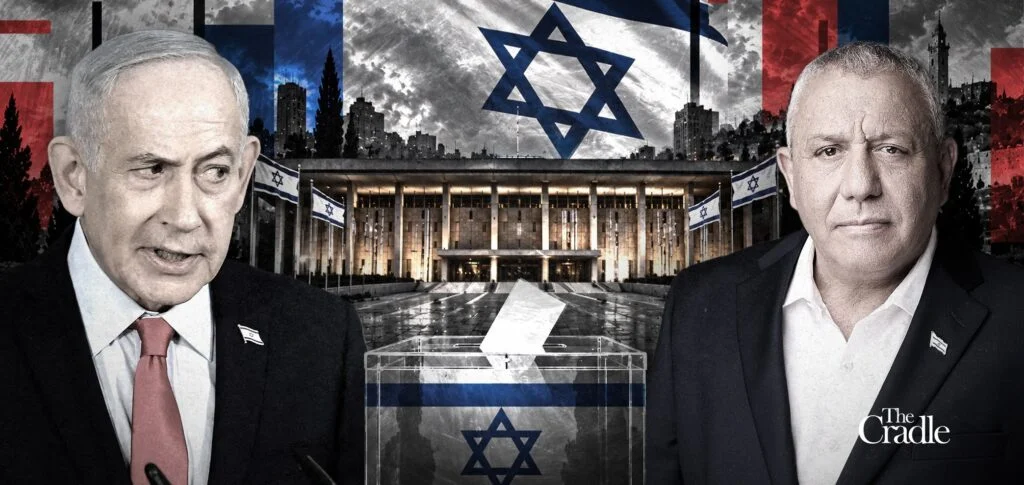
Arab turnout fuels the Israel election deadlock
Turnout reached 77.7%, the highest since 1999 and seven points higher than in 2022. Whatever else this election was, it was not an apathetic one.
The sharpest rise came among Arab citizens, roughly a fifth of the population, where turnout was put at about 80%. Exit polls gave Ra’am and the Joint List a combined 17 to 19 seats, which would be their strongest showing ever; the partial count has them at 15.
That surge is the hinge of the whole result. It is the main reason Netanyahu’s bloc sits short of a majority. Yet it doesn’t hand one to Eisenkot either, because two of his own partners have ruled out relying on Arab parties.
The campaign’s final day showed how charged this is. Netanyahu warned supporters about heavy Arab turnout; Arab party leaders called that incitement meant to frighten right-wing voters to the polls. Ra’am’s Mansour Abbas, in turn, credited the record vote to resentment of the outgoing government.
Four doors, all of them heavy
On today’s numbers, every route to a government requires someone to break a campaign promise.
A Netanyahu government. The coalition needs five more seats. The obvious candidates are hard to reach: Liberman has refused to serve under Netanyahu or alongside the ultra-Orthodox parties, and Bennett told supporters last night that Netanyahu had lost. A late shift in the count is Netanyahu’s simplest path.
An Eisenkot government. The opposition parties together are well short of 61. A majority exists only if Arab parties are counted in, and Bennett and Liberman reject that. Eisenkot himself has said partners must accept Israel as a Jewish state and the dismantling of Hamas, terms most Arab lawmakers are unlikely to accept. A minority government with outside Arab support has been floated inside his camp, but his allies oppose it.
A unity government. Likud and Yashar together would clear 61 comfortably. TIME reported before the vote that Netanyahu would prefer such a deal, and Liberman has accused Eisenkot of seeking one. For Eisenkot, it would mean propping up the leader he campaigned to replace.
class=”ds-markdown-paragraph”>另一次选举。如果无人能组建政府,以色列将重返投票,内塔尼亚胡继续以看守总理身份留任。继2019年至2022年间的五次选举后,很少有以色列人愿意这么快迎来第六轮选举,但这是一个可能发生的现实。
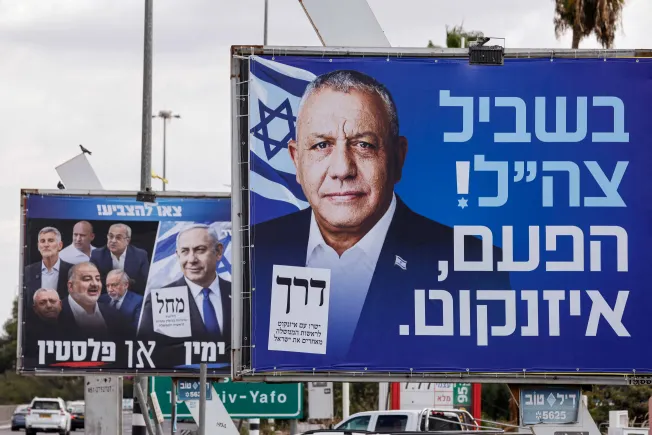
10月7日构成战时评判
这是自2023年10月7日哈马斯发动袭击以来的首次全国投票,人们普遍将其视为对内塔尼亚胡在该事件及随后在加沙、黎巴嫩和对伊朗的战争期间领导力的公投。
双方对该时期的解读截然不同。内塔尼亚胡的支持者认为他是位战时领导人,对以色列的敌人进行了强力打击,并保持与华盛顿的密切关系。他的反对者则指责他对10月7日之前的失败负有责任,并指责他在此后数年里造成的分裂,从司法改革到导致本届政府倒台的极端正统派征兵争议。
值得注意的是,主要挑战者并未以左翼身份参选。艾森科特、贝内特和利夫曼都是安全强硬派;这场竞争在很大程度上是关于信任和治理,而不仅仅是对巴勒斯坦人政策的争论。
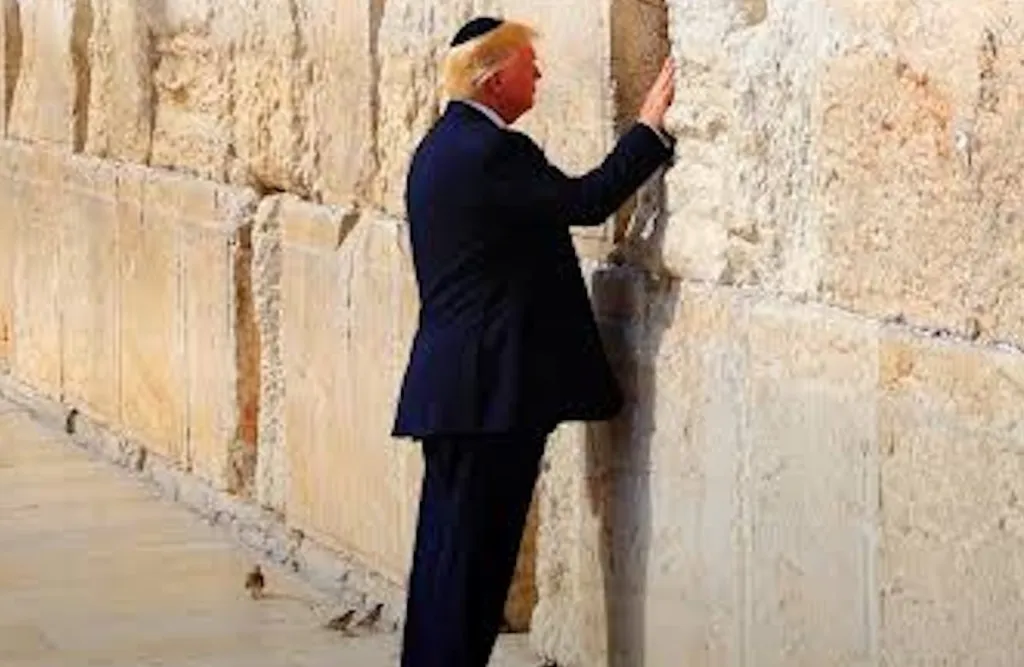
特朗普的背书未掀波澜
华盛顿在某种程度上也成了选票的一部分。唐纳德 特朗普公开背书 内塔尼亚胡,时间为投票前九天,据报道这是美国总统首次在以色列选举中作出明确背书。分析人士认为这不会改变太多选票,理由是以色列人对伊朗战争收场方式感到沮丧。艾森科特的回应是,只有以色列人自己选择他们的领导人。
最终计票结果预计在周五(10月30日)公布,官方结果计划于11月4日发布。在如此接近的竞赛中,一两个席位就可能改变哪些门是打开的,尤其是对于接近门槛的名单而言。
以色列总统Isaac Herzog随后将会咨询各党领袖,并指定最有可能组建政府的人选,获准最多42天时间。注意Bennett、Liberman和两党阿拉伯党派的建议:他们比任何领先者更能决定游戏规则。
以色列选举僵局取决于妥协
大局是这样的。以色列人大量投票,他们的投票意在不给任何人一个明确的授权。Netanyahu的时代尚未结束,Eisenkot的时代尚未开始。接下来发生的事,将由谁愿意与谁妥协来决定,而不是谁获胜。