
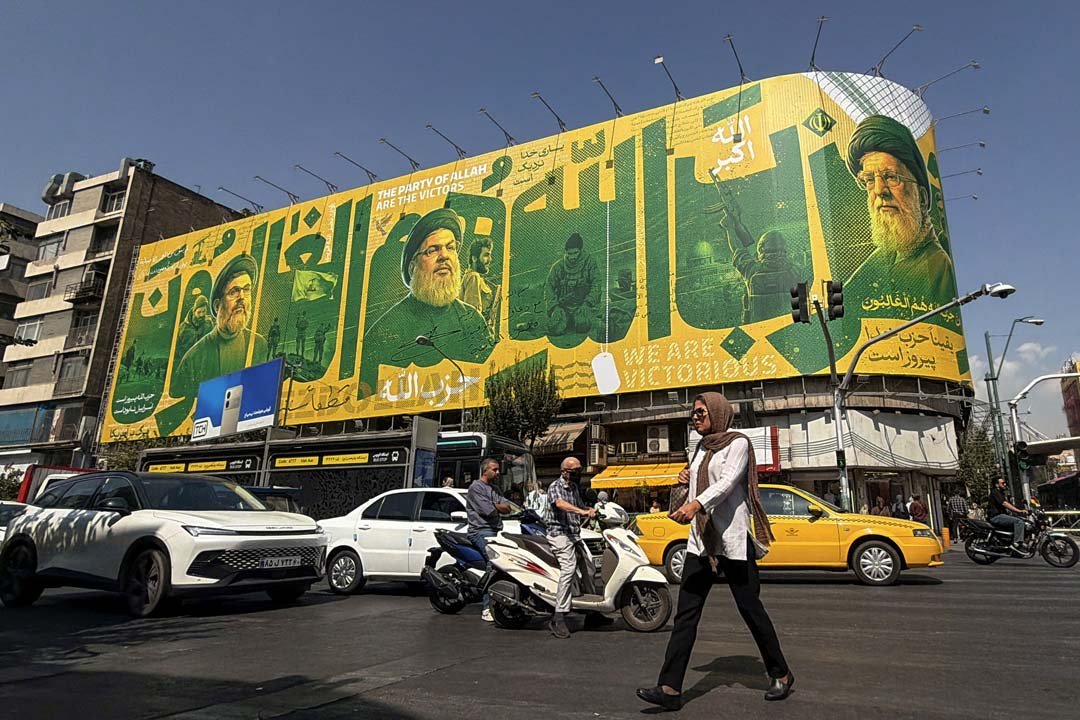
Iran’s axis of resistance no longer shields Tehran from direct attack. After Assad’s fall and Hezbollah’s losses, Iran now relies on missiles,drones and Hormuz leverage, yet still defends weakened partners whose survival it treats as inseparable from its own security, even as their military value fades.
Why Iranian Deterrence Now Relies on Missiles
Developments since 7 October 2023, when Hamas staged its deadly attacks on southern Israel, have transformed Iran’s network of state and non-state allies in the Middle East, as well as their role in Tehran’s military planning and deterrence posture.
The weakening of Hamas and Hizbollah at Israel’s hands in the last three years, the fall of Bashar al-Assad’s regime in Syria in December 2024 and, above all, the U.S.-Israeli war on Iran launched in February have altered the vectors of Iranian influence. Together, these events have exposed the limits of an Iranian strategy that had relied chiefly on regional partners to deter adversaries and keep any armed confrontation away from Iran itself. Instead, Tehran now places greater weight on capabilities under its direct control: missiles, drones and the ability to obstruct traffic in the Strait of Hormuz.
This evolution does not mean that the “axis of resistance”, as Iran calls its collection of allies, has lost all relevance. Rather, it means that axis members are now assuming different functions and that Tehran is approaching them differently.
Yemen’s Houthis have gained particularly significant strategic value for Iran because their ability to threaten Red Sea shipping complements Tehran’s leverage over the Strait of Hormuz and the Gulf. In Iraq, major Shiite factions also remain important political partners, even as Tehran increasingly turns to smaller armed groups to conduct military operations. Overall, the result is a more fragmented network in which heightened local autonomy among Iran’s non-state partners coexists with tighter Iranian control of select cells and smaller armed organisations.
Nor is a weaker “axis of resistance” necessarily synonymous with diminished Iranian commitment to its partners. Hizbollah’s lesser contribution to Iranian deterrence, for example, has not reduced Tehran’s determination to protect the Lebanese Shiite movement. To the contrary, Iran has shown itself more willing to use force in Hizbollah’s defence; it also has conditioned reaching a deal terminating its hostilities with the United States on an end to Israel’s campaign in Lebanon. In other terms, Iran still may be drawn into conflicts on its regional partners’ behalf, even as they have become less capable of shielding it from attack.
From the Levant to Maritime Chokepoints
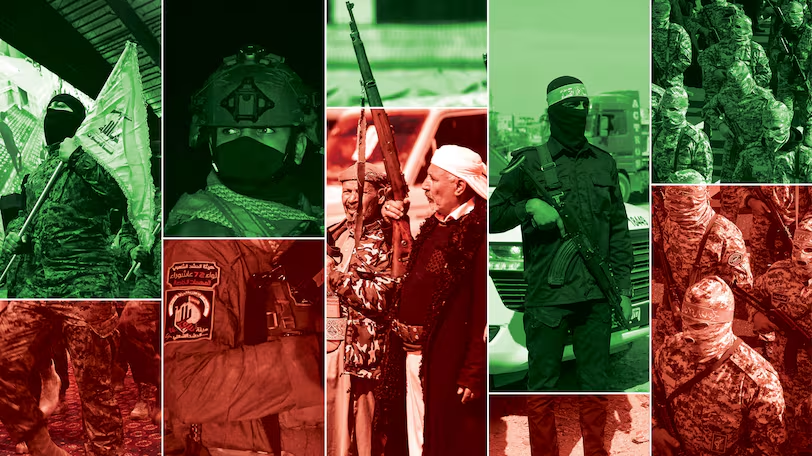
Prior to October 2023, Iran’s Middle East strategy centred on the Levant. Syria under Assad’s rule was the linchpin, the only Arab state allied with Iran, which provided it with substantial benefits: a land corridor linking Iran and its Iraqi Shiite partners to Hizbollah; proximity to Israel’s borders; and a logistical hub that enabled Tehran to project its influence to the eastern Mediterranean seaboard.
In June 2024, Yahya Rahim Safavi, a former commander of the Islamic Revolutionary Guard Corps who was then military adviser to Supreme Leader Ali Khamenei, likened Iran’s reach through the axis to that of the ancient Persian empire under Cyrus and Xerxes. The advantages of alliance with Assad explain why, over a decade of civil war in Syria, Tehran defended his regime at significant cost. Hizbollah fighters also helped the regime a great deal, battling both its domestic opponents and ISIS.
Hizbollah was useful in another important way, offering Tehran a means of threatening Israel from adjacent territory, thus ostensibly deterring it from direct strikes on Iran itself. If Assad’s Syria was a linchpin of the Islamic Republic’s Middle East strategy, the Shiite movement in Lebanon was a principal engine.
Why Syria’s Loss Still Hurts Tehran
[Assad’s fall] deprived Iran of its sole Arab state partner and disrupted its supply line to Hizbollah.
This arrangement has suffered severe damage since October 2023, when Hamas – apparently taking even Iran’s leadership by surprise – attacked Israel. The Gaza campaign that Israel launched in response dealt the axis a first blow, although Iran’s relationship with the Palestinian group has never been on par with those it has enjoyed with its other affiliates.
Assad’s fall – indirectly part of the chain of events triggered by the Hamas attacks – was far more consequential. It deprived Iran of its sole Arab state partner and disrupted its supply line to Hizbollah. After Hizbollah entered the post-2023 fray, Israeli counter-attacks also inflicted substantial losses on the Lebanese movement’s leadership and military assets, while causing significant death, destruction and displacement in the country. As a result, other Lebanese factions began issuing more urgent calls on Hizbollah to disarm. The setbacks reinforced one another: rebuilding a degraded Hizbollah was a far more daunting task without the Syrian channel that had previously sustained it.
These losses notwithstanding, Tehran has yet to forsake the Levant. Hizbollah still has a strong, institutionalised relationship with Iran, significant political weight in Lebanon and the capacity to regroup, at least in part. The Israeli incursions into southern Syria following the Assad regime’s demise may also have benefits for Iran. The Islamic Republic may be banking on local resistance to Israel eventually creating openings for renewed Iranian influence in Syria, though this prospect remains uncertain.
Iraq Becomes the New Coordination Hub
For now, Iran has turned its attention to an arena closer to its borders where it retains heftier clout. On 8 June, Esmail Qaani, commander of the Revolutionary Guards’ overseas operations arm, the Qods Force, described an emerging “security belt” stretching from the Gulf to the Red Sea. When compared to Safavi’s formulation two years prior, the phrase captures a shift in emphasis from the Levant to the maritime routes linking the Gulf to the western Indian Ocean, a theatre in which Iran’s sway comes more directly from its own place on the map.
The Islamic Republic requires neither an allied state nor a non-state partner to project power in the Strait of Hormuz; it can station missiles and drones nearby or even deep inland to threaten naval or commercial vessels in these waters. Tehran’s influence over maritime routes upon which states near and far depend for trade in oil, gas and other vital commodities is boosted by its partnership with the Houthis, who can fire at ships passing in either direction through the Red Sea and Bab al-Mandab.
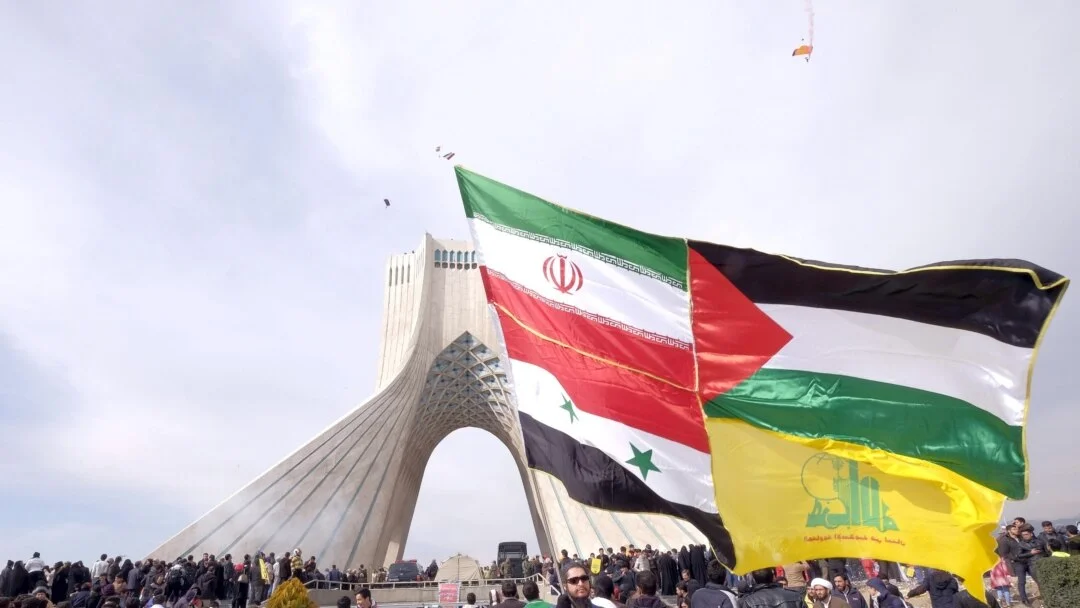
Though it no longer serves as a land bridge for arms transfers to Syria and Lebanon, Iraq nonetheless plays an important part in this changing landscape. In particular, it is a locus for coordination between the Houthis and Iraqi armed groups, as well as between the Qods Force and Iraqi groups that have conducted attacks on Gulf Arab states.
A More Fragmented Network
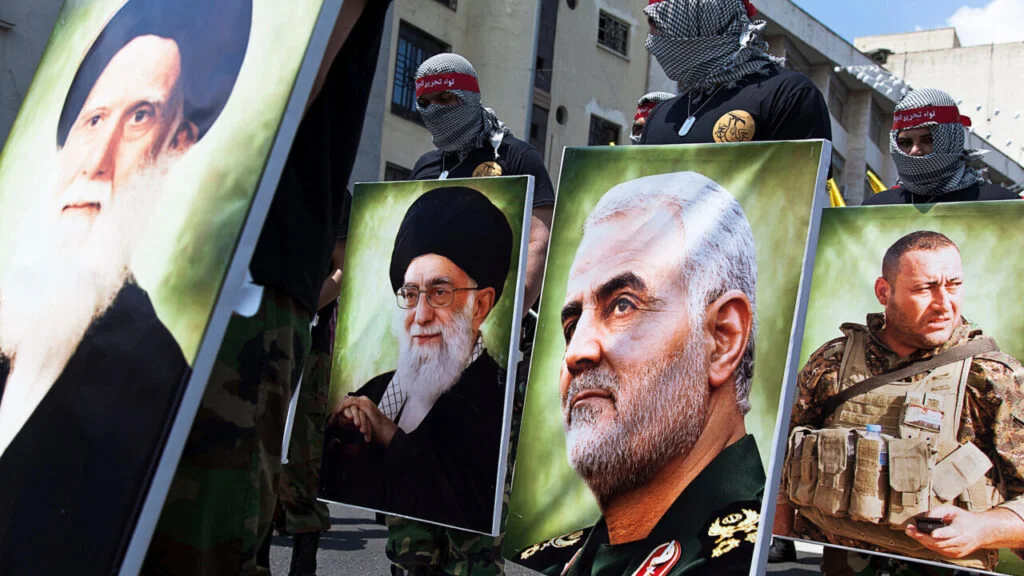
The shift in Iran’s primary focus from the Levant to the seas has gone hand in hand with organisational changes. Under its late commander Qassem Soleimani, the Qods Force was the principal coordinator of “axis of resistance” activities. Since the U.S. killed Soleimani in January 2020, the Qods Force has not played the same role. Subsequent wars and leadership losses, both within the Revolutionary Guards and among its partners, further discombobulated command structures and impaired joint military operations. As a result, Iran has had to adapt its relationships with groups whose military capabilities and domestic constraints themselves have changed. It has increasingly been compelled to work through smaller groups or selected elements of established organisations.
This trend has been most evident in Iraq. As the years passed after Saddam Hussein’s ouster, older Shiite political movements acquired key government positions and economic interests, thus becoming more beholden to popular constituencies. As a result, they are now more hesitant to engage in military action that risks provoking retaliation or eroding their standing.
This reluctance was apparent early in the present U.S.-Israeli war with Iran, when several major Iraqi Shiite armed groups declined to mobilise on Tehran’s behalf. Iran had to rely on smaller, less prominent ones – drawn from the self-styled Islamic Resistance in Iraq – to come to its aid. Iraqi sources speak of a network of clandestine cells established by the Revolutionary Guards and operating outside established militias’ command structures that reportedly has been responsible for attacks on Kuwait, Saudi Arabia and the United Arab Emirates.
These nimbler, smaller groups offer Tehran several advantages. They require fewer resources, they can conceal their affiliations and they can ignore the political constraints holding back their larger counterparts. Their greater ideological cohesion also arguably makes them easier for Tehran to direct. More institutionalised Iraqi Shiite groups remain important to Tehran, notwithstanding their reticence regarding military action in Iran’s defence. But their role has shifted: they are useful principally because they help Iran preserve influence in the country as well as the political space in which smaller armed groups are free to operate.
Iran’s changing relationship with Hizbollah illustrates another type of adjustment to similar pressures. Though the movement retains a substantial organisation that helps Tehran sustain influence in Lebanon, Hizbollah’s military actions increasingly resemble those of a guerrilla group – quick-hitting raids that leave the group less vulnerable to Israeli airstrikes and intelligence penetration.
Its use of first-person-view drones – drones using a live video feed from an onboard camera – to attack Israeli forces in southern Lebanon showcased the effectiveness of inexpensive technology, even as the movement has lost its more sophisticated capabilities. An Iranian expert with ties to both the Revolutionary Guards and Hizbollah told Crisis Group that Qods Force commanders have been directly involved in this revamping, including efforts to work through smaller units and help Hizbollah fighters adopt more agile tactics.
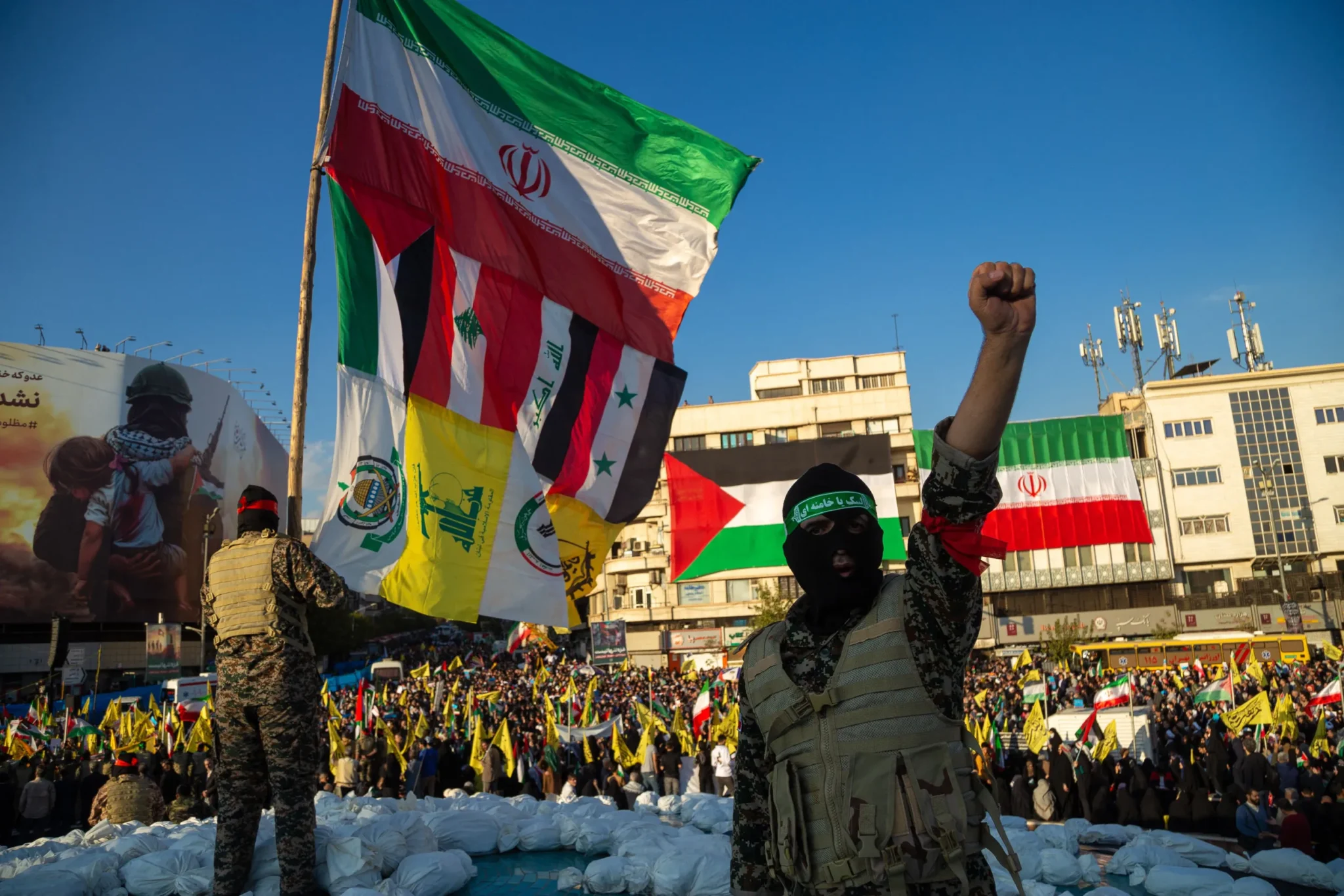
Iranian Deterrence Shifts Closer to Home
These changes reflect a broader reassessment of Iran’s deterrence posture. Its earlier approach heavily relied on the concept of “forward defence” ensured by regional partners, supplemented by the threat of direct retaliation from its own territory. The “axis of resistance” gave the Islamic Republic strategic depth, discouraging its adversaries from attacking it and keeping conflict distant from its borders. Only if that first layer of protection were to fail were Iranian missiles and drones to be used to shoot back.
The past three years of war have starkly exposed the limits inherent in this arrangement. Iran’s regional network did not prevent direct attacks on the country – whether the major exchanges with Israel in 2024, the surprise Israeli attack in June 2025 or the more substantial confrontation with the U.S. and Israel beginning in February. As the deterrence value of axis partners dropped, Tehran was compelled to place greater weight on its own capabilities: missiles, drones and geographical leverage.
Yet, if military setbacks have transformed the role played by the axis, they have not eliminated its utility to Iran. Though the axis as a whole no longer serves as the primary foundation of Iran’s deterrence, decision-makers in Tehran believe that certain partners can play important roles in particular circumstances as they magnify Iran’s own capabilities and geographical leverage. Their experience during the present conflict with the U.S. has only bolstered this conviction.
The Houthis have attained particular importance in the Islamic Republic’s thinking, which helps explain reports that Tehran has provided them with both guidance and military assistance. Tehran’s efforts in July to establish direct flights to Houthi-controlled parts of Yemen illustrated the multidimensional nature of this support: the flights both challenged restrictions imposed by Yemen’s internationally recognised government and Saudi Arabia on Houthi rule and reportedly carried Revolutionary Guards commanders, military advisers and missile- and drone-related equipment.
Hizbollah, too, has retained its usefulness for Tehran. The movement attacked Israel following February’s U.S. and Israeli strikes on Iran, forcing Israel to contend with an additional front and placing further demands on its air defences. True, that supporting role was a far cry from the crucial deterrent function the movement was intended to play, a reflection of its diminished capabilities. Iranian officials have nevertheless continued to frame their confrontation with the U.S. and Israel as extending to Iran’s Middle East partners, Hizbollah in particular.
In June, in a remarkable role reversal, Iran launched missiles at Israel in response to its campaign against Hizbollah, thereby marshalling its own forces in defence of its partner rather than the other way around.
Moreover, it conditioned its acceptance of the (short-lived) 17 June memorandum of understanding halting hostilities with the U.S. on cessation of Israeli attacks in Lebanon: the opening clause explicitly included Lebanon in the ceasefire and affirmed Lebanese sovereignty and territorial integrity.
Israel persisted with its offensive, however, including at Ali al-Taher, a strategic Hizbollah position in southern Lebanon where Israel besieged (and, in mid-September, demolished) an underground command and weapons complex. To Iranian officials, who had reportedly sent warnings that any such act would provoke a “forceful” response, the demolition was a reminder that Iranian threats of renewed missile attacks were an insufficient deterrent. Still, Iran’s stance showcased its commitment to axis members whose military utility has faded but not been erased.
Decades of institutional ties, ideological affinity and investment help explain Iran’s approach. According to Iranian experts interviewed by Crisis Group, several members of the security establishment regard Hizbollah’s survival in particular as being closely tied to Iran’s own security, giving the relationship a significance that extends beyond the movement’s immediate military capabilities.
This outlook has surfaced in public debates. In a January 2025 interview published by Iran’s Strategic Council on Foreign Relations, former diplomat Hadi Seyyed Afghahi argued that pressure on militant groups in Iraq, Lebanon and Yemen was aimed at “Iran and, more generally, the Shiites of the region”. Therefore, Tehran could not remain indifferent to these groups’ fate. Likewise, in December 2025, Ali Samadzadeh, an analyst with close ties to the regime, argued that Iran should be prepared to intervene militarily if Israel attacked Hizbollah, describing an assault on Lebanon as a prelude to renewed war with Iran. Defending regional partners, in this view, is part and parcel of protecting Iran itself.
In short, where Tehran regards a partner as key to its own security, the fact that the partner has been weakened arguably – and perhaps paradoxically – provides Iran with added reason to intervene on its behalf. Efforts to curb Iranian influence by targeting allied groups may therefore draw Tehran into conflicts – a marked departure from the role these groups once played in shielding the Islamic Republic from direct involvement in hostilities. The extent of Iranian involvement is likely to depend on the particular relationship in question and the risks and costs inherent in intervention. But the bottom line is that its partners’ diminished military capabilities will not necessarily reduce Iran’s exposure to, or participation in, their respective conflicts.
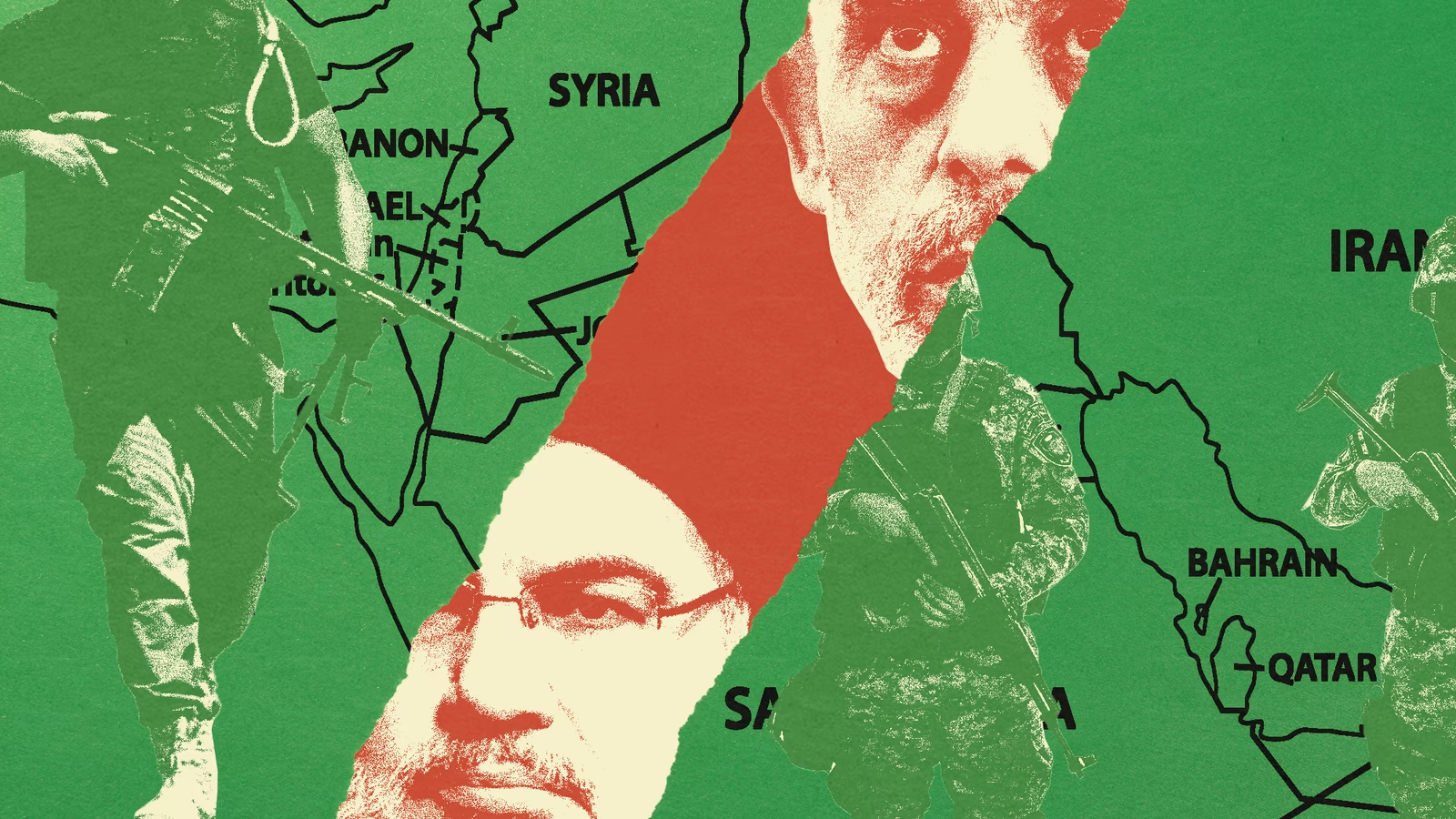
A Shifting Picture
After three years of hostilities involving Iran’s partners and, since February, Iran itself, the “axis of resistance” is neither down nor out, but it is not what it once was, either in the function it serves or in Tehran’s relationship to its various members. The changes have been manifold. First, some of its members’ military capabilities have been significantly degraded.
Secondly, direct confrontation with the U.S. and Israel has revealed the groups’ limited deterrent value and their inability to keep conflict away from Iranian territory. Finally, and partly as a result of their lessened status, they have come under growing domestic political, economic and security pressure, hindering their ability to directly participate in confrontations involving the Islamic Republic.
These changes do not rule out these groups’ continued close operational ties to Tehran; nor do they mean an end to Iran’s commitment to their protection. But, together, they constrain the groups’ freedom of action. As a result, the focus of the Islamic Republic’s strategic doctrine has pivoted from allied non-state actors toward its own capabilities.
This adjustment undoubtedly has preserved Iran’s ability to project power in its neighbourhood. But it does not come without serious risk, insofar as it has led Tehran to more directly bear the costs and dangers of confrontation.
The Islamic Republic may well find ways to manage the consequences of its partners’ weakened clout by coming to their aid when they are endangered, giving them breathing space to regroup and using its own military assets to deter its foes, including by ensuring that others – notably Gulf Arab states – suffer the consequences of Middle East war.
In so doing, Iran hopes to discourage future attacks. But this approach also risks deepening hostility among its neighbours, potentially encouraging closer security cooperation among Iran’s adversaries and heightening the very pressures Tehran seeks to reduce.