

Rep. Thomas Massie’s impeachment articles against Pete Hegseth expose a deeper injury than unlawful war powers: more than two dozen Senate-confirmed officers purged without explanation, budgets built on reconciliation expectations, and allied doubts about U.S.
Pentagon Leadership Faces Its First Impeachment
On Monday, U.S. Rep. Thomas Massie introduced articles of impeachment against Defense Secretary Pete Hegseth, triggering a vote in the House of Representatives that could come as early as this week. Massie, a Republican who will leave Congress in January, accuses Hegseth of waging an “unlawful” war in Iran and abusing the office. Hegseth will be the first civilian leader of the U.S. military establishment to face impeachment in 150 years.
The last, William Belknap, was President Ulysses S. Grant’s secretary of war—the title at the time for the civilian leader of the U.S. Army, before a unified Defense Department. The House voted unanimously to impeach him. Belknap resigned ahead of his Senate trial; he avoided conviction because of many senators’ discomfort with impeaching a private citizen. (Impeachments do not require the accused to be in office.)
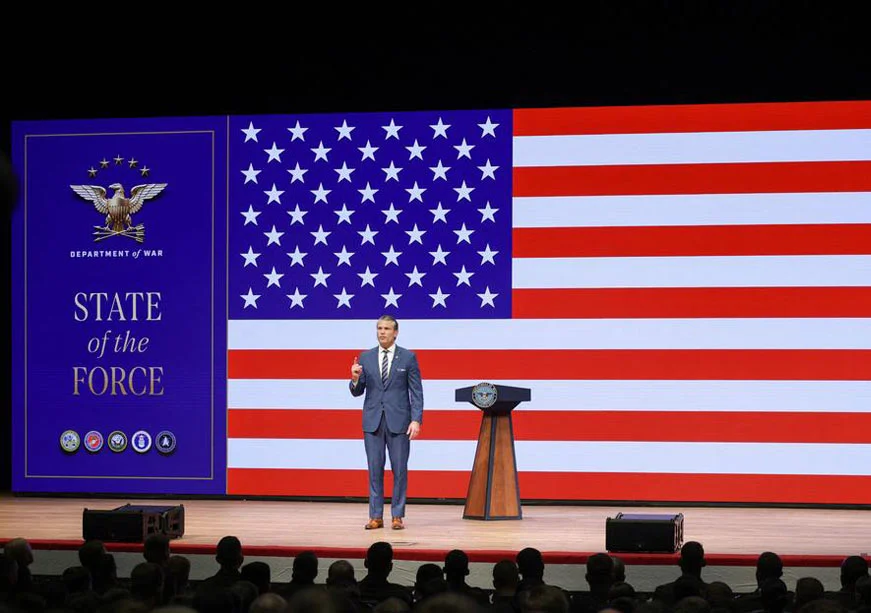
Eight Counts and a Charge Sheet
Massie’s charge sheet includes eight counts, the most severe of which is that Hegseth “knowingly executed and implemented unlawful orders to initiate war against a foreign nation notwithstanding the absence of congressional authorization” and “demonstrated that he will remain a threat to the Constitution if allowed to remain in office.”
Four of the counts of impeachment involve war powers, while the others concern civilian casualties, extrajudicial killings during boat strikes, suppressing free speech, and kidnapping a foreign leader.
The indictment does not include some of Hegseth’s more egregious norm- and law-violating behavior: violating the Impoundment Control Act by refusing to release funds authorized and appropriated by Congress for aid to Ukraine, requiring uniformed military participation in partisan rallies, refusing briefings to congressional Democrats, denying press access to the Pentagon, firing without explanation more than two dozen senior officers confirmed by the Senate in their ranks and positions, appointing people forced out of military service for insubordination or political acts to senior civilian positions in the Defense Department, renaming the department without congressional authorization, and campaigning against sitting members of Congress.

Trump Doubles Down on His Secretary
President Donald Trump continues to support Hegseth, praising him for “winning two wars.” And the defense secretary continues undaunted: On Nov. 5, he released a nearly six-minute video insisting that “this is not about me, but of course, the other side, in case you’ve noticed, they’re obsessed. A disgruntled, defeated congressman, along with all his Democrat allies, has also dropped sham articles of impeachment against yours truly, just like they tried against President Trump twice.”
The defense secretary’s most important responsibility is managing Congress because under the U.S. Constitution, it is Congress that has the power to “raise and support Armies” and “provide and maintain a Navy.” Hegseth has poisoned those relationships. It is likely that his impeachment will be successful in the House on at least the count of attempting to penalize the speech of Sen. Mark Kelly, whom Hegseth groundlessly accused of sedition. (Hegseth has initiated proceedings to retroactively reduce Kelly’s military rank and retirement pay.)
Rep. James Comer, the Republican chairman of the House oversight committee, sounds dubious about defending Hegseth rather than supportive, saying that “there are a lot of questions” about the defense secretary. House Minority Leader Hakeem Jeffries is a “hard yes” on impeachment. Tennessee Gov.-elect Marsha Blackburn appears unlikely to give Hegseth an exit with honor by appointing him to her vacant Senate seat.
Trump will surely goad Hegseth on to fight the impeachment and behave outrageously—both as a distraction from the drubbing of the Republicans in the midterm elections and to indulge his entertainment approach to governance since it would be “great television.”
Readiness Erodes While Munitions Run Short
Whether or not Hegseth is convicted, his actions have already cost the Defense Department years of combat-tested experience in the senior leaders who were forced out and have instilled a chilling effect on those who remain.
Hegseth has eroded military readiness by poor planning for the Iran war, requiring extended deployments; robbed the force of funding by failing to gain congressional support for a war supplemental spending bill; continued munitions shortfalls because he structured the budget to pay for them in expectation of a third partisan reconciliation bill; damaged retention in the force, as 53 percent of service members now want to leave earlier because of politicization; and caused allies to question the legality of U.S. military operations.

Why Pentagon Leadership Still Needs Better
There will be a strong temptation among Hegseth’s adversaries to bring the military into the impeachment process by calling fired officers to testify as witnesses.
This would be a mistake, both normatively and practically. As a normative matter, it damages civil-military relations to place the military in the position of judging its civilian masters. What a democracy should want in febrile political moments is for the military to remain politically inert. Practically, what some envision as a long table of uniformed officers with glittering medals bearing witness to policy depredations would actually be a parade of suits explaining that they have no idea why they were relieved or forced into retirement.
The two fundamental tests of whether the U.S. model of civil-military relations is healthy are that the political leadership can fire any military officer and that the military will carry out the civilian leadership’s policies whether or not it agrees with the decisions. For all the destruction that Hegseth has visited upon the U.S. military, its professional adherence to subordination to civilian control remains strong.
That is yet one more reason the military deserves much better civilian leadership than Trump, the senators who confirmed Hegseth as defense secretary, and Hegseth himself have provided.