
This analysis frames the Iran conflict as a contest of wills. Trump seeks quick victory via shock and awe. Iran counters by regionalizing conflict and exploiting America’s low casualty tolerance. Each strategy has limits—air power alone won’t topple regime; patience determines outcome.
History is replete with examples of smaller and less militarily endowed nations achieving victories over much larger and better equipped adversaries because they employed smarter strategies.
Can Iran today survive a war with the United States – the world’s most powerful military – by employing the right kind of strategy? It all starts with Iran being able to understand its opponent’s own strategy and devise a plan to counter it.
US objectives
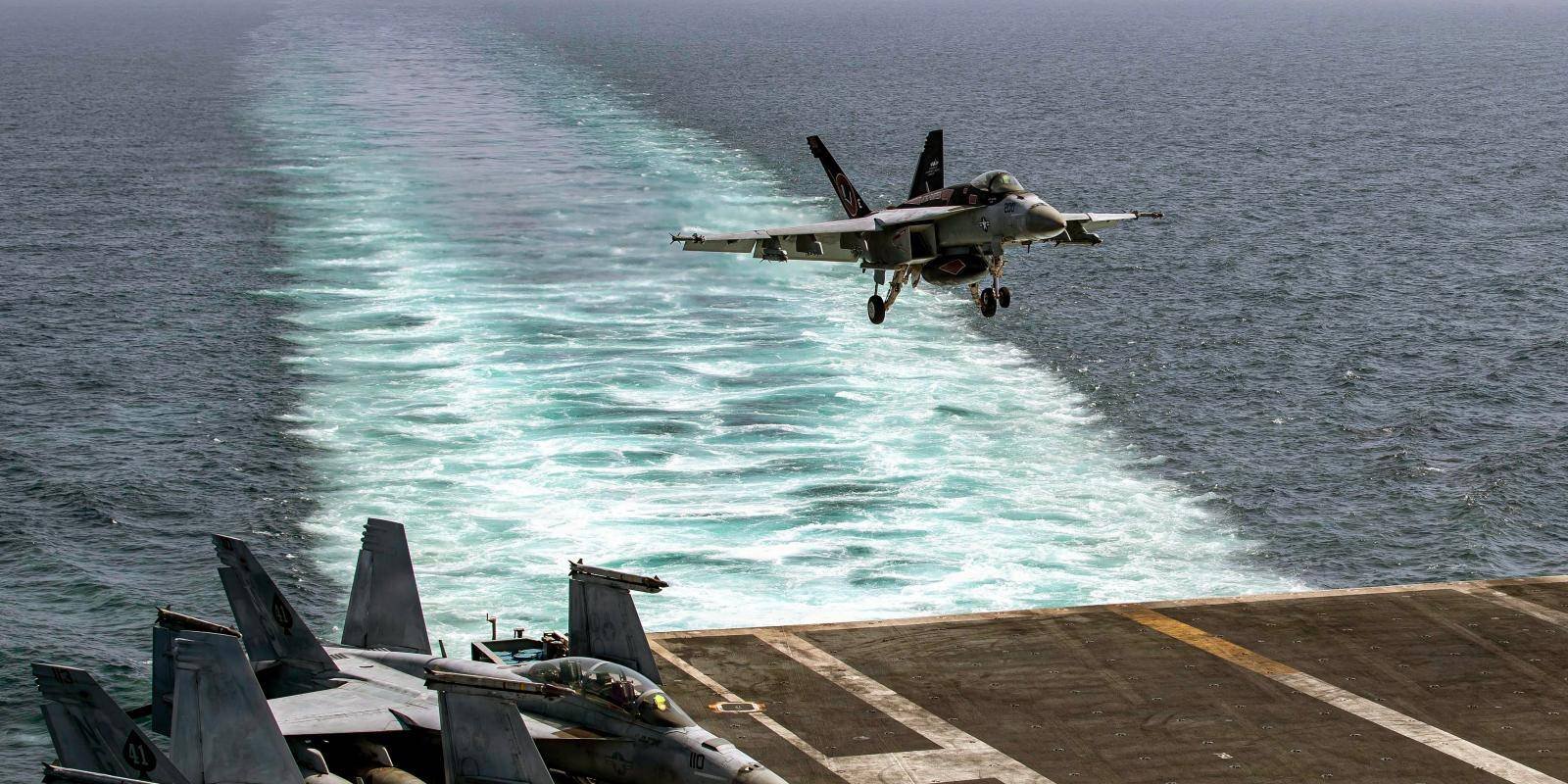
President Donald Trump is employing a strategy of shock and awe. He wants a quick and decisive outcome, and he has deployed a massive amount of firepower to the region for that objective.
He wants to keep the military confrontation with Iran geographically limited, minimizing repercussions for regional stability and the international economy. He wants Iran to concede on its nuclear and conventional capacities, and even topple its regime, before it mounts an effective resistance, retaliates and kills Americans.
He has pursued these goals by applying a tremendous amount of military pressure on the regime, attacking a range of military and security targets across the country – for now, exclusively from the air – and decapitating much of its leadership structure. In short, Trump is on the offensive.
Iran’s response
Iran, on the other hand, is on the defensive. It is doing, quite rationally, the exact opposite of everything Trump is trying to do. As always, it is playing the long game.
Given the overwhelming military superiority of the US, Iran knows that it cannot ensure regime survival – its top priority – by engaging in a shooting war. There is no way it can inflict enough military damage on the US to make Trump stop. Iran’s capabilities are far weaker, and its resources limited compared to its American and Israeli adversaries.
Instead, Iran’s strategy is to exact a high enough political price on Trump to compel him to discontinue military operations. So, the core element of Iran’s response is political and psychological in nature, not military. Its ultimate weapon is its much greater tolerance for casualties. This is where it holds a clear, and possibly the only, advantage over the US.
Tehran wants to extend and expand this conflict because it knows that Trump may not have the patience for a long conflict. Nor does the president’s domestic constituency, which opposes open-ended American interventions abroad – Trump has campaigned promising to be the ‘peace president’.
Democrats are gearing up for a fight with the president in Congress. The longer the war lasts and the more American soldiers are killed (four so far with five seriously wounded), the more effective they will be.
Iran is trying to regionalize and possibly even internationalize the conflict by dragging other countries, most notably the wealthy Gulf Arab states, into it.
The regime is operating from the principle that if it goes down, it will bring down others with it. It is messaging to Washington and the world that attempts to kill it will lead to chaos and serious economic pain.
It’s no accident that after it was hit by the US and Israel, Iran immediately struck oil fields, airports, and civilian buildings across the Arabian Peninsula. It’s hoping that this will rattle the international energy markets and compel the fragile Gulf Arabs states to push Trump to stop shooting. Their livelihoods and very political stability are at stake.
Iran also has struck various areas in Israel and instructed Hezbollah to open a military front from southern Lebanon.
In addition, the Houthis have threatened to resume strikes against Israel and in the Red Sea. Pro-Iran Iraqi militias have vowed to get involved, too. The activation of Iran’s regional network serves its strategy.
To stoke greater international fears, Iran also might close or disrupt commercial ship traffic near the Strait of Hormuz, one of the world’s most vital maritime chokepoints. According to reports, traffic has already slowed considerably due to regional uncertainty caused by the war.
Limitations on strategy
Both Iran and Trump’s strategies have important limitations. On the American side, air power alone is unlikely to bring down the Iranian regime. Boots on the ground are needed to accomplish that mission. Trump’s plan of helping the Iranian people rise up again and topple the theocracy sounds more like hope than a real strategy. There are no signs, yet, of any effective domestic opposition, or of defections from the regime.
On the Iranian side, attacking the Gulf Arab states could backfire. Those countries could reverse their policy of refusing the US permission to strike Iran using weapons based on their soil. They could even join the fight alongside the US. Beijing also won’t be enthusiastic about Iran closing the Strait of Hormuz. The Chinese import much of their oil from the Middle East.
NATO allies are staying on the sidelines for now, but a serious degradation of the global security environment might push some, including the British and the French, into action. (France and the UK have military bases in the Gulf).
Limited resources will challenge both Trump and Iran considerably. Of course, the US and its regional partners have more than Iran, but the latter is using cheaper missiles and drones which the US military is spending millions of dollars to intercept.
If the war drags on, the US inventory of interceptor missiles in the region could run out (it has to defend its partners, too), and Trump will be forced to bring in more from other theatres including the Indo-Pacific – a move the Pentagon will resist.
Iran also knows that it doesn’t have to fire in great numbers to meet its political ends. It just has to attack with its allied militias in various areas across the region to create havoc and undermine its enemies. Tempo, dispersion and to some extent lethality are more important than volume in this war.
This is only the beginning of what is likely to be a drawn-out conflict. There are countless other factors including luck that could influence its trajectory. For the time being, both sides are committed to their respective strategies. Like most other wars, this is a contest of will more than anything else.