
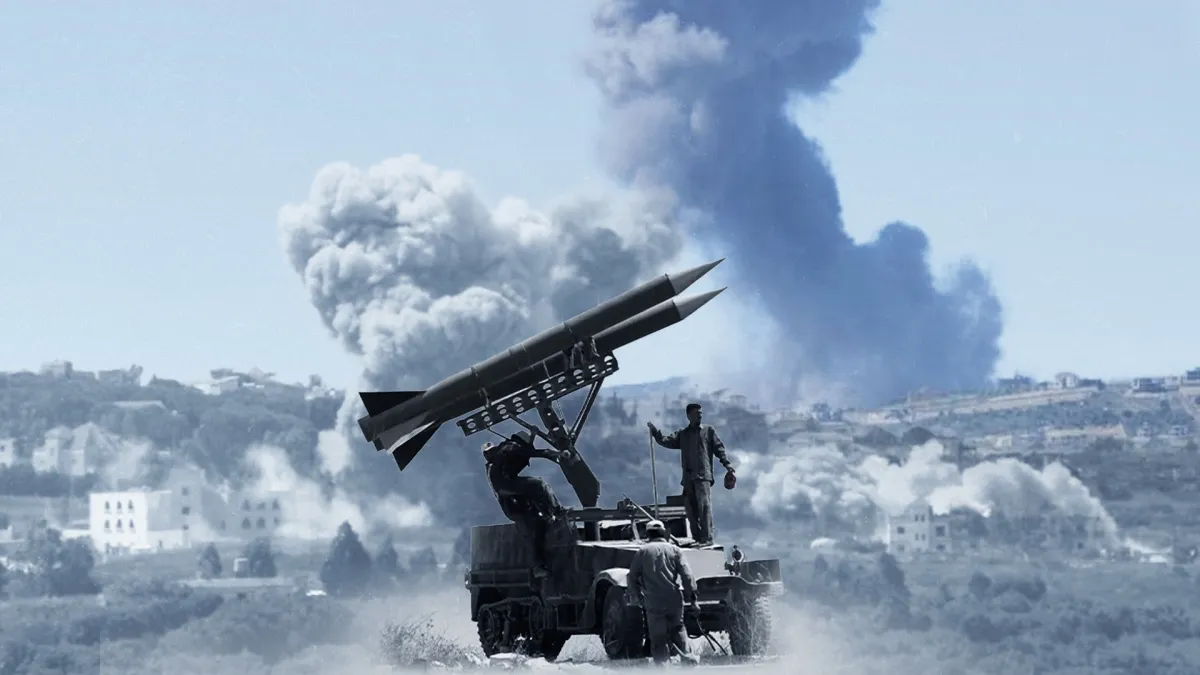
As of the time of writing this report on Wednesday morning, the Israeli army has attacked more than 250 targets in Lebanon, including over 100 targets in the past 24 hours, according to Israeli military sources who spoke to Alhurra.
The strikes targeted Hezbollah commanders and members of the Radwan Force, as well as rocket launch platforms, command centers, and weapons depots, as part of an ongoing military campaign aimed at reducing the group’s capabilities along Israel’s northern border.
Israeli military assessments indicate that Hezbollah’s elite force, known as the “Radwan Unit,” which had been considered the spearhead of any potential scenario involving an incursion into the Galilee or cross-border operations, has suffered successive blows that have significantly reduced its manpower. According to the same sources, the number of fighters in this unit is now estimated at fewer than 200, after losing a large portion of its structure over the past months.
The sources explained that the remaining Radwan fighters are now distributed between Beirut and areas along the Syrian–Lebanese border, while their presence in southern Lebanon has declined due to Israeli military pressure.
Meanwhile, the Israeli army has begun reinforcing its military presence in towns in southern Lebanon, with the 91st and 146th divisions moving into new positions in the area.
The sources said this step does not constitute a large-scale ground maneuver, but rather a defensive measure aimed at establishing an additional layer of protection, while designating a combat zone in which any armed individual entering the area is considered a legitimate target for attack.
These developments come within the context of a broader confrontation that places Iran at the center of Israel’s military effort. Military sources say Israel’s primary focus remains on the Iranian front, where significant achievements have recently been recorded, according to their description. Since Hezbollah’s long-term strategic plan relies heavily on Iranian support, any weakening of the regime in Tehran would directly affect the group’s military and economic capabilities.
When Operation “Roar of the Lion” began, Israeli assessments initially suggested that Hezbollah would join the fighting. According to the military sources, the organization found itself facing a strategic dilemma over how to respond. However, the assassination of Iran’s Supreme Leader, Ali Khamenei, marked a turning point that pushed the group, according to these assessments, to become involved in the confrontation.
Later, the strikes expanded to include weapons depots in various areas of Lebanon, particularly in the south, alongside operations that led to the evacuation of dozens of border villages.
According to the sources, these evacuations have created growing popular pressure on Hezbollah inside Lebanon, as large areas have effectively become near-empty zones due to the fighting.
However, pressure on the group is not limited to the military dimension. An Israeli source told Alhurra’s correspondent that Hezbollah’s financial structure has also suffered significant blows in recent weeks, following strikes against more than ten financial institutions linked to the organization. The source said that last month was the first time Hezbollah was unable to pay salaries to its members, although the beginning of the current month had been expected to see an additional round of salary payments.
This financial strain is also linked to a decline in Iranian support. Estimates indicate that since the previous ceasefire in Lebanon, more than one billion dollars had been transferred to Hezbollah, most of which was used to pay salaries, while only a limited portion was allocated to rebuilding damaged civilian areas.
At the heart of this financial system stands the Al-Qard Al-Hassan Association, which Hezbollah has for years presented as a social institution providing financial services to Lebanese citizens. However, Israeli data suggest that the association has effectively become a central financial pillar for the organization, enabling Hezbollah to create economic dependency among residents and channel funds toward purchasing weapons and paying its fighters.
The association relies on financial reserves derived from operational profits, donations, and independent funding sources, and it also provides Hezbollah with loans or credit lines during times of financial hardship, using depositors’ funds.
Al-Qard Al-Hassan has been under U.S. sanctions since 2007 because of its role in financing Hezbollah. During the most recent war, Israeli strikes targeted several of the association’s branches that were storing the organization’s cash reserves, as the group operates largely outside both the global and Lebanese banking systems and relies heavily on cash liquidity.
Israeli security assessments indicate that Hezbollah will require billions of dollars in the coming years to rebuild its military capabilities and reconstruct damaged areas. However, the funding pipeline itself has become more complicated, particularly with the halt of traditional money-transfer channels through Syria following the fall of Bashar al-Assad’s regime.
Between mounting financial pressure and continued military strikes, Israeli military sources believe that Hezbollah is entering a sensitive phase that could affect its ability to rebuild its strength in the coming period.