
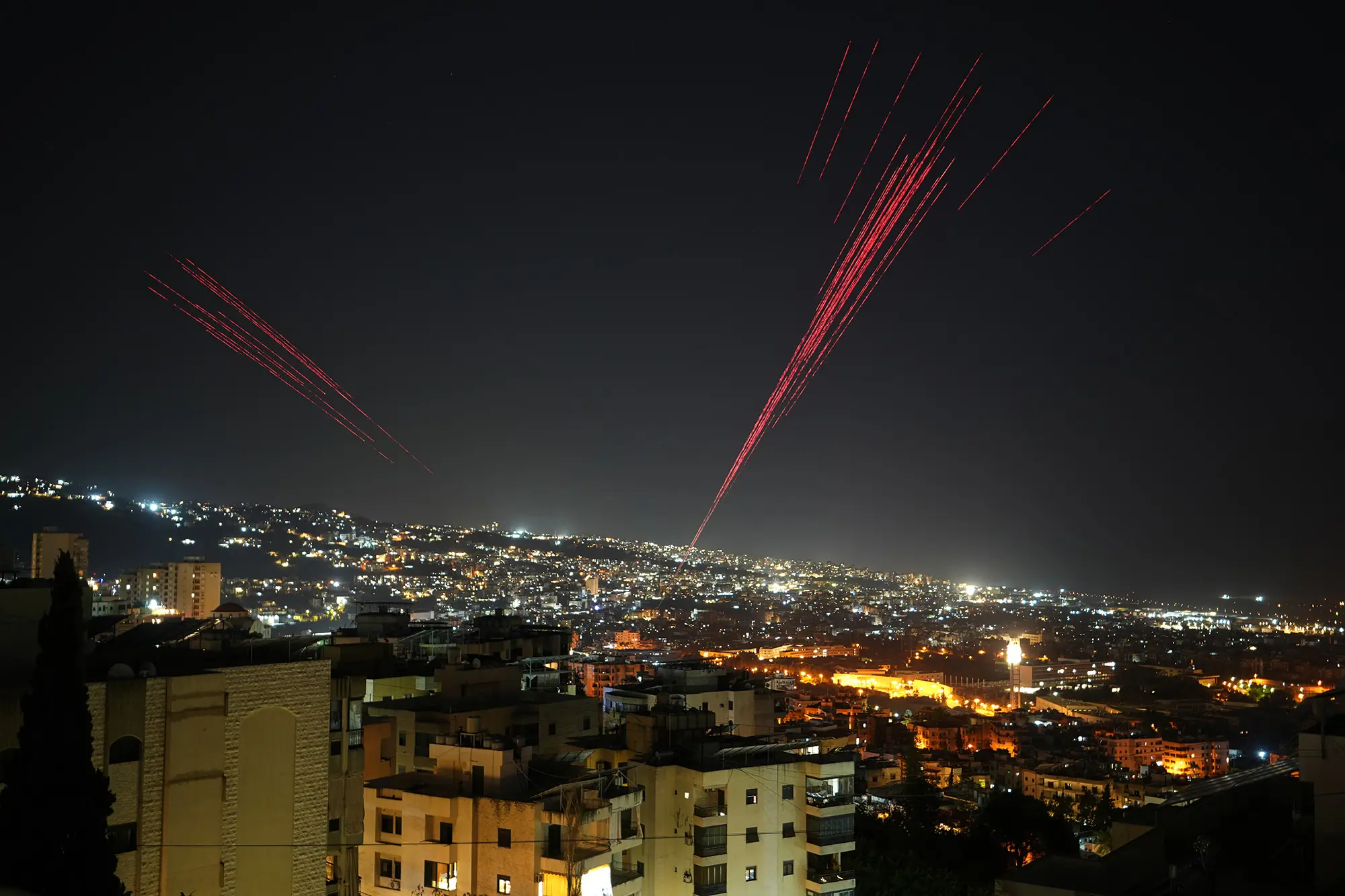
Iran’s weakened capacity to fund Hezbollah, combined with IDF strikes that killed 250 Hezbollah fighters, has forced Beirut to engage Israel directly. The US is leveraging this moment to pursue a peace agreement that would disarm Hezbollah and establish Lebanese military sovereignty, though the LAF cannot act by force alone.
One of the paradoxes of war is that it can jolt peacemakers into action when conventional diplomacy fails.
That’s what appears to be underway right now between Israel and Lebanon.
As a direct result of the success of the combined US-Israeli operations against the regime in Tehran, President Donald Trump has launched an unprecedented effort to forge a lasting peace between these two neighbors.
And a 10-day cease-fire, announced Thursday, could be the first step on that road.
At the heart of the challenge lies the Hezbollah terrorist organization.
Of all of Iran’s terrorist proxies in the Middle East, Hezbollah has posed the gravest danger to Israel and the West more broadly.
Since its 1983 suicide bombing that slaughtered 241 US servicemembers and 58 French paratroopers in Beirut, Hezbollah has killed, kidnapped and tortured Americans.
It’s fired thousands of missiles and drones against Israeli civilians — weapons it shouldn’t possess in the first place.
Hezbollah was meant to disarm in 2006 under UN Security Council Resolution 1701, which left the Lebanese army as the only legitimate military force in the country.
Yet 20 years later, despite being severely degraded by the Israel Defense Forces, Hezbollah still retains its weapons.
With up to 50,000 fighters in its ranks and tens of thousands of missiles still in its arsenal, no one should be under the illusion that disarming Hezbollah will be easy.
Widespread skepticism that such an outcome can be achieved through diplomacy prevails in both Israel and Lebanon.
Even so, the United States has rightly grabbed the current opportunity to overcome the dynamic of repeated wars while understanding that it is only Israeli military success that has made this moment possible.
Led by Secretary of State Marco Rubio, the effort aims to secure an enduring peace agreement between two small neighbors — with a combined territory about the size of Maryland.
Rubio conducted preliminary talks on Tuesday with the Lebanese and Israeli ambassadors in Washington.
On Thursday, Trump announced that Israel had agreed to a 10-day cease-fire, creating the space for substantive negotiations between Jerusalem and Beirut.
Peace between the two countries would give Israel the secure northern border it has lacked for decades.
Lebanon would benefit by finally becoming a fully independent country — freed from Hezbollah threats of a renewed civil war, and no longer cowed by powerful neighbors like Syria and Iran that have historically bullied, marginalized, threatened and killed Lebanese political leaders.
Given the domestic power that Hezbollah wields, it’s not surprising that Lebanese leaders have feared even speaking to their Israeli counterparts, let alone drawing up agreements with them.
That they’re doing so now underscores the damage that the Israeli military has done to Hezbollah in recent weeks.
It’s now abundantly clear that both the Lebanese government and Israel understand they have a mutual interest in dismantling Hezbollah.
A major psychological threshold has been crossed as a result.
When the United States helped broker a maritime agreement between the two in 2022, Lebanese delegates at the signing ceremony were careful to avoid even eye contact with the Israelis.
This week’s open, direct contacts and public discussions of peace suggest that the prospect of Lebanon confronting Hezbollah internally is no longer a distant dream.
Through a careful combination of diplomacy and force when necessary, it’s now an attainable goal.
Practically speaking, the Lebanese Armed Forces aren’t capable of disarming Hezbollah by force.
But whether Beirut admits it publicly or not, IDF successes on the battlefield — including the recent one-day elimination of 250 Hezbollah commanders and fighters — can only accelerate the Lebanese government’s goal of becoming the country’s sole sovereign authority.
After all, Israel has no interest in controlling Lebanese territory: Its forces only remain in southern Lebanon to counter Hezbollah’s continued attacks on northern Israeli communities.
The momentum is on Israel’s side.
With Tehran’s economy tanking, the Iranian regime is increasingly unable to bail out its Hezbollah proxy.
Now Trump should prevail on Lebanese President Joseph Aoun to follow through on his pledge to make his government “the sole authority responsible” for national security.
That means standing up to Hezbollah by openly engaging with Israel.
Negotiations rarely proceed smoothly, so it’s unrealistic to imagine a linear process from ceasefire to negotiations to a peace agreement.
Hezbollah is determined to sabotage every step along the way.
But Israeli strikes on the terrorists’ bases, operatives and missile silos are a necessary condition for meaningful talks.
Every blow against Hezbollah strengthens the Lebanese government’s position.
Under any final agreement, Hezbollah’s entire arsenal would need to be confiscated or ideally destroyed outright.
That may be months if not years on the horizon.
But the newfound willingness of Lebanon’s government to act independently of Hezbollah — and the growing impatience among ordinary Lebanese citizens at Hezbollah’s exploitation of their country as a forward base for Iran — means there’s no time like the present.