
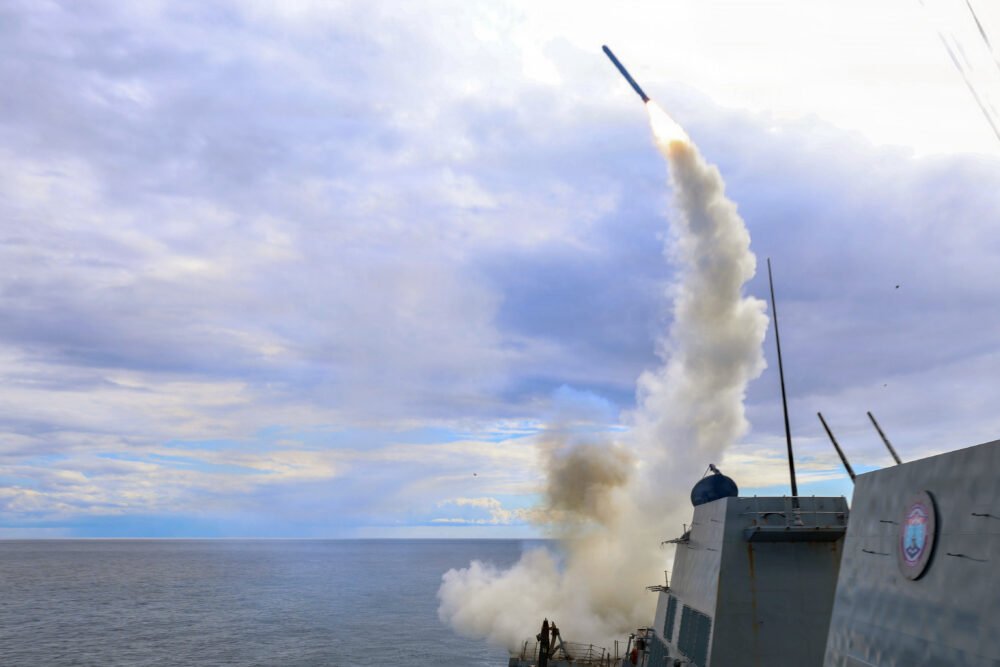
The United States and Israel launched strikes against Iran on February 28, decapitating the Islamic Republic’s leadership — but this did not eliminate a government that has terrorized its own people and the region for decades. The Iranian regime’s brutality and capacity to regenerate its own power structures — along with its ballistic missiles, drones, and network of terrorist partners — could easily cause this war to metastasize and spread.
In less than a week, the spillover from the initial attack has directly impacted at least 15 countries, with the economic and geopolitical ripples already affecting much of the world.
By attacking Iran without clear objectives or an exit strategy, the US and Israel turned what was the greatest strategic and chronic threat to regional security into an unpredictable set of imminent dangers generated by a regime increasingly in collapse. A fundamental task for US national security is to prevent this conflict from becoming a vortex that increasingly pulls in other powers, in the same way that the Syrian civil war did in the 2010s. This is one potential consequence of the Iranian regime’s counterstrikes in multiple directions.
The conflict threatens to spread
In less than a week, the remnants of the Iranian regime have focused on spreading the costs and risks of the conflict as they continue to absorb losses from ongoing US and Israeli strikes. Some notable actions and reactions include:
Iran fired off multiple waves of drones and ballistic missiles against Arab Gulf countries and Israel, with the United Arab Emirates receiving the heavy brunt of these strikes;
The United States sunk an Iranian warship in international waters, off the shores of Sri Lanka — the first time this happened since World War II;
North Atlantic Treaty Organization (NATO) forces shot down a ballistic missile targeting Turkey; and
At least four Iranian drones crossed into Azerbaijan, with one striking a regional airport and another falling near a school.
Reports that the United States and Israel may be arming and encouraging Kurds in Iraq and Iran to rise up against what remains of the Iranian regime could cause the vortex to swirl faster, with unpredictable and unintended consequences.
In the bigger picture, other global powers like China, India, and Russia appear to be staying mostly on the sidelines for now. China announced plans to send a mediator to the region, but it is unclear how much sway and leverage it would have to reduce tensions, particularly since the current dynamic is driven by Israel and the United States. But as the energy and economic costs of this conflict increase, their wait-and-see passivity may not hold.
How to contain the effects of the war
The central factor to watch right now is the race between how quickly America and its regional partners deplete their munitions versus how quickly the remnants of the Iranian regime draw down their arsenals capable of hitting out across the region. On balance, Iran remains much weaker in conventional military terms but possesses dangerous asymmetric capabilities.
Three strategic measures the United States should consider in the coming weeks:
Expand the defensive coalition to contain and thwart the effects of Iran’s counterattacks. This is already occurring to some extent, but the effort needs to go beyond ad hoc, reactive measures. At a Pentagon press briefing on Monday, US Secretary of Defense Pete Hegseth and the chairman of the Joint Chiefs of Staff, General Dan Caine, identified a core military goal: “to prevent Iran from the ability to project power outside of its borders.” This will require not only continued coordinated security measures but also diplomacy.
Negotiate an off-ramp with diplomacy backed by force. A regional coalition could help coordinate the inclusive diplomatic approach necessary to produce an off-ramp with what remains of the Iranian regime or what comes after it. One critical obstacle in the current moment is that any efforts to create a back channel to negotiate a cease-fire are complicated by the fact that the United States and Israel are actively targeting and seeking to kill those Iranian regime leaders who may want to see an end to hostilities.
Set a framework for the Iranian people to plan for the future. This is the most complicated, long-term step. It means thinking ahead to what sort of regional and international support frameworks might be available to stop Iran from imploding completely under the weight of the current war. One major hurdle: The Trump administration has rejected taking on any responsibility for a state-building project.
Less than a week into the fight, the ultimate trajectory of the operation remains unclear; but by most indicators, the main combatants are already siding down a slippery slope to a prolonged conflict. The main effect has been to divert US policy attention away from earlier areas of focus, such as the major, still not fully settled issue of the devastated Gaza Strip. The ongoing Iran war and its spillover will, almost by necessity, push Washington away from earlier tenuous attempts to proactively promote progress in Gaza (such as with last month’s Board of Peace meeting) back to the reactive, crisis-management mode that prevailed during the second half of the Biden administration after the Hamas attack against Israel on October 7, 2023.
Nearly 50 years ago, momentous events in Iran upended and irreparably damaged the presidency of Jimmy Carter. In launching the war against Iran this past weekend, Donald Trump risks a similar fate.