
Failed Islamabad talks leave the region on a knife’s edge. Scenarios range from targeted strikes and proxy warfare to catastrophic regional confrontation. Return to negotiations remains possible but requires mutual concessions before the two-week ceasefire deadline.
While logic dictates that no party has an interest in a full-scale war, a miscalculation could lead to one, especially since President Trump has threatened to resume strikes if the naval blockade does not change Iran’s behaviour.
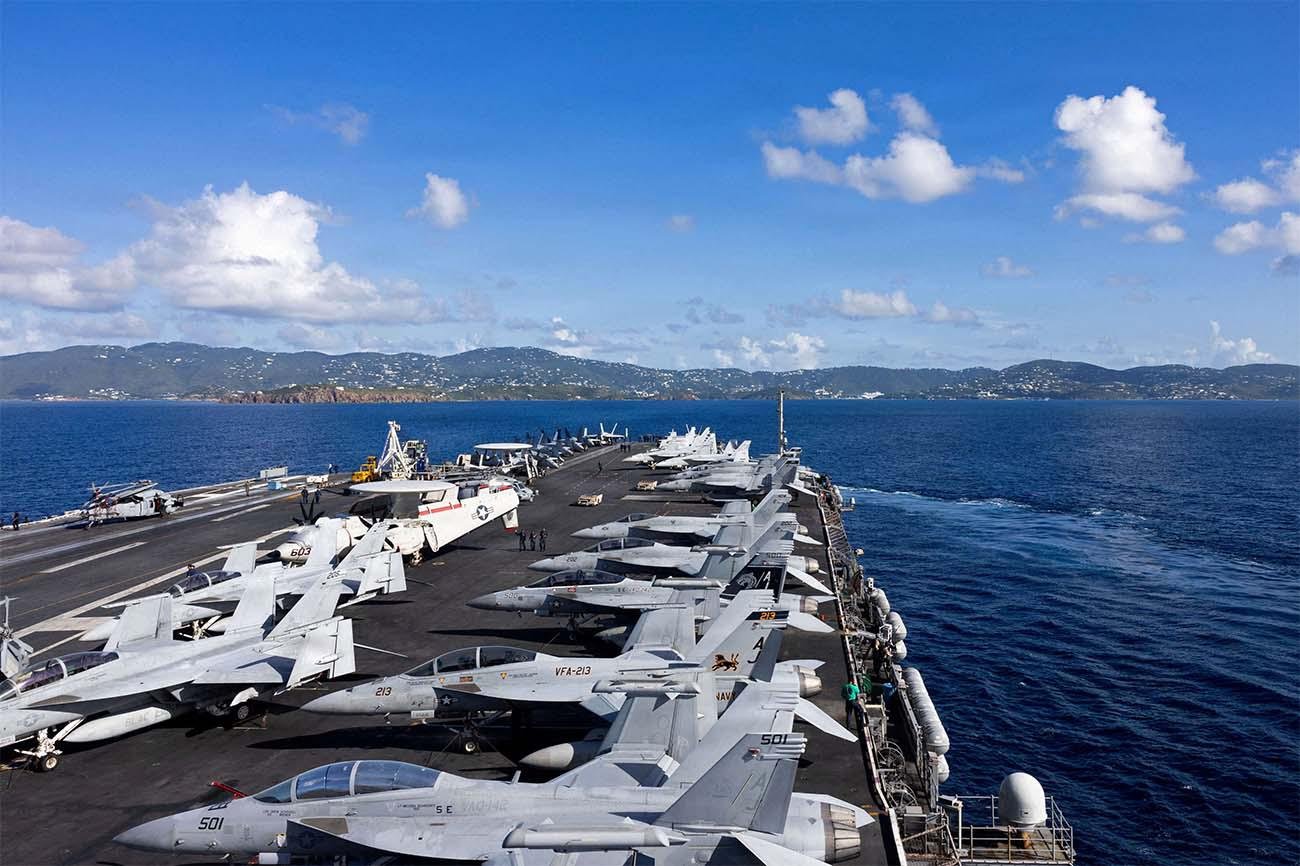
While the 21-hour negotiations held last weekend between the United States and Iran in Islamabad did not achieve a diplomatic breakthrough to end the state of uncertainty prevailing in the Gulf region, nor lead to a final cessation of the American-Israeli war against Tehran, they did push US President Donald Trump to threaten a naval blockade on Iranian ports to prevent oil exports. Meanwhile, Iran threatened to adopt a scorched-earth policy by targeting all Gulf ports.
Faced with these developments, which have placed the region between the jaws of American economic pressure and the Iranian threat linked to the security of the Gulf Arab states, many scenarios remain possible, ranging from sharp escalation to phased containment.
The first scenario involves a limited escalation through the targeting of oil tankers or a partial disruption of navigation in the Strait of Hormuz, alongside a potentially long-term proxy war waged through Iran’s allies in the region (the Houthis in Yemen, Hezbollah in Lebanon, and factions of the Popular Mobilization Forces in Iraq). In response, Washington might launch targeted strikes against Iranian sites, allowing both sides to send strong messages without sliding into an all-out war.
The second scenario is a strangling economic war on Iran, aimed primarily at crippling its exports and imports, while pressuring importing countries like China and India. This would likely push Tehran to take indirect retaliatory actions, such as smuggling and indirect escalation.
The third and most dangerous scenario is the outbreak of a wide-scale regional military confrontation, especially if Gulf ports and the Sea of Oman are targeted by Iran, or if it strikes oil facilities in the region. This could lead to direct intervention by Washington to protect its allies, with the potential for other parties to enter the conflict. The result would be a sharp rise in global oil prices and a significant disruption to international trade.
The most optimistic scenario remains a return to negotiations under pressure, leading to a phased agreement that eases sanctions on Iran in exchange for restrictions on its nuclear program.
While logic dictates that no party has an interest in a full-scale war, a miscalculation could lead to one, especially since President Trump has threatened to resume strikes if the naval blockade does not change Iran’s behaviour.
As Tehran uses energy and navigation security as a deterrent and Washington relies on sanctions and naval dominance to apply pressure, the region remains on a knife’s edge. There is a glimmer of hope that the resumption of direct negotiations between Washington and Tehran, scheduled for this Thursday—barring any new developments—could end the war between them before a two-week ceasefire deadline expires.
In the meantime, the Gulf region stands at a crossroads where geopolitical calculations intersect with the stakes of energy and international security.
Although the window for a diplomatic solution has narrowed, it has not yet closed. Past experiences confirm that back channels and quiet mediations can open unexpected paths toward de-escalation, especially when all parties become convinced that the cost of confrontation outweighs its gains. However, the success of this path depends on the willingness of all sides to make mutual concessions and move from a logic of arm-wrestling to one of interest management.
Under these circumstances, the stability of the Gulf is not just a regional choice but an urgent international necessity. Any slide into chaos would have repercussions far beyond the region’s borders, primarily affecting the global economy and energy security in a world that can no longer bear new open-ended crises. It’s a world where potential scenarios are many, but decisive solutions are few.