
Balochistan insurgency exposes Pakistan’s military vulnerability through vast terrain, porous borders, and local hostility. Cross-border links between Baloch armed groups now threaten Iran’s Sistan and Balochistan province with intensified separatist violence.
Balochistan insurgency has entered a new phase of operational intensity, exposing the structural weakness of Pakistan’s military presence in the province and drawing Iran deeper into a shared security crisis. The recent coordinated assaults on Pakistani security forces reveal a rebel movement that has refined its tactics, expanded its reach, and learned to exploit the porous borders with both Iran and Afghanistan. Pakistani forces in Balochistan, despite their extensive deployment, remain unable to secure territory or gather reliable intelligence from a population that views Islamabad as an occupying power.
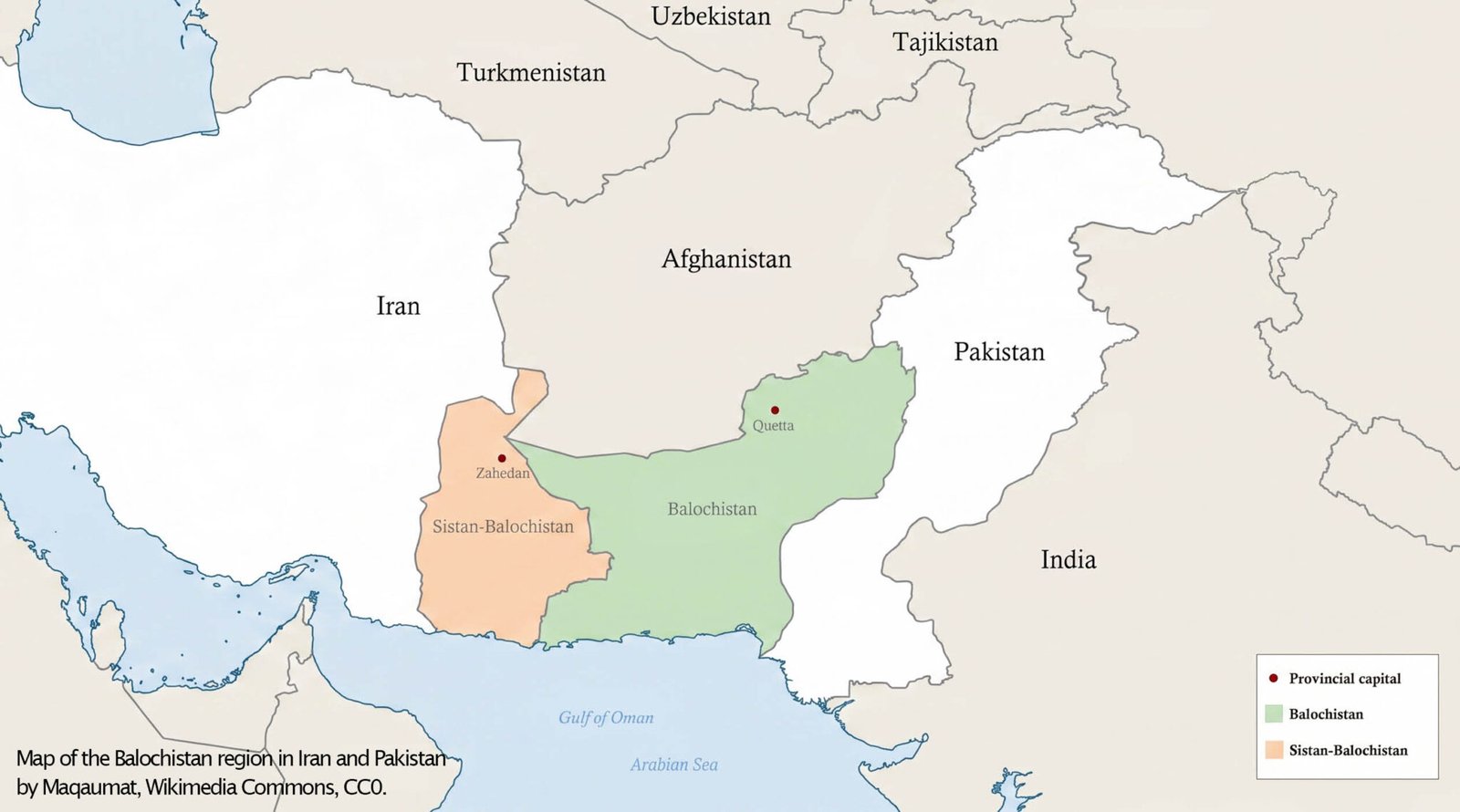
The army’s XII Corps, multiple air bases, naval installations, and a dense intelligence apparatus have not prevented heavy casualties or restored state control. The Balochistan insurgency now spills across the Goldsmith Line into Iran’s Sistan and Balochistan province, where groups like Jaish al-Adl operate on both sides of the border. The emergence of a cross-border nexus between Baloch armed groups threatens to transform a long-running separatist conflict into a transnational security crisis that neither Islamabad nor Tehran can manage independently. The insurgency’s growth stems from deep-rooted economic marginalization, forced resource extraction, and the absence of political representation—conditions that military operations alone cannot resolve.
Why Pakistani Forces Cannot Win
Increasingly well-coordinated and deadly rebel assaults on Pakistani security forces in Balochistan have revealed the extreme vulnerability of the Pakistani military in the province. The enormity of the territory, lack of local support, inability to commit sufficient forces, and porous borders with Iran and Afghanistan render the Baloch challenge to the Pakistani army nearly impossible to counter. The violence is spilling into the Sistan and Balochistan province of Iran, which is experiencing its own Baloch insurgency.
Operation Shaban Meets Rebel Resistance
Balochistan is currently experiencing one of the most severe outbreaks of violence it has endured all year. In the past few months, Pakistani security forces have suffered heavy casualties due to coordinated rebel attacks, and the Pakistani army’s General Headquarters (GHQ) has found itself compelled to initiate large-scale operations. The security forces and law enforcement agencies of Pakistan jointly proclaimed the commencement of Operation Shaban as a response to a fatal Baloch rebel attack on a police post at the Mangi Dam pumping station in Ziarat on July 6. Simultaneously, the Pakistani Army initiated Operation Al-Azm in Balochistan.
A Military Machine Without Control
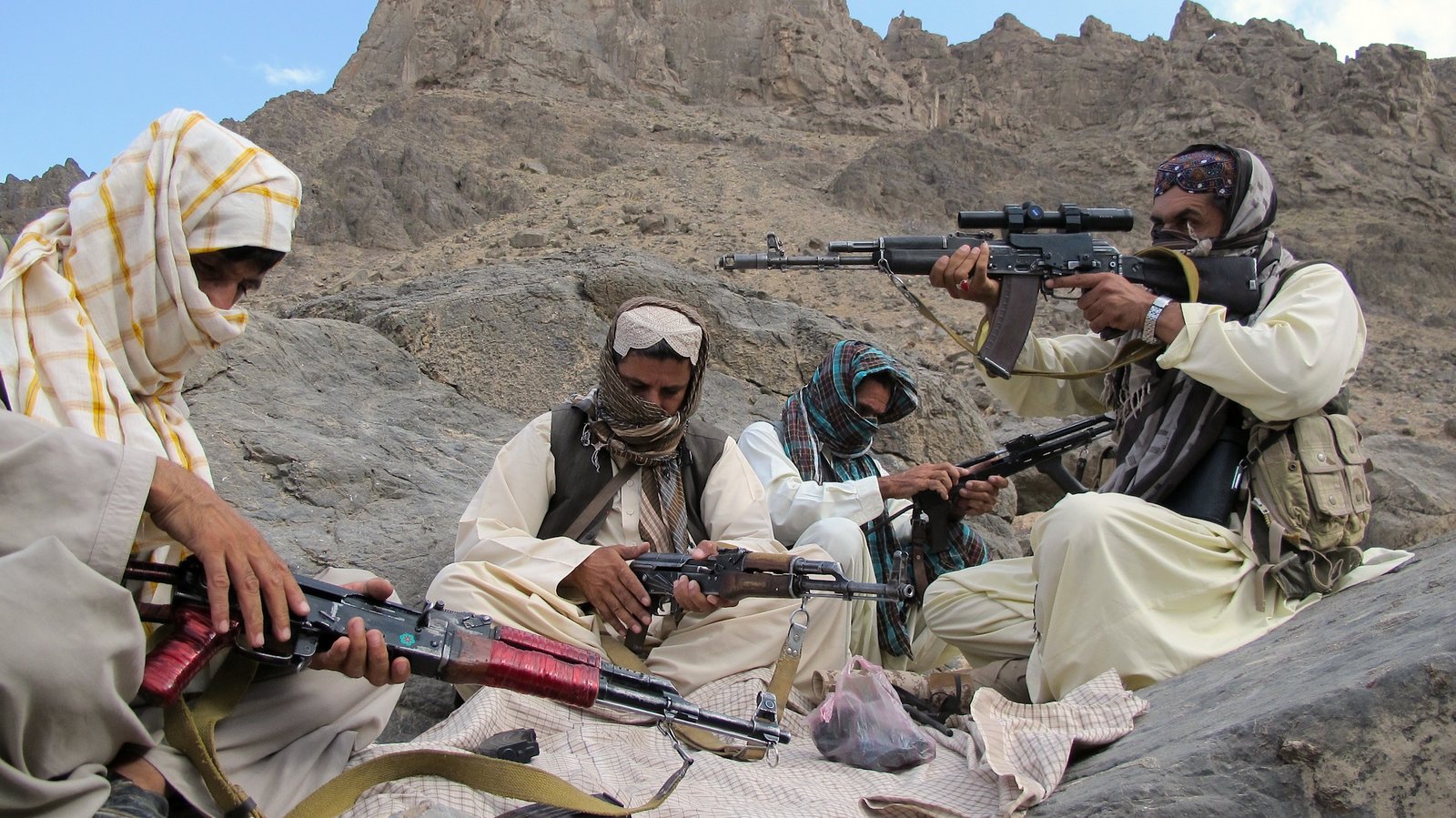
The well-coordinated attacks by Baloch rebels have exposed the extreme vulnerability of the province’s Pakistani Army units, which have shown themselves to be largely at the rebels’ mercy. The Baloch fighters are again demonstrating their capacity to coordinate intricate, large-scale, costly attacks with extensive reach. This is true despite the fact that nearly all the federal and state security and intelligence agencies of Pakistan have a substantial presence in Balochistan.
All branches of the Pakistan military, including the Army, Air Force, Navy, and Coast Guard, have a presence in Balochistan, with the Army the most significant. The Pakistan Army XII Corps, based in Quetta, is accountable for the province. It is led by a three-star general who concurrently serves as commander of the Southern Command. Four facilities in Pakistan-occupied Balochistan (POB) are run by the Pakistan Air Force (PAF). The primary base, Samungli, is in Quetta and is home to the 31st Fighter Wing.
The Pakistan Navy also operates four naval bases in POB. The deep-water port of Gwadar, located in western Balochistan, serves as the primary base and is the second-largest port in Pakistan after Karachi. The port also hosts the Pakistan Coast Guard’s 3rd Battalion. The three lesser naval bases are situated in Pasni, Ormara, and Jiwani.
Furthermore, the Pakistani intelligence apparatus maintains an extensive deployment in Balochistan. The Inter-Service Intelligence Directorate (ISI) has a substantial presence in Quetta and is accountable for strategic intelligence as well as undertaking operations. To monitor the western frontier and the shipping lanes of the Gulf of Oman, the Joint Signals Intelligence Bureau (JISB) of the ISI maintains stations in Saindak and Gwadar for signal intelligence collection. Every service possesses military intelligence assets, collectively referred to as MI, in addition to the ISI, which are used to fulfill tactical requirements.
Why Every Operation Fails
The Pakistani military establishment, despite its deployment of so many forces in Balochistan, has always struggled to maintain any sort of control over major parts of the restive province. As it makes all significant policy decisions for the country, the military establishment is deeply embarrassed by the recent attacks. It responds to assaults in Balochistan by announcing military operations to preserve its reputation, but those operations inevitably fail.
Vast Geography and Porous Borders
There are several reasons why the Pakistani Army always experiences disaster when attempting to conduct an operation in Balochistan.
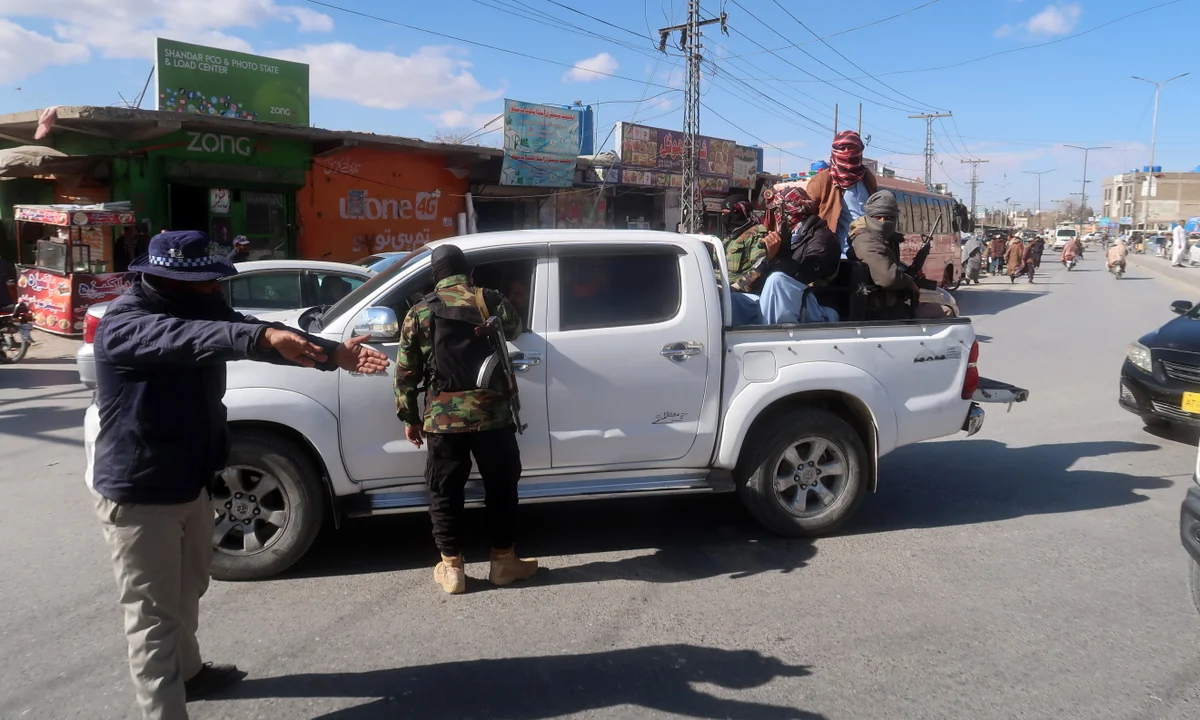
Vast geography: Balochistan is almost half the size of Pakistan, and its population is scattered. This presents a major challenge to the Pakistani government, as it cannot provide foolproof security against nationalist armed groups that can easily launch guerrilla attacks and then hide within the province’s vast geography. Tracking down a band of guerrilla fighters in Balochistan is next to impossible.
Porous border: Balochistan’s borders with Iran and Afghanistan are porous and poorly guarded. It is quite easy for Baloch rebels to move both men and materials across these borders. In addition, Pakistani authorities are unable to establish a collaborative strategy with their neighbors to impede the movement of Baloch fighters across the frontier due to their strained relationships.
Large force commitment: A mobilization of large numbers of forces is necessary to effectively monitor and dominate Balochistan. Pakistan is unable at present to allocate that level of force, as the army is bogged down on numerous fronts. Pakistan cannot relocate its forces from the Line of Control (LOC) and the International Border with India, and escalating tensions with the Afghan Taliban render it impossible to redirect forces away from the Durand Line. Additionally, in the Khyber-Pakhtunkhwa (KPK) province, the Pakistani Taliban (TTP) has heavily engaged Pakistani security forces. For these reasons, the Pakistani Army’s high command is having difficulty bolstering its troop strength in Balochistan.
Balochistan Insurgency Gains Local Support
Rebels’ growing capabilities: Baloch armed groups have significantly enhanced their capabilities in all respects. Over the years, Baloch combatants have made substantial improvements to their communication capabilities and armaments. The rebels’ resilience and longevity are unquestionable assets, as they have acquired the ability to adjust and respond to the diverse counterinsurgency strategies employed by the Pakistani government. The Baloch armed groups are capable of delivering a devastating blow to the Pakistani army on the ground by employing guerrilla tactics such as ambushes, IED blasts, sniper fire, and suicide attacks.
No local support: Despite Balochistan’s vast natural wealth, much of its population lives below the poverty line, a state of affairs that has created a deep sense of resentment among the locals towards the Pakistani state. A major proportion of Baloch society considers the Pakistani “deep state” to be looters who exploit their land and use it as a colony. With such strong anti-Pakistan sentiment prevalent in Baloch society, it is next to impossible for the Army to gather credible intelligence about the Baloch Sarmachars from the locals. Any military operation is destined to fail without accurate ground information.
At the core of the ethno-nationalist armed resistance is a deep-rooted sense of oppression among the Baloch people. The Pakistani state has always labelled this resistance the handiwork of foreign intelligence agencies, but the truth is that the forceful occupation and looting of the province’s vast natural resources have fueled the call of Baloch nationalism. The common Baloch has limited to no access to education, jobs, electricity, roads, or even clean water, and he fails to understand why he is forced to live in such abject poverty while Islamabad benefits from the natural resources of his homeland.
The Baloch national movement seems to have spread deeper into Baloch society. Anti-state sentiments now grip the entire province. It is a hard truth that Balochistan has slipped from Pakistan’s hands, and it is only a matter of time before Islamabad witnesses a second division of the so-called country.
Iran Faces a Domino Effect
Iran is experiencing a domino effect resulting from the deterioration of the situation in Pakistan-occupied Balochistan. The Sistan and Balochistan province in the southeastern region of Iran is home to its own Baloch insurgency. This province of Iran is the most impoverished and underdeveloped region in the nation, with the highest unemployment rate. The Baloch people, a Sunni ethno-religious minority, are disproportionately subjected to state atrocities and are excluded from Iran’s administrative structures.
Two long and porous borders, one with Afghanistan and the other with Pakistan-occupied Balochistan, are shared by Iran’s Sistan and Balochistan province. These borders are critical thoroughfares for the illicit trade of consumer commodities, drug trafficking, and human smuggling. The emboldened insurgency in POB and the exploitation of the Iranian armed forces’ vulnerability in Balochistan-Sistan by insurgents as a result of the ongoing conflict with the United States have resulted in an intense Baloch separatist movement in Iran.

A Cross-Border Insurgent Nexus Emerges
Sunni Baloch armed groups like Jaish al-Adl, the foremost such group in Iranian Balochistan, are active on both sides of the Goldsmith Line (the Iran-Pakistan border). The Sunni Baloch groups that are actively resisting the Iranian regime thus benefit from the lawlessness and lack of state writ in POB, as they can establish safe havens across the border. Additionally, Jaish al-Adl has undergone a rebranding and established new partnerships in POB. Jundullah, the parent group of Jaish al-Adl, was sectarian in nature and favored targeting the Shia population of Pakistan, while Jaish al-Adl’s primary objective is to free the Baloch people from the theocratic government of Iran.
Jaish al-Adl and the Balochistan Liberation Army (BLA), the biggest Baloch armed group operating in POB, are closely related in many respects due to their status as ethno-nationalist rather than sectarian militant groups. The former’s increasingly intricate attack strategy implies that a cross-border nexus may have emerged between the two Baloch insurgent groups. Although Jaish al-Adl is still somewhat religious and the BLA is secular, the two insurgent outfits share common objectives and, increasingly, a common method of achieving those objectives.
It is only a matter of time before Iran experiences an intense insurgency in its southeastern province akin to the Kurdish insurgency in Iranian Kurdistan (Rojhelat). Tehran will face serious challenges in managing the Baloch armed movement, as doing so will require joint operations in coordination with Pakistani authorities that are unlikely to be fruitful. There is a significant trust deficit between Tehran and Islamabad regarding the Baloch separatist movement, with each accusing the other of supporting the Baloch armed groups to undermine the other. The IRGC will have great difficulty maintaining order at home, where numerous armed movements are currently disrupting stability, while simultaneously combating an external enemy.