
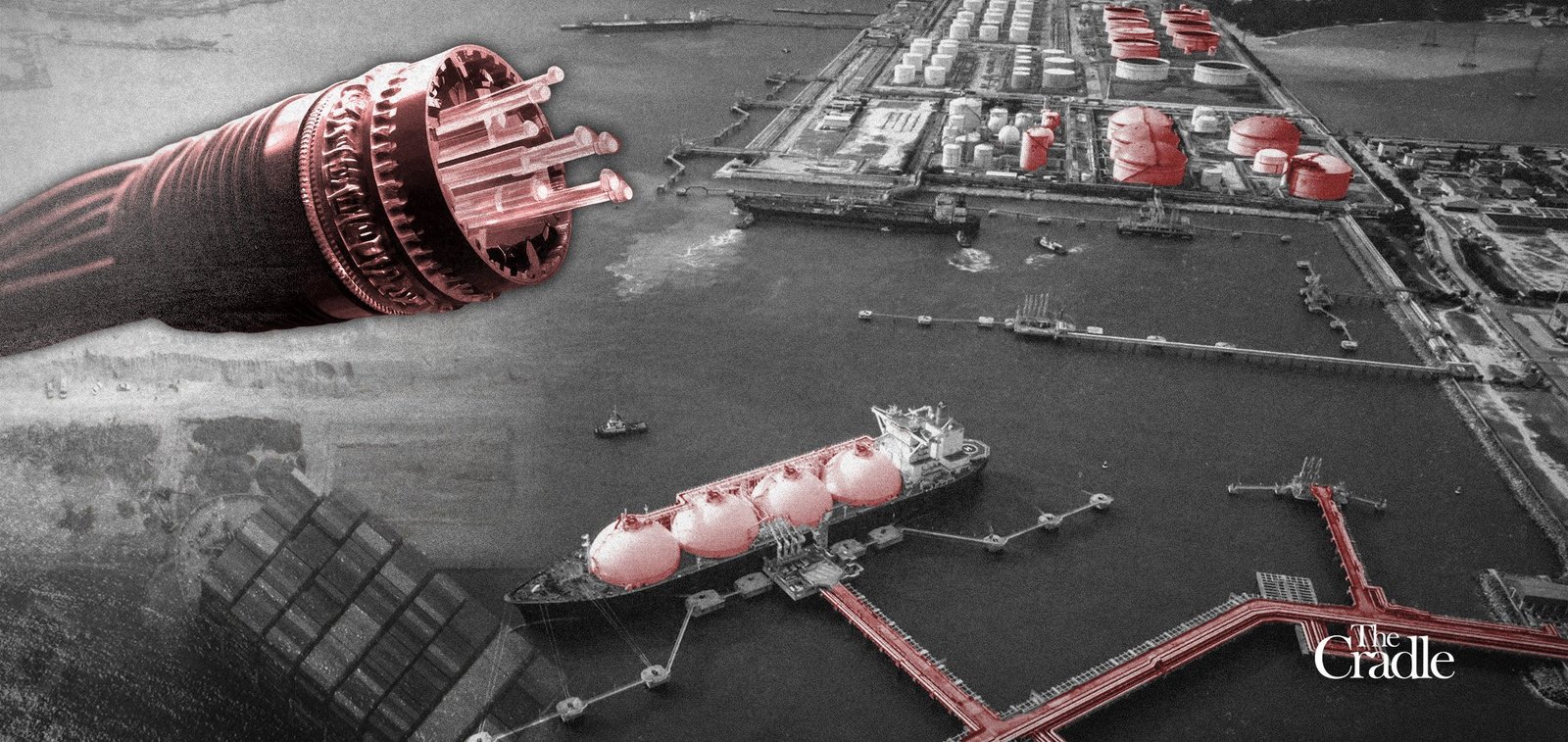
Submarine cable networks carrying 99 percent of global traffic are the new assets of global influence. As oil corridors yield to fiber lines, control over digital infrastructure in the Red Sea and the Persian Gulf dictates economic and technological superiority.
Global competition has quietly descended beneath the oceans as physical infrastructure replaces traditional maritime chokepoints in the race for technological dominance. Modern commerce and national security now depend entirely on undersea networks, transforming how states secure critical data routes across contested waters. As superpowers race to protect these undersea cables, these strategic data routes have quickly become the primary arena where the future balance of global influence is decided.
Data routes redraw geopolitical power
On the morning of 23 March 2021, the world watched as the ‘Ever Given,’ one of the largest container ships ever built, became wedged across the Suez Canal. Within hours, hundreds of vessels were stranded. Global supply chains slowed, insurance costs climbed, and energy markets reacted.
For six days, one ship exposed a geopolitical reality that has defined international politics for more than a century: control over strategic routes translates into power.
The Suez disruption was about far more than maritime logistics. It exposed the extraordinary dependence of the global economy on a handful of narrow corridors through which energy, trade, and industrial production move.
From the Strait of Hormuz and Bab al-Mandab Strait to the Strait of Malacca, the geography of power has long been defined by the movement of oil.
Yet as attention fixed on the vessels trapped above the water, another transformation was already in motion below it.
Around 99 percent of international data traffic now travels through roughly 500 submarine cables spanning 1.7 million kilometers. These networks carry financial transactions, cloud computing, government communications, scientific research, military data, and the workloads that sustain artificial intelligence (AI).
Three decades ago, media theorist Nicholas Negroponte argued that “the change from atoms to bits is irrevocable and unstoppable.” His observation once described the digital revolution. Today, it describes a geopolitical revolution.
If oil powered the Industrial Age, then data powers the Age of AI. The defining competition of the 21st century is no longer only about moving barrels across oceans. Instead, it is increasingly about moving bits across continents.
How data routes fuel infrastructure
For more than a century, pipelines, tankers, refineries, and maritime chokepoints defined the architecture of global power. Whoever secured the movement of energy enjoyed economic leverage, political influence, and strategic advantage.
That structure still holds, though it now extends into a wider system.
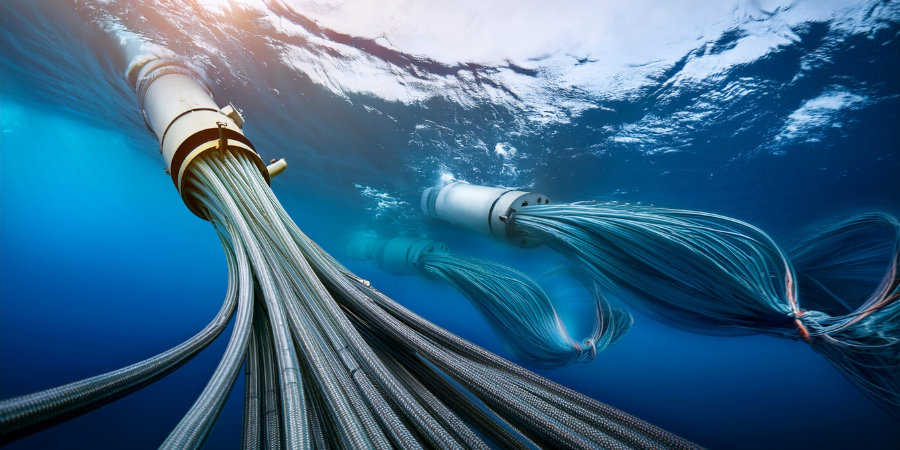
Hundreds of submarine cable systems now connect global markets and institutions. They synchronize financial systems, link cloud platforms, support government services, and enable nearly every advanced AI application.
Despite its name, the cloud has a physical footprint. It relies on electricity grids, semiconductor supply chains, hyperscale data centers, exchange points, landing stations, and resilient submarine networks. AI is often framed as software. In practice, it rests on infrastructure.
Every advanced AI model ultimately depends on reliable electricity, enormous computing capacity, sophisticated chips, secure cloud architecture, and uninterrupted international connectivity. Without these physical foundations, AI cannot function at scale.
This is why digital infrastructure is no longer a technical layer alone. It has become a strategic asset. Aircraft carriers still matter. Oil tankers still matter. They now sit alongside fabrication plants, GPU clusters, cloud platforms, data centers, and submarine cables as determinants of technological advantage.
West Asia secures data routes
Nowhere is this shift more visible than in West Asia. For decades, the region’s geopolitical weight rested on hydrocarbons and maritime geography. Oil exports made the Persian Gulf indispensable, while Suez, Bab al-Mandab, and Hormuz became enduring points of leverage.
Those dynamics remain as a second layer is taking shape.
Projects such as 2Africa, SEA-ME-WE 6, PEACE Cable, and Blue-Raman are reshaping the geography of global connectivity. Although presented as commercial telecommunications projects, they are also strategic investments in the infrastructure of the digital economy.
They are reshaping how data moves between Europe, Asia, Africa, and the Gulf. The Red Sea, Egypt, the Eastern Mediterranean, and the Gulf now function as data corridors alongside their role in energy transit.
More than 90 percent of communications between Europe and Asia pass through Egypt and onward into Red Sea cable systems. In March 2024, the severing of several cables disrupted roughly a quarter of telecommunications traffic linking Asia, Europe, and Africa.
States are adjusting accordingly. China continues to expand its Digital Silk Road across telecommunications networks, cables, and cloud infrastructure. Gulf states, including Saudi Arabia, the UAE, and Qatar, are investing in sovereign AI, hyperscale computing, and digital platforms.
Submarine cables are the lifelines of the digital age. Protecting the infrastructure that powers the digital economy is becoming a strategic priority. As AI reshapes global competition, countries that host, secure, and connect these networks will increasingly influence the distribution of economic and geopolitical power.
Data routes face systemic vulnerability
The 20th century focused on maritime chokepoints: Suez, Hormuz, Bab al-Mandab, and Malacca. The current moment requires an additional category, namely digital chokepoints.
These are locations where cables, landing stations, exchange hubs, data centers, and energy infrastructure converge. Like their maritime counterparts, they concentrate dependency.
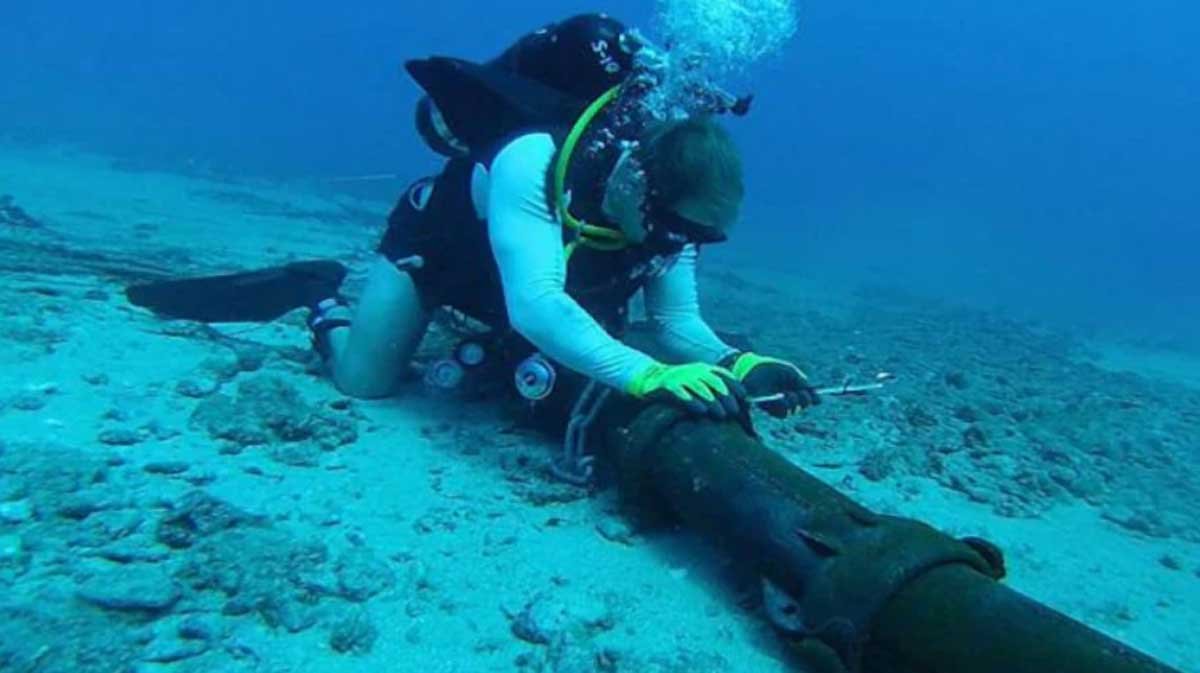
Disruption – whether through conflict, sabotage, cyber operations, natural events, or accidents – can ripple across financial markets, logistics systems, government platforms, and cloud services. This is already a recurring risk. Between 150 and 200 cable faults occur globally each year, often caused by anchoring or fishing activity. In contested environments, repair becomes slower and more complex.
The Gulf is a case in point. As tensions rise, attention has turned to the vulnerability of submarine cables running through Hormuz and surrounding waters. In April 2026, Iran’s Tasnim News Agency highlighted the potential impact of disruptions across multiple systems, pointing to wider consequences for regional connectivity.
Kristian Coates Ulrichsen, a specialist on Gulf geopolitics, has warned of a potential “double chokepoint effect” if submarine connectivity in both the Gulf and the Red Sea were disrupted at the same time. Such a scenario would place pressure on two of the most concentrated routes linking Europe and Asia.
The warning is significant. A confrontation around the Strait of Hormuz would no longer threaten only oil and shipping. It could also affect payments, cloud services, government platforms, and business operations across the Gulf.
In this sense, the Strait of Hormuz is becoming both an energy chokepoint and a digital chokepoint.
Defending data routes requires cooperation
Efforts to address these risks are underway. The International Telecommunication Union (ITU) and the International Cable Protection Committee (ICPC) have established an advisory body to strengthen resilience.
Sandra Maximiano, chair of Portugal’s National Communications Authority (ANACOM), has described stronger cable protection as requiring greater international cooperation, reflecting the reality that no country can protect transcontinental digital infrastructure alone.
Governments can therefore no longer treat energy security and digital security as separate policy domains.
Energy security and digital security are now tightly linked. AI depends on electricity. Electricity powers data centers. Data centers rely on global connectivity. That connectivity is carried, largely unseen, across the seabed.
When the ‘Ever Given’ blocked the Suez Canal, the disruption was immediate and visible. Future disruptions may not be. They may begin with a cable cut far below the surface.
For more than a century, power was measured by the ability to secure the routes that carried oil. In the current phase, it is increasingly tied to the capacity to build, control, diversify, and protect the networks that carry data.
The battle for global power has not left the oceans. It has simply moved beneath them.