
“Iraq’s Kurdistan currently faces an existential crisis as internal political deadlocks paralyze regional governance. This instability leaves the semi-autonomous area vulnerable to external aggression, specifically the fallout from the ongoing conflict affecting Iraq’s Kurdistan. As partisan rifts between the KDP and PUK deepen, the strategic viability of Iraq’s Kurdistan as a functioning entity is being called into question by both domestic and international observers.”
The Governance Stalemate within Iraq’s Kurdistan
The stalemate over government formation is affecting the semi-autonomous region’s ability to deal with the fallout of the Iran war – and eroding its autonomy. More than 18 months have passed since voters in the semi-autonomous Kurdistan Region of Iraq went to the polls in the region’s parliamentary election, but no new regional government has been formed. This deadlock has left the Kurdistan Region dangerously on autopilot as political and economic challenges pile up around it – not least those stemming from the Iran war.
Partisan Rifts and Geopolitical Vulnerability of Iraq’s Kurdistan
At the heart of this impasse is disunity between the two main parties; the Kurdistan Democratic Party (KDP) and the Patriotic Union of Kurdistan (PUK). Their rift prevents the Kurdistan Region from adhering to basic democratic governance, dilutes its ability to project influence, and leaves it increasingly irrelevant in the political calculations of other actors.
If the institutions and political arrangements that undergird the Kurdistan Region as a unified and coherent entity no longer function, it could be heading for a rupture that will only exacerbate the challenges it faces.
Why did cooperation between the KDP and the PUK break down?
Historically, relations between the KDP and the PUK have been characterized by extreme tension, but there have been periods of cooperation too. One such period in the mid-2000s allowed for Kurdish autonomy to be formally established into Iraq’s constitutional framework. This often-messy arrangement between the two parties – sealed by a strategic agreement in 2006 – now appears to be breaking down.
This is because the KDP and the PUK have fundamentally different assessments of their relative political status – and a new generation of leaders in both parties are not willing to compromise.
The KDP believes that it is the ascendent and primary force in Kurdistan, as reflected in its vote and seat totals in both federal and regional elections. It wants to abandon power sharing with the PUK – a view explicitly endorsed by its leader Masoud Barzani – and is also highly suspicious of PUK president Bafel Talabani’s leadership.
Power Dynamics and Leadership Struggles in Iraq’s Kurdistan
The PUK, meanwhile, wants to re-establish itself as the KDP’s relative equal after more than a decade of political aimlessness, factional infighting and challenges from opposition parties. Any government formation deal without substantive power sharing would be viewed as unacceptable. The PUK is also frustrated by the centralization of power around Kurdistan Regional Government (KRG) Prime Minister Masrour Barzani of the KDP and is seeking assurances this will be addressed.
After months of deadlock over government formation, no political ties remain between the two parties. Meanwhile, this discord is undermining their ability to respond effectively to the serious domestic challenges and geopolitical crises currently facing the Kurdistan Region.
Economic Relations Between Baghdad and Iraq’s Kurdistan
In the wider Iraqi context, the battle between the KDP and PUK over the Iraqi presidency is the most visible recent manifestation of their disunity. Since 2005, the post of president been allocated to the Kurdish bloc under Iraq’s informal ethno-sectarian distribution system. The PUK has held the Iraqi presidency since this system was introduced.
However, over the past two election cycles, the KDP has used its status as the largest Kurdish party to argue that the presidency should no longer automatically go to the PUK, but be subject to intra-Kurdish negotiation. In 2021, this contributed to a year-long delay in federal government formation when it put up its own candidate for the post. There was a similar, albeit shorter, impasse after the 2025 Iraqi election.
If this rift was only about competing for political posts, the issue could be resolved relatively easily. But it has also facilitated the erosion of the Kurdistan Region’s autonomy. Over the past year, the Iraqi federal government has dramatically curtailed the KRG’s ability to manage its financial affairs.
For example, federal authorities have taken charge of exporting oil via the pipeline to Turkey that runs through the Kurdistan Region, as part of a September 2025 deal to resume oil exports after a two-year suspension. In March, Masrour Barzani attempted to use the pipeline to gain leverage over the federal government, which was under severe economic stress due to the closure of the Strait of Hormuz.
But he was unable to stand his ground, in part because of lack of support by the PUK and foreign partners. The federal government has also introduced a new country-wide customs system, known as ASYCUDA, that bypasses the KRG and means the Kurdish parties will no longer control revenue collection at the borders with Turkey and Iran.
Persistent Security Threats Facing Iraq’s Kurdistan
The fallout of the Iran war
The parties’ diminished influence in Baghdad is reflected in the Kurdistan Region’s geopolitical position. Despite the strategic importance of its location, bordering federal Iraq, Iran, Turkey and Syria, it is more at the mercy of other actors than ever before – as demonstrated by the Iran war.
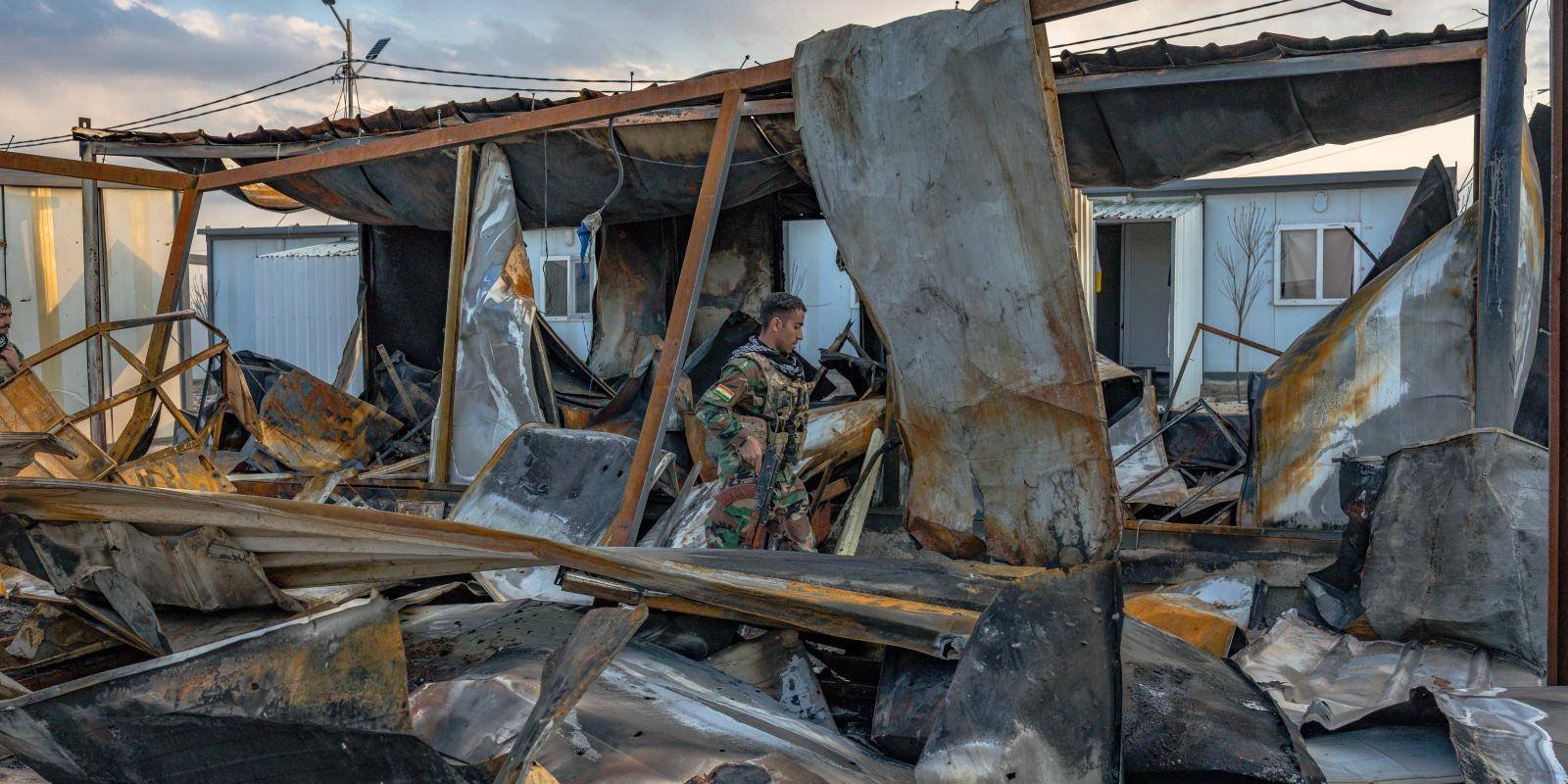
The Kurdistan Region has experienced at least 695 Iranian attacks since the beginning of the war, including 48 since the beginning of the ceasefire, according to local war monitor Community Peacemaker Teams. 22 people have been killed and more than 100 injured, while critical infrastructure and US military and diplomatic facilities have repeatedly been targeted.
Mutual distrust between the KDP and the PUK prevents them from establishing a united front and projecting influence in Washington and Tehran to keep the Kurdistan Region out of the war, and in Baghdad to limit attacks from Iran-backed Iraqi militias.
CPT estimates these militia groups are responsible for around 453 attacks on the Kurdistan Region since the beginning of the war. The attacks are primarily motivated by perceptions that the Kurds are aligned with the US, though tensions between Baghdad and Erbil contribute.
In turn, their division does not inspire the confidence of partners who have helped them deal with security threats in the past, like Washington did during the fight against Islamic State (ISIS). It also allows antagonists to continue to act with impunity. Finally, the political deadlock undermines the ability of the region’s leaders to effectively respond to the growing economic fallout from the war.
Analyzing the Strategic Future of Iraq’s Kurdistan
What the future holds
This is a discouraging assessment for the Kurdistan Region of Iraq – but one that has been evident for some time. KDP and PUK leaders ultimately choose whether to deepen their estrangement or change course and pursue reconciliation, but the latter seems unlikely. They could accept outside mediation. The US helped broker an end to the Kurdish civil war in 1998, for example, but more recent attempts have failed to address the root causes of their disunity. It could also be difficult to find a willing mediator, given the profound lack of leadership demonstrated by the two parties.
The longer the deadlock in Erbil continues, the more the Kurdistan Region’s viability as a functioning entity will be called into question. A formal breakup is unlikely, however, as it would involve a constitutional change – and a tricky revisiting of Iraq’s post-Ba’athist foundations. But one option that has been threatened in the past is for the region’s governorates to receive funding directly from Baghdad, bypassing the KRG completely.
Optimists argue that the KDP and the PUK will ultimately make a deal and form a government. But as long-held assumptions begin to dissolve, the once unthinkable seems increasingly likely.