
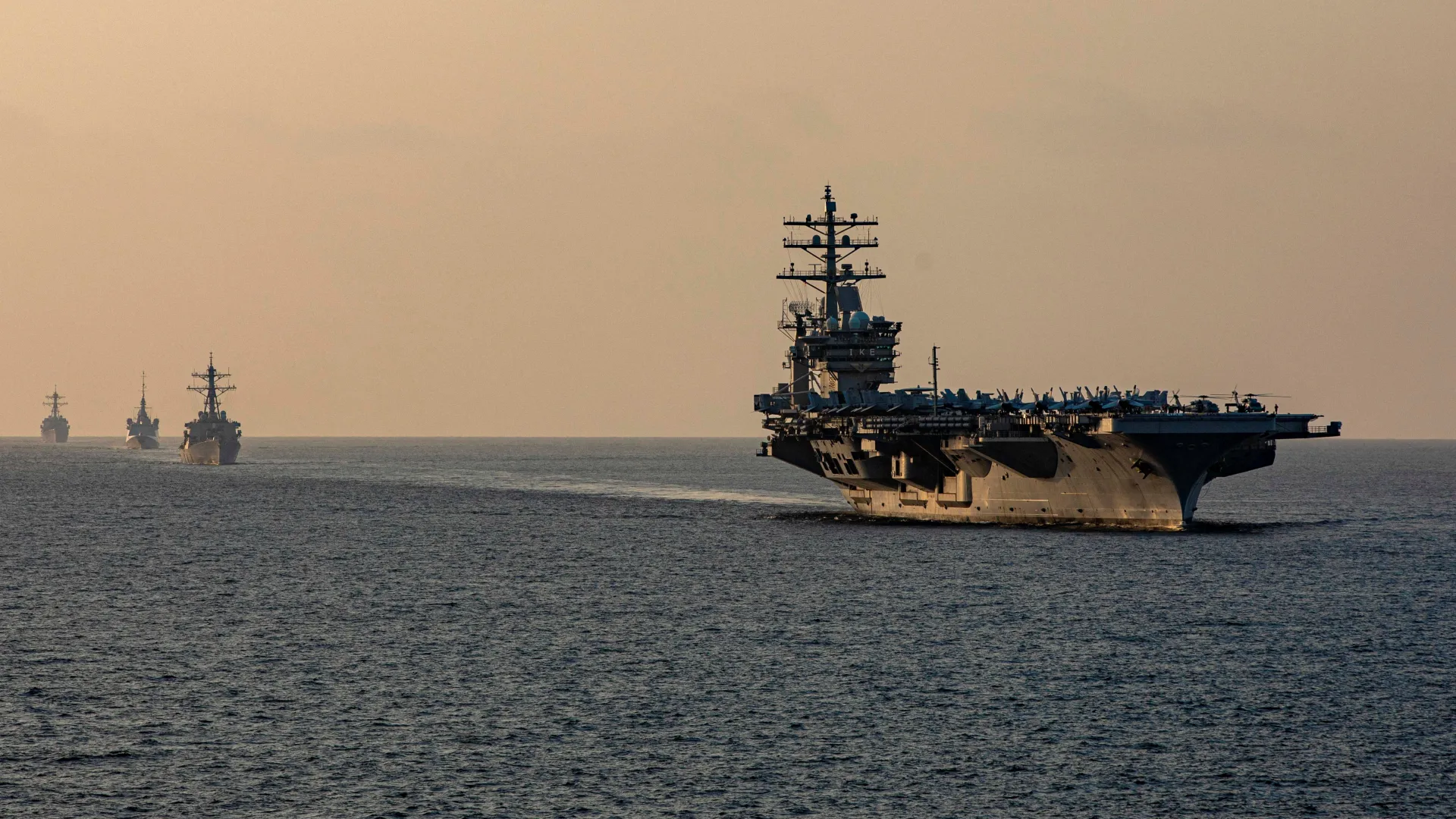
A profound analysis of the US-Israel-Iran conflict highlighting the fragmentation of international security. The brief evaluates tactical milestones against long-term attrition, concluding that the conflict yields a fragile equilibrium rather than a decisive victory.
The conflict has transformed the regional balance of power without providing a definitive conclusion, illustrating how the Iran war now functions as a war of endurance rather than decisive victories. As global actors struggle to manage the fallout, this protracted Iran war has fundamentally exposed the limits of military power in the modern geopolitical arena.
Iran war redefines global security dynamics
The US-Israel-Iran war has reshaped the Middle East’s balance of power, but it has not produced a strategic resolution for any of the actors involved. While both sides traded escalation with containment, Europe and China kept their focus firmly on the economic risks, managing their own exposure to the war rather than seeking to alter the course of the war itself.
The war has resulted in a redistribution of losses and gains within an international order drifting toward greater fragmentation. The United Nations Development Programme estimated in April 2026 that more than 30 million people across 162 countries were at risk of being pushed into poverty by the conflict, illustrating its global reach—and the scale of loss, which far exceeds any political gain that any single actor stands to win from it.
America Has Already Overcommitted to the Iran War At the core of the American strategy has been the prevention of a slide into a broader war that would threaten the stability of the international order and global energy markets.
After launching its initial attack on February 28, Washington sought to contain escalation with Tehran and manage the regional balance to prevent the collapse of the security environment, all without being drawn into an open-ended, protracted war. Despite these relatively limited aims, the war has not come cheap: the United States is estimated to have spent $3.7 billion in the first 100 hours alone of its campaign against Iran, or roughly $891 million per day.
A senior Pentagon official claimed in late April that the war had cost $25 billion over the first two months, while independent estimates suggest a cost closer to $50 billion. This is purely the cost to the US government; costs to consumers in the form of higher gas and commodities prices likely amount to billions more. The war has produced limited gains for the United States—chief among them the degrading of Iran’s military threat, a relative stabilization of Middle Eastern regional dynamics, and the re-anchoring of the US naval presence in the Strait of Hormuz and the Red Sea.
Yet America’s failure to achieve a decisive victory in the conflict also exposed its eroding capacity to impose a comprehensive strategic resolution as in earlier decades. Washington no longer has the strength or the political will to re-engineer the Middle East from the top, as it attempted in 2003; it must now manage multiple parallel compound crises, a significant transformation in the nature of its role in the region. Israel Has Not Dismantled Iranian Influence, Despite Some Gains Throughout the post-October 7 period,
Israel has adopted an aggressive approach to defending its security. This approach is centered on reshaping the Middle East, weakening Iran by aggressively targeting the extended infrastructure of its influence. This has included separate wars against Tehran’s proxies across the region, including Hezbollah in Lebanon, the Houthis in Yemen, and Iran-aligned factions such as the Popular Mobilization Forces in Iraq and Syria. The aim has been not only to weaken Iran itself, but to dismantle the proxy network, severely degrading its ability to act outside its own borders.
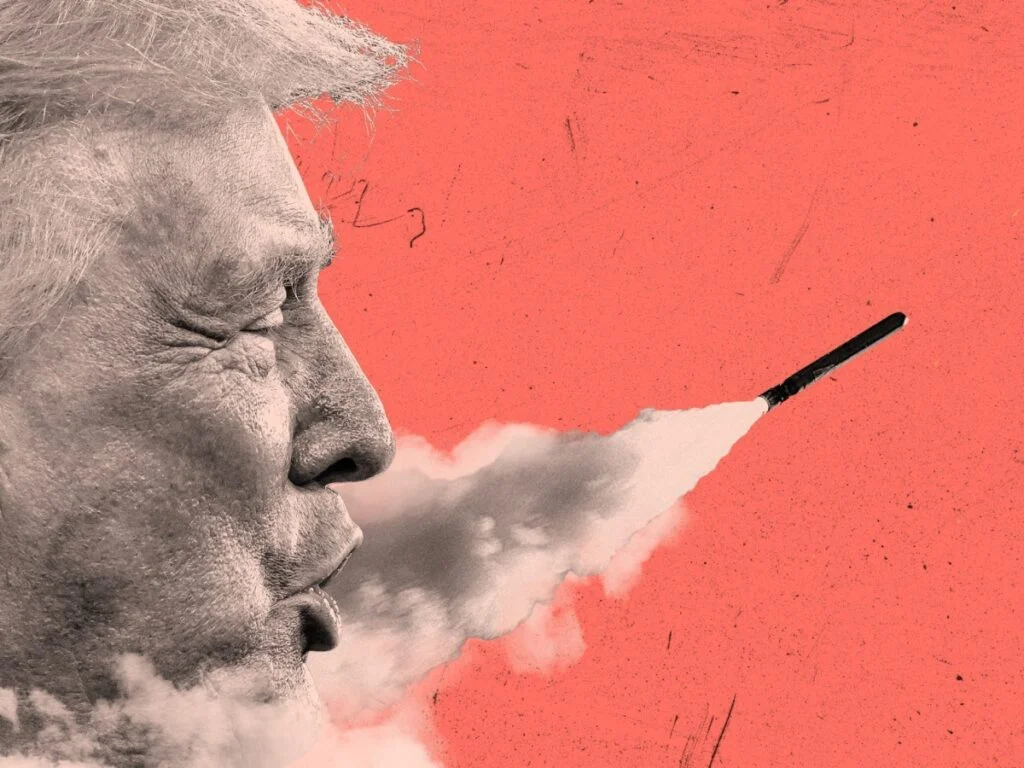
Israel combats regional Iran war threats
So far, Israel has achieved remarkable tactical military gains. Its conventional military might has given it “dramatic dominance” over Iranian-aligned groups—above all Hezbollah, which suffered massive losses in its 2024 conflict with Israel, including the death of longtime leader Hassan Nasrallah.
Even so, this approach has failed to produce a final resolution. The regional threat architecture remains in place, even if more constrained and less flexible. And Israel lacks the ground forces required to inflict a decisive defeat on Iran, a reality which places it before a prospect of prolonged attrition with no clear endpoint. The post-Oslo era has shown Israel that tactical mastery does not necessarily translate into strategic stability—and military power alone cannot solve a geopolitical impasse that has endured since 1979.
Iran Has Survived the War—for Now Iran, for its part, has relied on a strategy of remaining within its “pressure zone” without collapsing. Instead of seeking a conventional victory over America—probably an impossible outcome, given the vast disparity in the two nations’ strengths—it concentrated on preserving state cohesion and maintaining the minimum viable architecture of its regional influence. It demonstrated a notable capacity to absorb military, economic, and political pressure, deploying negotiation and calibrated escalation in parallel.
In so doing, it denied its adversaries the decisive outcome they sought. Though this resilience has enabled the Iranian regime to survive, the conflict cannot under any circumstances be read as a victory for the Islamic Republic—whatever its pronouncements to the contrary. The systematic failure of Iran’s forward defense doctrine, established during the Iran-Iraq War to keep confrontation away from its soil, means that Tehran is living inside a continuous condition of conflict. Survival itself has become the strategic objective, and although the Islamic Republic is likely to survive, its strategy has come at a great cost—transforming the country from an ambitious regional actor into one managing its own existence under permanent internal and external pressure.
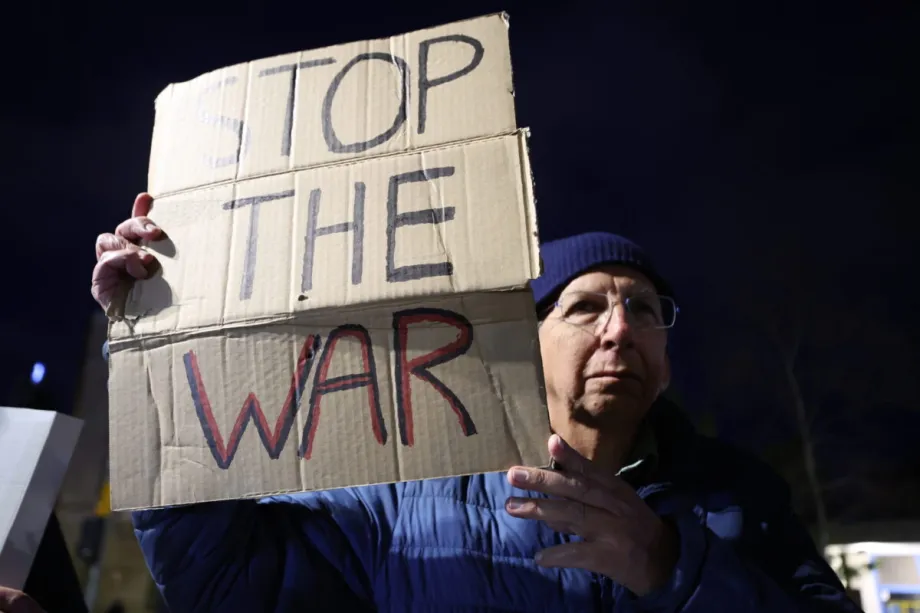
Geopolitical costs of the Iran war
The Iran War Has Underscored Europe’s Strategic Absence Europe has emerged as an economically significant but strategically marginal actor in the conflict. Its dependence on Middle Eastern energy and maritime corridors has not translated into effective military or political engagement; European nations have long ceded this territory to the United States, and are unprepared to replace it.
Since the start of the conflict, Brussels has opted for cautious diplomacy considering its structural constraints, even as the economic cost of the war reached homes across the continent through inflated energy and heating bills. This contradiction between structural dependence on regional stability and the inability to shape it has defined Europe’s role throughout the war. To make matters worse for Europe, global financial turbulence accelerated as equity markets declined and sovereign bond yields rose, leaving the continent’s governments to manage the economic fallout of a war started beyond their borders.
China Has Profited from Western Distraction In the Asian context, China has emerged as perhaps the most significant beneficiary of the conflict. To be sure, Beijing has absorbed real economic costs from Hormuz disruptions, but the conflict has also served as a stress test for its economy—a test that it passed with flying colors. China is better prepared for oil shocks than most Asian nations due to its strategic reserves, diversified suppliers, and growing renewable energy capacity.
Iran war creates economic disruptions
China has long positioned itself as an economic actor capable of engaging all parties without absorbing the cost of the conflict—achieving geoeconomic gains while avoiding the direct military and political costs that constrained other major powers. More broadly, it has gained strategic advantage due to the Western distraction; the Iran conflict has consumed vast quantities of munitions that the United States will be hard-pressed to replace in the near future, giving Beijing a freer hand to operate in the Indo-Pacific. The conflict thus reinforces the shift of the global center of gravity eastward, even within a quasi-functional international order.
The Gulf Cooperation Council Has Seen the Value of Self-Reliance At the heart of this conflict, the Middle East emerges as a significant testing ground—particularly the states of the Gulf Cooperation Council (GCC), which found themselves in a position of direct threat without being central parties to the conflict. The GCC states demonstrated notable resilience and defiance during the war, which counts as a relative gain—particularly Saudi Arabia and the United Arab Emirates, which developed alternative pipeline infrastructure enabling oil exports outside the Strait of Hormuz, somewhat reducing their vulnerability to its closure.
In spite of Iranian attacks on Gulf capitals, the Gulf states managed to avoid being drawn into a full-scale war and to preserve their relative economic stability. Yet they also discovered the limits of reliance on external security umbrellas. The war confirmed that security in a highly fluid regional environment cannot be imported; it requires the construction of more robust and resilient indigenous capacities—an architecture encompassing defence manufacturing, supply-chain security, diversification of partnerships, and the building of autonomous deterrent tools capable of closing the protection gaps that widen whenever major powers become absorbed in their own priorities.
The Iran War Has Led to Fragile Equilibrium Ultimately, there is no true winner in this war. No actor possesses the capacity to impose its will on the others in full, and none can exit the conflict cycle and lose face. The United States has managed the conflict without resolving it; Israel has made advances, but finds its strategic position little better than before; Iran has survived, but grown weaker; Europe has tried to remain outside the conflict, but has suffered from its effects anyway; and China has benefited from Western distraction while nevertheless facing its own economic setbacks.
Navigating a complex Iran war stalemate
What emerges from the conflict is not a new order, but the exhaustion of the old one, held together by the shared inability of any actor to bear the cost of its collapse. The Iran war amounts to a redistribution of losses within an international system drifting toward greater complexity—the end of the age of “clean” victory and the dawn of an age of fragile equilibrium. Every actor emerged with partial gains that fall short of victory, and deferred losses that fall short of defeat. As the situation endures, the question all parties must ask is not how much strategic advantage they can gain, but how much economic pain they can bear.