
A sophisticated analysis of the third round of bilateral negotiations, detailing how contrasting Lebanese holistic strategies and Israeli security-first paradigms can find common ground to systematically disarm Hezbollah and restore regional sovereignty.
The regional security landscape hinges on breaking the cycle of asymmetric warfare, making a constructive diplomatic track indispensable. Analysts must look past surface-level deadlock; the Lebanon-Israel Peace Talks offer a rare, structured forum to align disparate state strategies against shared destabilizing elements. By formalizing hidden diplomatic leverage, the Lebanon-Israel Peace Talks can translate backchannel security understandings into enforceable border mechanisms.
Lebanon-Israel Peace Talks accelerate regional diplomatic realignment
It’s easy to dismiss the significance of the Lebanon–Israel talks, now in their third round. They are, even to the most sympathetic eye, rather atypical. The two sides are trying to forge a path to pacify relations, made combustible over the past 26 years by the actions of a third party—Hezbollah—over which the Lebanese government has no effective control. Even though Lebanese and Israeli representatives are meeting at the State Department to discuss peace between their countries, it is Hezbollah and Israel who are fighting.
To be clear, Hezbollah should not and cannot be in the room. Nevertheless, it’s hard to ignore the logical incongruity and structural handicap of the talks. Any agreement reached by Lebanon and Israel that does not address and deliver on the issue of Hezbollah’s disarmament will be of little consequence.
That said, to judge these talks as meaningless is a mistake. Their value lies in each side presenting its own view of the Hezbollah challenge and its solution. Such an exchange will inevitably reveal common ground, which is most needed to move the negotiation forward.

Strategic convergence shapes the Lebanon-Israel Peace Talks agenda
The truth is that Lebanon and Israel see the Hezbollah challenge very differently. Consequently, they are exploring solutions in very different ways. What the talks are supposed to do, however, is acknowledge those differences while also identifying measures that contribute to mutually beneficial outcomes. Unilateral military responses, as pursued by the Israeli side for decades, have failed repeatedly. It’s time for a common approach, even if it’s not formally recognized and directly coordinated.
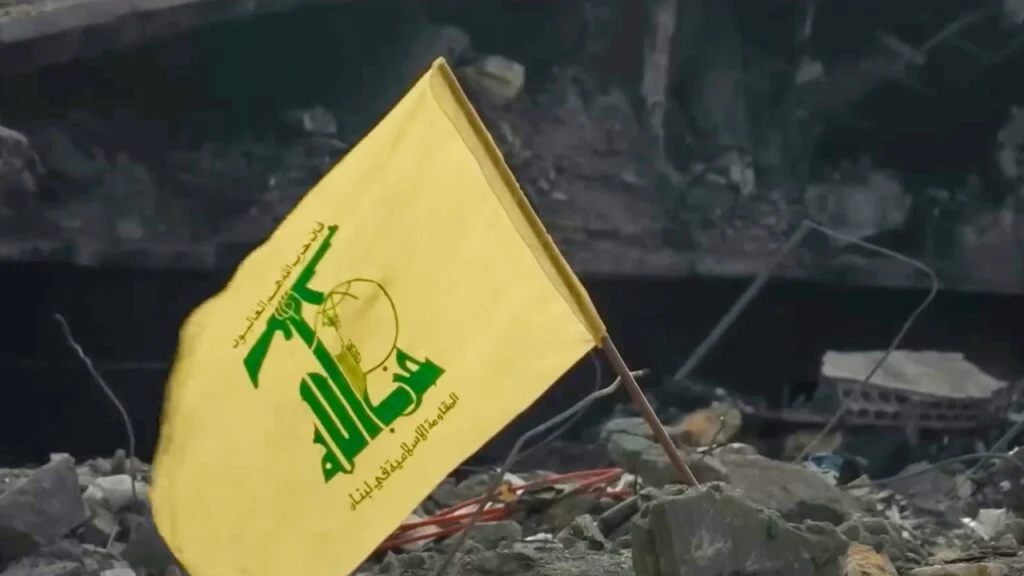
The Lebanese Holistic Perspective on Hezbollah For the Lebanese government, Hezbollah presents a multifaceted challenge because it is a multifaceted entity. Its loyalty to Tehran and autonomous military status undercut Lebanese sovereignty and the state’s monopoly over the use of force. Its criminal networks and widespread illicit activities, including money laundering, both domestic and global, fuel a parallel black economy that erodes formal market stability and state authority.
Its political violence, which it has exercised against the Lebanese through armed assaults and assassinations of politicians, intellectuals, and activists who dared to disagree with it, is a threat to civil peace. Hezbollah does not need rockets and missiles to operate as a deadly menace at home. It is a domestic militia with considerable security and intelligence capabilities.
Its sectarianism and ideological extremism, borrowed from the principles of the Iranian Revolution, are inconsistent with traditional Lebanese social liberalism and religious tolerance. Its very identity as a religious-sectarian political party is illegal according to the Lebanese constitution.
Each layer of the Hezbollah challenge requires a distinct response from the Lebanese government. But at the same time, it’s virtually impossible to treat one while ignoring the rest because they all complement each other. For example, Lebanon cannot deal with the group’s weapons without addressing its finances. And it cannot address its finances without stopping its domestic violence. And Beirut cannot stop its domestic violence without countering its radicalism. The Lebanese government has had to navigate the political process, the bureaucracy, the law, the financial system, the military, and the social-communal space to offset Hezbollah’s various sources of support.
Politically, Lebanese President Joseph Aoun and Prime Minister Nawaf Salam have issued various statements confronting Hezbollah, including outlawing its arms, ordering the Iranian ambassador to Lebanon to leave the country, and declaring Beirut as “safe and free of weapons.”
Bureaucratically, the Lebanese government has quietly reshuffled numerous positions in the security services and the Lebanese army to dilute the influence of Hezbollah, including, most notably, personnel at the Lebanese airport and Port of Beirut.
Legally, the Lebanese judiciary has issued arrest warrants for individuals involved in firing unauthorized rocket attacks across the border, and the Lebanese army has executed those warrants. President Aoun delivered a speech at the UN asserting Lebanon’s authority to declare war and peace and the enforcement of sovereignty by the Lebanese army. Financially, the Lebanese Central Bank, under the leadership of its reformist governor Karim Souaid, has banned banks and brokerages from doing business with Al-Qard Al-Hassan, Hezbollah’s main financial institution.
Militarily, while there is more the Lebanese army can do to constrain Hezbollah’s military activities, it has cleared tunnels, rocket-launching positions, and other structures since the Lebanese government approved its disarmament proposal. It went into effect in September of last year.
The Lebanese government had set a deadline of the end of 2025 to remove all Hezbollah weapons from south of the Litani River. Still, it is unclear how much remains or when, or if, the Lebanese army will move to the far more contentious northern part of the area. Hezbollah itself has rejected calls to dismantle its arsenal north of the Litani River, describing pressure to do so as a “grave sin.”
Regardless of the Lebanese government’s will to instruct the army to expand and escalate its clearing operations, there is an issue of capability. The Lebanese army doesn’t have the means to conduct such a mission while also securing the northeastern borders with Syria and maintaining civil peace in Beirut. Socially, the Lebanese government has sought to bring the Shia community—the support base of Hezbollah—into the fold by emphasizing the priority of rebuilding devastated areas in southern Lebanon. Prime Minister Salam toured heavily damaged towns and villages in the south back in February, declaring that “we want the region to return to the authority of the state.”
The Israeli Security-First View on Hezbollah For Israel, the priority is confiscating Hezbollah’s weapons. That the group challenges Lebanese state authority, civil peace, and way of life is hardly relevant. If Hezbollah can be prevented from firing missiles, rockets, and drones into Israeli territory, and if it can be forced to keep the Lebanese-Israeli borders calm, it does not matter how much harm it causes inside Lebanon, even if the group takes over the government or leads the country to another civil war.
Sovereignty demands concrete outcomes from Lebanon-Israel Peace Talks
Such a security-focused Israeli view has led successive Israeli governments to rely exclusively on military force to deal with the Hezbollah problem. For decades, Israel occupied Lebanese territory in the south, carving out a “buffer zone” to neutralize the threat posed by Hezbollah and deter it from launching attacks. It created the South Lebanon Army (SLA) to police that zone. It fought three wars with Hezbollah in 1993, 1996, and 2006. Yet all of Israel’s attempts to disarm or defeat the group have failed. On the contrary, after every military confrontation, Hezbollah grew stronger.
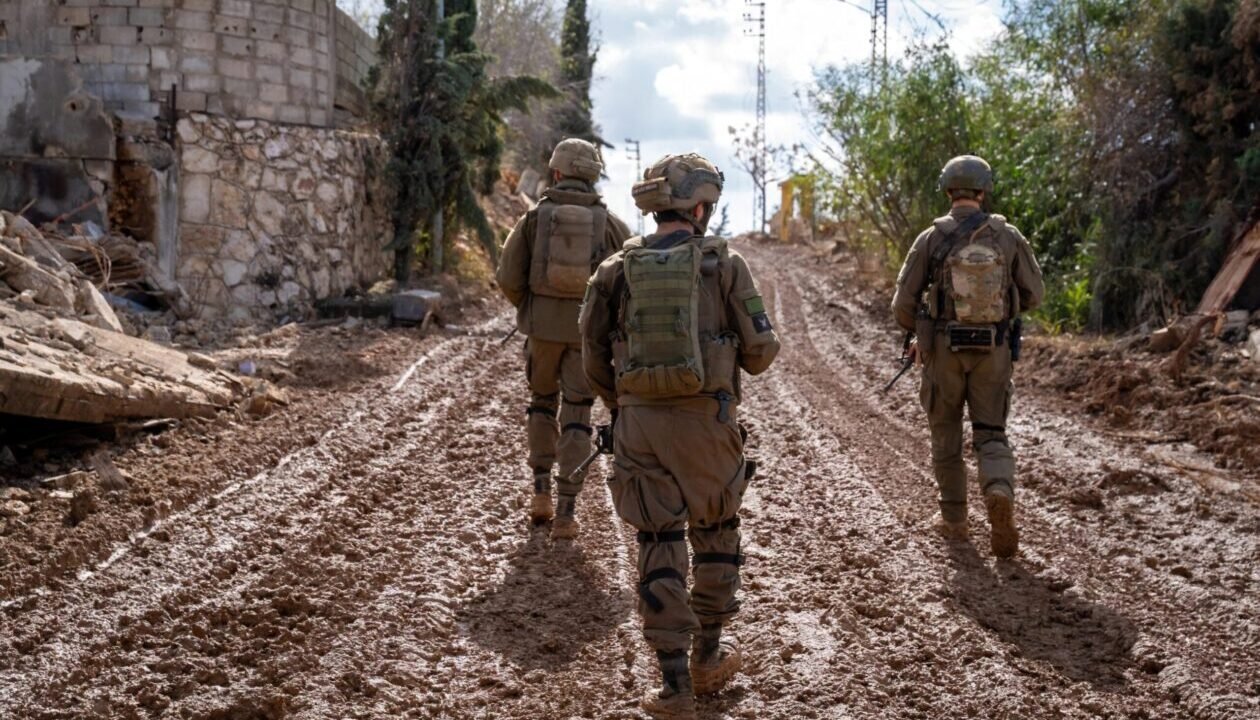
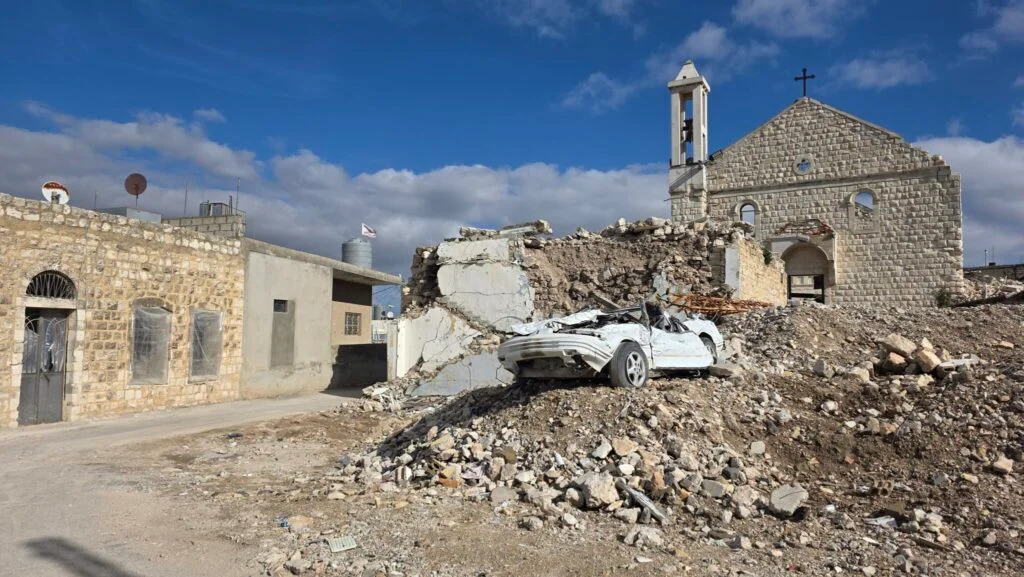
The lesson Israel has learned from its repeated clashes with Hezbollah is that more force is the answer. Following Hezbollah’s attack on Israel on March 2 in retaliation for the US-Israeli strikes that killed Iranian Supreme Leader Ayatollah Ali Khamenei, Israel has launched heavy bombardments of the group’s strongholds—including in Beirut’s southern suburbs—and renewed operations in southern Lebanon. In addition, Israel has once again occupied Lebanese territory in the south, creating a buffer or security zone. The difference this time around is that the Israeli military is systematically destroying Lebanese towns and villages near the border as it did in Gaza, making it virtually impossible for southern Lebanese residents to return to their homes any time soon.
Despite Israel’s heavy-handed approach (which has proven ineffective over decades), Hezbollah is still able to launch attacks into Israeli territory and fight and kill Israeli soldiers on occupied Lebanese land, as it did from 1985 to 2000.
It is doubtful that expanding Israel’s security zone in the south and unleashing more death and destruction on Lebanon will disarm or defeat Hezbollah. The Israeli military has badly hurt the group, with its arsenal reduced and most of its leaders and commanders eliminated. Still, Hezbollah has rebounded as before, thanks to its deep bench and ongoing support from Iran.
Lebanon-Israel Peace Talks offer alternative to failed kinetic options
How to Find Common Ground Between Israel and Lebanon Israel has neither the patience nor the ability to treat the Hezbollah problem holistically like the Lebanese government is trying to do. It cannot compete with it at the polls, counter its finances, take it to court, or win the hearts and minds of its Shia support base. Only the Lebanese government can do those things. But here’s an inescapable reality that Israel refuses to acknowledge at its own peril: the more Israel indiscriminately bombs Lebanese infrastructure, kills innocent civilians, and occupies land in the south, leading to the displacement of roughly a quarter of Lebanon’s population, the harder it will be for the Lebanese government to challenge Hezbollah methodically.
Of course, there have to be rules and a timeline for this formula. Israel is not about to wait indefinitely for the Lebanese government to get more proactive about Hezbollah’s disarmament while the group reconstitutes and continues to launch strikes on Israel.
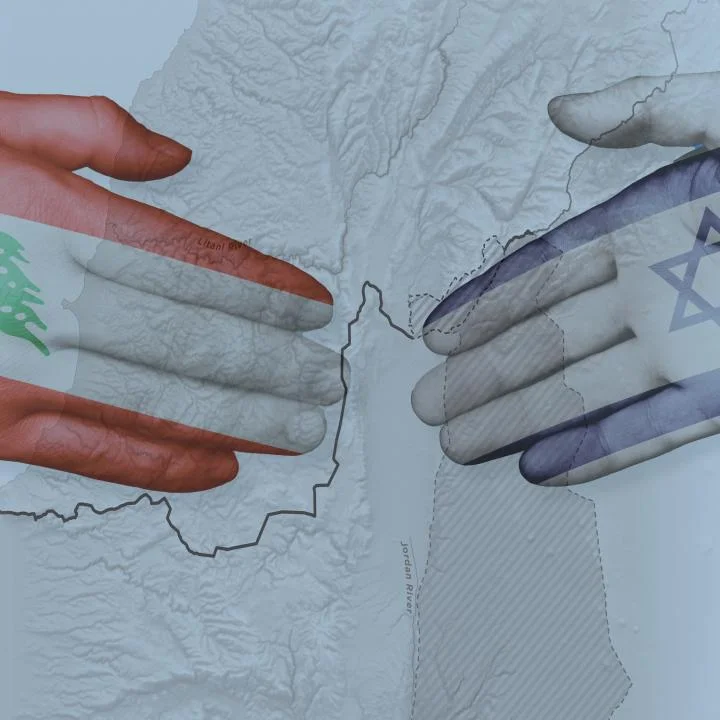
It is those very rules, those very deliverables by the Lebanese government, and that very timeline that should be on the table in the Lebanon-Israel talks. Gradualism is key. Hezbollah is not about to be disarmed overnight. Confidence-building measures by both sides are a must.
De-escalation depends entirely on Lebanon-Israel Peace Talks metrics
The more political ammunition Israel gives to the Lebanese government—by withdrawing from parts of its buffer zone, by refraining from striking Beirut and other civilian areas, and by releasing several Lebanese prisoners detained in Israel—the bolder President Aoun and Prime Minister Salam can act on Hezbollah’s disarmament, including the deployment of the Lebanese army in the southern suburbs of Beirut and moving to the next phase of clearing Hezbollah weapons in the northern part of the Litani River.