
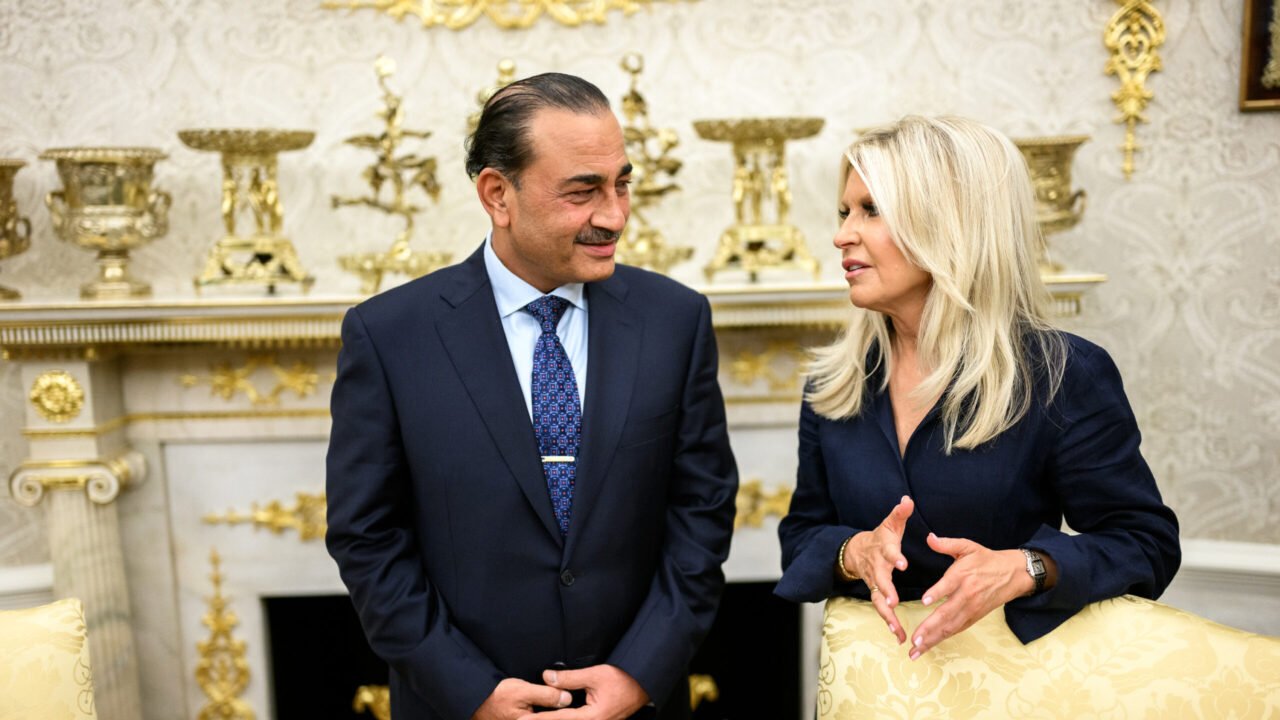
Field Marshal Munir’s personal access to Trump and Iranian officials enabled direct US-Iran talks for the first time since 1979. While no agreement emerged, Pakistan’s military has displaced traditional diplomacy, leveraging enforcement credibility and intelligence networks to become a central regional mediator.
The centrality of the Pakistani military to the mediation of the Iran War stems from the perception that it can deliver agreements more effectively than traditional diplomats.
Pakistan’s recent role in brokering a ceasefire in the Gulf between Iran and the United States is indicative of a regional realignment. Long seen as an actor confined to South Asia, Pakistan is helping to redefine a broader geopolitical zone that binds South Asia to the Middle East. In other words, Pakistan is no longer on the periphery of the Middle East but is asserting itself as a central actor in the region.
It is a historical paradox that at moments when conventional diplomacy appears to have stalled, the burden of peacemaking falls on those trained for war. Today, in Islamabad, that old logic is once again on display. Pakistan’s military has emerged as an improbable mediator in the most dangerous flashpoints of the early 21st century.
Following weeks of a regional war that began with US-Israeli strikes on Iran in late February, Army Chief Field Marshal Syed Asim Munir helped orchestrate a fragile ceasefire and facilitated talks in Islamabad on April 12–13. Leveraging his personal rapport with President Donald Trump (who has publicly called him his “favorite field marshal”), Munir brought US Vice President JD Vance and senior Iranian officials to the negotiating table, the first direct meeting between such high-ranking US officials and Iranians since the Iranian revolution in 1979.
The talks ultimately ended without a deal agreed by the two sides, but expectations of a dramatic breakthrough may have been inflated and unrealistic. Nonetheless, the talks themselves marked a constructive first step.
Military leaders do at times step into roles customarily reserved for diplomats. Charles de Gaulle came out of military retirement to end France’s war in Algeria, and George C. Marshall spearheaded Europe’s postwar reconstruction and helped shape its emerging political order. Pakistan’s own history is replete with military dictators who placed a high priority on foreign affairs.
As former foreign secretary of Pakistan, Aizaz Ahmad Chaudhry wrote on April 12, “Traditionally, diplomacy was confined to dispatching envoys to represent the country, negotiate on its behalf, and report on the host country’s policies. Not anymore. Besides economic and public diplomacy, military diplomacy has emerged as an important element in the diplomatic toolkit. We associate the military with the use of force and diplomacy with peaceful pursuits. However, states today leverage the non-kinetic potential of their armed forces to promote foreign policy and national security goals.”
In practice, this “non-kinetic potential” of armed forces lies in capabilities that civilian institutions seldom possess. Senior military leaders often have direct access to foreign counterparts and intelligence networks, enabling sensitive engagement with adversaries quickly and discreetly—as illustrated by Field Marshal Munir’s recent visit to Tehran, where senior political and military officials received him amid heightened regional tensions. Unlike diplomats, they can enforce, or at least credibly guarantee, ceasefires and de-escalatory measures, giving weight to any understanding reached.
Pakistan’s defense-centric strategic relationships reinforce this credibility. Pakistan and China, for instance, maintain a close military partnership. As Chinese analyst Zhu Yongbiao acknowledged, while similar ceasefire proposals for the Iran War have circulated before, the five-point Pakistani initiative agreed upon by China carried greater weight precisely because “it came formally from a regional power with influence” and few (if any) leaders have more influence than the Pakistan military leadership.
As Ambassador Major General Tariq Rashid Khan told the author in an interview, “The armed forces operate within a highly structured, transparent and rigorous system of career progression. Officers undergo continuous training, must meet defined professional benchmarks, and maintain strict physical standards throughout their careers. They are evaluated alongside their course-mates as they advance. The same level of consistency and merit-based progression is not always evident in the civilian bureaucracy.”
Field Marshal Munir’s recent interactions demonstrate how this professional formation translates into practice. He has held meetings with military and diplomatic counterparts from Egypt, Jordan, and Libya, as well as with leading Gulf actors, including the United Arab Emirates and Qatar. The most consequential of these came in September 2025, when he and Pakistan’s prime minister met Saudi Crown Prince Mohammed bin Salman and signed a mutual defense pact, further cementing Pakistan’s role as a regional security interlocutor.
Setting aside the ambiguity resulting from the strict embargo on official disclosures or leaks, what remains clear is that Field Marshal Munir projected Pakistan’s influence beyond its traditional sphere, extending it into the Middle East. In October 2025, just a month after high-level engagements in the Gulf, Pakistan played a supportive and visible role in implementing the ceasefire between Israel and Hamas in Gaza, and has considered deploying troops as part of the International Stabilization Force.
While the first round of Islamabad talks did not yield an agreement, local sources claimed that working-level contacts between members of both delegations continued in the background, even after the principal envoys departed. Yet the cacophony of post-talks statements from all sides continues to exacerbate the opacity surrounding the entire process.
Iran’s foreign minister, Abbas Araghchi, expressed disappointment with US conduct during the discussions, while Vance characterized the failure to reach an agreement as “bad news for Iran.” Trump, for his part, initially claimed on Truth Social that the talks had gone largely well and that most points had been agreed upon, before subsequently announcing a naval blockade on Iran. According to The Guardian, unnamed Pakistani sources close to the negotiations also spoke of “mood swings from the two sides.”
A second round had been expected in Islamabad on April 22, but US-Iran tensions have delayed formal reconvening. Iran’s Foreign Ministry spokesman Esmaeil Baqaei told Iranian state TV that their hesitation was “not due to indecision,” but “contradictory messages, inconsistent behavior and unacceptable actions by the American side.” The process, however, has not been derailed as communication is reportedly ongoing, suggesting another round of talks remains very much in the cards.
Since the onset of the post-October 7, 2023, crises sweeping across the wider Middle East, Pakistan has taken on a far greater influence than at any time in its short history from the traditional actors in Middle East diplomacy. Much of that can be accounted for by Oman slipping away from its traditional role as a mediator, Turkey’s anger towards Israel due to the Gaza War, and the UN’s inability to insert itself into the peace process. It is also, to a great extent, the leverage the Pakistani military achieved through its strong relationships and skills that brought the United States and Iran to the negotiating table in Islamabad.