
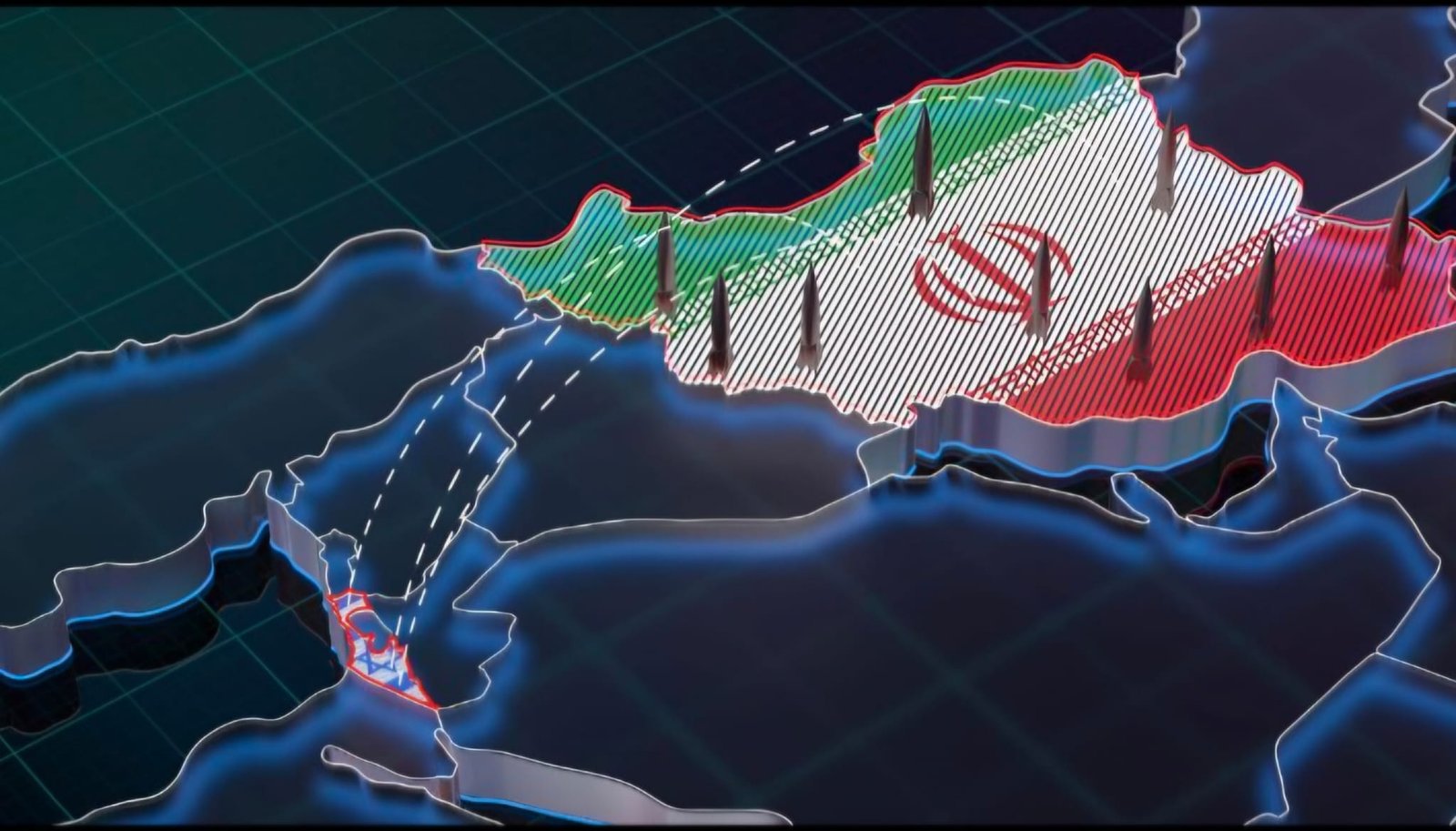
Israel faces post-Iran nuclear threats not just from Tehran but from potential future adversaries like Egypt, Turkey, or Saudi Arabia. Ending nuclear ambiguity and preparing for retaliation, counter-retaliation, preemption, and war-fighting scenarios would enhance deterrence credibility. Rationality of enemy leadership remains critical.
EXECUTIVE SUMMARY
US Vice President J.D. Vance returned from Pakistan without achieving an Iran war settlement. For Israel, this failure is concerning not just because it signifies continuing nuclear danger from Iran, but because it portends further regional destabilization and nuclear proliferation. For Israel, nuclear threats are not just about Iran. Even a favorable end to the current war could produce another dangerous enemy or configuration of enemies. Over time, this adversary (e.g., Egypt, Turkey, Saudi Arabia) could create a new risk of nuclear war, even if it were to remain non-nuclear. Jihadi terrorist groups could also act as force-multiplying surrogates of an “Iran replacement enemy”. To prepare for such threats, Jerusalem will need to engage in comprehensive theorizing, not the visceral seat-of-the-pants policies and intra-crisis hyperbole favored by US President Donald J. Trump. To enhance the credibility of its nuclear deterrent, Israel should consider ending its policy of nuclear ambiguity.
How might Israel find itself engaged (wittingly or unwittingly) in a nuclear war? Under what circumstances might Israel find itself faced with credible nuclear peril or actual nuclear attack?
While Iran has been set back in its efforts to build a nuclear bomb, it still has enough fissile material to launch radiological (enhanced radiation) warfare attacks – and the likelihood that Israel or the United States will manage to take control of Iran’s well-hidden and well-dispersed enriched uranium assets is almost nil. In the final analysis, strategic deterrence (nuclear and non-nuclear) is not about superiority. Even a weaker enemy can inflict unacceptable retaliatory harm on Israel.
All conceivable nuclear war scenarios remain imprecise and unprecedented. An enemy attack on Israel’s Dimona nuclear reactor, for example, could prompt Israeli escalation to nuclear conflict. This could occur even if the attacking state is itself non-nuclear and if the outcome of the attack falls short of a major radiological release.
To proceed efficiently and rationally, Israel’s strategic planners will need to re-examine core canons of science-based inquiry. Looking beyond the current war, four narratives cover the analytic bases of nuclear conflict preparedness: nuclear retaliation, nuclear counter-retaliation, nuclear preemption, and nuclear war fighting. Each warrants close study, including consideration of possible intersections.
(1) Nuclear retaliation
Should an enemy state ever launch a nuclear first strike against Israel, Jerusalem would respond, immediately and to whatever extent possible, with a retaliatory nuclear strike. If the enemy first strike were to involve not nuclear but other forms of unconventional weapons, especially high-lethality biological weapons of mass destruction, Israel might still launch a nuclear reprisal. Israel’s response would depend on Jerusalem’s expectations of follow-on aggression, judgment of comparative damage limitation, and intersection with US nuclear strategies.
If Israel were to absorb “only” a massive conventional attack, a nuclear retaliation could still not be ruled out per se, especially if (a) the state aggressor were perceived to hold nuclear and/or other unconventional weapons in reserve; and/or (b) Israel’s leaders were to believe that exclusively non-nuclear retaliation could not prevent the annihilation of the Jewish State (i.e., a genocide). A nuclear retaliation by Israel could be ruled out only in those circumstances wherein the enemy state aggression was conventional, “typical” (that is, sub-existential or consistent with previous instances of enemy attack in degree and intent), and hard-target-directed (that is, directed only towards Israeli weapons and military infrastructure, not at “soft” civilian populations.
(2) Nuclear counter-retaliation
Should Israel ever feel compelled to preempt enemy state aggression with conventional weapons, the target state’s response would determine Jerusalem’s next move. If the enemy’s response were in any way nuclear, Israel would likely turn to nuclear counter-retaliation. If the enemy’s retaliation were to involve other weapons of mass destruction, Israel might feel pressed to escalate. Prima facie, any such initiatives would reflect a presumed need for “escalation dominance.”
All decisions would depend upon Jerusalem’s early judgments of enemy state intent and calculations of damage limitation. Should the enemy state’s response to Israel’s preemption be limited to hard-target conventional strikes, it is unlikely that the Jewish State would move on to nuclear counter-retaliation. If, however, the enemy’s conventional retaliation was “all-out” and directed at Israeli civilian populations, an Israeli nuclear counter-retaliation could not be excluded.
It would appear that such a counter-retaliation can be ruled out only if the enemy state’s conventional retaliation is proportionate to Israel’s preemption, confined exclusively to Israeli military targets, circumscribed by the legal limits of “military necessity” as codified in the law of armed conflict, and accompanied by explicit and verifiable assurances of non-escalatory intent.
(3) Nuclear preemption
It is implausible (at least for the foreseeable future) that Israel would decide to launch a preemptive nuclear strike. Although circumstances could conceivably arise in which such a strike would be technically rational, it is nonetheless unlikely that Israel would allow itself to reach such dire circumstances. Unless the nuclear weapons involved were used in a fashion consistent with the codified and customary rules of war, an all-out preemption would represent a grave violation of binding international law.
Even if such consistency were possible, the psychological and political impact on the world community would be overwhelmingly negative and far-reaching. It follows that an Israeli nuclear preemption can be expected only where (a) Israel’s state enemies had acquired nuclear and/or other weapons of mass destruction judged capable of annihilating the Jewish State; (b) these enemies had made it clear that their operational military intentions paralleled their capabilities; (c) these enemies were believed ready to begin a “countdown to launch”; and (d) Jerusalem believed Israeli non-nuclear preemptions could not possibly achieve even minimum levels of damage limitation (meaning the physical preservation of the Jewish state).
(4) Nuclear war fighting
Should nuclear weapons ever be introduced, either by Israel or by an enemy, into actual conflict, nuclear war fighting at one level or another would ensue. This would be true so long as (a) enemy first strikes against Israel failed to destroy Jerusalem’s second-strike nuclear capability; (b) enemy retaliation for an Israeli conventional preemption did not destroy Jerusalem’s nuclear counter-retaliatory capability; (c) Israeli preemptive strikes involving nuclear weapons did not destroy the adversary’s second-strike nuclear capabilities; and (d) Israeli retaliation for enemy conventional first strikes did not destroy the enemy’s nuclear counter-retaliatory capability.
Ipso facto, to satisfy essential survival requirements, Israel should take prompt steps to ensure the likelihood of (a) and (b) and the unlikelihood of (c) and (d).
In every case, Israel’s nuclear strategy and forces should remain oriented towards deterrence, not war fighting. Jerusalem has likely already taken steps to reject tactical or relatively low-yield “battlefield” nuclear weapons and has plans for counter-force targeting. For Israel, nuclear weapons can make sense only for deterrence ex ante, not revenge ex post. Recalling Israel’s “bomb in the basement”, this calculation should become incrementally less ambiguous.
These four scenarios make plain that Israel needs a coherent nuclear strategy and doctrine. This need stipulates a counter-value targeted nuclear retaliatory force, one that is both invulnerable to an enemy first strike and capable of penetrating an enemy state’s active defenses.
Israel should consider ending its traditional posture of “deliberate nuclear ambiguity”. By removing the “bomb” from the “basement” (“selective nuclear disclosure”), Israel’s planners would enhance the credibility of their country’s nuclear deterrence posture. Though possibly counter-intuitive, the mere possession of nuclear forces does not provide Israel with credible nuclear deterrence.
Prospective aggressors, whether nuclear or non-nuclear, must be encouraged to believe that Israel is willing to launch a measured nuclear retaliation (not Trump-favored threats of “obliteration”) and that Jerusalem’s nuclear forces are sufficiently invulnerable to first-strike attack. These enemies should also be made to expect that Israel’s nuclear forces can reliably penetrate their missile and air defenses.
To maximize Israeli nuclear deterrence, the utility and security of Israel’s nuclear retaliatory forces must be supported. This should entail the targeting, hardening, dispersion, multiplication, basing, and yield of pertinent military forces. Under certain conditions, the credibility of Israeli nuclear deterrence could vary inversely with the destructiveness of its weapons. In the end, nuclear deterrence depends not on having the “biggest button” (the self-deceiving metaphor once used by Donald J. Trump vis-à-vis North Korea), but on one’s perceived willingness to retaliate with “assured destruction”.
Also critical will be the rationality or irrationality of adversarial leadership, both state and sub-state. Israel will need to prepare differently for a rational nuclear adversary than for an irrational one. National decision-makers in Jerusalem and Washington will have to be able to distinguish between genuine enemy irrationality and feigned enemy irrationality. Operationalizing such a distinction will not be easy.