
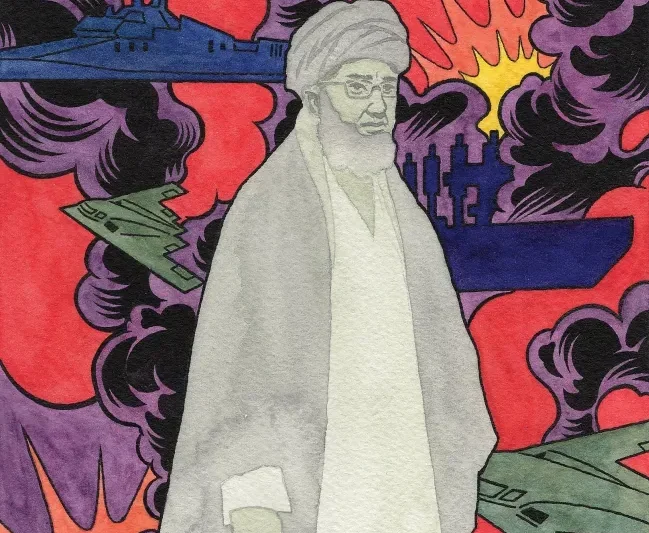
Surviving mass protests and the 2026 war has hardened Iranian rulers around Mojtaba Khamenei and IRGC networks, using Strait of Hormuz extortion and regional escalation to preserve regime power while GDP per capita lags pre-1979 levels and domestic decay accelerates.
Why Iranian Rulers Treat Crises as Strength
Iran’s theocratic rulers have drawn a Nietzschean lesson from nearly half a century of crises: what has not killed their revolution has only made it stronger. In 2026, the Islamic Republic survived a nationwide uprising and a devastating war with the United States and Israel that eliminated its leaders, decimated its military, and ravaged its economy. Yet rather than reconsider the principles and policies that have stoked nearly five decades of confrontation, isolation, and popular unrest, Tehran’s rulers drew the opposite conclusion: revolutionary ideology was not an albatross weighing the regime down, but a life preserver keeping it afloat.
They are not entirely misguided in that belief. Since the 1979 revolution transformed Iran from a pro-American monarchy into an anti-American theocracy, the regime’s organizing principles have been the imposition of theocratic rule at home and resistance against Israel and the United States abroad. These policies have fueled recurring internal unrest and external conflicts that have impoverished, isolated, and destabilized Iran. Paradoxically, however, revolutionary regimes that survive such challenges often emerge more resilient, cohesive, and confident in their ideological convictions. The Islamic Republic, under the new leadership of Mojtaba Khamenei, appears to be following the same pattern.
The joint U.S.-Israeli war on Iran did not meaningfully rally an impoverished and abused Iranian society around its oppressive regime. It did, however, rally the regime around the revolution. Rather than embrace the possibility of a different political order, Tehran’s rulers closed ranks and extended the Khamenei era—literally, by anointing Mojtaba Khamenei to succeed his father, the slain supreme leader Ayatollah Ali Khamenei. “God’s grace is clear,” supporters chanted, “A young Khamenei is here!”
At home, the war entrenched a revolutionary elite whose priority is resistance, not governance. That will only prolong the country’s crisis. The regime can suppress revolts but cannot address the conditions that produce them, leaving Iran trapped in a downward spiral of despotism, decline, and despair.
U.S. President Donald Trump’s attempt to resolve the Iranian challenge instead exacerbated it. The war, launched in the midst of negotiations, has degraded Tehran’s military capabilities but hardened its revolutionary character, deepened its already profound mistrust of Washington, and taught its rulers a dangerous lesson: violence, not dialogue, secures concessions. Tehran has established new precedents for attacking its neighbors, disrupting global energy supplies, and asserting control over the Strait of Hormuz. Its leaders are determined to rebuild their military capabilities and avenge Khamenei’s death, while Israel is equally determined to prevent Iran from restoring the capacity to threaten it. What Tehran may regard as necessary to rebuild its deterrence, Israel may regard as preparation for another war.
Washington can choose to end its war with Iran, but it cannot end the Islamic Republic’s confrontation with the United States. Israel cannot afford to ignore an adversary it regards as an existential threat. Gulf Arab states may have little say in whether Israel and Iran fight another war, but they could bear some of its greatest costs as their cities, energy infrastructure, and shipping through the Strait of Hormuz are vulnerable to Iranian retaliation. Tehran regards the Gulf’s economic and technological achievements not as examples to emulate, but as vulnerabilities to exploit and targets to threaten. For these reasons, the end of this war is likely to prove an intermission rather than a resolution.
The challenges the Islamic Republic poses to the Middle East, the United States, and the global economy can ultimately be resolved only with political change in Tehran. Yet getting through 2026 has simply reinforced the Islamic Republic’s revolutionary conviction that its survival is best ensured through continuity, not change. The country will remain suspended between war and peace abroad, and between prolonged decay and sudden upheaval at home. Iran is thus left in a paradox. Revolutionary ideology has led the country toward destruction. But abandoning revolutionary ideology could lead the regime toward collapse.
The Leaning Tower
Like all ailing autocracies, the Islamic Republic has the potential to both gradually atrophy or abruptly implode. Russian Tsar Nicholas I first referred to the Ottoman Empire as “the sick man” of Europe in 1853; its end came seven decades later. George Kennan wrote in these pages in 1947 that the Soviet Union “bears within it the seeds of its own decay, and that the sprouting of these seeds is well advanced.” It took another 44 years for the Soviet Union to collapse.
The Islamic Republic of Iran has come to resemble the Leaning Tower of Pisa: seemingly on the verge of collapse but defying political gravity decade after decade. Despite its abundant natural resources and human capital, theocratic Iran has been a case study in squandered national potential.
Its economy is trapped in recurring crises, its currency is ravaged by inflation, and generations of educated citizens seek their futures abroad. Nearly half a century after the revolution, Iran’s real GDP per capita remains nearly a quarter below its 1976 peak. That means that many Iranians are materially worse off than their parents and grandparents were before the revolution, an economic regression typically suffered only by failed states or societies ravaged by civil war.
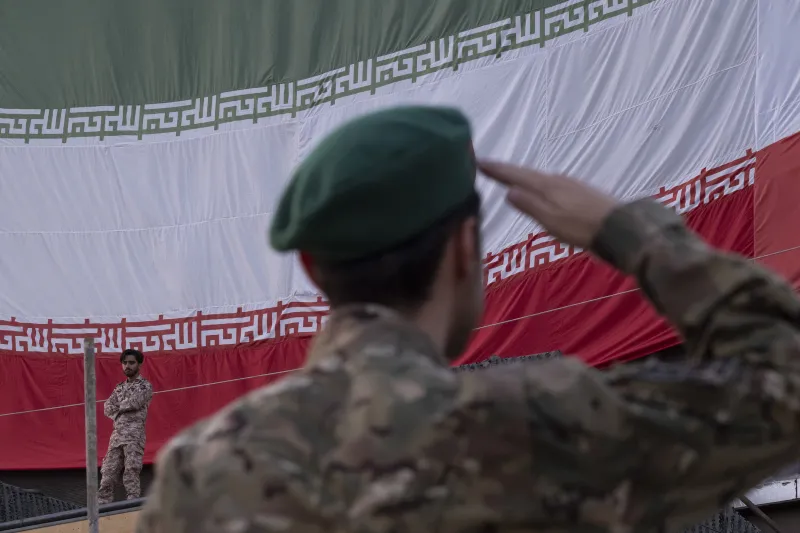
Morteza Nikoubazl / NurPhoto / Getty Images
While Iran’s economy has regressed, its society has progressed. Over the last five decades, its population has nearly tripled, and a predominantly rural and traditional society has become increasingly urban, educated, and socially liberal. Since the 2022–23 “Woman, Life, Freedom” protests, mandatory veiling—what Ayatollah Ruhollah Khomeini once called the “flag” of the Islamic Revolution—appears increasingly unenforceable. Women now routinely walk down the streets of Tehran and other cities with their hair uncovered. The breaking of this taboo will embolden Iranians to break others. In short, Iran’s citizens look forward, Iran’s rulers look backward, and Iran’s economy spirals downward. It is a country whose people have moved beyond the revolution, but whose rulers refuse to leave it behind.
The historian Crane Brinton compared revolutions to fevers that eventually break, ushering in a period of moderation known as Thermidor. Yet many decades after the revolution, Iran’s rulers still refuse to lower the temperature. Iranian society has long sought a return to normalcy, but the regime fears that ending the revolution would mean ending its own rule.
The growing gap between rulers and the ruled can be sustained only through continued brutality. The Islamic Republic’s aspiring Deng Xiaopings were sidelined for fear they might become the regime’s Mikhail Gorbachevs. Its Vaclav Havels have been imprisoned, exiled, or killed. Edmund Burke warned that “a state without the means of some change is without the means of its conservation.” Yet the Islamic Republic’s rulers appear more willing to risk breaking the regime than to allow themselves to bend, and more willing to risk another calamitous war than to abandon the revolutionary principles that have sustained their power.
PERMANENT REVOLUTION
Revolutionary regimes are surprisingly resilient. As the political scientists Steven Levitsky and Lucan Way write in Revolution and Dictatorship, such regimes tend to last nearly three times as long as their nonrevolutionary counterparts, despite being twice as likely to be involved in wars. Although their radicalism often triggers counterrevolution or external war, regimes that survive those early challenges commonly develop three pillars of durability: “a cohesive ruling elite,” “a highly developed and loyal coercive apparatus,” and “the destruction of rival organizations and alternative centers of power in society.”
The Islamic Republic has developed these three pillars because of, not in spite of, decades of internal opposition and near-constant hot and cold wars. The 444-day seizure of the U.S. embassy in Tehran beginning in 1979 and the eight-year war with Saddam Hussein’s Iraq, which began the following year, were foundational crises that brought international isolation and economic devastation to Iran but helped entrench Khomeini’s theocracy.
Both were prolonged well beyond their initial objectives, in part because they served the regime’s internal consolidation: the hostage crisis marginalized moderates, while the exigencies of the war with Iraq smothered internal dissent and helped build the military-industrial system—namely the Islamic Revolutionary Guard Corps (IRGC)—to entrench theocratic government. Just as the Long March forged the bonds and credentials of China’s revolutionary elite in the 1930s, the Iran-Iraq War of the 1980s forged those of the Revolutionary Guard commanders who rule Iran today.
Whereas most states seek normalcy and the resolution of crises, crises in the Islamic Republic provided fertile soil for the revolution. As Abolhassan Bani-Sadr, the Islamic Republic’s first president, observed in 2003, after more than two decades in exile: “With the end of the war, crisis-making did not end. The mullahs’ regime, which was born of crisis-making, could not continue its life without making crises.” The Islamic Republic has made disequilibrium its equilibrium. Indeed, some within the regime privately believe that IRGC attacks on shipping during this year’s cease-fire, as well as the maximalist demands of Iranian negotiators, were meant to prolong the war and entrench the power of hard-liners, much as the Iran-Iraq War helped cement their position.
By attacking Iran weeks after the regime killed thousands of protesters, one of the bloodiest massacres in modern Iranian history, Trump provided Tehran with an external crisis to divert attention from its internal one. Imagine if the United States had attacked the Soviet Union in 1982, as its economy stagnated, its ideology languished, and its aging rulers struggled to preserve a discredited political order.
Rather than hastening communism’s demise, such an attack might have revitalized its defenders, discredited its critics, and transformed a crisis of legitimacy into a struggle for national survival. Something similar seems to have happened in Iran. The war allowed Tehran’s rulers to portray their decades of hostility toward the United States not as the source of Iran’s predicament, but as vindication of their worldview. It is telling that while Israeli and U.S. forces have killed many of the regime’s top political and military leaders, no high-level officials have defected.
No one in today’s Islamic Republic has the stature to push for reform or rapprochement with Washington; its many veto men, whose privileges depend on the status quo, have the power to block both. Profound change requires consensus. Inertia can be entrenched by a few.
A great deal depends on the largely invisible Mojtaba Khamenei. It remains to be seen for how long the Islamic Republic’s political and military elite will defer to a supreme leader who has, for whatever reason, withdrawn from public view. Iranian political culture tends toward personality cults, and over much of the last century the country has largely been led by four strongmen: Reza Shah (1925 to 1941), Mohammad Reza Shah Pahlavi (1941 to 1979), Khomeini (1979 to 1989), and Ali Khamenei (1989 to 2026).
Few major countries have experienced such extraordinary continuity of personal rule across radically different political systems. The present situation—an absent supreme leader hidden from public view, possibly for health reasons or out of fear of assassination, and competing centers of power within the security establishment—therefore looks like an unstable equilibrium.
PROPHETS AND PROFITEERS
After Khomeini came to power, in 1979, outside observers commonly assumed Iran’s revolutionary fervor would fade and that the country’s new leaders could be won over with the right mix of respect and economic inducements. “Khomeini will be somewhat of a saint when we get over the panic,” Andrew Young, a UN ambassador in the Carter administration, predicted in February 1979. “In two years, our relations with Iran will be on a pretty even keel.” But today, the regime still chants “Death to America.” Governments do not cling to policies that they believe endanger their survival. The enduring mistake has been to assume that Iran’s leaders cannot possibly mean what they repeatedly say.
The Islamic Republic has always framed its conflict with the United States not merely as a geopolitical dispute but also as a moral and ideological struggle. Khomeini, who outlined his vision of Islamic government nearly a decade before the revolution and implemented it after seizing power, called the United States “the foremost enemy of Islam” in his last will and testament. His successor, Ali Khamenei, maintained remarkable ideological consistency over nearly four decades, repeatedly describing the rivalry as an “inherent conflict—an inherent incompatibility.” For both men, their publicly articulated convictions proved a far more reliable guide to the Islamic Republic’s conduct than the reassurances of its diplomats or the wishful interpretations of Western observers.
Khamenei’s son and successor Mojtaba—whose face and voice have not been seen or heard since he became supreme leader in March 2026—has echoed his father in his public pronouncements. “The criminal rulers of America and the illegitimate Zionist regime,” he said in one statement, “are not merely enemies of the Islamic Republic, Iran, or the vast front of Islamic resistance; they harbor enmity toward the entire Islamic ummah”—the Muslim community.
After the Democratic victories in the U.S. midterm elections in November, a post on Mojtaba Khamenei’s official English-language X account proclaimed that “the process of the US’s collapse has accelerated.” He further warned that neither American elections nor Iranian concessions would alter the “hegemonic system” of the United States and its hostility toward the Islamic Republic.
The elder Khamenei’s assassination at the start of the war continued the transformation of Iran from a country led by clerics into one dominated by current and former IRGC officers. Many observers assumed this shift from turbans to uniforms would move the regime’s focus from religious ideology to national interest. This has yet to happen. Although the regime has adopted more overtly nationalist rhetoric, it still subordinates the welfare and security of Iranians to the goals of the revolution. The motivations of security officials may be more financial than theological, but their interests have remained bound to the same revolutionary order.
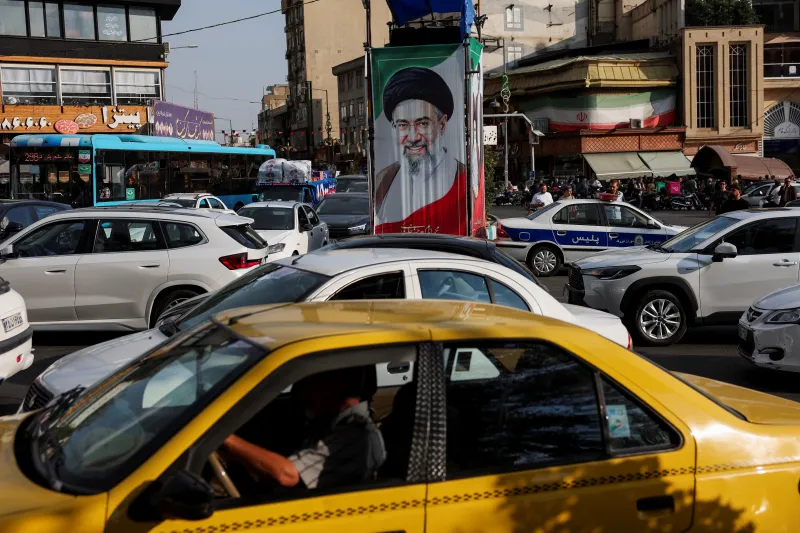
Majid Asgaripour / West Asia News Agency / Reuters
Siamak Namazi, an Iranian American who spent nearly eight years as a hostage of the IRGC in Tehran’s Evin prison, describes the Islamic Republic as a “competitive kleptocracy masquerading as a theocracy.” Many of the regime’s elite, he has observed, are driven less by religious dogma than by the spoils of power: preferential exchange rates, privileged loans, import licenses, and a cut of the smuggling trade.
“The revolutionary Kool-Aid,” he said, “is reserved for the ranks, because someone still has to believe enough to open fire on their own countrymen.” The true believers also have a great deal to lose. A January 2026 Bloomberg report alleged that Mojtaba Khamenei had used a middleman to build a financial empire in the West, including $138 million in British luxury real estate and Swiss bank accounts.
The IRGC has eclipsed the clergy in both political and economic power, with some estimates suggesting they control more than a third of Iran’s economy. Individual commanders have accumulated fortunes, often by enabling the business activities of their children, known as aghazadehs, or princelings. Yet rather than challenge the supreme leader, the senior command’s public statements suggest continued solidarity with the office. Mohsen Rezaei, a longtime IRGC commander with substantial family business interests who returned to serve as secretary of the Supreme National Security Council, expressed his devotion to Mojtaba in a September 2026 interview with state television. “Let us preserve our unity,” he insisted. “Let us preserve our dignity. Let us march behind the leader of the revolution.”
In a 26-page open letter to the American people published the same month, the IRGC declared that the war had “reinvigorated the Islamic Republic” and would ensure the regime’s survival for decades. Rather than question the ideology that had brought Iran to this precipice, the corps reaffirmed velayat-e faqih, the doctrine of clerical guardianship, as an “embodiment of all godly virtues in the political sphere” that empowered Iran to stand firm against diabolical powers. Revolutionary and religious dogma were not the source of Iran’s predicament, they concluded, but rather the “main factors underpinning Iran’s victory.”
Iran’s rulers are neither pragmatic nationalists guided by traditional state interests nor an apocalyptic death cult. They outsource the politics of martyrdom to regional militias while ruthlessly practicing the politics of survival at home. For the true believers, abandoning the revolution would mean betraying their convictions; for its profiteers, it would mean jeopardizing their power and privileges. When the regime’s survival is at stake, they may change their tactics, but they won’t change their worldview.
A Gangster Regime
The war has left Tehran both weaker and much more aggressive. Before the war, the Islamic Republic resembled a zombie regime: its ideology, legitimacy, and its 86-year-old supreme leader all appeared to be fading. Since the outbreak of the war, it has come to resemble a gangster regime—one that practices extortion as statecraft—and is emboldened to attack its neighbors, the global economy, and the United States to extract concessions.
Tehran has been rewarded for its defiance by Trump. In his dramatic address launching the war in February 2026, Trump vowed to end Iran’s nuclear weapons ambitions, destroy its missile capabilities, and neutralize its regional proxies. He encouraged Iranians to overthrow their “wicked” dictatorship. But the president soon changed his tune. Although Trump believed the war would be a swift “little excursion,” Iran’s attacks on tankers in the Strait of Hormuz and its over 6,700 missile and drone attacks on its Gulf neighbors compelled him to attempt one of the most striking reversals in modern American foreign policy.
In June, Trump signed a memorandum of understanding with Tehran that gave away the store. He pledged to lift all sanctions as part of a final agreement, release frozen Iranian assets, permit Iranian oil exports, and work with regional partners on a $300 billion reconstruction package. The agreement also accepted an Iranian role in determining the future administration of the Strait of Hormuz, committed Washington to noninterference in Iran’s internal affairs, and made no mention of Iran’s missiles or regional proxies.
In just four months, Trump had gone from pursuing the most hawkish Iran policy ever to offering the most generous diplomatic terms since the 1979 revolution. A policy of regime change became one of accommodation. Although the memorandum of understanding was short-lived—each side blames the other for abrogating it—the lesson Tehran learned was unmistakable: restraint projects weakness, whereas aggression is rewarded.
“We seize concessions not through dialogue, but with missiles,” declared Mohammad Bagher Ghalibaf, a former IRGC commander, the current speaker of the parliament, and one of the regime’s most powerful figures. “The winner of any agreement,” he added, “is the one who is better prepared for war from the day after.” Tehran is already signaling that its chief postwar priority will not be to rebuild its decimated economy, but to restore—and expand—its ability to impose costs on its adversaries.
The Strait of Hormuz offers the clearest example of this dynamic. What was once an Iranian threat has become, in Tehran’s eyes, an entitlement: the ability to regulate passage through one of the world’s most consequential energy chokepoints. For Iran, this constitutes both economic leverage and a potential deterrent against future attacks on itself and its regional proxies. For the rest of the world, it creates the prospect that Tehran can hold global energy markets hostage whenever it chooses.
Before the war, the Iranian regime’s longtime ambitions to drive the United States from the Middle East and end Israel’s existence appeared fanciful. Today, the growing number of American politicians and commentators who have called for the United States to end its aid to Israel and wind down its regional military presence has emboldened Tehran to believe it is winning the ideological war. “POTUS clearly recognizes that the vast majority of Americans are disgusted with Israel,” Iranian Foreign Minister Abbas Araghchi said in a post on social media in November. He continued: “Americans are evidently sick and tired of Israel bamboozling US administrations into Forever Wars. They had enough. So has our region.”
FRISBEES AND FERRARIS
The Islamic Republic’s newfound confidence is partly rooted in its ability to inflict enormous damage at comparatively little cost. Its Persian Gulf neighbors have spent decades and trillions of dollars transforming themselves into global hubs of energy, transportation, finance, and technology.
And Iran can now threaten all of it with cheap Shahed drones against which the United States and its partners must field multimillion-dollar interceptors—a costly undertaking that Nick Carter, a retired British general and former chief of the British defense staff, likened to “Ferraris being thrown at Frisbees.” Building is costly and slow; destruction is fast and cheap. Rezaei has pledged to target undersea cables, data centers, and artificial intelligence facilities across the Gulf in the event of renewed fighting.
The Islamic Republic’s theory of victory does not require defeating the United States militarily. It only requires persuading two audiences—the American public and Iran’s Gulf neighbors—that the U.S. military presence in the region and the partnership with Israel bring more harm than good. The attacks on American bases, Gulf data centers, and ships passing through the Strait of Hormuz are a message that the road to regional security must go through Iran, not the United States or Israel. “The nations and territories of the region will no longer serve as a shield for American bases,” Mojtaba Khamenei has declared.
But this Iranian aggression is likely to produce the opposite of what it intends. Tehran’s threats against the Gulf only stoke the anxieties that sustain Washington’s military presence in the region. The result is a self-perpetuating cycle in which Gulf governments seek American protection against Iran, Tehran attempts to evict Washington from the region, and each new round of conflict deepens the Gulf states’ dependence on the United States.
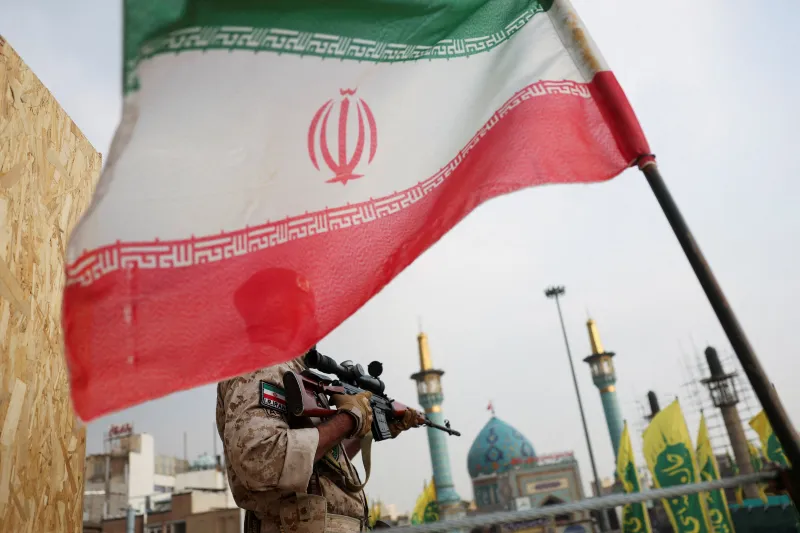
Majid Asgaripour / West Asia News Agency / Reuters
Iran’s confrontation with Israel poses a different, potentially more explosive danger. The regime’s hostility to Israel has survived the destruction of much of Tehran’s military infrastructure and its regional proxy network. Iranian leaders remain determined to rebuild their missile and drone arsenals, restore the capabilities of allies such as Hezbollah, and avenge the killing of Ali Khamenei. Yet Israel is equally determined to prevent Iran from reconstituting the capabilities that threatened it before the war. Each side may therefore interpret the other’s attempts at deterrence as preparations for another attack.
As for Trump’s original justification for the war—to avert an Iranian nuclear bomb—his actions and words have persuaded a growing number of Iranian officials to openly advocate nuclear arms development. The president himself supplied Tehran’s talking points. “If they had a nuclear weapon,” Trump told a crowd of supporters six months into the war, “I’d be calling the supreme leader and I’d be saying: ‘Mr. Supreme Leader, how are you, sir? Is there anything we can do for you?’—as opposed to bombing the crap out of him.”
Why Iranian Rulers Risk Another War
THE AMERICAN PREDICAMENT
Since the 1979 revolution, Washington has tended to underestimate the Islamic Republic’s agency and overestimate its own ability to shape Iran’s future. Advocates of engagement often blame American hostility for Tehran’s intransigence, while advocates of confrontation have blamed American weakness. One side has overestimated the Islamic Republic’s flexibility; the other, its fragility. Both have been susceptible to what the former U.S. national security adviser H. R. McMaster has called “strategic narcissism”: the assumption that adversaries are primarily reacting to the United States rather than acting on their own interests, identities, and ambitions.
Trump’s war exposed the limits of trying both to bomb Iran into submission and to bribe it into moderation. In the span of four months, Washington employed overwhelming military force to weaken or overthrow the Islamic Republic, then offered sweeping economic and diplomatic incentives to alter its behavior. Neither altered a revolutionary stance that has been remarkably consistent for decades. As Henry Kissinger wrote in 1957, “The distinguishing feature of a revolutionary power is not that it feels threatened . . . but that nothing can reassure it.”
The seeds of the next war have already been planted. Regardless of what the United States chooses to do, the Islamic Republic’s renewed confidence, along with its resolve to rebuild its military might and retaliate for the death of its supreme leader, portends another showdown with Israel. Each side now views the other as an existential threat, and there is no direct channel of dialogue to prevent miscalculation and a potentially even more destructive war. For Washington, the implication is clear: The United States may seek to disengage from the Middle East, but it cannot insulate itself from the consequences of another war between Iran and Israel.
The Islamic Republic’s most consequential compromises came in 1988, when Khomeini reluctantly accepted a cease-fire ending the eight-year war with Iraq, and in 2015, when Iran agreed to stringent restrictions on its nuclear program. Although separated by nearly three decades, both decisions followed a similar logic. Faced with overwhelming pressure, international isolation, and a diplomatic off-ramp that does not require it to change its identity, the Islamic Republic has demonstrated a capacity to make concessions—but only in the service of living to fight another day.
In a 2013 speech foreshadowing Tehran’s nuclear compromise, Ali Khamenei described this approach as “heroic flexibility.” The supreme leader likened the regime to a wrestler who “shows flexibility for technical reasons” but must never “forget who his opponent is and what he is doing.” Tactical flexibility, Khamenei insisted, must never come at the expense of Iran’s “revolutionary nature”: “The fact that the world has changed cannot give us an excuse to change our behavior, our ideals, and our goals.” Ali Khamenei had the legitimacy to push for heroic flexibility. The current regime is filled with men who will pursue escalation long before they ever call for compromise.
Today, the challenges posed by Iran are much greater than a decade ago. Washington must not only prevent it from acquiring nuclear weapons but also deter it from attacking its neighbors, disrupting the global energy trade through the Strait of Hormuz, and waging AI-assisted cyberwarfare and influence operations against the United States and its partners. At the same time, Washington has fewer allies and less diplomatic leverage than it did in 2015, and the trust gap between the two governments may prove unbridgeable. The Iranian regime believes that global public opinion is on its side, not Trump’s.
The 48-year history of U.S. policy toward the Islamic Republic shows that grand designs, whether for regime change or rapprochement, have failed. On two occasions, in 1988 and 2015, both sides reached narrow agreements that addressed Tehran’s conduct rather than its character. Lasting change, however, can come only from within Iran, when the pillars that sustain the Islamic Republic—a cohesive elite, a loyal coercive apparatus, and the absence of rival centers of power—crack. Rather than widening those cracks, Trump’s war may have narrowed them.
Iran’s rulers see the regime’s survival as proof of their own strength. Yet each crisis they weather leaves the country poorer, its people more estranged, and the regime more dependent on brutality to endure. Like Washington before it, Tehran now overestimates what force can achieve; its hubris may help produce the next war, just as the repression that quelled the last uprising will invariably fuel another.
The revolutionary ideology that keeps the regime afloat will continue to weigh Iran down, leaving in place a leadership even more intent on resisting its adversaries, at home and abroad, than on governing its people. The regime may declare victory, but for the proud people of Iran—an ancient civilization and an energy superpower with a worthless currency, a shunned passport, and a leader in hiding—there is little reason to celebrate. What has not killed the Islamic Republic is slowly killing Iran.