
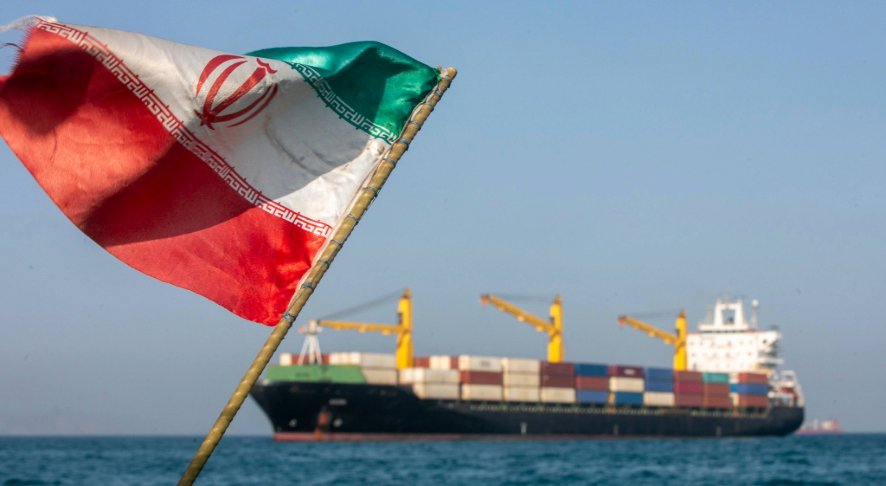
US strikes stripped the IRGC Navy of bases, radars and watchtowers, yet drone attacks on Hormuz shipping rose to 62 percent of incidents after mid-July, and damage clustered at funnels and engine rooms suggests infrared seekers. Open-source data cannot measure miss distances.
IRGC Drones Adapt After US Strikes
The United States military has repeatedly attacked both the Iranian Navy’s and Islamic Revolutionary Guard Corps Navy’s (IRGCN) infrastructure in the Strait of Hormuz, with the latter bearing the brunt of strikes during the escalation in US attacks in July. The US targeted Iranian base and port facilities, watchtowers, radar sites and other sensors to blind its military in the area. However, despite the reduction in its capabilities, the IRGC has found a way to engage vessels transiting the waterway.
Although reliable data remains scarce, reporting from the International Maritime Organization (IMO), United Kingdom Maritime Trade Operations Centre, and the Washington Institute for Near East Policy highlights the continued threat faced by shipping in the strait, with the IMO tracking 96 incidents between 1 March and 4 October.
Eighteen attacks on shipping can be identified as employing one-way attack uncrewed aerial vehicles (OWA UAVs). A further 17 are very likely to have also been targeted by these systems based on descriptions, damage profiles and, where possible, imagery and video analysis. Video evidence is rare, but when available has shown damage consistent with the speed and warheads of OWA UAVs rather than that from anti-ship missiles, naval mines or uncrewed surface vessels (USVs).
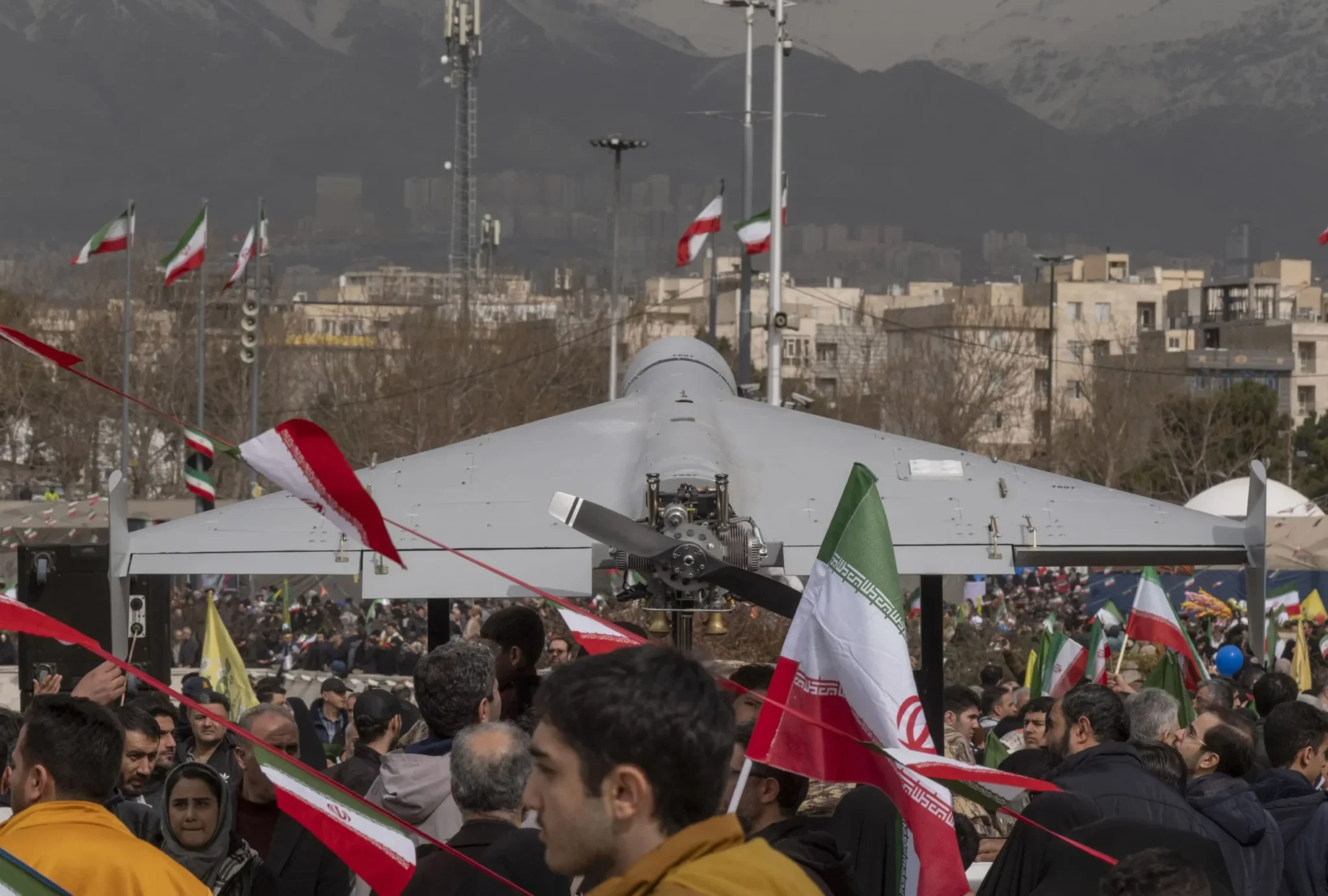
Attacks Shift Toward the Narrow Channel
Data also points to two distinct profiles in the attacks: before 15 July and afterwards.
Before 15 July, Iranian operations blended attacks by patrol boats armed with rocket-propelled grenades, seizures of vessels, and strikes by USVs, anti-ship missiles and OWA UAVs, with some of the latter targeting ships anchored closer to ports in Gulf Cooperation Council countries.
Later, USVs and seizures disappeared entirely from the datasets, while anti-ship missile attacks have significantly decreased. After 15 July, most incidents attributed to Iran were clustered around the narrowest part of the Strait of Hormuz, targeting outbound ships, and 29 out of 47 attacks (62%) are assessed to be OWA UAV strikes. Most of the remaining cases lack sufficient data to make that determination, but several others indicate that OWA UAVs were used. This compares to only seven out of 47 incidents (15%) identified or assessed as OWA UAVs in the phase before 15 July.
Matching the weapon to the attack
Available data post-15 July indicates that many attacks have targeted the port side or stern of vessels, the sides facing the Iranian coastline and islands as ships transit east or south. When they provide details of the attack, or damage caused, reports frequently note that the vessels were hit near or at the funnel or engine room. Often, the result was a localised fire, typically brought under control within a few hours, with most causing no structural damage. However, these attacks around the funnel and engine room, the hottest areas of the ship’s surface, suggest that some engagements may have used weapons equipped with infrared (IR) seekers.
There is precedent for equipping Shahed OWA UAVs with IR seekers. In June 2025, the War Sanctions website operated by the Defence Intelligence of Ukraine reported an Iran-supplied Shahed 136 with an unidentified infrared video camera.
The downed air vehicle featured a serial number (MS001) that suggests a new production series. It was also equipped with a computing board from Nvidia’s Jetson series, highlighting Russia’s and Iran’s ongoing ability to circumvent sanctions and obtain advanced computing hardware.
Ukrainian analysts concluded that the MS001 variant was produced in Iran due to its Iranian satellite receiver antenna and inertial navigation system – the Nasir and Sadra systems, respectively. The Jetson chip can support engagements using an onboard target recognition database, among other tasks.
While using an onboard target recognition database would represent a more sophisticated means of engagement, other less technically challenging or advanced approaches are also possible, such as guiding the air vehicle towards hotspots found by a seeker, using simpler pattern matching rather than a target database, or a datalink to an operator who controls the terminal phase of the attack. A further option would be a semi-active approach, whereby spotters illuminate the target and the seeker guides the munition towards it; however, this approach likely does not lend itself to a consistent strike pattern.
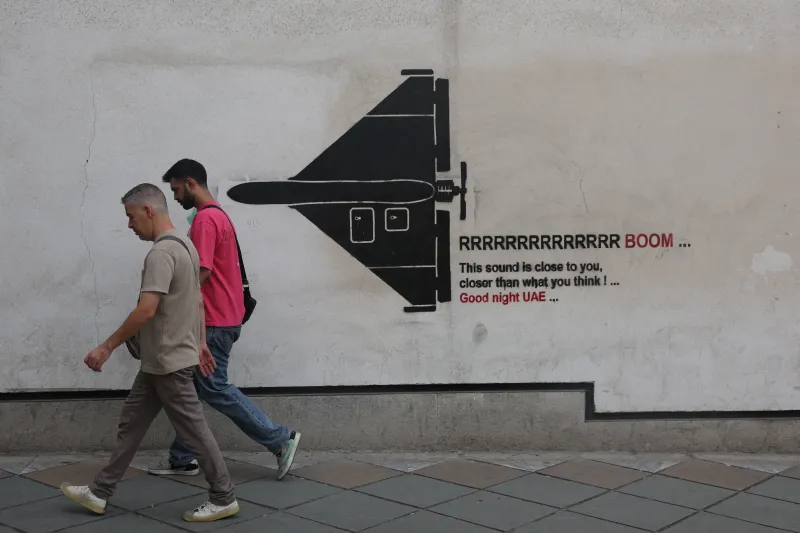
Attack patterns
The IRGC has shifted to attacking ships where they are canalised in a new transit route in the southern channel of the Strait of Hormuz. Tehran deems this channel to be an illegal route, with vessels that are not from countries it designates as friendly or neutral considered targets for the Iranian military.
Videos posted on social media of attacks in mid-October confirm the presence of the IRGCN’s small boats used as spotters. These report the location, speed and direction of vessels to the IRGC Aerospace Force, which then sends swarms of roughly two to five OWA UAVs – likely consisting of a mixture of versions of the Shahed 136 and the newer jet-powered Shahed 238, as some Iranian outlets indicate – to attack each ship.
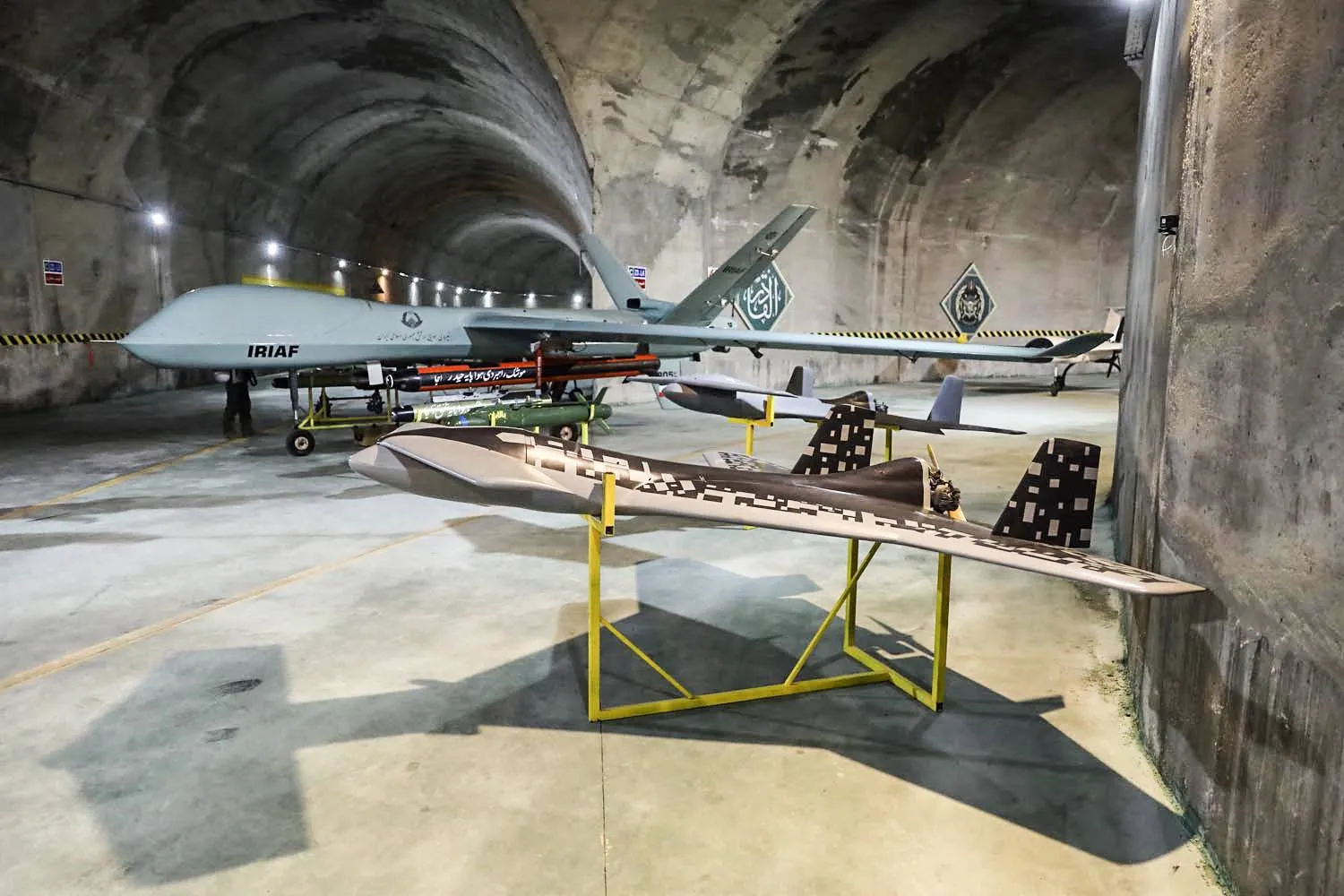
IRGC Drones Outlast American Naval Power
In transiting through the southern channel, vessels sail east, then south, with their engine rooms and funnels pointing north towards the likely approaches of the UAVs from Iran’s coastline and islands. Reports from ships have noted several projectiles flying simultaneously and frequent near misses. This could indicate that the more advanced engagement profile requires the seeker to obtain a heat source and an image – hence the typical approaches from port side and not directly astern.
The success rate of the OWA UAV attacks cannot be determined from current open-source data, making it difficult to assess how advanced – and effective – the seekers and associated software that equip these systems are. For example, more advanced hardware would enable the ship image to be clearer and the target point to be identified from farther away, thus allowing the air vehicle to be directed from farther away, which would likely reduce the miss distance. Similarly, advances in software alone mean that the IR image would not need to be sourced from a particularly advanced seeker.
Whatever the attack profile employed and mixture of OWA UAVs used, the IRGC has been able to employ these systems to harass and successfully target marine traffic in the Strait of Hormuz in the face of US naval power and with severely degraded capabilities.