
Iranian missile strikes on key infrastructure have accelerated defense talks between Kuwait and Pakistan. Facing 1,414 strikes, Kuwait City seeks operational support and hardware while diversifying security ties toward South Asian militaries alongside traditional Western allies.
Sustained Iranian missile strikes against airports and critical infrastructure are forcing GCC capitals into a profound Gulf Security Shift, away from total reliance on Western defense umbrella models. As Kuwait City negotiates expanded defense ties with Islamabad, this broader Gulf Security Shift highlights how regional powers are turning toward South Asian militaries to secure operational backing and layered deterrent capabilities.
Gulf Security Shift deepens
On 17 July, Kuwait and Pakistan opened preliminary discussions over expanding their defence relationship beyond the cooperation agreement signed in 2023. According to reports, the talks have covered military personnel, fighter aircraft, drones, air defence systems, and possible arms procurement, although negotiations remain at an early stage and neither government has publicly confirmed what a final agreement might include. The discussions come just weeks after a renewed escalation of the Iran war once again exposed the vulnerability of Gulf states to sustained missile and drone attacks. Kuwait was among the countries most directly affected.
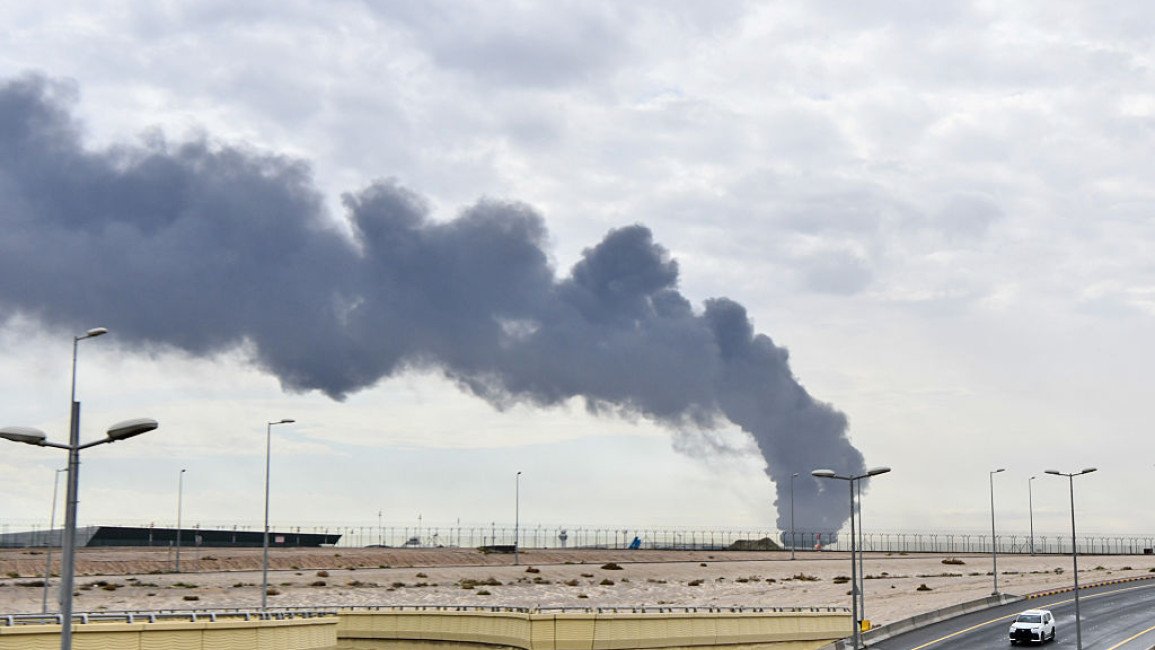
On 3 June, Iranian strikes hit Kuwait International Airport, followed by further attacks on US-linked military facilities and a desalination plant, underscoring how quickly civilian infrastructure can become part of a regional conflict. Whether the current negotiations ultimately produce a formal defence pact or a more limited expansion of military cooperation remains uncertain. Even so, Kuwait’s outreach to Islamabad suggests a broader shift in the way Gulf governments are approaching regional security. Alongside long-standing partnerships with the United States and Europe, countries across the Gulf are increasingly exploring closer military relationships with South Asian partners capable of providing operational support, training and specialised capabilities alongside defence equipment.
New Gulf Security Shift models
In June 2023, Kuwait and Pakistan signed a defence cooperation agreement covering joint military training, exercises and exchanges between their armed forces. During talks this month, both governments are now discussing whether that framework could be expanded to include military personnel, fighter aircraft, drones, air defence systems, and possible arms procurement.
The talks remain preliminary, and neither side has publicly indicated what form a future agreement might take. On 26 July, Kuwait gave that 2023 framework the force of domestic law, publishing a decree formalising it in the official gazette, Kuwait Alyawm. The decree covers training, logistics, intelligence-sharing, and personnel exchanges – the same areas the 2023 agreement already addressed – and does not include a mutual defence clause, underlining the distance between this administrative step and the far more consequential pact Kuwait is now discussing with Islamabad.
The discussions come after months in which Kuwait has faced the most sustained military pressure in its modern history. By 16 July, the country had recorded 1,414 Iranian attacks since the outbreak of the conflict – 1,002 drones, 387 ballistic missiles and 25 cruise missiles – making it the second most targeted GCC state after the United Arab Emirates.
On 3 June, Iranian missiles and drones struck Kuwait International Airport, damaging Terminal 1, killing one person and injuring more than 60 others. Subsequent attacks targeted US military facilities, while strikes against a desalination plant and, more recently, a power station demonstrated how rapidly the conflict had expanded from military targets to infrastructure essential to the country’s daily functioning. Kuwait’s response has extended well beyond repairing the damage.
On 8 June, the US State Department approved a possible $1.98 billion sale of counter-unmanned aerial systems, including Anduril’s Roadrunner-M and Anvil interceptor drones, electronic warfare systems, surveillance towers and command-and-control software. The country is also moving ahead with its acquisition of the Norwegian-developed NASAMS air-defence system, with Kongsberg and Raytheon signing a contract worth around $400 million only days ago to deliver additional components under the US Foreign Military Sales programme.
Accelerating the Gulf Security Shift
On 28 June, Kuwait also brought into force a long-pending defence cooperation agreement with Ukraine, opening the way for expanded military training, defence-industrial cooperation and possible joint production. Although originally signed in 2018, the agreement entered into force as Kuwait searched for operational lessons from Ukraine’s experience in countering sustained missile and drone attacks. The reassessment has not been limited to procurement.
Kuwaiti officials have also reviewed how the country’s armed forces would sustain operations during a prolonged missile and drone campaign, while the conflict appears to have reshaped Kuwait’s own willingness to employ military force. Reportedly, Kuwaiti fighter aircraft joined Bahrain in strikes against Iranian military targets in early July, marking what would represent Kuwait’s first direct military retaliation against Iran if confirmed. Against that backdrop, Kuwait’s talks with Islamabad look less like an isolated initiative than the latest step in a broader effort to shore up the country’s ability to withstand a prolonged missile and drone campaign.
Saudi Arabia has already provided the clearest indication of how Pakistan’s military role in the Gulf is evolving. In September 2025, Riyadh and Islamabad signed the Strategic Mutual Defence Agreement, expanding a security relationship that had rested for decades on military training, advisory missions, and the protection of key facilities.
The deployment that followed in May 2026 included around 16 JF-17 Thunder multirole fighters – jointly produced by Pakistan Aeronautical Complex and China’s Chengdu Aircraft Corporation – alongside approximately 8,000 Pakistani troops, in addition to the estimated 1,500-2,000 Pakistani military personnel already stationed in the Kingdom under earlier defence agreements. According to officials familiar with the arrangement, the pact could eventually allow for the deployment of up to 80,000 Pakistani troops to support Saudi border security if required.
Gulf Security Shift reshapes alliances
Pakistan’s military presence in Saudi Arabia predates the 2025 agreement by decades. Earlier deployments focused primarily on training, advisory missions and the protection of strategic installations. The Strategic Mutual Defence Agreement considerably broadened that framework, adding combat aircraft, larger troop deployments and closer operational integration as Riyadh adapted its security posture during the Iran war. The agreement did not create an entirely new relationship; it formalised and significantly expanded one that had long existed. The military partnership has since grown into a broader strategic compact.
Saudi Arabia has supported Pakistan financially for decades, most recently by extending a fresh $3 billion loan and rolling over an existing $5 billion deposit after Islamabad came under renewed financing pressure during the Iran war. Those measures followed growing uncertainty over Emirati financial support, after Abu Dhabi sought the repayment of part of its outstanding loans to Pakistan rather than agreeing to the longer rollover Islamabad had been seeking. The episode also illustrated that Gulf partnerships are becoming less uniform. While Saudi Arabia moved quickly to stabilise Pakistan’s finances, the UAE adopted a more transactional approach, reflecting the different strategic priorities that are emerging among Gulf capitals.
Abu Dhabi has continued to deepen its relationship with Pakistan, but it has also expanded cooperation with India across trade, investment and, more recently, selected defence technologies. Gulf states are not pursuing identical approaches towards South Asia: distinct partnerships are emerging, shaped by their own strategic interests. Kuwait’s discussions with Pakistan remain far less advanced. Reuters reported that Pakistani officials have approached the negotiations cautiously, reflecting both the preliminary nature of the talks and Islamabad’s reluctance to become more deeply involved in regional tensions with Iran.
Even so, Kuwait’s interest suggests Saudi Arabia may no longer be the only Gulf state seeking a security relationship with Pakistan that extends beyond defence diplomacy and military exchanges.
Kuwait’s discussions with Pakistan coincide with a broader expansion of Gulf security partnerships across South Asia. Gulf governments are not relying on a single regional partner: they are increasingly cultivating relationships that serve different strategic purposes. Pakistan’s long-standing military integration with Saudi Arabia provides operational experience, personnel and force integration. India’s engagement has followed a different trajectory, built over decades on trade, energy, maritime connectivity and a large expatriate community before only recently beginning to acquire a more explicit security dimension.
Real Gulf Security Shift impacts
That evolution accelerated following the Iran war. During his July tour of Qatar, Bahrain, Kuwait and Oman, Indian External Affairs Minister S. Jaishankar placed regional security, maritime stability and strategic cooperation alongside the traditional pillars of India’s Gulf policy.
The visit reflected New Delhi’s growing willingness to engage Gulf partners on defence and security issues at a political level rather than limiting the relationship to economics and diplomacy. Concrete signs have begun to follow. In June, the UAE opened preliminary discussions with India on the possible acquisition of the BrahMos supersonic cruise missile and the Akashteer integrated air-defence command-and-control system.
Although both discussions remain at an early stage, they illustrate how Gulf governments are beginning to evaluate Indian military capabilities in areas where operational experience, rapid innovation and industrial cooperation now matter alongside traditional procurement considerations. Maritime security has followed a similar trajectory. Over the past several years, India and Gulf states have expanded naval exercises, port visits, information-sharing and maritime domain awareness initiatives across the Arabian Sea and the western Indian Ocean. Those activities have taken on greater strategic significance following repeated disruptions to commercial shipping in the Strait of Hormuz and the Red Sea, reinforcing India’s role as a security stakeholder across the wider Indian Ocean, not merely an energy customer of the Gulf.
The comparison with Pakistan, then, is one of complementarity, not competition. Pakistan offers capabilities that few other partners can readily provide: decades of military integration with Saudi Arabia, experienced personnel already familiar with Gulf operational environments and the ability to deploy forces rapidly during periods of crisis.
India’s defence relationship with Gulf states remains considerably less developed, but it rests on a much broader strategic foundation that now extends to technology, maritime security and selected areas of defence cooperation. The two relationships do not replace Western partners; they expand the range of options available to Gulf governments as they seek greater strategic flexibility. For Gulf capitals, the significance of this shift extends well beyond individual weapons systems or bilateral agreements.
Kuwait’s talks with Pakistan are unlikely to be an isolated case. As other Gulf states weigh similar arrangements with South Asian partners, defence procurement, maritime security and economic ties are becoming harder to treat separately – prompting Gulf governments to build overlapping networks of partners instead of leaning on one alone.