
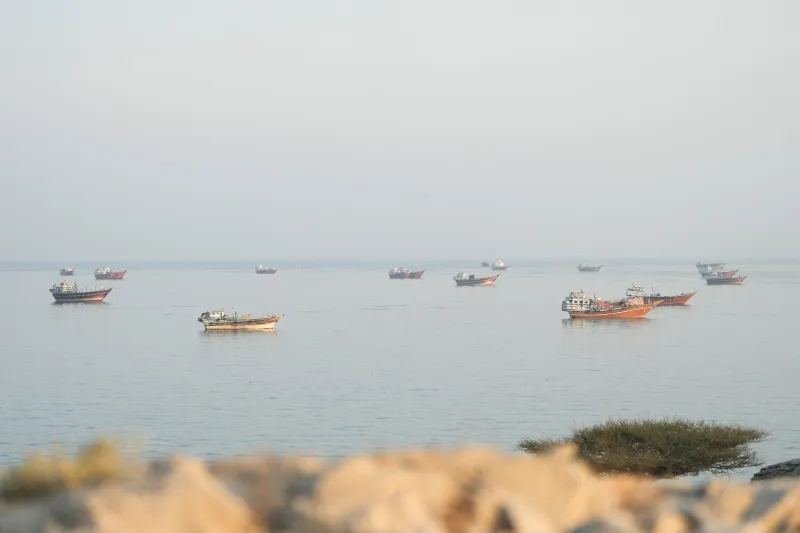
Iran and the Houthis are throttling Hormuz and the Bab el Mandeb while Britain, France, Saudi Arabia and Washington build three separate missions. History shows split commands invite escalation. Merging them under one coalition is the only path to lasting deterrence.
Iran chokes Hormuz and Bab el Mandeb
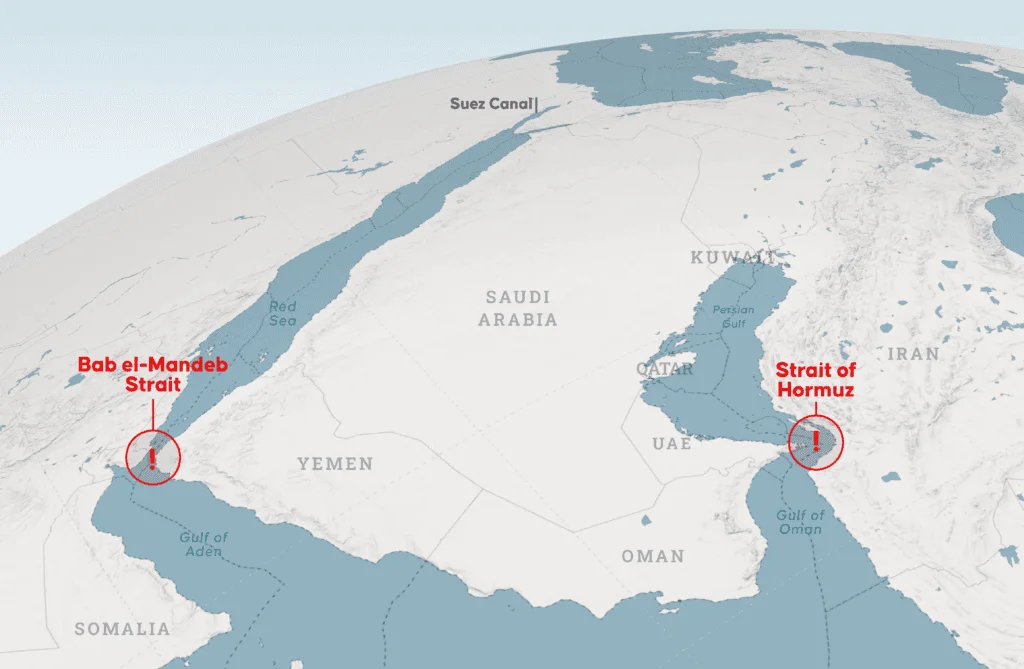
Over the past month, Iran has made its most intense attacks on shipping in the Strait of Hormuz since the United States and Israel declared war, in February. More than 100 drone and missile launches into the strait have been recorded since the war began; in October alone, a container ship and a bulk vessel sank in the waterway. Meanwhile, in the Red Sea, Yemen’s Iran-backed Houthis have sustained their campaign to throttle seaborne trade as they target Saudi Arabia more directly, seizing new territory along the Bab el Mandeb Strait.
These dual maritime crises form part of the same strategic problem—one that, despite its new intensity, has existed for years. In 2019, Iran attacked shipping across the Gulf in response to the first Trump administration’s maximum-pressure sanctions campaign; in 2023, the Houthis launched assaults in the Red Sea following Hamas’s October 7 massacre in Israel. After each of these campaigns, the United States and its partners established maritime coalitions to protect these vital seaborne trade routes. The efforts helped secure the waterways, but they never fundamentally persuaded Iran and its proxies that asymmetric attacks on shipping were an ineffective way to project power. On the contrary, such tactics have only become more appealing to Tehran.
Even now, some shipping persists through both waterways. On October 15, Lloyd’s List Intelligence reported that transit through the Bab el Mandeb Strait was up modestly from August. U.S. naval patrols—as well as creative logistical adaptation by Gulf states, including ship-to-ship transfers, have allowed some oil to move through Hormuz. But shipping still remains throttled, and international actors have not yet found a way to update their deterrence playbook.
In 2019 and 2023–24, U.S., European, and Middle Eastern navies formed separate, overlapping defensive maritime coalitions to escort vessels, collect intelligence on evolving threats, and intercept missile and drone attacks. In the United States’ case in 2024, a separate multinational coalition also conducted offensive strikes in Yemen to undermine Houthi maritime capabilities.
Today, governments are falling back on the same instinct—to join forces, but not all their forces. The British and the French have proposed a multinational maritime defense coalition to secure the Strait of Hormuz once the war ends, while Saudi Arabia is planning, but has not yet deployed, its own alliance to protect the Red Sea. Neither project includes the United States, which has deployed nearly one-third of its naval warships to the Middle East in an attempt to reestablish freedom of navigation, enforce a naval blockade against Iran, and support U.S. attacks on Iran.
Multiple short-term, insufficiently coordinated defensive missions organized around voluntary contributions can buy down marginal risk for shippers in the near-term but they cannot deliver long-term deterrence. Separate missions embolden Iranian and Houthi leaders, who will interpret them as half-measures that are easily strained by resource scarcity, an inability to adapt quickly to evolving threats, and the absence of real-time intelligence sharing across the two chokepoints.
As crises in the Strait of Hormuz and the Red Sea become more linked amid an expanding regional war, replicating the patchwork maritime strategy that never fully worked would be a serious mistake. What is needed instead is a single, sustained multinational effort to secure both waterways that combines American military capabilities with the imprimatur of a unified coalition of Asian, European, and Middle Eastern countries. Otherwise, Iran and the Houthis will again learn that threatening global commerce in maritime chokepoints is a strategy worth repeating.
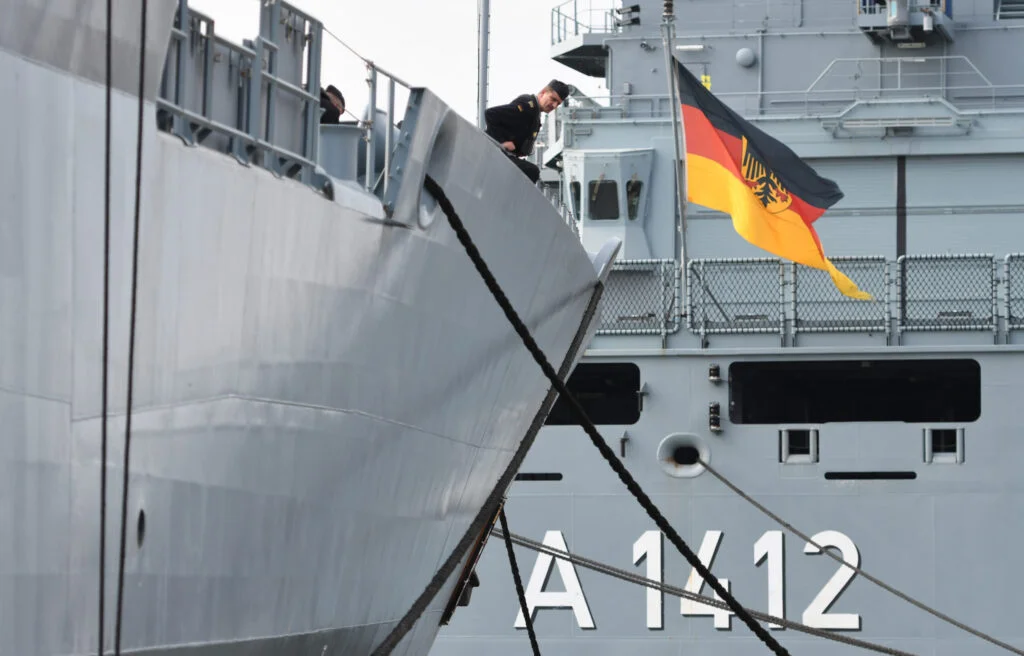
One Maritime Coalition beats three missions
The maritime coalitions now taking shape share a troubling precedent. Twice before, international actors have mounted similar efforts, and their mixed results show why even effective defensive operations fail to prevent renewed attacks in Middle Eastern waterways. In mid-2019, after the first Trump administration launched its “maximum pressure” sanctions campaign against Iran, Tehran attacked tankers off the coast of the United Arab Emirates (UAE) and in the Gulf of Oman and seized a British-flagged oil tanker from international waters in the Strait of Hormuz.
Insurance premiums spiked tenfold, and freight rates for crude-oil-carrying tankers jumped nearly 40 percent. In response, Washington established the International Maritime Security Construct (IMSC), headquartered in Bahrain; the mission sought to maintain naval vessels across key waterways in the Middle East to deter Iran and collect intelligence on Iranian maritime activities to share with commercial shippers.
By the end of 2019, Albania, Australia, Bahrain, Saudi Arabia, the UAE, and the United Kingdom had joined the IMSC. But despite Washington’s efforts to expand the coalition further, most European countries abstained from joining. They were frustrated with the Trump administration’s withdrawal from the 2015 nuclear deal with Tehran and wary that joining the IMSC—with its focus on confronting Iran—would be seen by Tehran as aggressive or an endorsement of Washington’s maximum pressure campaign. Instead, eight European countries joined a French-led mission called European Maritime Awareness in the Strait of Hormuz (EMASoH), which emphasized de-escalation, surveillance, and encouraging regional dialogue with Iran.
Four years later, when the Houthis began to threaten shipping in the Red Sea—spiking maritime insurance rates and forcing vessels to detour around the Cape of Good Hope—the United States and Europe once again organized separate responses.
In December 2023, the United States launched Operational Prosperity Guardian (OPG), a naval coalition soon joined by more than 20 countries. The mission maintained four to eight warships in the Red Sea area at any given time and successfully shot down Houthi drones and missiles; within its first month, its leaders said it had facilitated safe transit for more than a thousand commercial vessels.
The European Union formed its own, substantially smaller defensive maritime operation that escorted European commercial vessels through the southern Red Sea and also intercepted Houthi drone and missile attacks.
In both crises, the United States, Europe, and the Gulf states broadly agreed that Iranian and Houthi threats to freedom of navigation required a response. Because freedom of navigation was viewed as a fundamental principle of the global order, assembling large groups committed to upholding this pillar was intended to demonstrate international resolve and isolate the bad actor. But disagreement over how to confront the challenge diluted the missions. Many governments declined to join offensive strikes or coalitions explicitly directed at a state. Political divides further splintered the response, as Europe sought to put distance between itself and the United States’ Iran strategy.
The 2019–24 missions achieved important tactical successes by improving maritime awareness, intercepting some attacks, and stopping a complete shutdown of shipping. But the lack of a long-term, coordinated strategy for ending Iran’s aggression weakened the response. The missions never fully persuaded shippers that these waterways were safe—especially the Red Sea—or prevented Iran and the Houthis from eventually returning to their efforts to exploit the chokepoints. According to a 2021 assessment by the Dutch government, the Netherlands assumed that Iran could differentiate between the European maritime mission and the American-led one and would be less aggressive toward European vessels, underscoring Tehran’s ability to exploit the gaps between overlapping operations and the need for a unified front.
GREATER THAN THE SUM OF ITS PARTS
The lessons from these missions matter enormously today. After years of shadow warfare, the United States and Israel have now fought Iran directly. In 2025, the United States and Israel also launched separate months-long campaigns against the Houthis in Yemen, following a decadelong Saudi-led effort to dislodge the rebel group. These campaigns badly battered Iran and the Houthis. But they also gave them a chance to hone their asymmetric tactics.
Having survived wars intended to collapse their regimes, Iran and the Houthis have emerged more willing to hold global commerce at risk and impose costs on actors not directly involved in the wars against them. Both have learned that they do not need to fully close maritime chokepoints. Simply threatening them can change decision-making in the halls of power.
Nobody wants tolls or unilaterally imposed service payments on these waterways, proposals that Iran has tabled. Instead, to try to deal with the crises, there has been a flowering of disjointed maritime coalition planning efforts. The British-French plan resembles previous European maritime efforts, proposing a defensive multinational mission to escort vessels.
It excludes the United States and will not activate until the U.S.-Israeli war with Iran ends for good—a condition that essentially guarantees its uselessness in the near term. Houthi aggression, meanwhile, has sent Saudi Arabia scrambling to secure Red Sea transit, which is increasingly vital given disruptions in the Strait of Hormuz. In late July, Riyadh announced the formation of its own defensive maritime coalition with 14 countries from across Africa and the Middle East, as well as Bangladesh and Pakistan, which will be distinct from both European efforts on Hormuz and the U.S. mission.
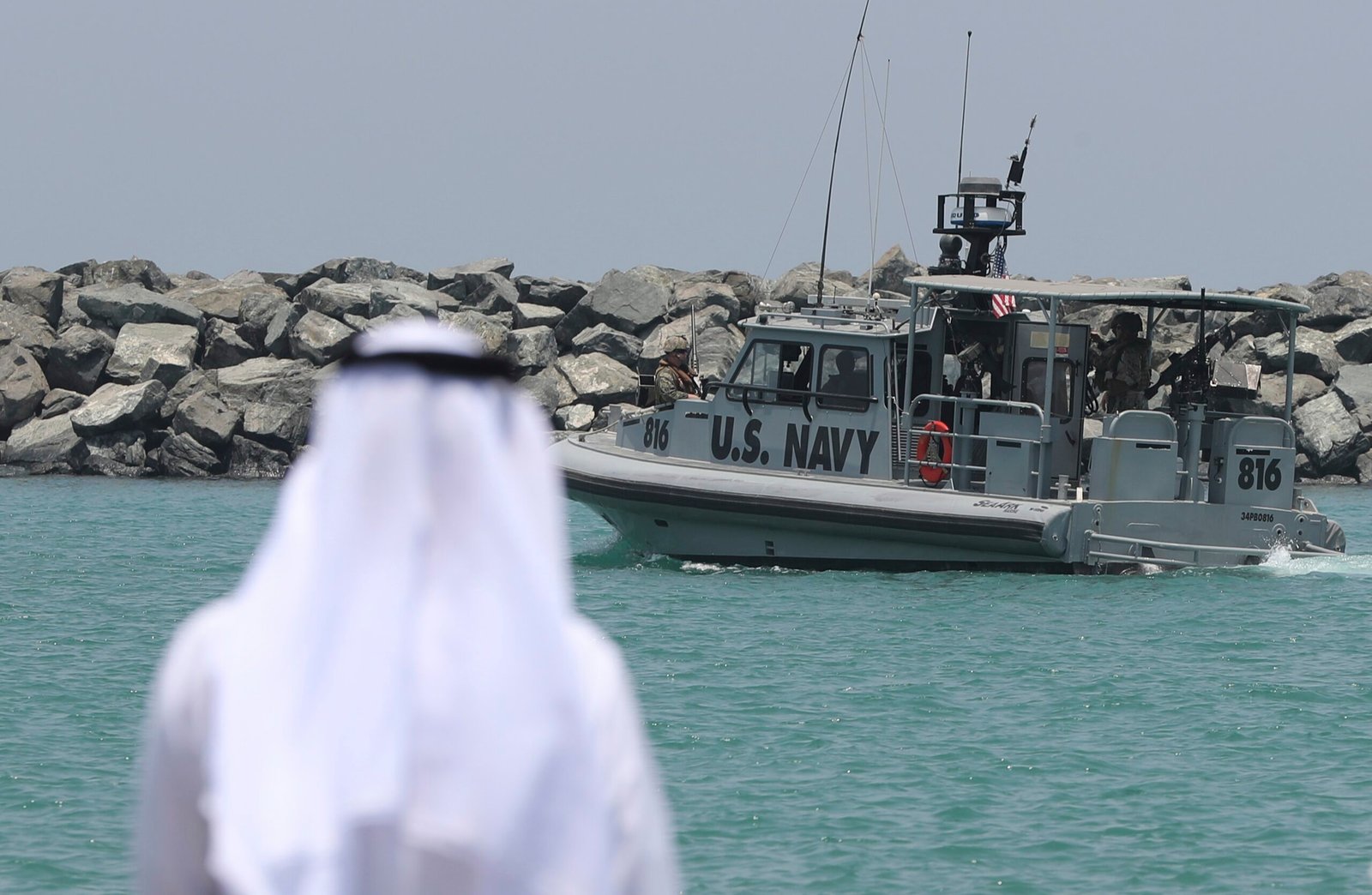
The United States has put up its own military effort to secure Gulf waterways focused on escorting vessels through Omani waters and actively defending commercial shippers from daily Iranian attacks. Concurrently, the U.S. Navy is enforcing a naval blockade against Iranian ports and disabling tankers that ignore its warnings.
The European and Saudi plans are already behind the curve of events. Leaders across Europe and the Middle East want to differentiate their defensive maritime missions from U.S. and Israeli offensive campaigns against Iran in order to prevent escalation and protect their own forces.
But the European and Saudi efforts have not moved beyond planning. The U.S. mission, for its part, is active in the wartime waterways of the Middle East and has for now successfully restored much of the prewar crude oil flows out of the region amid Iranian attacks.
But eventually, the U.S. Navy will struggle to maintain its large presence in the Middle East given competing priorities and the wear and tear of continuous deployment. Iranian leaders are gambling that they can outlast the United States in will and capability, while driving wedges between Washington and its long-standing partners in Asia, Europe, and the Middle East, who have yet to meaningfully defend maritime transit. These coalitions will all fail to deter Iran and the Houthis for good if they do not coordinate with each other.
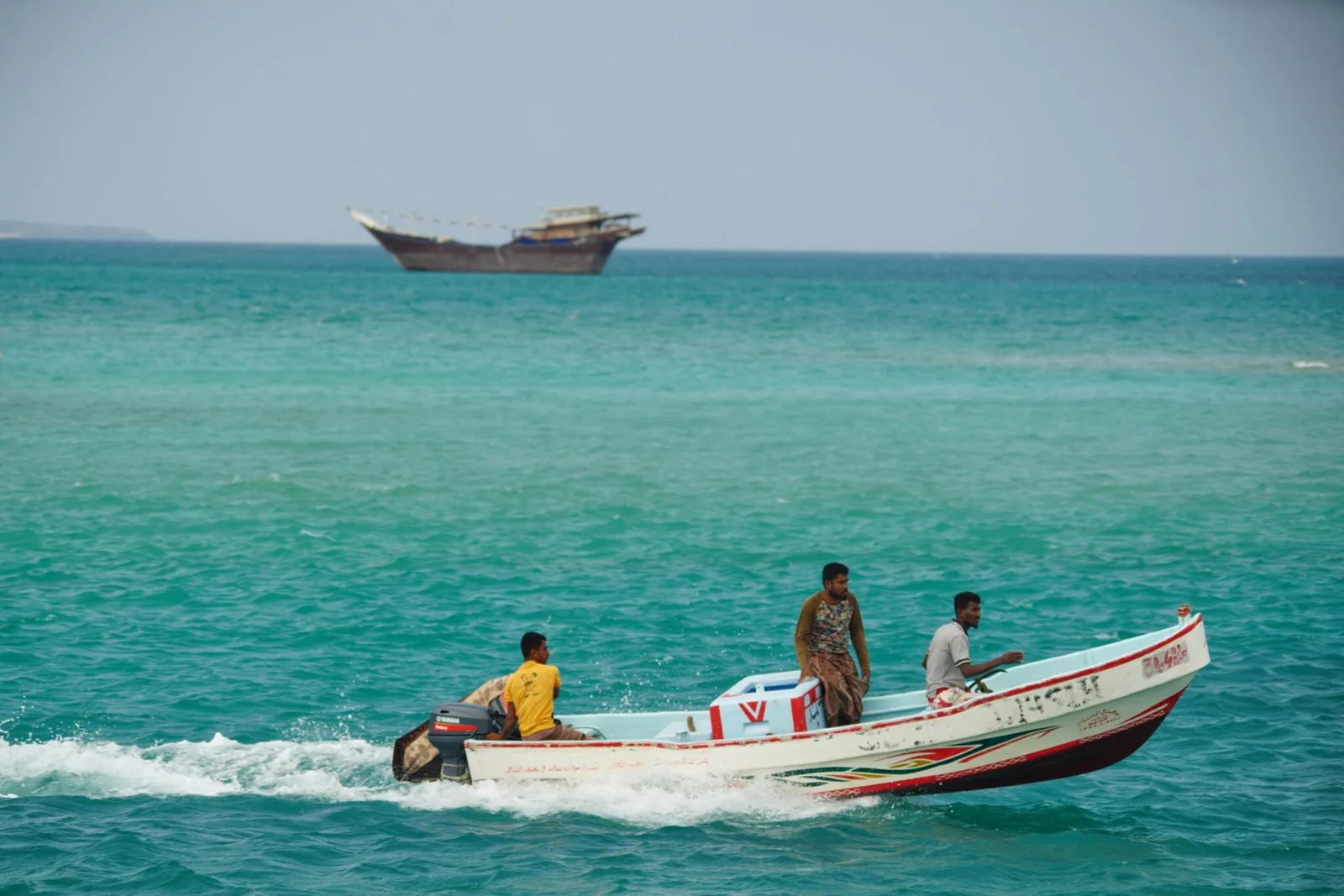
Merge missions under Arab-led command
Without American naval capabilities and intelligence, maritime missions to secure these waterways simply cannot succeed given the scope and scale of the threat. (In 2019, the European mission was only able to field a maximum of three warships and a single patrol aircraft, compared with the United States’ dozen ships; the United States’ 2023–24 OPG mission was able to respond thanks to its naval bases nearby in Bahrain.)
Yet U.S. naval superiority itself is insufficient. Iran and the Houthis have seen this rush to uncoordinated maritime coalitions before, and they know how to exploit the political and operational gaps. Truly isolating Iran is the best way to win concessions from its leaders. Both it and the Houthis have little reason to abandon their tactics if governments cannot agree on how to confront them.
European and Saudi leaders need to merge their maritime planning efforts and invite the United States to join. Whatever serious disagreements they have with Washington about its military actions in Iran must be set aside when it comes to confronting the throttling of international waterways. An Arab- and European-led command structure, supported by American military capabilities, would demonstrate broad international opposition to maritime aggression while distinguishing the mission from the U.S.-Israeli war on Iranian territory.
For now, the United States should be prepared to contribute significant military capacity and operational support, given the extensive deployments it already has in the Middle East. Its partners across Asia, Europe, and the Middle East should redirect the resources they pledged to the European and Saudi missions to a broader coalition that includes the United States. And Washington must lean into a role as military integrator, smoothing out communication and coordination at sea for navies not used to dynamic multimember missions. In particular, the United States and Israel must share real-time intelligence about the evolving nature of Iranian and Houthi targeting capabilities and weapons, so that maritime coalition members can get ahead of the innovation curve.
Israel should share real-time intelligence
In the near term, the United States should commit to operational flexibility, seconding any offensive strikes to a separate chain of command. Leaders in Tehran will take notice of a unified international response to Iranian and Houthi maritime aggression and will think twice before attacking a mission made up of dozens of navies all working together. In return, Washington must accept that its partners would be joining a defensive maritime mission—not enforcing the naval blockade or entering the war against Iran. In 2024, Washington took care to differentiate its role in the OPG defensive Red Sea mission from the separate multinational offensive strikes it undertook against the Houthis. The U.S. government should replicate that model today.
Other militaries, including Israel’s, should contribute intelligence, sea drones and other unmanned capabilities,maintenance and logistical support, and personnel. In return for the United States serving as the mission’s backbone, European, Middle Eastern, and Asian partners should commit to gradually expanding their own naval capabilities and assets so the coalition becomes a long-term investment with equitably shared burdens. Joint messaging—regular coordinated statements and outreach to commercial shippers to counter Iranian and Houthi disinformation—will be vital, as well as collaborative innovation. Iran and the Houthis adapt rapidly; it will be easier for coalition countries’ defense industries to stay ahead of them if they work together.
A Maritime Coalition must share burdens
Military efforts to date have failed to compel either Iran or the Houthis to change course at sea. In fact, Iranian and Houthi leaders believe that they have more to gain from escalation, as evidenced by their statements and continued attacks. Countries everywhere are suffering for it. In October, the World Bank projected that Gulf economies would contract by 4.3 percent in 2026, thanks in no small part to the closure of the Strait of Hormuz and Iranian attacks on energy infrastructure. In June, the International Monetary Fund estimated that the war in Iran could reduce growth in the euro area by 0.5 percentage points in 2026.
A unified Middle East maritime coalition on its own would neither reverse these trends nor fully restore freedom of navigation. But it would be an important first step in denying Tehran opportunities to drive wedges between long-standing allies and partners. If, instead, the current trajectory of political discord, piecemeal missions, and short-term adaptation by commercial shippers continues, Iran and the Houthis will learn that they can exploit divisions among foreign governments, selectively escalating maritime threats to extract concessions. And other U.S. adversaries will learn the same lesson—that economic disruption is an extraordinarily effective weapon when the world lacks the will to defend its commons.