
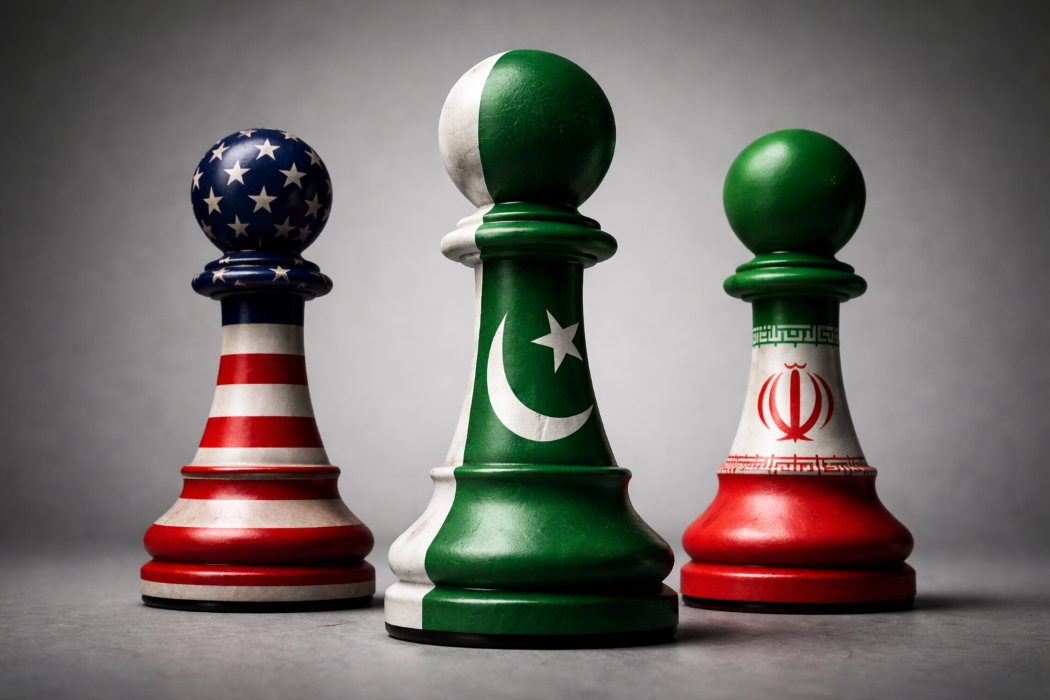
Pakistan leverages West Asia crisis mediation as a survival hedge, not altruism. Facing economic fragility and regional spillover threats, Islamabad converts diplomatic access into security buffers and Gulf leverage, trading visibility for tangible gains amid systemic uncertainty.
Pakistan’s push for West Asia crisis mediation is not altruistic but a calculated survival hedge against economic collapse and regional spillover. Facing fragility on multiple fronts, Islamabad weaponizes its diplomatic access to convert the West Asia crisis into leverage with Gulf partners and global powers, trading strategic visibility for tangible security buffers.
West Asia crisis mediation as damage control
Pakistan is attempting to position itself as a mediator in the West Asia crisis during the conflict involving the United States, Israel, and Iran. This effort should be viewed not as a neutral peace initiative but as a calculated survival strategy. Islamabad seeks to convert its geopolitical relevance into economic, diplomatic, and security gains against a backdrop of economic fragility, high dependence on external actors, and persistent security threats on its borders.
There are three primary motives behind Pakistan’s involvement: the need to curb economic shocks resulting from regional escalation; the fear of instability spreading to the domestic arena, particularly Balochistan; and the need to carefully manage relations with Saudi Arabia and Iran simultaneously. Pakistani mediation does not reflect surplus power or regional decisiveness. It is instead an effort to maintain maneuverability, accumulate legitimacy, and prevent a deterioration that would primarily harm Pakistan itself.
During the current war involving the United States and Israel versus Iran, Pakistan has positioned itself as one of the most active actors in mediation attempts between Washington and Tehran. Islamabad has even signaled a willingness to host direct talks between the parties. At first glance, this may appear to be a surprising entry by a relatively peripheral player into the heart of a broad regional crisis. However, in practice, this is neither an altruistic step nor a detached peace initiative. It is a well-calculated move designed to serve Pakistan’s internal and external needs. Islamabad is seeking to exploit the crisis to convert geopolitical relevance into diplomatic, economic, and security achievements.
Pakistani mediation is not an end in itself but part of a broader survival strategy. A state suffering from economic fragility, domestic security pressures, and limited maneuverability, and which is highly dependent on external factors, is attempting to make itself indispensable. It is precisely because Pakistan does not enjoy stable economic power or full international legitimacy that it needs to generate value for itself by functioning as a communications channel and a hosting locale, and as an actor that can mitigate escalation risks.
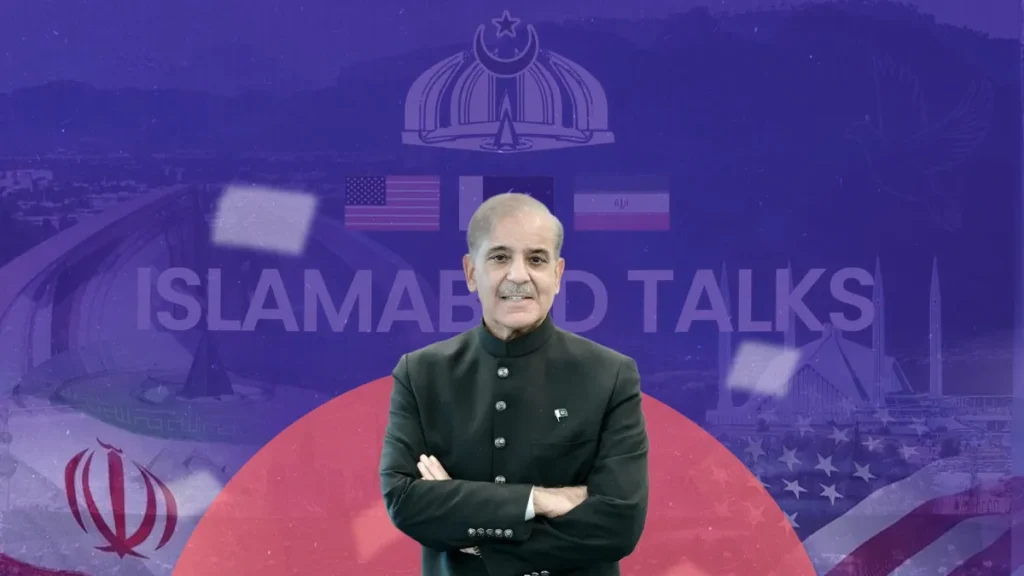
Decoding Pakistan’s motives in West Asia crisis
Pakistan’s first and most urgent motive is economic. Its economy is highly vulnerable and largely dependent on energy imports from the Gulf and remittances from Pakistani workers in regional countries. Any disruption to shipping in the Strait of Hormuz or sharp rise in energy prices translates almost immediately into domestic pressure. For Islamabad, establishing itself as a mediator is intended not only to improve its image but also to signal to its Gulf partners, investors, and international financial institutions that it is a player with strategic value, not just another state in chronic crisis.
Pakistan also has a clear security motive. Its long and sensitive border with Iran in the Balochistan region could quickly become a friction point if the war expands. Refugee spillover, terrorist infiltration, a strengthening of armed groups, or broader regional instability could all further burden the Pakistani security establishment, which is already taxed by prolonged threats on the Afghan border and the western frontier. From Pakistan’s perspective, containing the spread of the Iran crisis is an immediate security interest, not merely a foreign policy move.
Another dimension is Pakistan’s relationship with Saudi Arabia. The close ties between Islamabad and Riyadh, particularly the components of security cooperation, place Pakistan in a complex dilemma. Iranian escalation against Saudi Arabia could create pressure on Pakistan to join the fray or at least support Riyadh, even if doing so contradicts its own interests. Mediation serves not only as a mechanism to prevent deterioration but also as a tool to convey the message to Tehran that Pakistan’s ties with Saudi Arabia should not be interpreted as a basis for offensive action against it.
Why Pakistan rises as a West Asia crisis
Unlike classic mediators such as Oman or Qatar, Pakistan does not rely solely on quiet diplomacy or relative neutrality. It brings a different combination: the status of a large Muslim state, nuclear capabilities, regional security ties, geographical proximity, and personal access channels to power centers. While this combination does not make Pakistan an ideal mediator, it does make it a player that, in extreme situations, can serve as a platform through which to convey messages and manage contacts.
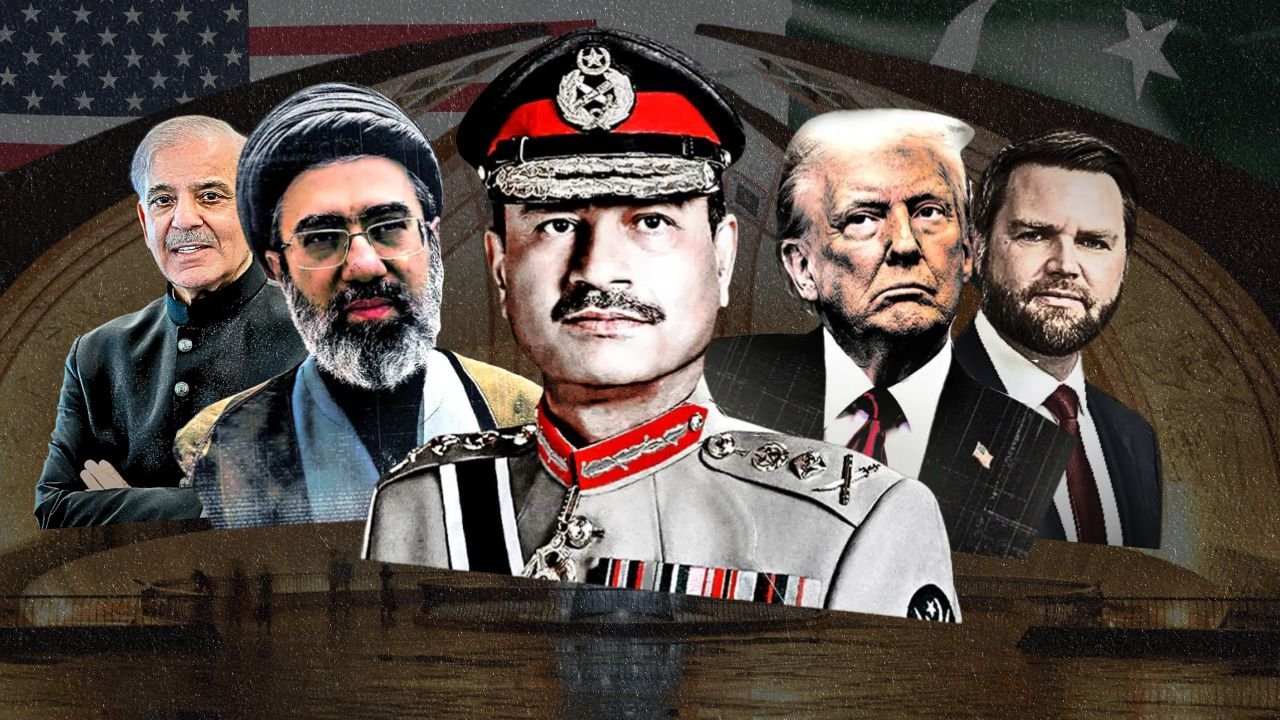
Chief of Army Staff Field Marshal Asim Munir plays a particularly prominent role in this context. Munir has personal connections and informal channels within the US administration. By leveraging his access to President Trump’s inner circle, Pakistan can attempt to bypass institutional diplomatic routes and generate influence through a combination of personal diplomacy, business logic, and accessibility to decision-making centers. This is not classical diplomacy but a flexible, personal, and sometimes opportunistic mechanism that characterizes the way in which Islamabad is trying to boost its own value in a changing international system.
It is also highly relevant that Pakistan is both a nuclear power and home to a large Shia population. For Tehran, these characteristics grant it a degree of legitimacy and distinguish it from mediators who are perceived as too closely identified with the United States or the pro-Western Sunni camp. In other words, Pakistan can be perceived by Iran not as a neutral arbiter but as a channel that will not preemptively dismiss the honor or status of the Islamic Republic.
However, a distinction must be made between mediation capability and the capacity for decisiveness. Pakistan may be able to convey messages, present proposals, and contribute to the creation of a space that allows for a temporary ceasefire, but this does mean it has the ability to independently shape a stable settlement. Its power lies in being a conduit, not a player capable of forcing an outcome.
West Asia crisis and the Indian angle
One interesting consequence of the Pakistani move concerns India. For years, New Delhi has invested considerable diplomatic effort into isolating Pakistan and presenting it as a problematic marginal state incapable of contributing positively to the regional order. Islamabad’s entry into a mediation role between the United States and Iran deals a blow to the narrative India has worked so hard to create about Pakistan. Suddenly, at a moment of crisis, Pakistan is perceived not as a source of additional instability but as an entity capable of fulfilling a useful diplomatic function.
India’s response has been pragmatic. Rather than confront Pakistan’s new visibility head-on, New Delhi has focused on protecting its own vital interests: continuity in supply chains, protection of energy movement, and maintaining flexibility in its relations with all actors. Its stable relations with Tehran have allowed it to enjoy a certain degree of maneuverability, reducing potential damage to its status. For India, Pakistan’s move serves as a reminder that in a multipolar era, even players previously defined as weak or marginal may regain relevance when the regional system enters a state of crisis.
Limitations facing fragile West Asia crisis
The Pakistani model may have had tactical success in terms of positioning, but it rests on fragile foundations. First, a significant portion of its current leverage is based on a personal connection with an American president known for unpredictable decision-making. Excessive dependence on a relationship with a single person, however powerful that person may be, creates structural risk. A sharp shift in Washington’s approach could quickly turn Pakistan from diplomatic asset to a player bearing some responsibility for a possible failure.
Second, Pakistan is highly exposed to internal pressures. Domestic public opinion is permeated with anti-American and anti-Israel sentiment and is particularly sensitive to any harm that comes to Iran. If the regime in Islamabad is perceived as facilitating, even indirectly, American or Saudi steps against Tehran, it could encounter sharp public protest and suffer further erosion of its internal legitimacy.
The third barrier is perhaps the most central: the fact that Pakistan has no real influence over Israel. As long as Jerusalem views the continuation of the campaign against Iran as a vital strategic goal, and as long as it is not ready to make substantive compromises, Islamabad’s mediation capacity will remain limited. In such a situation, the most Pakistan can do is assist in conveying messages, reducing friction, and managing contacts. It cannot function as an arbiter capable of leading to a comprehensive settlement; nor can it enforce understandings.
The Pakistani move in the West Asia crisis teaches that even a state suffering economic vulnerability, a governance crisis, and ongoing security challenges can find opportunities to be diplomatically useful. Pakistan seeks to convert its role as partial mediator into broader strategic value: to curb regional escalation that could do it harm, improve its standing with its Gulf partners, and strengthen its image in the eyes of investors and international bodies. In so doing, it presents an interesting model of strategic survival through flexible and opportunistic diplomacy.
However, strategic visibility should not be confused with the ability to shape a strategic outcome. Pakistan’s success so far is primarily one of positioning, not decisiveness. In the long run, the extent of its influence will be tested by its ability to maintain an active political channel between Iran and the United States without collapsing under internal pressures, dependence on Washington, and a lack of influence over a key component of the equation—Israel. As long as these limitations remain, Pakistan will remain an important mediating actor but will not be a decisive one.