
Shifts in subsea technology are turning naval warfare into a network-driven discipline. India faces challenges from China and Pakistan in the Indian Ocean, requiring rapid deployment of uncrewed platforms, acoustic sensor arrays, and regional domain awareness initiatives.
Modern naval warfare is undergoing a massive shift as advances in undersea domain awareness transform ocean depths into networked, information-centric battlefields. As major powers deploy autonomous platforms, sensor arrays, and deep-sea surveillance, conventional fleet structures face unprecedented vulnerability. For the Indian Navy, securing strategic advantage across the Indian Ocean requires accelerating the transition toward a hybrid fleet that seamlessly pairs crewed submarines with uncrewed assets and distributed sensor networks.
Naval Warfare Undersea Domain Transformation
Undersea competition is transforming naval warfare from a platform-centric battlespace into an information-centric domain, making a hybrid undersea force and coherent UDA architecture increasingly urgent for India Richard Marles, Australia’s Deputy Prime Minister and Minister of Defence, recently remarked that the “seabed is a battlefield”, foreshadowing the announcement of a new signature project under AUKUS Pillar II, under which the United States (US), United Kingdom (UK), and Australia would develop payloads and enabling systems for Uncrewed Undersea Vehicles (UUVs). Marles’ comments echo a notable trend in contemporary maritime security: naval forces worldwide are investing substantial resources in developing their undersea surveillance and combat capabilities.
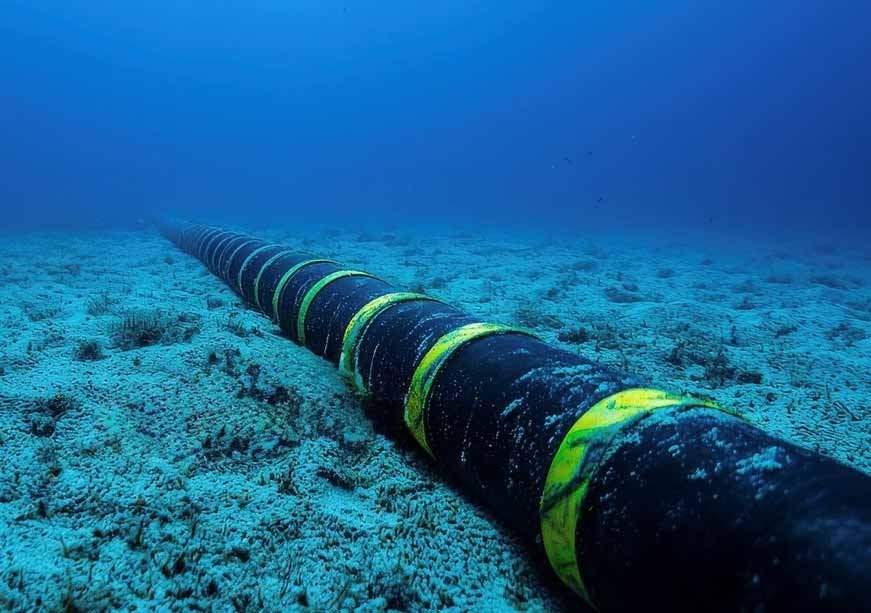
Marles also cited instances of subsea internet cables being damaged in the Taiwan Strait and the Baltic Sea to emphasise the urgency of the threat. This is especially significant at a time when countries such as China and Russia have developed capabilities to target critical undersea infrastructure (CUI). Concurrently, recent conflicts have seen a noticeable proliferation and deployment of underwater drones, which have been used to target conventional naval assets and commercial shipping, operationalising a new form of asymmetric warfare
As the undersea domain becomes increasingly salient in national strategic discourse, this warrants an examination of how competition in this domain is redefining contemporary naval warfare, and argues that undersea warfare will be a key factor shaping force-structure decisions for naval forces worldwide, with particular relevance for India. The analysis suggests that the future of undersea warfare is gradually shifting from a platform-centric endeavour to one centred on subsea information networks, supported by a combination of crewed and uncrewed platforms, and enabling a persistent undersea domain awareness (UDA) architecture. For India, this signifies an immediate need to shift towards a hybrid undersea force structure, underpinned by a coherent UDA architecture.
Contemporary Relevance and Subsea Security
Contemporary Relevance of the Undersea Domain The undersea domain is largely unmapped, difficult to navigate, and subject to the hostile characteristics of marine physics. Communications are constrained underwater, making it much harder to maintain persistent intelligence, surveillance, and reconnaissance (ISR) — to target, map, and even engage enemy vessels — than in the surface or aerial domains. Traditionally, submarines have been the foremost warfighting and intelligence-gathering asset deployed by navies to maintain deterrence in the undersea domain.
Sea-denial operations have formed the crux of the present era’s sub-surface strategy, with submarines functioning as silent ocean hunters, tracking the opposing fleet in a sea of darkness. Conventionally powered diesel-electric hunter-killer submarines (SSKs) currently underpin this naval force architecture. Recent advances in acoustic quieting technology, propulsion systems, and hull designs are also progressively improving the operational endurance of SSKs while making them harder to detect. This, in turn, is fuelling an intense undersea arms race for advanced platforms, as nations invest heavily in submarine and anti-submarine warfare (ASW) capabilities.
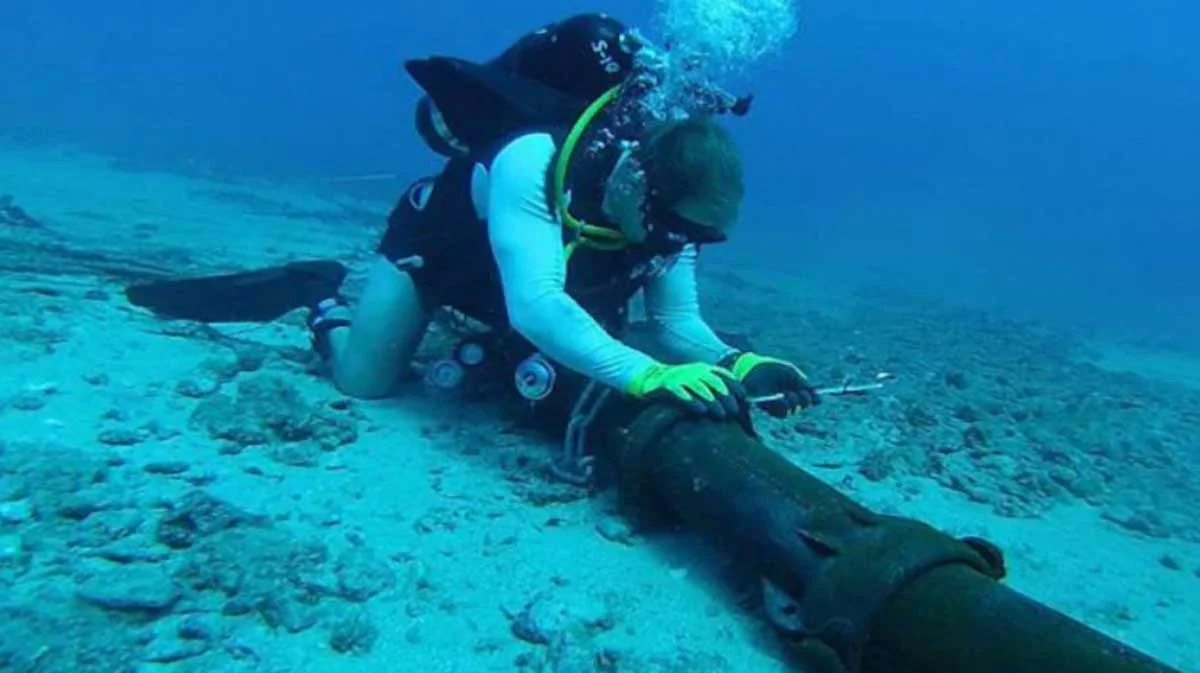
However, as states seek to establish a seabed presence, protect their CUI — such as subsea cables, energy pipelines, and offshore platforms — and operationalise new subsea activities such as deep-sea mineral mining, security in the undersea domain is gaining prominence and dominating contemporary threat assessments. This has resulted in two significant developments. First, the conceptualisation of a hybrid navy is becoming commonplace, envisioning subsurface operations and fleet structures that integrate conventional, crewed platforms with uncrewed assets. Second, to attain comprehensive undersea domain awareness (UDA), ISR operations are evolving to synergise information from all nodes of a naval force, to deliver a persistent, seamless operational picture of the undersea domain.
Autonomous Systems in Undersea Warfare
A New Age of Undersea Warfare Navies worldwide are investing considerable resources in the development of autonomous maritime systems. These include UUVs that can be deployed and recovered through a submarine’s torpedo tube, Uncrewed Surface Vessels (USVs) endowed with vertical launch systems, and ship-launched Uncrewed Aerial Vehicles (UAVs) capable of performing multi-domain ISR and targeting operations. Autonomous systems that can operate alongside and complement conventionally manned naval assets are increasingly being envisioned as the future of naval combat.
Nations, therefore, are devoting resources and devising operational tactics to adapt to this new formula of naval warfare. They are investing in autonomous maritime systems while also developing technologies to counter such platforms. Underwater communication modules have also improved significantly in the past few years, alongside the development of modular systems ranging from batteries and sensors to even lethal payloads. This, in turn, has advanced the conceptualisation of hybrid operations, allowing nations to reduce strain on conventionally crewed assets while achieving maritime domain awareness.
Developments also indicate that contemporary subsea naval strategy is transforming from a platform-centric approach to an information-based one. Progressively, UDA is becoming an endeavour coalesced around an integrated maritime awareness architecture consisting of multiple nodes, with multi-physics sensors forming a significant element of this approach. The eventual aim is to develop a ‘Common Operating Picture’ that allows operational flexibility and prompt decision-making.
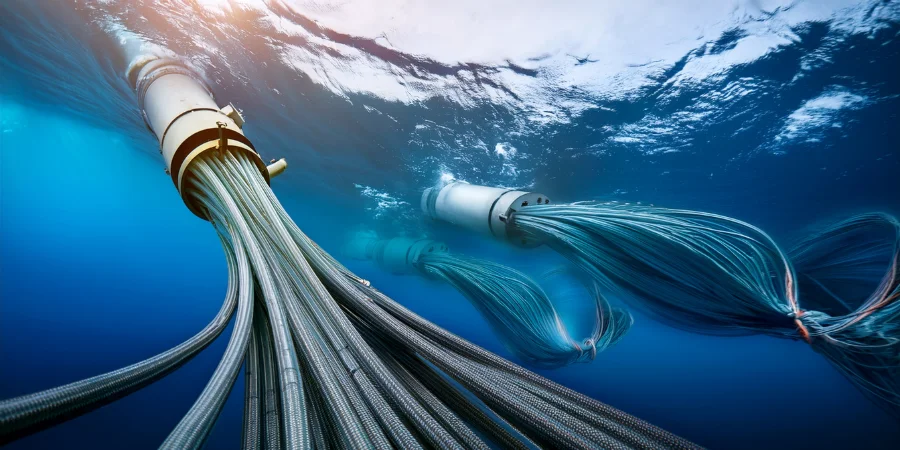
A key development in this effort is Rayleigh scattering-based distributed acoustic sensing (DAS) systems, which use fibre-optic cables as undersea sensors, enabling acoustic detection and monitoring of large areas of the ocean floor with remarkable precision and flexibility. While DAS systems and complementary optoelectronic infrastructure have not yet been deployed at scale, their future proliferation is likely to sharpen seabed activity detection considerably.
Modern Warfare and Undersea Domain Evolution
Consequently, ASW is also evolving in character. Multi-nodal sensory data, processed through AI-enabled data fusion and shared via improved underwater communications, now facilitates the continuous collection and sharing of real-time information, enabling persistent undersea surveillance. The cumulative effect of these activities diminishes the sanctuary that deep, dark oceans currently offer submarines.
Strategic Dilemmas Facing Indian Security
India’s Undersea Security Dilemma India faces a demanding two-pronged threat environment in the undersea domain. On one hand, India needs to contend with a far more capable adversary in the form of China, which is developing a concerted range of subsea capabilities — from uncrewed systems to nuclear-powered submarines to integrated sensor networks. In recent testimony, a senior US naval officer described China as “pursuing a unified approach that links strategy, naval modernisation, seabed infrastructure, and resource extraction into a single, connected effort”.
India’s other undersea threat emanates from Pakistan, which is also building its submarine capacity. However, in the absence of conventional parity with India, Pakistan might operationalise an asymmetric strategy by procuring one-way attack drones from partner countries. India’s position is especially precarious given the close naval ties between Beijing and Islamabad. Despite its undersea superiority in the Indian Ocean Region (IOR), such a naval compact poses a serious challenge to India’s strategic advantage.
On all fronts, India needs to move beyond replenishing its conventional forces through procurement deals and domestic SSN production; it must also incubate research, development, and production of a distributed array of uncrewed platforms. Although India was slow to enter the UAV development space, undersea platforms offer the Indian defence industry a unique opportunity to innovate and develop dual-use technologies. In undersea counter-drone systems, especially where technological development remains nascent, India could position itself as a scalable production partner for foreign defence firms.
At the same time, national security decision-makers in New Delhi need to develop a concerted undersea vision — one that goes beyond the current Deep Ocean Mission, includes a flexible investment plan for the undersea technology industry, and reflects a steadfast commitment to regional UDA partnerships. Given its undersea threat matrix, a hybrid undersea force structure may well be the only viable way forward for India. India’s Underwater Fibre Optic Sensing System, being developed by DRDO’s Naval Physical and Oceanographic Laboratory, demonstrates how fibre-optic sensing could support a future Indian UDA architecture. To make this architecture truly effective, the system will need to be integrated with the Navy’s various subsea platforms.
Hybrid Navy Architecture and Future Outlook
Conclusion Techno-economic assessments that inform a navy’s force-structuring computations increasingly point towards a future in which the concept of the hybrid navy, paired with distributed lethality, becomes the centrepiece of naval strategy. Crewed, uncrewed, and autonomous assets will all function under one centralised command, but with a distributed kill-chain and multiple targeting options.
However, many of these novel concepts still await rigorous testing and standardisation, suggesting that the strategic edge afforded by large crewed fleets will remain intact for at least the next 10-15 years. Yet the acute security dilemma that has been brewing beneath the surface will eventually come to bear, driven by the widespread proliferation of subsea platforms and infrastructure (both civilian and military), deep-sea mineral mining contracts, and the emergence of new concepts of undersea information-domain networking. The decisive undersea advantage will not belong to the navy with the largest number of platforms, but to the navy that can extract the most coherent operational picture.
For India, given the security challenges it faces, the strategy should not merely be to invest in systems and accompanying technology, but also to develop a unique UDA architecture that connects a hybrid naval force structure to an undersea sensing network.
Another key move should be cooperation within regional UDA networks. Possible partnerships include the ‘Indo-Pacific Maritime Surveillance Cooperation Initiative’ mentioned by the four Quad countries, as well as partnering with European nations to build something akin to NATO’s Digital Ocean Initiative and Critical Undersea Infrastructure Network. India should also seek to join or help establish UUV co-development initiatives similar to AUKUS Pillar II, and to develop common standards for data sharing and testing.
Unless India leverages its strategic partnerships to co-develop uncrewed naval systems and establish a unified undersea domain awareness architecture in the IOR, the undersea security environment is likely to deteriorate. In any case, a new era of undersea and seabed warfare is imminent for New Delhi — one that is sure to challenge the status quo of conventional naval strategy and fleet design.