
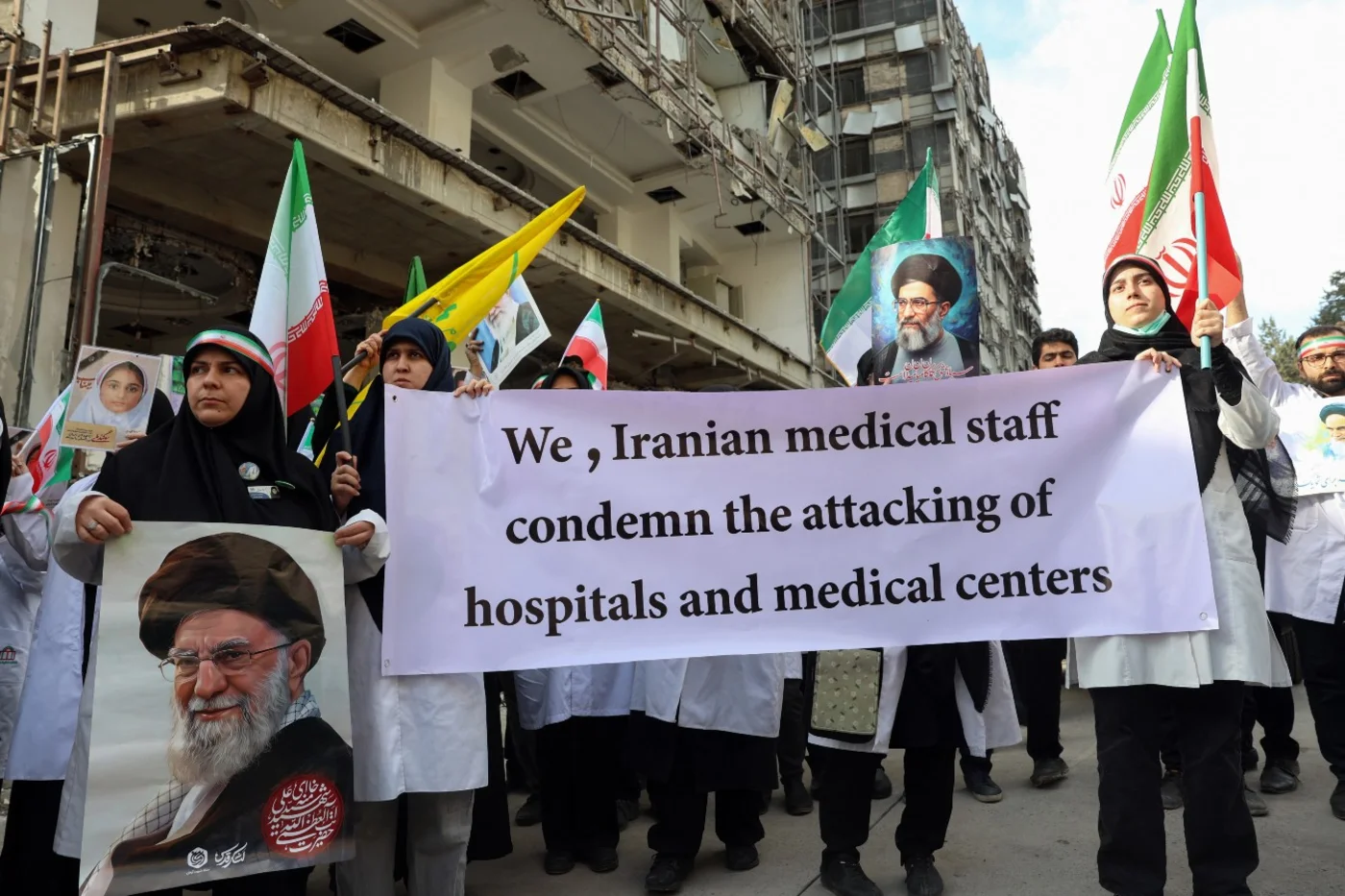
Targeting Iran’s flagship medical and pharmaceutical facilities eliminates sovereign vaccine and API production. Beyond material loss, the strikes cripple cross-border epidemic response and scientific collaboration, imposing long-term regional health vulnerability.
By targeting the century-old Pasteur Institute and the Tofigh Daru pharmaceutical complex, the US and Israel has erased decades of global research and innovation.
On 28 February 2026, the first day of the war, the US and Israel launched a joint strike on the office of Iran’s Supreme Leader. It resulted in the death of Ayatollah Ali Khamenei and several senior government officials.
The neighbourhood where the Supreme Leader’s headquarters are located is known as Pasteur. It is named after the Pasteur Institute of Iran, one of the Middle East’s most prestigious and oldest scientific research centres, which predated most of the governmental facilities, including the Presidential Office, the Supreme National Security Council, and the Assembly of Experts.
On 28 February, the medical centre was left unscathed by the massive bombing in the Pasteur neighbourhood. However, a month later, on 1 April and 2 April, US-Israeli bombing hit the Institute, levelling its headquarters and 13 source laboratories.
Founded in 1920, following a diplomatic agreement between the French and Iranian government, the Pasteur Institute of Iran is part of 33 institutes worldwide at the forefront of the fight against infectious diseases, named after the French chemist and microbiologist Louis Pasteur (1822-85), father of the germ theory and microbiology.
“The main building is older than Israel,” one of the Institute’s top scientists, who asked the name be withheld as scientists have been targeted by the US and Israel, wrote to me, adding “how dare they destroy such a piece of history?”
The 120-year-old building was on Waqf land, a religious endowment offered by the Qajar Prince and short-lived Prime Minister of Persia Abdol-Hossein Farman-Farma. It was a gift in the project to modernise Iran’s public health, which had been devastated in the first two decades of the 20th century by a great famine, the Spanish flu, and recurrent cholera and typhoid epidemics.
Global reputation
On 31 March, Israeli and US fighter jets had conducted another air strike against Tofigh Daru Research and Engineering Company, which is the leading producer of active pharmaceutical ingredients (API) in Iran.
APIs are the ghost in the machine of medicine: they are the ingredients that produce the therapeutic effect of drugs, be it killing bacteria, neutralising a virus, regulating hormones, or reducing body temperature or inflammation.
Scientists and public health officials are shocked by such attacks. One of them confirmed that the attacks resulted in the destruction of the plant’s production, research and development units, “with repercussions that will be long-term in anaesthetics, anti-cancer medicine, and critical hospital drugs,” according to Pasteur’s top scientist
Without API, Iran’s public health system risks losing its sovereignty in the face of a health crisis.
“It’s not only about the buildings,” says one of the scientists in Tehran, “but it should be understood as harm to scientific cooperation and regional epidemic preparedness.”
Indeed, institutions such as Pasteur and Tofigh are essential in the work of disease surveillance, diagnostic, outbreak response and scientific exchange. “If those who attack think it’s only about us, it is not! Unless you live in a silo, our region is highly interconnected, the strength of one country’s public health infrastructure contributed directly to the safety of others,” added the Pasteur scientist.
Epidemiological risk is tied to the flows of migration, trade, pilgrimage and displacement all of which constitute the ecosystem of life in the Middle East. “Diseases do not understand the meaning of borders,” my interlocutor concluded.
Iran’s Pasteur Institute, a 24,000-square-metre complex with facilities, home to National and Reference laboratories and biobanks as well as scientific research and development laboratories, has been at the forefront of health crisis response for over a century.
From cholera and Hepatitis B to the latest vaccination programme during the Covid-19 epidemic, the Institute enjoys a global reputation for independence and innovation, its researchers recognised as leaders in biomedicine.
The latest bombing raised immediate concerns over the potential leak of infected samples and material. The premises include biobanks with live viruses and bacteria; “the targeting of the labs could cause spreading of dangerous pathogens or chemicals”, with serious and unpredictable effects for public health beyond the Iranian context.
However, a spokesperson for the Institute reassured the public saying that in the immediate aftermath of the US-Israeli attacks, a team of technicians visited the area and confirmed that there were no microbial or chemical threats emerging from the affected sites.
Prestigious facilities
The Pasteur Institute and Tofigh have been two pillars of Iran’s prestigious health and scientific system, and among the few places in the Middle East and North Africa capable of synthesising complex APIs for vaccines such as Covid, as well as pneumococcal and rotavirus and recombinant Hepatitis B vaccines.
In 2021, the Pasteur Institute of Iran jointly produced a highly successful Covid-19 vaccine through a one-in-a-kind collaboration with Cuba’s Finlay Institute. The vaccine, named Soberana 2 in Cuba and PastoCovac in Iran, rivalled far more costly western vaccines such as Moderna and Pfizer.
The US and Israel justified the attack against the pharmaceutical facilities – a war crime under the Geneva Convention – accusing Iran of developing fentanyl as part of its chemical warfare programme.
Notoriously, in 2002, Russian security forces used a fentanyl-derivative pumped into Moscow’s Dubravka Theatre to incapacitate Chechen militants who had taken about 900 hostages. Over a hundred people died in that event due to the lack of consistent dosage regulation and immediate availability of Naloxone, an antidote which can reverse overdose effects.
A powerful opioid, fentanyl is best known in North America under the brand name of OxyContin, marketed by the Sackler family’s Purdue Pharma.
The Jewish-American family, famed for its philanthropic largesse, faced a number of lawsuits, for their role in the US overdose epidemic. The family were accused of using misleading marketing about the drug, and downplaying concerns about abuse and addiction to encourage doctors to prescribe more of it (in spite of fentanyl’s recognised powerful addictive strength).
Fentanyl claims
It is this feature of fentanyl, as a powerful sedative that can induce respiratory failure, that the Americans and Israelis used to justify their attacks against Iran’s pharmaceutical industry.
There is no reputable evidence that Iran has developed any fentanyl-based warfare programme, let alone one hosted at the Tofigh pharmaceutical plant and Pasteur, despite a web of think tank publications from neoconservatives and pro-Israeli sources claiming so.
Instead, the Israeli-US attacks on Iran’s scientific and medical foundations is aimed at bringing the country to a political and military capitulation, while leaving it in a long-term state of dependency in a spectrum of fields, from industrial production to biotechnology.
For a country that has long prided itself for contribution to world science, the US-Israeli attacks go beyond the enormous material damage, which is further exacerbated by the targeting of top Iranian universities such as Shahid Beheshti and Iran University of Science and Technology.
They are a stain in the pursuit of scientific and technological sovereignty, two cornerstones of Iran’s long-lasting struggle since the 20th century.