
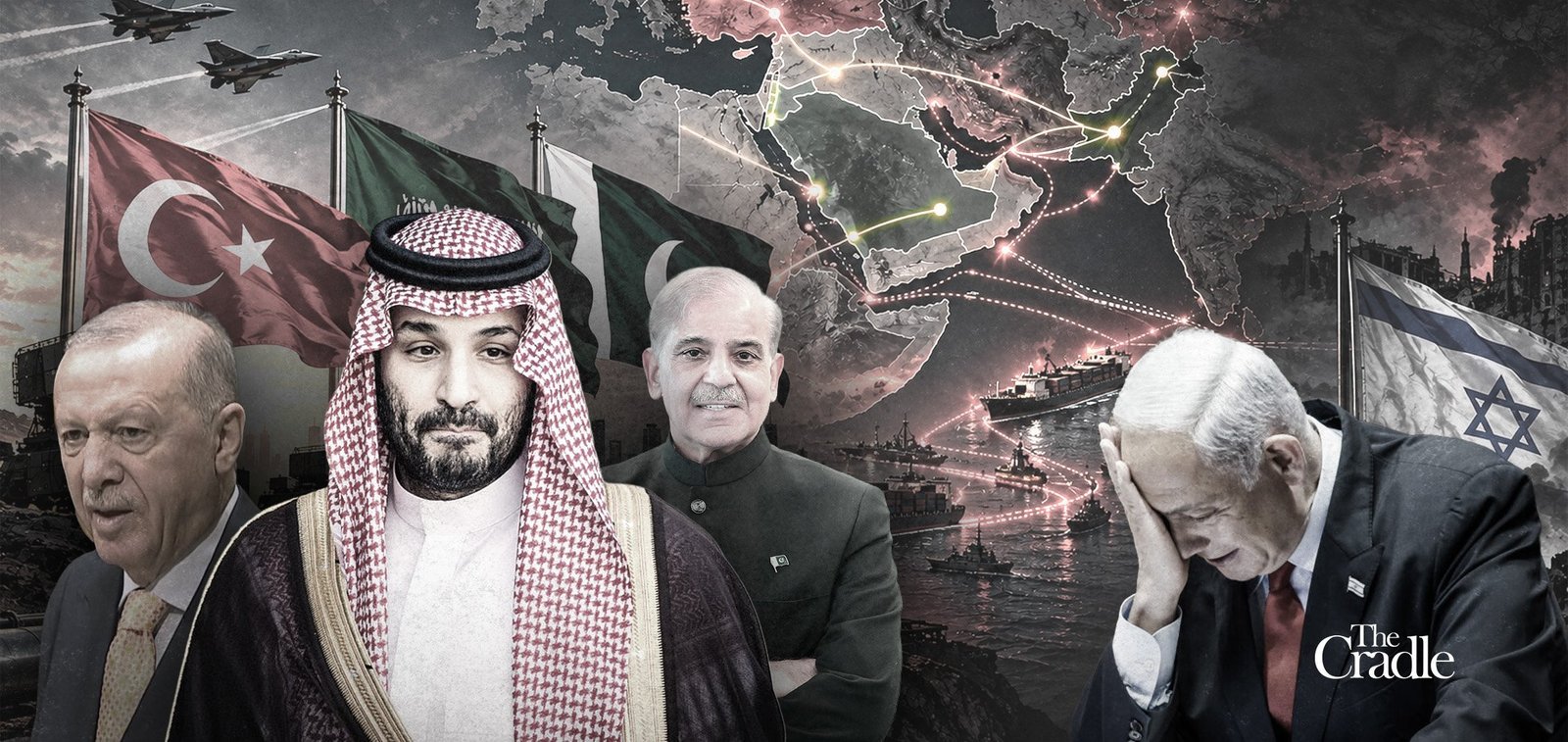
Saudi activated the Mecca Pact amid escalating attacks from Yemen, strengthening coordination with Pakistan and Türkiye while preserving flexibility toward Iran, Israel, and the United States. The episode highlights an emerging regional security order built around pragmatic partnerships rather than traditional alliances.
Post-Israel Order Enters Operational Phase
On 5 October, the Strategic Political and Defense Committee of the Mecca pact held an emergency meeting in Riyadh. The committee had held its inaugural meeting only weeks earlier. Now the three governments were putting the defense pledge they had signed at Mecca’s Safa Palace into effect.
Saudi Defense Minister Prince Khalid bin Salman wrote on X that the three states had agreed to activate collective deterrence against attacks on the kingdom and those responsible for them.
The joint statement, published by Pakistan’s Foreign Ministry, said the committee had decided to “move immediately to the practical implementation of the collective defense commitments.” The three governments would take steps to provide the agreed forces and military capabilities and ensure their rapid deployment to Saudi Arabia, subject to approved arrangements and each country’s laws.
The statement did not name an enemy, but it followed weeks of retaliatory attacks by Yemen’s Ansarallah-aligned armed forces (YAF) on Saudi airports and vital facilities. Its reference to “those responsible” left room for a wider reading.
A pact put to work
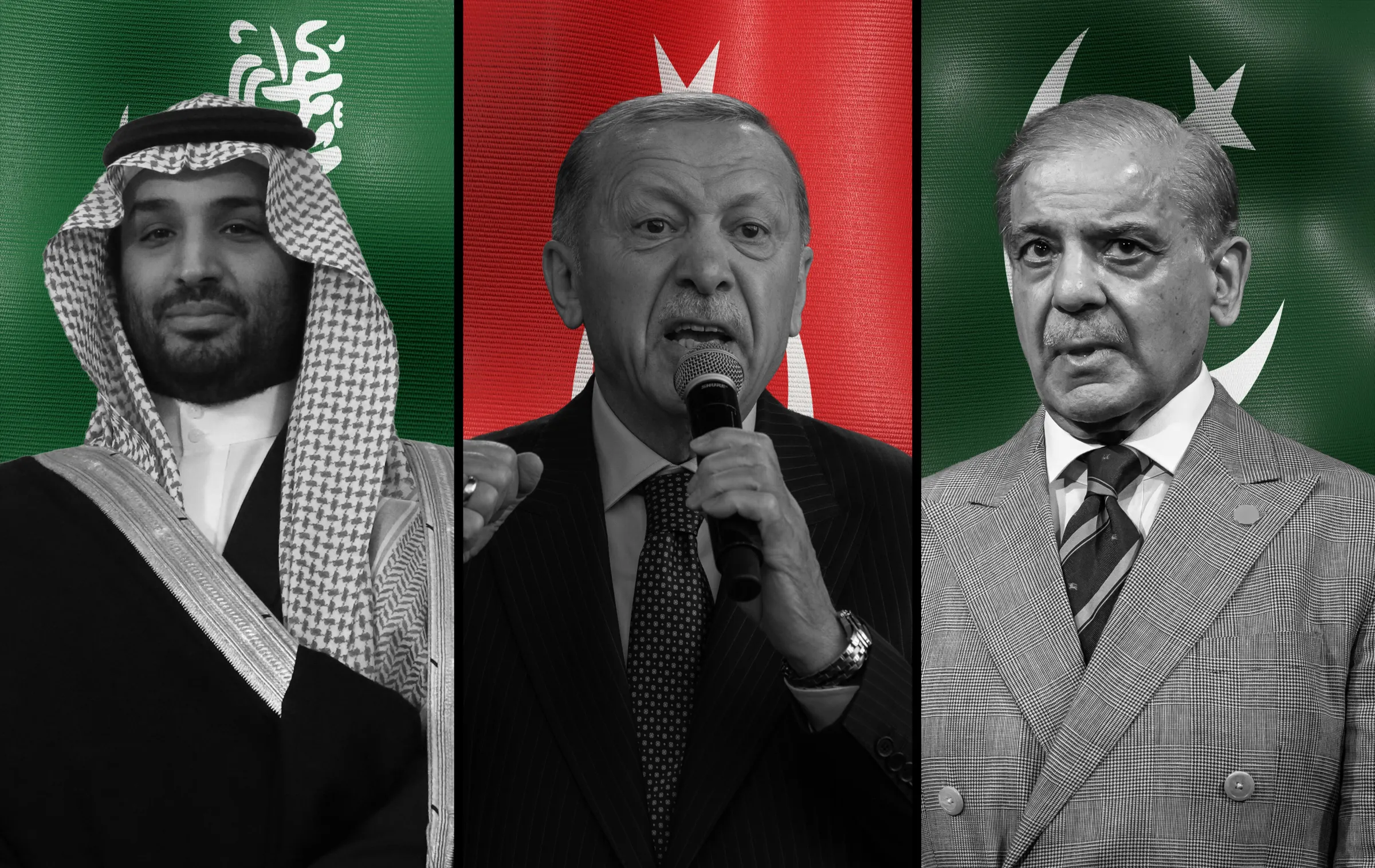
The Mecca agreement grew out of the Saudi–Pakistani strategic mutual defense pact signed on 17 September 2025, days after Israel’s strike on Doha. On 7 August 2026, Crown Prince Mohammed bin Salman (MbS), Turkish President Recep Tayyip Erdogan, and Pakistani Prime Minister Shehbaz Sharif signed the three-way agreement at Safa Palace. An armed attack on one member would be treated as an attack on all three.
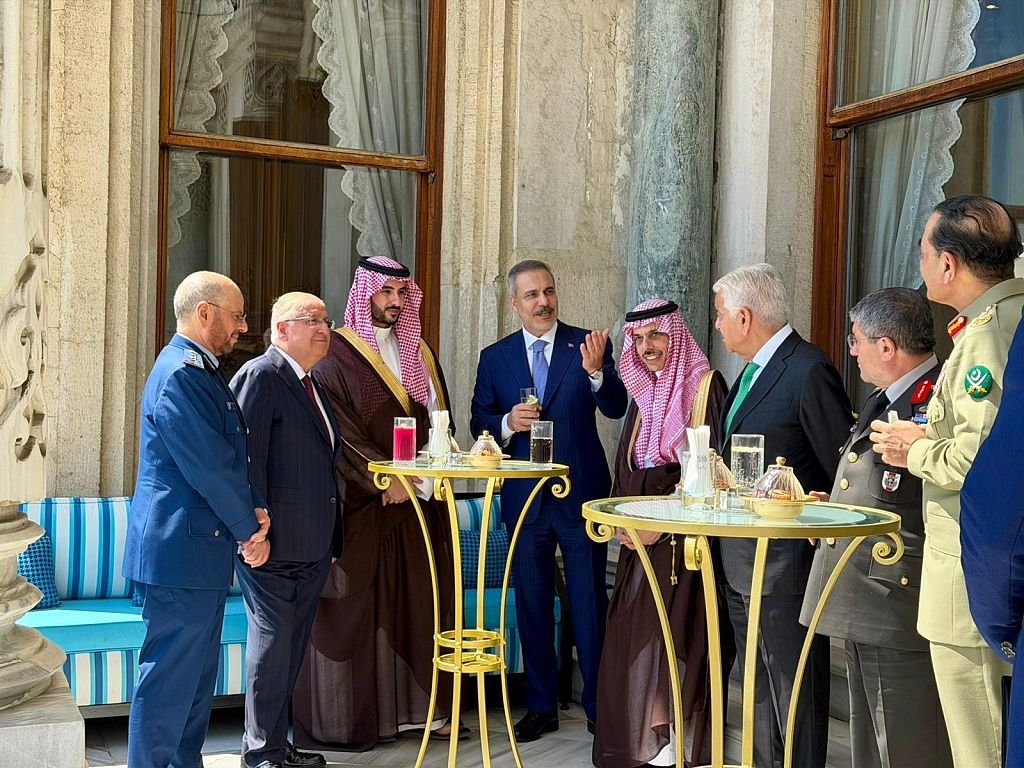
The text has not been published. Analysts at the Arab Center Washington DC noted that the pact established no joint command, standing force, or specified trigger mechanism. It has since gained a secretariat headed by retired Pakistani Lieutenant General Nauman Mahmood, Pakistan’s Foreign Office said. The committee itself met for the first time in Istanbul on 31 August.
Islamabad has carefully defined its contribution. Defense Minister Khawaja Muhammad Asif told Geo TV on 5 October that Pakistani and Turkish forces were performing support duties, including reconnaissance, while Saudi forces carried out the fighting. Three days earlier, Deputy Prime Minister and Foreign Minister Ishaq Dar said the agreement was defensive and had no offensive agenda.
Pakistan’s Information Ministry said on 6 October that the operational details of collective deterrence would remain confidential. Two days later, its military confirmed that Pakistani forces were present in the kingdom without specifying their number or assignments.
The ministry also rejected a New York Times (NYT) report that Pakistani jets had struck Yemeni forces, calling it “fake and fabricated.”
Ankara faces a separate constraint. Article 92 of Turkiye’s constitution requires parliamentary approval to send troops abroad, and the pact has yet to be ratified. Turkish Foreign Minister Hakan Fidan said on 8 October that Ankara was considering assistance to Saudi Arabia but ruled out sending troops to attack Yemen.
Pakistan and Turkiye have answered Riyadh’s call, while insisting they will not fight its war in Yemen. Their forces can guard Saudi cities and installations and provide surveillance as the kingdom presses its offensive across the border. Riyadh gains military support without asking either partner to openly join the assault.
The war Riyadh chose to contain
Riyadh’s decision reflects its reading of the threat since the US and Israel launched their war on Iran on 28 February. The kingdom has weathered the closure of the Strait of Hormuz, Iranian pressure on Gulf shipping, and missile attacks across the region. It has treated the confrontation as a crisis to survive and manage, without signing up to a new front alongside Israel.
The wider diplomatic setting reinforces that calculation. On 8 October, US President Donald Trump said on Truth Social that Washington would not attack Iran before the 3 November midterm elections, while keeping its blockade of Iranian ports. Tehran said the same day that it was studying Washington’s response to its latest proposal. Hormuz remains Iran’s strongest card – on 4 October, it said the strait would stay closed until the US met its conditions.
For Riyadh, the immediate task is to withstand a war of attrition. Activating the Mecca pact over attacks from Yemen, rather than against Tehran itself, is the clearest expression yet of where it has drawn the line.
Yemen sets the terms
The pressure came from the south. The YAF took the Red Sea port of Mokha on 10 September and moved close to Bab al-Mandab. Sanaa warned airlines that Saudi airspace fell within its theater of operations, while excluding the skies over Mecca and Medina.
The strikes mounted. Sanaa announced an attack on a Saudi energy facility in early October, and attacks on Jazan and Najran airports injured at least three people. On 8 October, three people, including a pilot, were killed in strikes on Riyadh’s King Khalid International Airport, according to Saudi aviation authorities. The YAF said one of its ballistic missiles hit its target.
On 10 October, another strike on the Riyadh airport killed 12 people and wounded more than 300, according to Saudi authorities. A further attack on 11 October killed a Pakistani national and injured 11 people, Saudi authorities said. The rising civilian toll sharpened the pressure on Riyadh and its new partners.
The alliance’s joint statement condemned alleged attempts to target Mecca and Medina, though Sanaa denies targeting either holy city. The competing claims are central to the argument over whether the pact’s activation is limited to defending Saudi territory or opens the way to a broader war.
Saudi-backed forces claimed to have retaken Mokha, but Sanaa denied losing the port. Riyadh’s offensive appears to have made gains around Dhubab, while Mokha remained a central objective. The coalition also said it had destroyed three missile launchers.
Washington backed the campaign without directly entering it. On 5 October, Secretary of State Marco Rubio said Saudi Arabia had “a right to defend itself” against “Houthi” attacks. Al Jazeera reported that about 200 US advisors were working in Saudi operations centers.
Tehran’s red line
Iran watched the pact’s activation with growing hostility, much of it directed at Islamabad. A day before the Riyadh meeting, its Foreign Ministry voiced hope that reports of a Pakistani deployment to fight in Yemen were false. Any further intervention, it warned, would only make the conflict more complicated.
The tone hardened after the decision. Tasnim framed the pact’s activation as Turkiye and Pakistan joining Saudi Arabia’s war against the Yemeni people. Nour News, close to Iran’s Supreme National Security Council, asked whether this was the Mecca alliance or an alliance against Yemen’s oppressed people.
Tehran’s practical red line appears narrower than that rhetoric. Iranian researcher Javad Heirannia told Al Jazeera that Iran could tolerate a strictly defensive Pakistani deployment to protect Saudi facilities, but would regard participation in attacks on the YAF as crossing a red line. He said Islamabad’s mediation between Tehran and Washington had shifted from neutrality to managing conflicting interests.
A defensive cordon around Saudi cities could preserve Pakistan’s channel to Tehran and Riyadh’s own path toward de-escalation. Pakistani airstrikes in Yemen would put both at risk. Islamabad’s denial of the reported jet strikes therefore matters well beyond the question of which aircraft flew where.
Abu Dhabi returns
Six days before the committee met, the Saudi crown prince received UAE Vice President Sheikh Mansour bin Zayed Al Nahyan in Riyadh. The Saudi Press Agency said they discussed relations and regional developments in the presence of Prince Khalid bin Salman. It was the first visit by a senior Emirati official since last year’s Yemen-related rift between the two capitals.
The visit came as fighting intensified along Saudi Arabia’s southern approaches. Riyadh appeared to be seeking renewed coordination with Abu Dhabi on Yemen while retaining command of its own campaign. The meeting’s official account did not announce a joint plan.
The UAE also has a difficult relationship with the Mecca pact itself. Arab Center Washington DC researchers say the agreement is widely seen as a challenge to the Abraham Accords and may conflict with Abu Dhabi’s preferred India–Israel–UAE strategic triangle.
No public Emirati response to the pact’s activation was recorded before Abu Dhabi condemned the subsequent Riyadh airport attacks. For now, Riyadh appears to want Abu Dhabi’s help in Yemen without bringing it into the three-way alliance.
A landing in Tabuk
On 30 September, flydubai Flight FZ1073 was headed from Dubai to Tel Aviv when its copilot attacked the captain. The aircraft diverted to Tabuk in Saudi Arabia. The Saudi Interior Ministry’s preliminary findings confirmed the assault, while the UAE attorney general called it a terrorist act. Israelis made up nearly all of the 172 people aboard.
The episode quickly acquired competing political meanings. The Jerusalem Post cast the Saudi assistance and Emirati return flight as signs that Israel’s regional ties could deliver practical help, while noting Israeli Prime Minister Benjamin Netanyahu’s interest in emphasizing that cooperation. Al-Araby al-Jadeed described his use of the incident ahead of the election. His opponents, meanwhile, drew comparisons with the security failures of Operation Al-Aqsa Flood, as the Times of Israel reported.
Riyadh acted as the authority responsible for the aircraft after it landed. It also opened an aviation safety investigation alongside the UAE criminal inquiry. Saudi Arabia declined an Israeli request to send planes to retrieve the passengers, according to security sources cited by Reuters. The emergency landing produced practical cooperation, but no Saudi political opening to Tel Aviv.
Palestine is the price
The deeper obstacle to Israel’s place in Riyadh’s security plans is Palestine. In September 2024, MbS told the Shura Council that Saudi Arabia would not establish diplomatic relations with Israel without an independent Palestinian state with East Jerusalem as its capital. An Israeli Institute for National Security Studies study describes Riyadh’s demand for statehood on the 1967 borders as unequivocal and nonnegotiable.
That condition has hardened since the days when recognition could be cast as part of a larger bargain with Washington. The Israeli election campaign has exposed the distance between the two governments.
Likud’s election posters offer voters a choice between “Right or Palestine.” A government campaigning against Palestinian statehood has little to offer on the condition Riyadh has publicly set.
Post-Israel Order Tests Saudi Choices
The Mecca pact is one part of Saudi Arabia’s regional plan. Syria has become another. In a 28 September analysis, the Middle East Institute described how the war on Iran and the threat to Hormuz have driven governments to seek trade routes through Syrian territory.
The list includes a proposed Saudi high-speed railway from Arar through Jordan to the Syrian coast; a Jordanian-Turkish-Syrian committee coordinating an overland corridor; plans to revive the Hejaz Railway between Aqaba and Europe; and Saudi–Turkish work to connect that network to the kingdom’s Gulf ports.
It also includes DP World’s $800 million Tartous Port agreement and the Silk Link telecommunications project, whose first phase has attracted more than $1 billion in Saudi investment. It is argued that the Silk Link could cut Gulf internet latency by up to 40 milliseconds.
Damascus drew at least $28 billion in investment in 2025, and Syria accounted for more than a quarter of West Asian fuel-oil exports in July 2026. Capital and trade are moving faster than the rail lines meant to carry them.
Israel watches Riyadh
Israel votes on 27 October, with the Gulf already part of the argument. Polls reported this week by the Jerusalem Post showed a close race between Likud and Yashar, although the projected balance of the rival blocs varied between surveys.
Iran hangs over the campaign. Trump’s promise to hold off on strikes before the US midterms puts the Israeli vote inside Washington’s current pause with Tehran. That is also the diplomatic space Riyadh has tried to preserve since February.
The Mecca pact has entered Israeli debate chiefly through commentary. No official Israeli response to its activation has been recorded. Channel 14’s Tamir Morag wrote on 6 October that the deployment should set off alarm bells in Israel, warning it might set a precedent for Pakistani intervention alongside Turkiye.
In August, Ynet quoted an unnamed senior Israeli official calling the pact directed against Israel. An INSS analysis instead urged Israel to continue seeking closer ties with Riyadh while keeping channels to Ankara open.
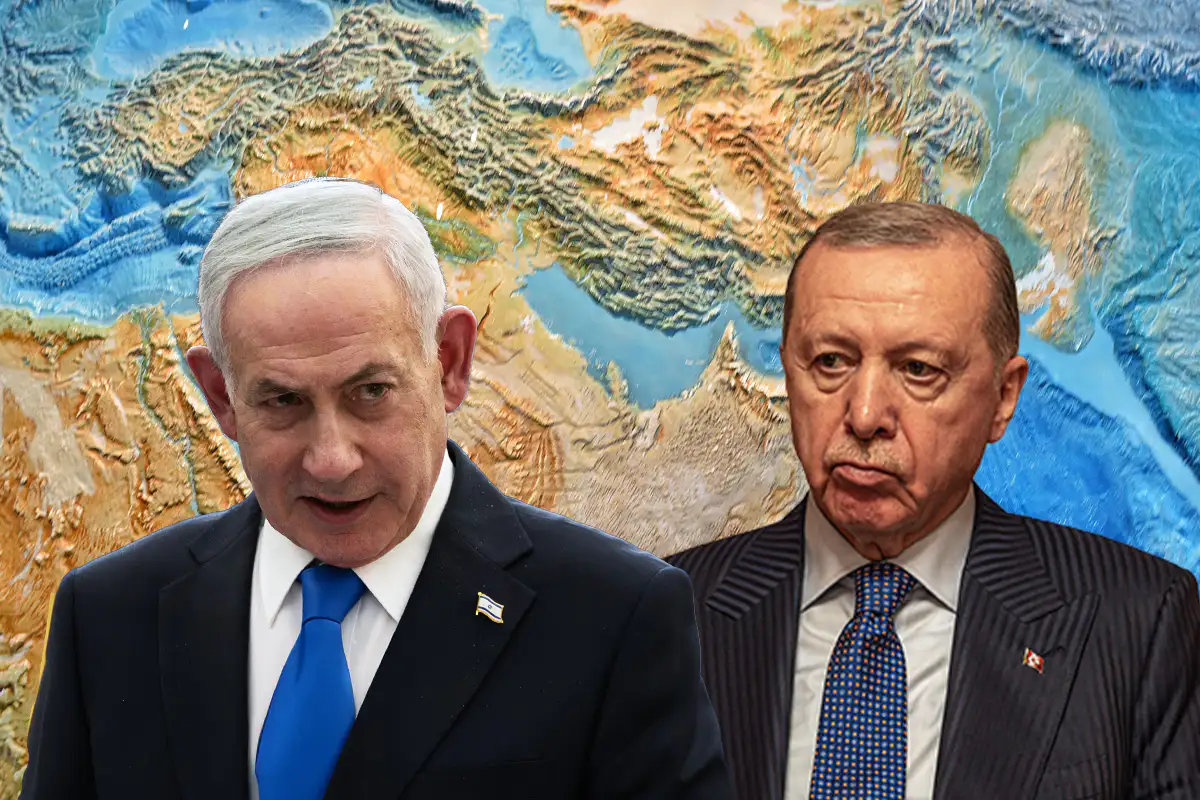
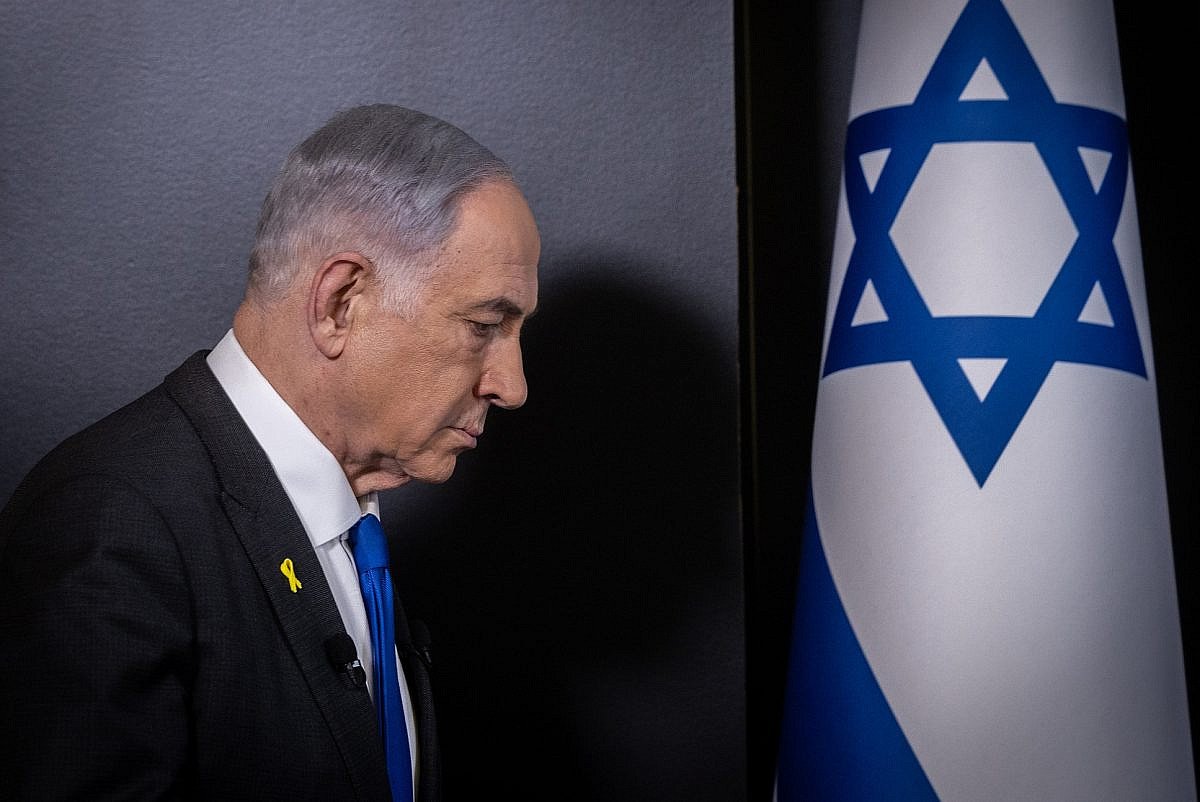
Netanyahu’s campaign promises “a new Middle East” built on Gulf partnerships. Saudi Arabia, its largest Gulf prize, has meanwhile formalized defense ties with Turkiye, increasingly portrayed in Israeli politics as a strategic rival. The gap between that campaign promise and Riyadh’s decisions is widening.
How far the shield reaches
The pact is still far from an Islamic NATO. Its members see different principal threats: Turkiye looks toward Syria and the eastern Mediterranean, Pakistan toward India, and Saudi Arabia toward its vital facilities and southern border.
Turkish parliamentary approval remains outstanding, Pakistan keeps the details of its deployment secret, and Saudi operations still draw on US support.
The Mecca pact was meant to broaden Riyadh’s options. Its first test has shown which options Saudi Arabia chose. Under attack, it called on Ankara and Islamabad, drew on US support, and took heed of Iran’s warning. Tel Aviv had no place at the table.
The pact now has a committee, a secretary-general, and orders to deploy. Whoever wins Israel’s 27 October election will face a Saudi security arrangement already in motion.