
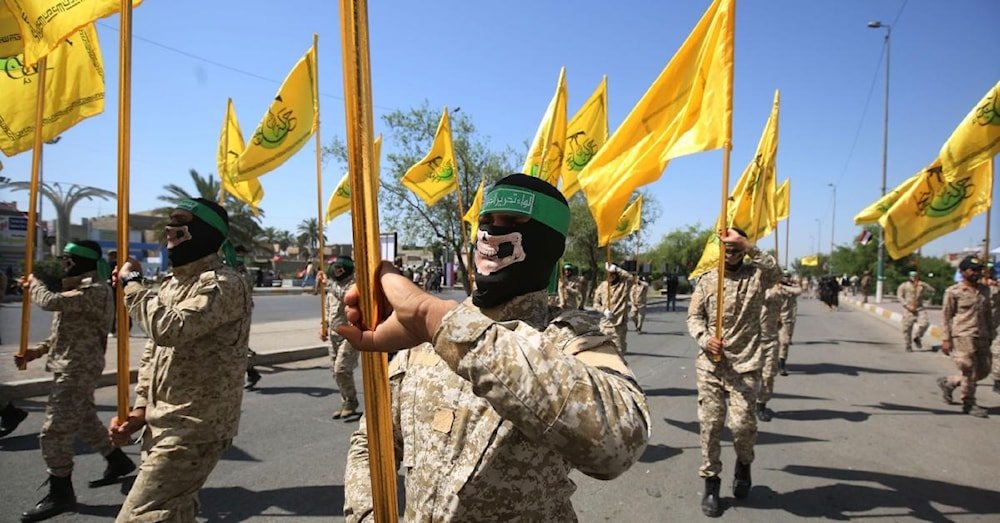
Sanctions on Iraq offer the only credible lever against entrenched militias. Military and judicial institutions are captured by the same factions, while Sistani’s ambiguity avoids confrontation. Financial pressure exploits Tehran’s dependence on Iraq’s official economy.
The assumption that a prime minister’s order can dismantle entrenched armed networks misunderstands how Iraq’s political system actually operates. Sanctions on Iraq have been proposed as a tool to break this paralysis, but they must target the financial arteries that sustain both the militias and their Iranian patron. Washington’s reading of Ali Al-Zaidi’s July 2026 pledge mistakes rhetoric for capacity.
The real obstacle is not the absence of state instruments, but their entanglement with the factional interests the prime minister seeks to confront. Iraq’s senior military leadership operates within a sectarian quota system that guarantees Iran-aligned groups dominant control over institutions. The Badr Organization commands the Interior Ministry; others dominate the remaining security apparatus.
Any decision to use force against armed groups must traverse an institutional chain controlled by those same groups’ affiliates. The judiciary faces parallel capture, with political parties appointing judges according to loyalty. Grand Ayatollah Ali al-Sistani’s 2014 fatwa, though not intended to create a permanent parallel army, gave armed factions legitimacy to entrench themselves. Military action backfires by driving factions to close ranks. Sanctions on Iraq therefore offer the most credible leverage, because Iraq’s official financial system is vital to both the factions and Iran’s economic survival, exploiting Tehran’s vested interest in preventing Iraq from becoming an economic burden.
Washington Misreads Baghdad’s Capacity
Washington’s reading of Iraqi Prime Minister Ali Al-Zaidi’s July 2026 pledge to dismantle Iran-backed militias mistakes rhetoric for capacity. The real obstacle is not the absence of state instruments, but rather, that those instruments are embedded in a political system shaped by the factional interests Al-Zaidi seeks to confront. The question, therefore, is not whether the prime minister can order disarmament; it is whether the institutions required to enforce that order can act independently of the networks being disarmed.
Sanctions on Iraq Target Militia State
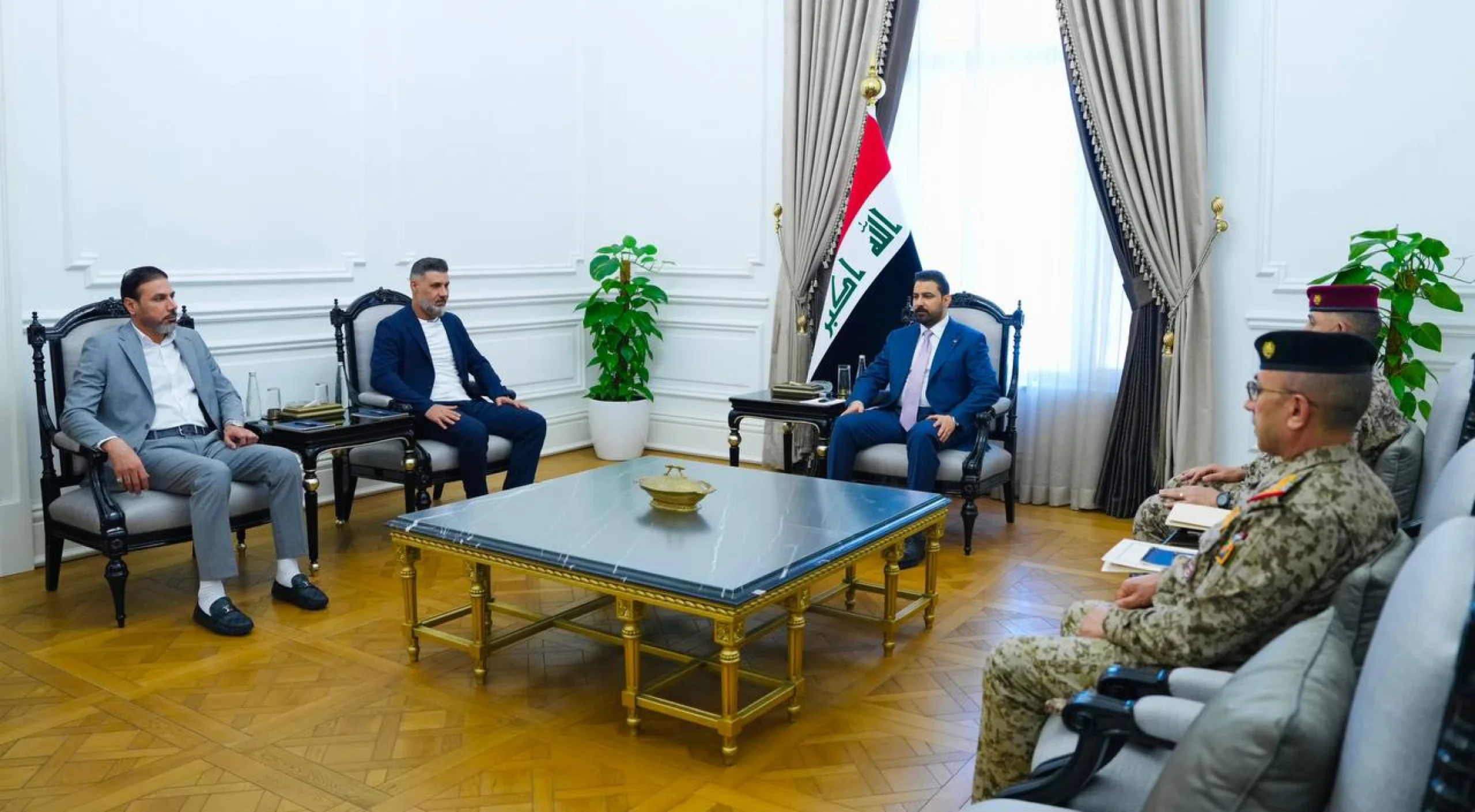
In theory, Iraq’s prime minister can order the military to confront armed factions. In practice, such an order would enter a command structure whose senior appointments and institutional interests political parties shape, including the political wings of Iran-backed militias.
Iraq’s senior military and security leadership operates within a sectarian quota system that guarantees Iran-aligned groups dominant control over institutions. The Badr Organization commands the Ministry of Interior; others dominate the remaining security apparatus. This occupation of the state’s coercive apparatus by the factions Al-Zaidi purports to dismantle creates a distinction between formal command authority and effective control. Any decision to use force against armed groups must traverse an institutional chain controlled by those same groups’ affiliates.
Senior commanders loyal to or affiliated with the militias will not order campaigns against their own networks. They face either the political costs of betraying patrons or the physical risks of defection. Either way, the military becomes unreliable precisely when it is most needed.
Judiciary Cannot Prosecute Militia Leaders
The judiciary presents a parallel problem. Political parties appoint judges according to loyalty, and Hadi Al-Amiri, leader of the Badr Organization, has admitted to intimidating judges. A judiciary operating under such pressure cannot serve as the independent mechanism for prosecuting militia leaders or enforcing disarmament decisions. Chief Judge Faiq Zaidan’s account of militia protection—on Qods Force commander Qassem Soleimani’s orders—illustrates the problem: Armed factions operate not only outside state authority but as protectors of it. Personnel owe their positions and safety to those same militias and Iran.
Coordination Framework Blocks Disarmament
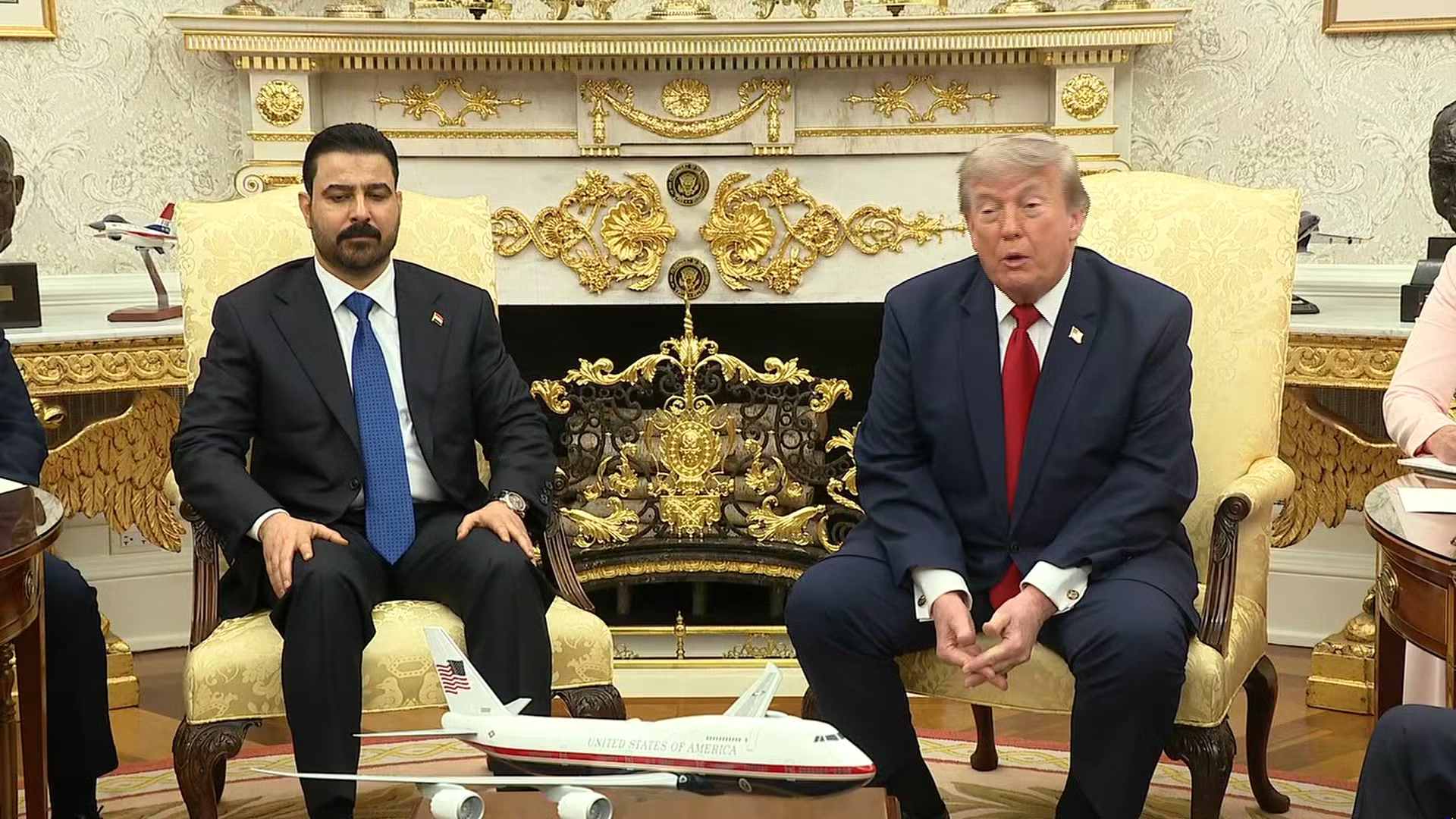
Iraq’s constraint, however, is political; Al-Zaidi’s government derives its parliamentary legitimacy primarily from the Coordination Framework, where Iran-aligned armed groups exercise decisive leverage and maintain representation in parliament.
The factions do not need to defeat a government militarily; they can use boycotts, withdrawals, and legislative obstruction to paralyze governance and pressure the prime minister into decisions. This tactic proved effective during the past decade and re-emerged in August 2026, when Asa’ib Ahl al-Haq announced it would withdraw its support for Zaidi, forcing him to shift his position on disarmament through the government spokesman’s clarification that the deadline concerned the scheduled withdrawal of Coalition and U.S. forces, not the termination of armed factions, while figures within the Coordination Framework reframed disarmament as the organization of weapons. The episode reflected the limits of what the prime minister can enforce.
Sistani’s Fatwa Creates Parallel Army
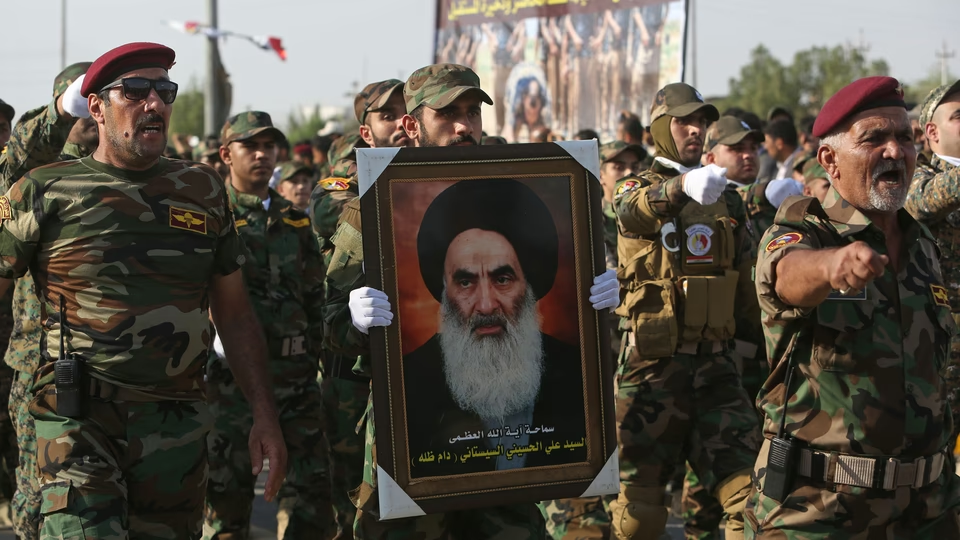
The supreme Shi‘i authority Grand Ayatollah Ali al-Sistani’s 2014 fatwa of communal jihad mobilized Iraqi Shi‘a against the Islamic State. Although it was not intended to create a permanent army parallel to the state, armed factions claimed legitimacy to entrench formations inside and outside the official state structure.
Najaf’s Strategic Ambiguity Avoids Confrontation
Ever since, Najaf has faced a different dilemma: Sistani’s inner circle has guided a policy of strategic ambiguity, issuing vague statements through Friday sermon preachers that permit multiple interpretations rather than a decisive fatwa regarding the status of these militias.
To issue an explicit and comprehensive stance calling for the dismantling of all Khomeinist Iraqi armed factions would place the religious authority in confrontation with forces possessing weaponry loyal to Tehran and challenging Iran’s influence and the ayatollah’s revolutionary transnational agenda. It could risk undermining Sistani’s own prestige and authority. This would transform the state’s monopoly on power from an Iraqi political matter into one of legitimacy within the Shi‘i camp itself.
Sanctions on Iraq Exploit Tehran’s Dependence
Military action backfires by driving factions to close ranks, leaving financial pressure as the primary lever to break Iraq’s political paralysis. The credible threat of U.S. sanctions can force armed groups to shift positions by raising the cost of maintaining parallel forces. Because Iraq’s official financial system is vital to both these factions and Iran’s economic survival, strategic financial pressure exploits Tehran’s vested interest in preventing Iraq become economic burden.