

Drone strikes from Iraq shut the East-West pipeline as Houthi forces seized Mocha, Perim, and Hanish islands. Washington declined Saudi requests for strikes, leaving Riyadh to manage both fronts with limited options.
The Saudi Two-Front Crisis has exposed the limits of Riyadh’s decade-long strategy to avoid a costly ground war in Yemen while protecting its oil infrastructure. A drone attack from Iraqi territory on the East-West pipeline forced a precautionary shutdown, while Houthi forces completed their takeover of Yemen’s Red Sea coast, seizing Mocha, Perim, Zuqar, and Hanish islands commanding Bab al-Mandeb.
Washington declined Saudi requests for direct strikes, leaving Riyadh to manage with limited airstrikes, intelligence support, and diplomacy. The Saudi Two-Front Crisis has emboldened Iran, which benefits from simultaneous pressure on Saudi energy exports and global shipping. Oil markets have registered the risk, with Aramco shares falling as the kingdom’s crude supply hit a three-decade low. Crown Prince Mohammed bin Salman faces narrowing options: escalate and risk returning to the ground war he spent years exiting, or negotiate from a position of weakness. The crisis also challenges the regional order Washington has been building ahead of the midterms, giving Tehran another lever to pressure its adversaries and the global economy.
Saudi Two-Front Crisis Deepens
A drone attack launched from Iraqi territory last week against Saudi Arabia’s main pipeline to the Red Sea has revived the prospect of a two-front confrontation for Riyadh.
As the situation in Yemen spirals further out of anyone’s control, Saudi Arabia’s options for managing both fronts are narrowing.
The Houthis have completed their takeover of Yemen’s Red Sea coast, seizing Mocha and the islands of Perim, Zuqar, and Hanish, which command the Bab al-Mandeb Strait.
While the Yemeni government’s counteroffensive has since shifted toward Marib and Jawf, the front lines remain fluid.
A second front opens
On Thursday, several drones struck Saudi Arabia’s East-West Pipeline south of Medina, causing injuries and damage and forcing Riyadh to shut the pipeline as a precaution.
The Saudi foreign ministry said the drones had been launched from Iraq and would not retaliate “at this stage,” at the request of Iraqi Prime Minister Ali al-Zaidi.
Baghdad dismissed the commander who led operations in Missan province after an investigation traced the drones to launch platforms near al-Shib, on the Iranian border, and closed three crossings, Shalamsheh, al-Shib and al-Mandali, to stop the attackers fleeing into Iran.
Al-Zaidi has accepted an Iranian request for a joint investigation. No group has claimed the strike, and an alliance of Iran-backed factions has denied hitting the pipeline.
The Islamic Resistance in Iraq called it “an honour that we do not claim”. Shalamsheh and al-Shib reopened to passenger traffic on Sunday, though not yet to trade, with a full reopening due by Thursday.
It is not the first time Riyadh has traced an attack on its oil infrastructure to Iraq. On 29 July, US and Saudi forces struck Iran-aligned Popular Mobilisation Forces (PMF) factions accused of hitting Saudi facilities in the Eastern Province. Twenty PMF fighters and five Iranian advisers were reportedly killed. Riyadh called it self-defence.
The Islamic Resistance in Iraq initially threatened retaliation over the July strikes before backing down under pressure from Iraqi figures, including Hadi al-Amiri. Diplomatic efforts through August did not stop last Thursday’s attack.
The Shia Coordination Framework in Baghdad remains divided over how to disarm Iran-backed factions ahead of a 30 September deadline. Part of the problem is that some factions are deeply embedded in Iraq’s security apparatus and maintain close ties to the Islamic Revolutionary Guard Corps (IRGC).
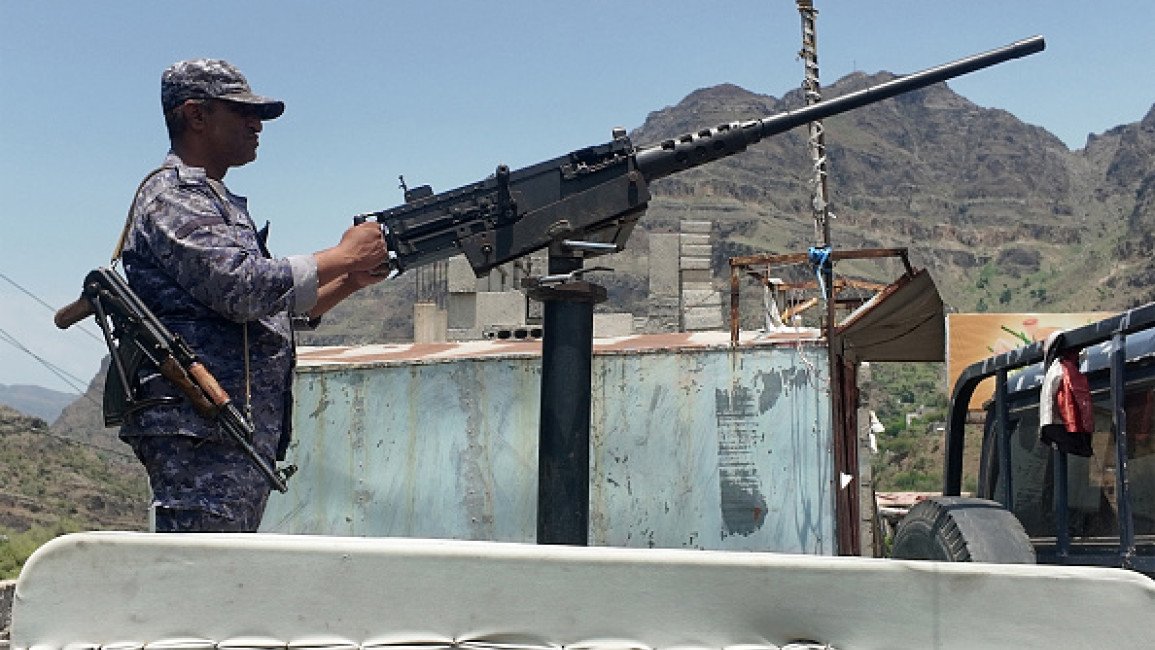
That disarmament push may not even solve the underlying problem. Tamer Badawi, an Iraq analyst and associate fellow at the Royal United Services Institute (RUSI), told The New Arab that the Islamic Resistance in Iraq’s denial, if it “proves accurate,” could mean Iran’s Quds Force “may be conducting attacks via new groupings”.
Even if known factions like Kataib Hezbollah, Harakat Hezbollah al-Nujaba, and Kataib Sayyid al-Shuhada disarm, “other new and unknown groups can launch transborder attacks from Iraqi territories”.
Baghdad, Badawi added, lacks “consistent control over the Iran-aligned groups” and the “ground-to-air capabilities” needed to stop such strikes.
“It’s most certainly the case that there is coordination between Tehran, armed networks in Iraq, and Ansarallah,” he told The New Arab, though it is “taking much less of a public and celebrated appearance” than when Iraqi factions and Ansarullah synchronised attacks against Israel after 7 October.
The Institute for the Study of War described the strike as part of “a coordinated effort with other Axis of Resistance members to coerce Saudi Arabia to meet Houthi demands by attacking Saudi energy infrastructure”.
The same assessment linked the attack to the Houthi campaign around Bab al-Mandeb, saying the Houthis are “setting conditions to establish” the strait “as an Axis of Resistance-controlled body of water,” which it called “unacceptable for US national security and economic interests”.
Saudi strategy under pressure
The latest Houthi offensive began on 3 September across Taiz and Hodeidah, producing Yemen’s biggest territorial changes since a 2022 truce halted the civil war. It also undoes years of Saudi effort to reduce exposure.
Riyadh led a coalition against the Houthis from 2015, scaled back after a costly air campaign, and pursued a peace roadmap from 2023.
Direct hostilities resumed in July, after Saudi Arabia struck Sanaa airport and the Houthis blockaded Red Sea ports. Last Tuesday, Houthi missiles and drones hit four southern Saudi cities, injuring at least 73 people. Riyadh has relied on tens of thousands of Yemeni troops rather than deploy its own.
The Houthis claimed a fresh strike of their own on Sunday, saying they hit weapons depots and command centres at the Sharurah military base in southern Saudi Arabia. An Iranian commercial vessel was struck the same day in the Strait of Hormuz, a reminder that Riyadh’s other maritime exit remains unsettled too.
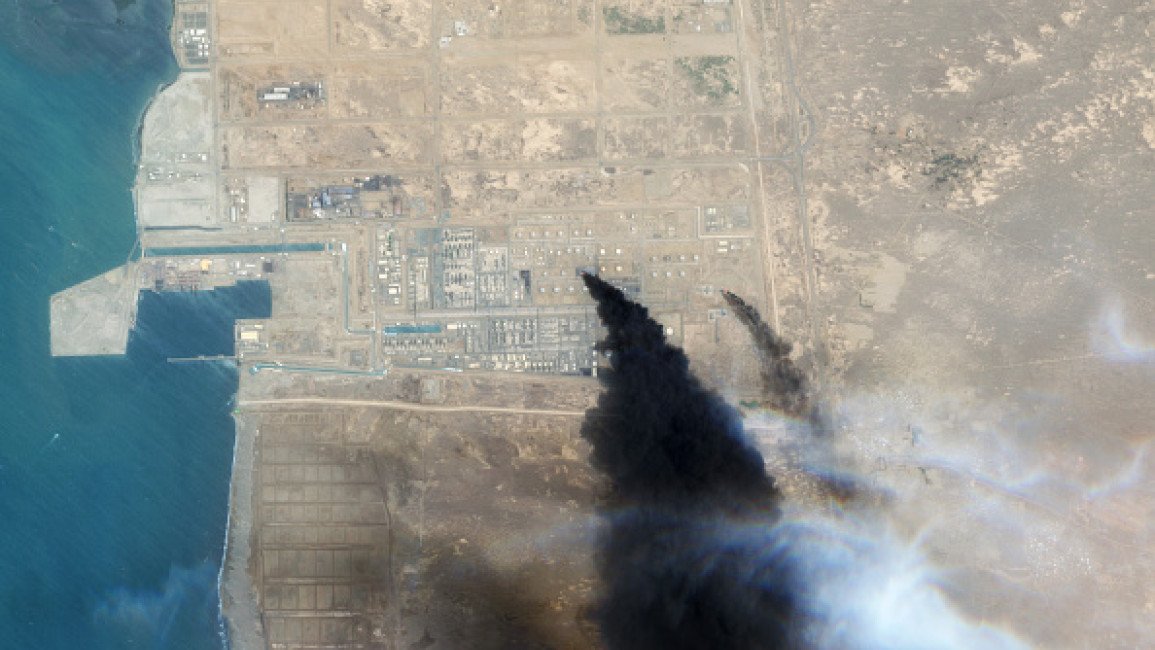
Those forces have struggled for familiar reasons. Coordination between units has been patchy, reinforcement mechanisms weak, and Saudi air support limited. Someone still has to fight on the ground, and the units expected to do that are the ones already exposed as weakest.
Can Riyadh Contain the Houthis
Ahmed Nagi, a senior Yemen analyst at the International Crisis Group (ICG), said the Houthis’ hold on Bab al-Mandeb has already changed their leverage.
“It’s clear that the Houthis now have a greater influence over the Bab al-Mandab,” he told The New Arab. “It also gives them room to expand toward the other side of Yemen and further weaken the government forces that Saudi Arabia is supporting.”
Nagi said Riyadh has few good options left. “I don’t think the Saudis have many good options to contain the situation now,” he said.
“Things have basically gone from bad to worse. If they want to contain it, they’ll probably have to make some concessions, because the Houthis are now negotiating from a much stronger position.”
That bind predates last week’s advance. Reversing the Houthi gains risks pulling Saudi Arabia back into the ground war it spent a decade trying to leave. Leaving them unanswered risks losing the coastline and the pipeline’s approach to Yanbu for good.
Mohammed al-Basha, founder of the risk advisory firm Basha Report, said that “the situation on Yemen’s West Coast remains fluid”.
The coalition, he told The New Arab, “appears to have resumed limited airstrikes against Houthi positions,” while the Southern Giants Brigades and National Shield Forces “have stabilised a new defensive line south of the strait,” with units withdrawn from the coast regrouping elsewhere.
Houthi casualties from the offensive that ended 9 September are “heavy,” though unconfirmed.
Saudi Two-Front Crisis Tests Washington
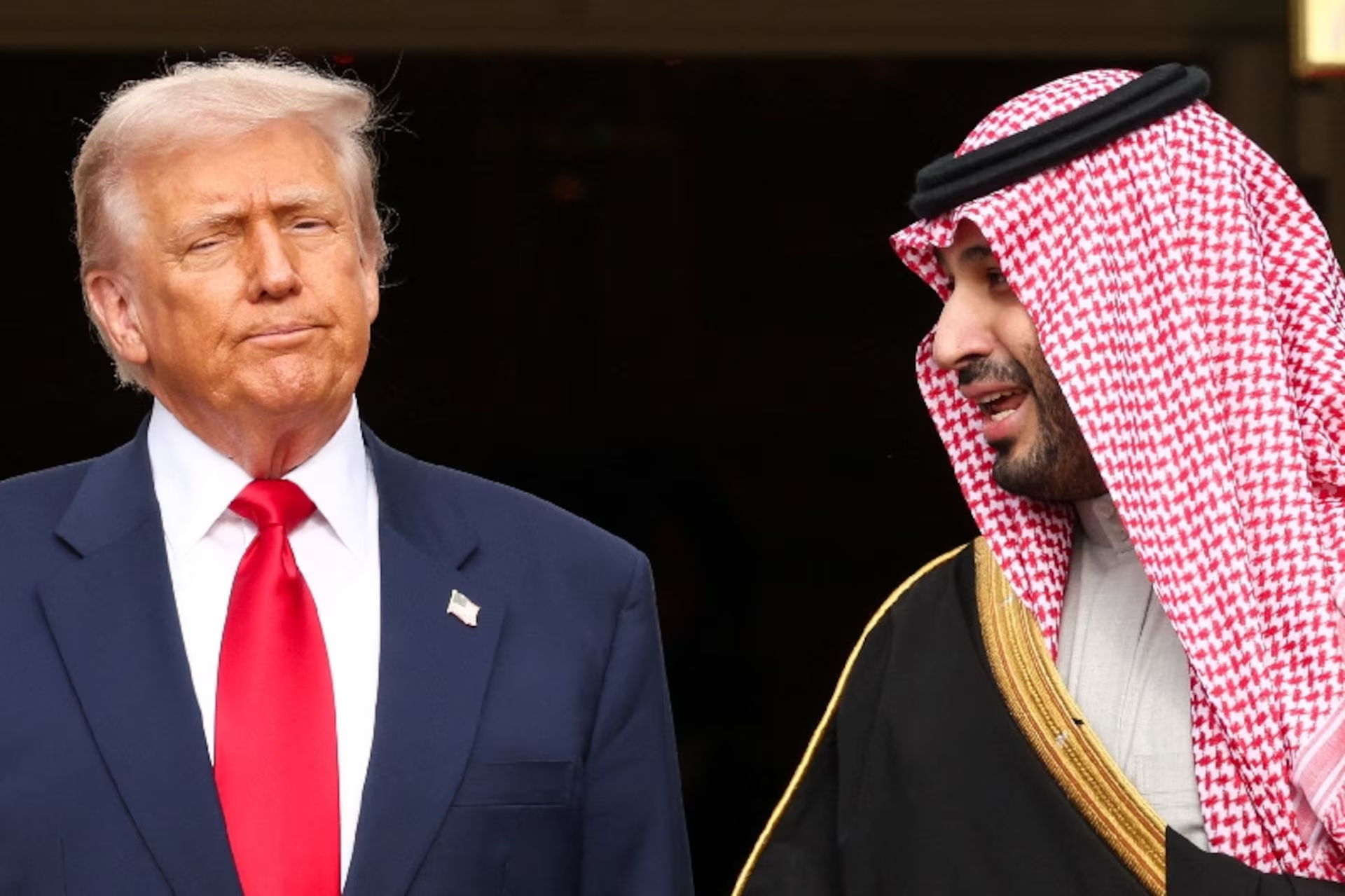
The Houthi advance has already pushed Riyadh to seek military help it said only two months ago it did not need. Crown Prince Mohammed bin Salman called President Donald Trump twice on Thursday as Saudi-backed forces retreated, asking in the second call for the US to authorise strikes against the Houthis. Trump declined.
Adm. Brad Cooper, the CENTCOM chief, travelled to Saudi Arabia on Thursday, and around 200 US personnel are now in the kingdom, with more than 100 focused on intelligence and targeting, according to reports.
In practice, Riyadh is managing the war largely alone, with indirect support, limited airstrikes, stronger air defences, and a parallel push for Oman-mediated talks.
That mix of escalation and diplomacy is not necessarily a contradiction. It reflects a Saudi calculation that military pressure and a negotiated off-ramp serve the same goal, keeping the Houthis from consolidating gains without a return to the costly ground war Riyadh spent years trying to exit.
Saudi oil route comes under pressure
The pipeline gives Saudi Arabia only a partial way around Hormuz. It lets crude bypass the strait and reach Yanbu, but tankers carrying those exports south still have to cross the Red Sea toward Bab al-Mandeb. Bypass capacity, in practice, is not secure supply.
Markets are already registering some of that risk. Saudi Arabia’s benchmark stock index fell 1.3% on Sunday, and Aramco shares 1.6%, as investors weighed the pipeline’s precautionary shutdown. Reuters put the exposure at roughly 4% of global oil supply.
The Houthis say their blockade targets only Saudi vessels. Saudi crude supply fell 2.3 million barrels a day in August to 6 million bpd, its lowest level in three decades, according to the International Energy Agency, partly due to attacks on ships transiting Bab al-Mandeb.
Iran Gains Leverage From Chaos
Nagi sees a deliberate logic behind the timing. Iran, he argued, has a clear interest in pressuring Saudi Arabia while Hormuz is already disrupted, and in hitting Saudi energy exports via the Yanbu reroute now within Houthi reach.
It also challenges the regional order Washington has been building ahead of the midterms.
“That obviously benefits Iran at this moment,” he said, “because it gives Tehran another way to put pressure on its regional adversaries and the global economy.”