
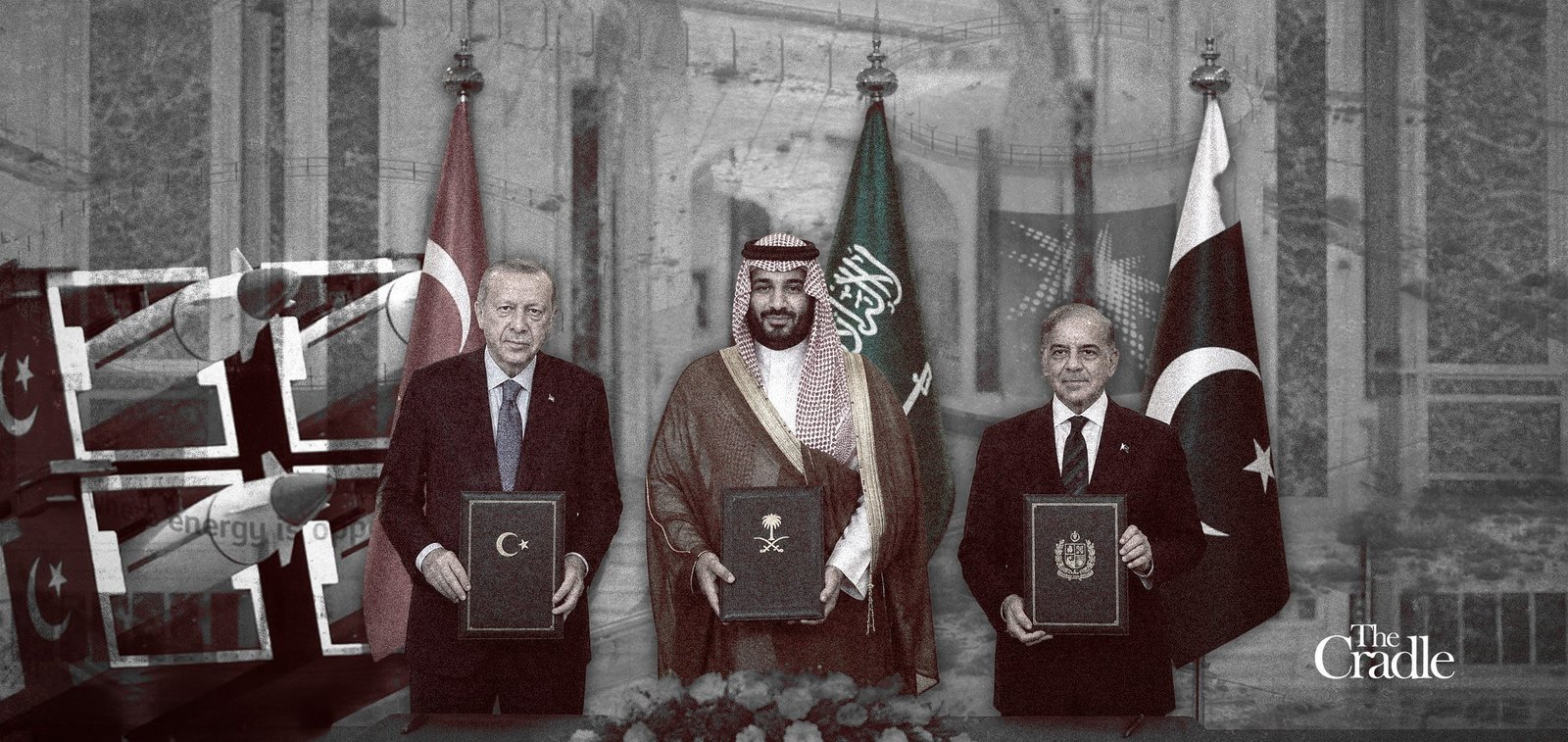
Pakistan faces its first Mecca Pact Test as Yemeni strikes hit Saudi Arabia. Islamabad signals it will protect Saudi territory but avoid bombing Yemen, balancing Riyadh ties against Iran diplomacy and domestic resistance.
The Mecca Pact Test has arrived barely a month after Saudi Arabia, Turkiye, and Pakistan signed their trilateral defense agreement, as Yemeni strikes on Saudi territory force Islamabad to define what collective defense actually means. Pakistan’s Foreign Ministry initially said no military response was under discussion, while Defense Minister Khawaja Asif later declared there was “absolutely no ambiguity” about Islamabad’s obligations.
This contradiction reveals the pact’s central design flaw: its headline clause treats an attack on one as an attack on all, but it establishes no automatic trigger and offers no operational rules for cases where a member’s adversary strikes in retaliation. The Mecca Pact Test therefore exposes a gap between political rhetoric and military reality.
Field Marshal Asim Munir faces competing pressures: longstanding financial and military ties to Riyadh, an inability to afford hostility with neighboring Iran, and domestic resistance to another Yemen entanglement. Pakistan’s likely response is layered rather than spectacular—intelligence sharing, air defense reinforcement, and infrastructure protection—while refusing to bomb Yemen. This ambiguity allows Islamabad to claim fidelity to Riyadh, preserve its channel to Tehran, and avoid turning the pact into a declaration of war. Whether that balancing act holds depends on how far the conflict escalates and whether Saudi Arabia demands more than Pakistan is willing to give.
Islamabad Draws a Line
Conflicting signals from Islamabad have raised the question of whether Pakistan will invoke the Mecca Joint Defense Agreement at Saudi Arabia’s insistence and enter the kingdom’s renewed confrontation with Yemen’s Ansarallah-aligned Yemeni Armed Forces (YAF).
The much-trumpeted pact has met its first serious test barely a month after it was signed. As fighting reaches the Saudi border and missiles and drones strike the kingdom, Pakistan’s military leadership has turned to diplomacy with Iran. Turkiye, meanwhile, has defended the alliance while stopping short of any concrete military commitment.
Critics say the agreement has already proved ineffective against Yemen’s retaliatory attacks. A senior Turkish official rejected that charge, describing it as an attempt to undermine the new alliance between Turkiye, Saudi Arabia, and Pakistan. Yet the absence of a joint response has only sharpened questions about what the accord requires when a member state is struck during an ongoing war.
Mecca Pact Test Meets First Crisis
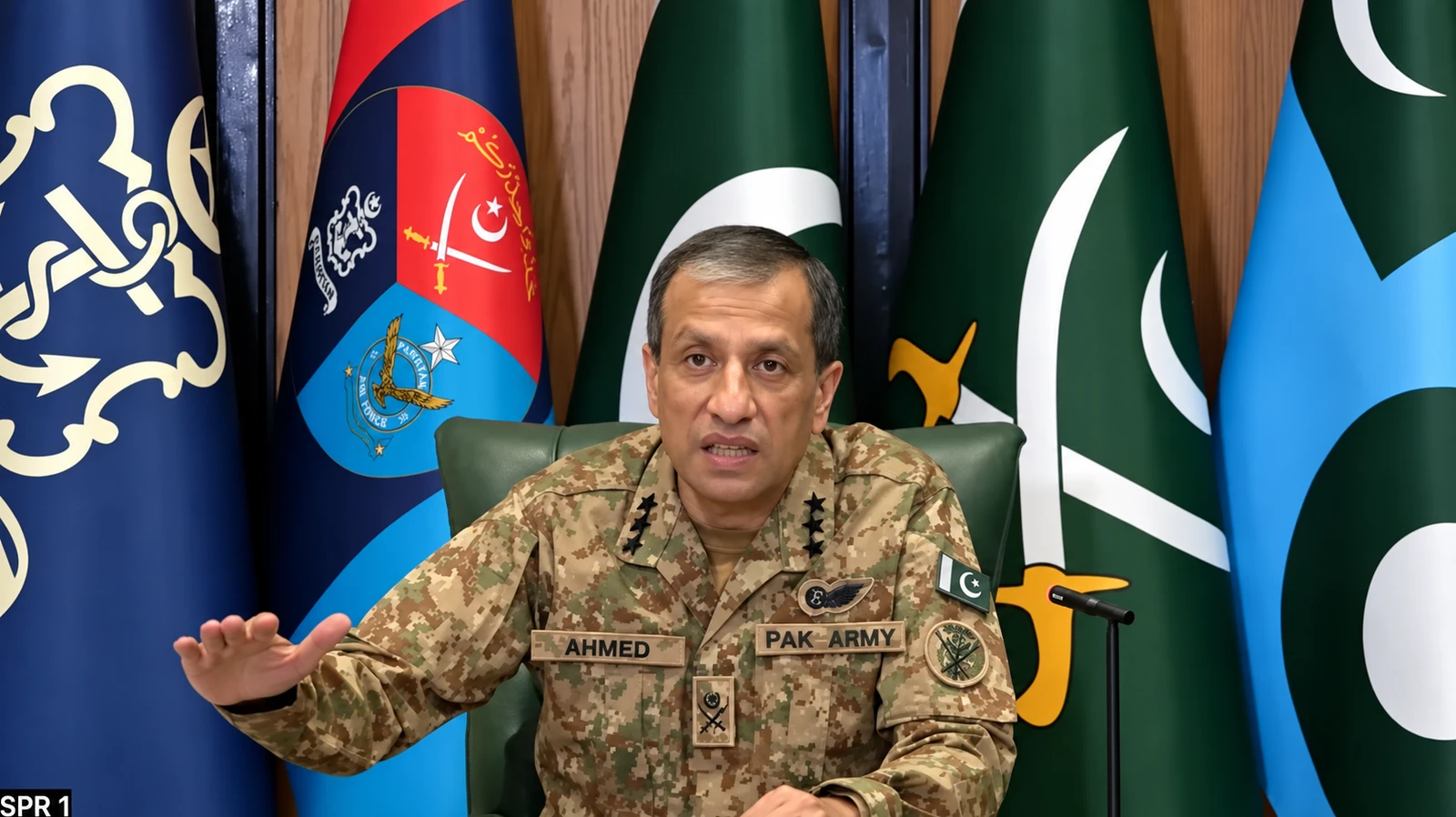
Pakistan’s position hardened after Saudi Arabia claimed it had intercepted a Yemeni drone headed toward Mecca. Speaking to Geo News on 17 September, Defense Minister Khawaja Asif said there was “absolutely no ambiguity” over Islamabad’s obligations. “The Mecca Agreement applies to us, and we will fulfill our duty,” he said, while keeping the details of any defense response confidential.
Asif also said the time had come to implement the agreement and that Pakistan’s duty to defend Islam’s holy sites existed independently of the pact. “If Mecca is attacked, there is no need for an agreement to protect it,” he added. His remarks marked a shift from the Foreign Ministry’s position a week earlier.
On 10 September, Pakistan’s Foreign Ministry had said no military response was under discussion. “There is no such thing under discussion right now,” spokesperson Sajjad Haider Khan said. “When the time comes, we will act under the agreement.”
Zahir Shah Sherazi, executive vice president of Bol News, tells The Cradle:
“Signs point to Pakistan not responding to the Houthi [YAF] attack on Saudi oil interests. Pakistani military authorities and the Foreign Office have vehemently denied any such designs. Islamabad is likely to provide only protective measures to Saudi Arabia, like intelligence sharing, military infrastructure, border surveillance, and protection of key areas.”
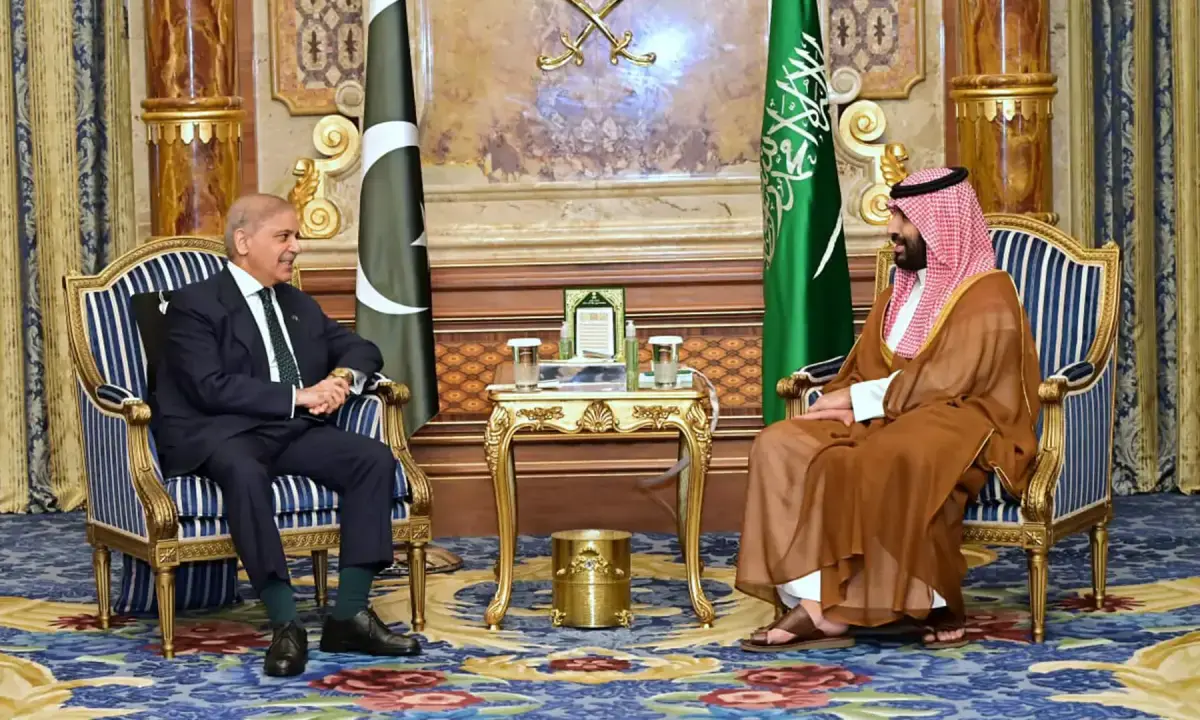
That position reflects the bind Field Marshal Asim Munir faces. Pakistan has longstanding military and financial ties with Riyadh, but it cannot afford open hostility with neighboring Iran or another direct entanglement in Yemen. Islamabad’s room for maneuver depends on separating the defense of Saudi territory from offensive operations across the border.
Munir has therefore pursued talks with both Iran and Saudi Arabia, urging restraint as attacks on the kingdom’s energy facilities intensify. During an August visit to Tehran, he met Iranian President Masoud Pezeshkian and Foreign Minister Abbas Araghchi as part of efforts to prevent the conflict from spreading further.
Islamabad has also pressed Tehran to use its influence with Ansarallah, while reminding Iranian officials that Pakistan has formal defense commitments to Riyadh. This allows Pakistan to present its diplomacy as an attempt to uphold the pact without turning it into a mandate for war.
“Pakistan is trying to strike a balance between Iran and Saudi Arabia because it cannot afford to have animosity with its neighbor, Iran, especially now that Iran is warming up its trade coordination with India as a warning to Islamabad,” Sherazi says. The most Pakistan can realistically offer Riyadh, he adds, is help securing strategic installations.
Sherazi says Islamabad is under pressure to honor its defense commitments, but will continue using its channels with Tehran to prevent a wider regional conflagration. Direct involvement would destroy Pakistan’s claim to act as a mediator and peace broker, while opening a new front along its western flank.
A Pact Built on Ambiguity
The gap between the Foreign Ministry’s earlier caution and Asif’s declaration shows that applying the pact does not automatically determine Pakistan’s response. Much still depends on how the attack began, whether it is treated as retaliation, and what each partner understands by collective defense.
Squadron Leader (Retd) Nauman Wazir, a former senator from Imran Khan’s Pakistan Tehreek-e-Insaf party, tells The Cradle:
“There appear to be many loopholes in the deal that might potentially exempt Pakistan’s military involvement should one of the three signatories of the defense accord face a retaliatory attack. The pact only provides for collective action if any of the signatories is attacked without provocation.”
Saudi aircraft had resumed heavy strikes in Yemen as fighting intensified between the YAF and forces aligned with the Saudi-backed Presidential Leadership Council (PLC). Sanaa then launched its 8 September drone and missile attack on targets in Abha, Jizan, Khamis Mushait, and Najran. Saudi authorities said the strikes hit civilian and economic sites and injured 73 people, including women and children.
The exchange continued with further Saudi-led airstrikes inside Yemen. By mid-September, the conflict had widened again, with attacks and counterattacks placing the pact’s language under growing strain.
The central question is whether the agreement requires action against an adversary whose strike follows an attack by one of the pact’s own members. The public text offers no clear answer, and the signatories have not disclosed operational rules for such a case.
What the Mecca Pact Provides
Saudi Arabia, Turkiye, and Pakistan signed the trilateral agreement in Mecca on 7 August 2026. Its headline clause treats an armed attack on one as an attack on all three, echoing NATO’s Article 5. But the joint statement gave no details on the obligations accepted by each country and did not establish an automatic military response.
The framework instead creates political and military mechanisms for coordination among foreign ministers, defense ministers, and senior commanders. Its broader aims include joint exercises, cooperation in air defense and electronic warfare, and the development of drones and other military technologies.
Wazir says the pact’s defense terms appear to have been modeled on Article 5, but action would still be coordinated through oversight bodies rather than an instant trigger. The agreement also contains no declared nuclear-sharing mechanism, leaving Pakistan under no formal obligation to extend its deterrent to Turkiye or Saudi Arabia.
“Insofar as resource sharing is concerned, Saudi Arabia, where the permanent general secretariat of the defense coordination will exist, will provide financial and energy support. Turkiye will supply advanced defense technology, drones, and naval platforms, while Pakistan’s contribution includes military manpower and frontline personnel,” Wazir explains.
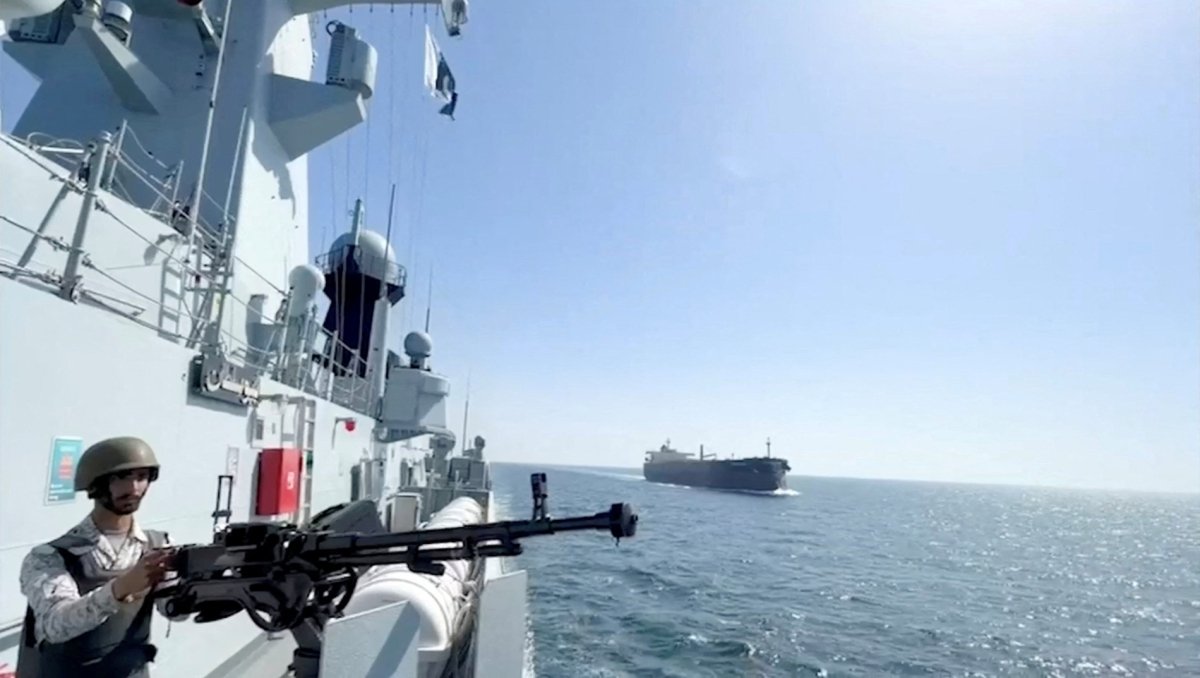
Pakistan has already deployed thousands of troops, aircraft, drones, and air defense systems to Saudi Arabia. Those assets give Islamabad room to strengthen the kingdom’s defenses without sending Pakistani forces into Yemen.
Munir Expands Wartime Powers
The debate over the pact coincides with a major restructuring of Pakistan’s armed forces. Parliament’s Defense Forces of Pakistan Act, 2026, created the post of Chief of Defense Forces (CDF) and placed Munir at the head of the army, navy, and air force while he remains army chief.
The new office gives a single commander statutory operational authority across all three services, replacing the old joint chiefs structure, which largely coordinated rather than commanded. The government says the change will integrate land, sea, air, cyber, and drone operations and accelerate decisions in a crisis.
A Defense Ministry source, who was not authorized to speak publicly, tells The Cradle that the legislation provides the legal foundation for the CDF office created by last year’s constitutional amendment. It also makes implementation of the Mecca pact easier by centralizing command and procurement.
The source says Pakistani military and security personnel were already in Saudi Arabia before the latest crisis. Riyadh’s financial leverage over Islamabad further complicates any attempt to refuse assistance outright. As CDF, Munir can coordinate all three services without bargaining separately with the army, navy, and air force chiefs.
Operational authority, however, is only part of the equation. Any decision to strike Yemen would carry a heavy domestic price. Pakistan’s parliament refused to join the Saudi-led war in 2015, and the country’s political and military leadership remains wary of importing a regional conflict into a state already strained by economic crisis, militancy, and sectarian fault lines.
A war against an Iranian ally could also ignite unrest across Balochistan and Pakistan’s already volatile western frontier.
Mecca Pact Test Reveals Narrow Path
The likely Pakistani response is therefore layered rather than spectacular. Islamabad can increase diplomatic pressure on Tehran, reinforce Saudi air and missile defenses, expand intelligence cooperation, and support efforts to protect the Bab al-Mandab without placing its own forces inside Yemen.
Regional assessments likewise judge a direct Pakistani operation against Sanaa unlikely unless the confrontation escalates much further. Islamabad can reinforce Saudi air defenses, share intelligence, and protect critical infrastructure while refusing to bomb Yemen.
For now, that narrow line allows Pakistan to claim fidelity to Riyadh, preserve its channel to Tehran, and avoid turning the Mecca pact into a declaration of war.