
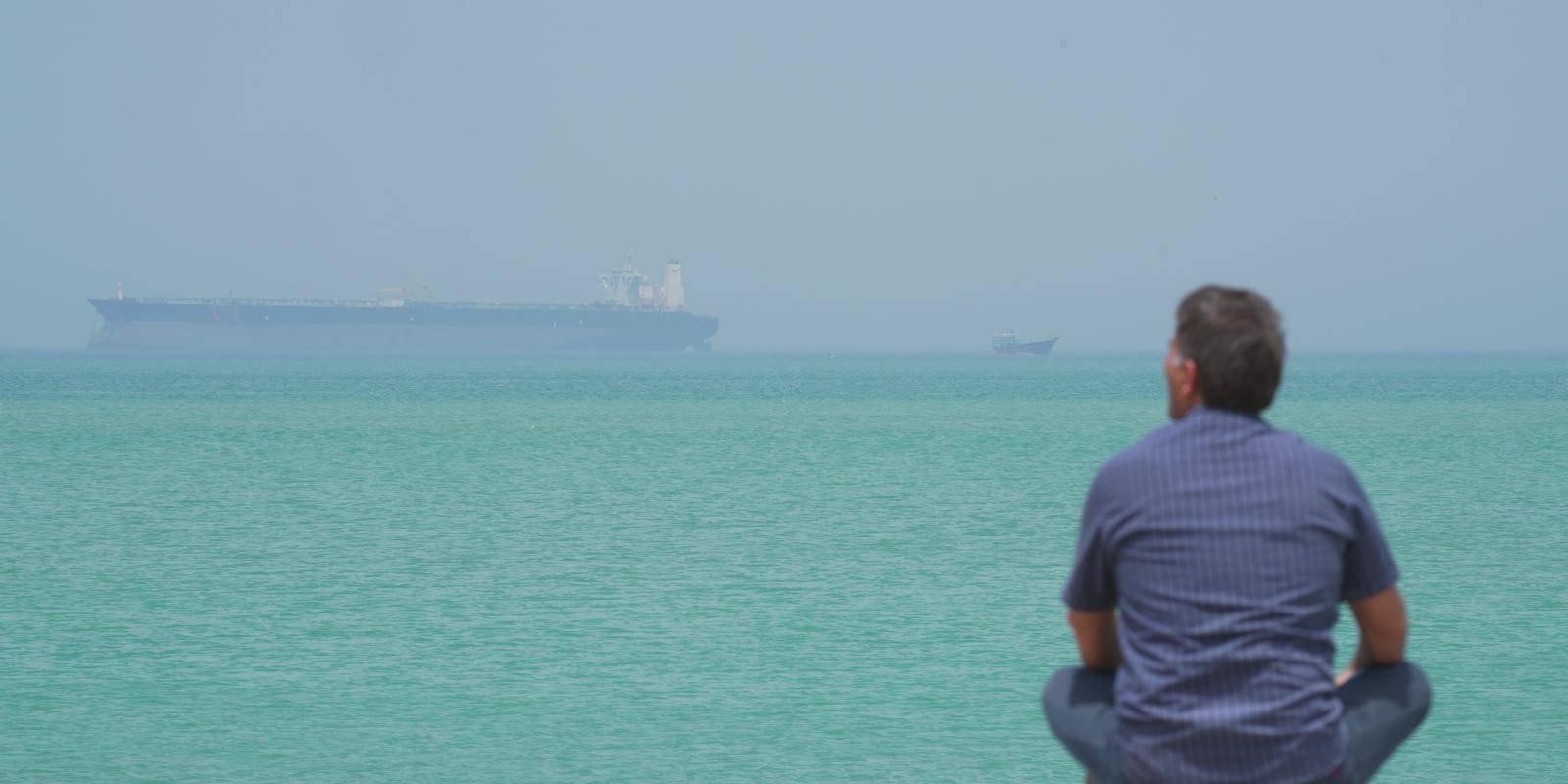
The Strait of Hormuz remains neither open nor secure after the US ceasefire extension with Iran, and conflict at sea continues to threaten global shipping through the Strait of Hormuz.
Why the Strait of Hormuz Needs a Naval Coalition, Not a Military Solution
On 21 April, the US announced a ceasefire extension with Iran. Since then, however, the US has maintained a blockade over the Strait of Hormuz and boarded a tanker carrying Iranian oil in the Indian Ocean. Iran had also seized two container ships that were transiting the Strait and continues to reject the US presence there. As such, the Strait of Hormuz remains neither open nor secure and conflict at sea continues.
In response, the UK and France have announced that they are assembling an international naval coalition to protect shipping through Hormuz ‘as soon as conditions permit following a sustainable ceasefire agreement.’ The mission ‘will be independent and strictly defensive’ and will not be seeking to reopen the Strait of Hormuz in a conventional military sense. Indeed, the Strait cannot be opened by force and requires more than ad hoc security measures in the long term.
Deterrence and Confidence-Building for the Strait of Hormuz
Instead, the purpose of the proposed UK-France coalition is to deter future conflict and restore confidence about the safety of transit to the insurance and shipping industries. It will face the challenge of managing persistent insecurity in the Strait, whether in the context of a likely fragile US-Iran ceasefire agreement or amid continued ‘grey zone’ confrontation.
It is not yet clear who will join the UK and France’s final coalition, but 51 countries attended the summit they jointly convened in April. The US is also reportedly seeking to establish a separate US-led maritime coalition with international involvement. It remains unclear which plans will come to fruition in a changing situation.
Lesson 1 for the Strait of Hormuz: Coordinate and Compartmentalize
The success of any coalition seeking to maintain open shipping lanes under the potential threat of renewed violence in the Gulf will depend less on military might and more on how it is designed. From combined task forces to coalitions, previous maritime missions offer key lessons for the creation of a naval coalition in the Strait of Hormuz.
Efforts to combat piracy off the Horn of Africa involved several overlapping missions. These included the EU’s Naval Force Somalia – Operation Atalanta, the UK Maritime Trade Operations (UKMTO) centre, the Contact Group on Piracy off the Coast of Somalia, and the UN-mandated Combined Maritime Taskforce 150 (a 34-nation coalition).
These missions succeeded in large part because there was a clear division of responsibilities between each group and among the countries within them. For example, some groups of countries were responsible for directly interdicting pirate ships. Others were responsible for conducting surveillance, supporting regional capacity building efforts or developing legal frameworks for law enforcement.
For the Strait of Hormuz, policymakers should consider dividing responsibilities among subordinate task groups. These could include a ship escort group, a mine countermeasures group and a maritime domain awareness group.
Lesson 2 for the Strait of Hormuz: Limit Force to Prevent Escalation
Compartmentalizing task groups also allows for escalation management with Iran. A major lesson from counter-piracy efforts in Somalia was that the use of force should be limited, discriminate and tied to specific behaviours: in this case, interference with commercial shipping.
International naval forces frequently confronted pirates but managed to avoid escalation and retain Somalia’s support through their use of limited force. This reflected rules of engagement that were designed to deter attacks without signalling a broader campaign to destroy any particular regime or group.
In the Strait of Hormuz, limits on use of force would signal limited intent to a potentially hostile country like Iran. The goal of a naval coalition should not be to defeat Iran militarily but to alter its cost-benefit analysis by making any attacks on shipping consistently ineffective and increasingly escalatory.
At present it is relatively inexpensive for Iran to threaten to disrupt traffic in the Strait, while it is costly for any single country to guarantee security through naval escorts. A multinational coalition redistributes this burden by pooling naval assets and sharing operational costs. A collective force can outweigh Iran’s capacity for disruption and keep individual contributions manageable.
Lesson 3 for the Strait of Hormuz: Build a Tiered Escort System
One of the most effective tools developed for Somalia was the use of structured transit corridors and group escorts. The International Recommended Transit Corridor (IRTC) in the Gulf of Aden organized vessels by speed and grouped them into monitored convoys which reduced their vulnerability by allowing naval forces to target their protect efforts.
A Hormuz coalition should adopt a similar system. High-value or high-risk vessels like oil tankers will need a dedicated naval escort, while rapid-response forces could provide protection to lower-risk traffic in emergencies. Scheduled transit windows would further reduce uncertainty, allowing ships to move in predictable patterns that are easier to defend and insure.
This system balances security and scale. It avoids the challenge of overextension and heavy-handed militarization while still providing meaningful protection where it is most needed. A tiered escort system would allow the coalition to secure the Hormuz without attempting to control every meter.
Lesson 4 for the Strait of Hormuz: Create Regional Ownership Early
Somalia’s counter-piracy mission depended on foreign navies. As a result, when international attention dropped, piracy returned. By contrast, the Malacca Strait Patrols – designed to protect the Strait of Malacca from piracy – are explicitly led by the Strait’s littoral states: Indonesia, Malaysia, Singapore and Thailand.
Since being formally established in 2006, the Malacca Strait Patrols have successfully protected shipping in the region, demonstrating the effectiveness of regional security systems. More importantly, four-way cooperation has also prevented any one country from taking advantage of this waterway.
For Hormuz, Gulf navies should be embedded into the command structure of the coalition with a clear pathway toward regional leadership over time. This will be politically complex, particularly given tensions with Iran and strained intra-Gulf relations; as of 22 April, regionally only Bahrain and Iraq had joined the joint UK-France declaration. But the long-term goal should be an inclusive framework that centres the region, with space for broader participation. Eventually, even adversarial states may have incentives to engage in confidence-building measures that stabilize the waterway for their own trade.
Lesson 5 for the Strait of Hormuz: Burden-Sharing with the Private Sector
The private sector is an active participant in risk management and international maritime transit. In response to piracy off the Horn of Africa, the shipping industry invested heavily in private security measures ranging from hardened vessels to privately contracted armed security personnel.
Cooperation between international coalitions and shipping industry organizations like the International Chamber of Shipping, developed practices that helped significantly reduce successful pirate attacks. These efforts complemented and fortified existing naval operations.
A coalition for the Strait of Hormuz should formalize this partnership with industry. Commercial vehicles can report incidents promptly to help the coalition stay aware of threats. Existing models like the UKMTO office or Singapore’s Information Fusion Centre illustrate how such collaborations could work in practice.
In the Gulf, maritime information sharing remains fragmented, with multiple national centres operating in isolation. Integrating these systems into a cohesive framework would enhance response times, build trust and support maritime visibility.
What Next for the Strait of Hormuz Coalition?
The UK and France should learn from these previous maritime efforts. The coalition can begin organizing itself into subordinate task groups that are ready to begin de-mining or setting up maritime surveillance once the Strait is open again. Likewise, governments can already start working with industry to develop best practices and establish communication channels with crews stuck in the Gulf.
Ultimately, no coalition will be able open the Strait through military means and will require the fighting between Iran and the US to subside, at least to a degree. But if the coalition is designed well, with regional stakeholders and private-sector partnership, it may be able to restore shipping through the Strait and deter attacks in the future.