
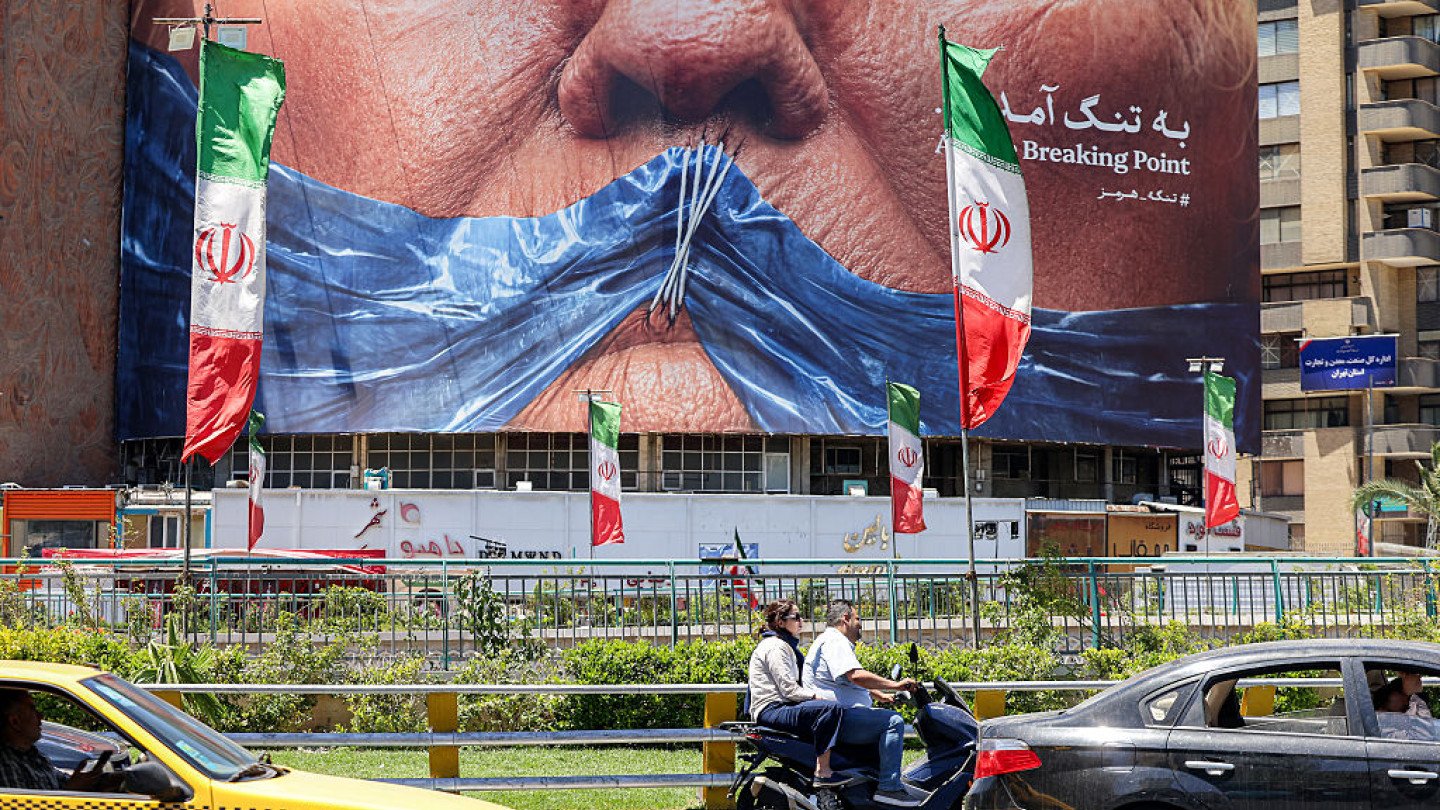
Following the Memorandum of Understanding, the Trump administration seeks to rewrite the agreement through military and economic pressure. Rising tensions across Lebanon and the Strait of Hormuz show Tehran resisting renewed coercive measures to protect its security.
In an attempt to rewrite the Iran deal through military pressure, President Donald Trump is pushing new boundaries following the Memorandum of Understanding. Washington has intensified military posture in Lebanon and the Strait of Hormuz, seeking further economic and tactical concessions. However, Iranian officials reject these post-agreement demands, setting up a sharp confrontation across the Middle East.
Rewrite the Iran deal
The renewed confrontation between the United States and Iran is often described as the breakdown of a fragile agreement.
But from Tehran’s perspective, the problem is more deliberate: President Donald Trump signed a Memorandum of Understanding (MoU) ending the war and then began trying to stretch its limits on the battlefield.
Unable to force Iran to capitulate during the war, the Trump administration is now trying to achieve through renewed military pressure what it failed to secure through negotiations.
The escalation in Lebanon, the confrontation over the Strait of Hormuz, the refusal to unfreeze Iran’s assets, the removal of oil sanctions waivers, and the resumption of military attacks are not separate disputes. Together, they represent an effort to alter the practical terms of the MoU after it was signed.
Iran’s response is driven by the calculation that accepting these new pressures without responding would only invite more. Tehran is escalating not because it has abandoned the MoU, but because it believes Trump is trying to hollow it out.
The MoU was signed after the second devastating war launched by the United States and Israel against Iran. The United States and Israel enjoyed overwhelming military superiority. They could strike deep inside Iran and inflict enormous damage. But military supremacy did not translate into victory.
Iran did not surrender, nor did it accept the full set of demands imposed on it. Instead, it continued fighting, using strategy, geography, regional alliances, and asymmetric tactics to escalate horizontally and impose costs on far more powerful adversaries.
The war demonstrated both Iran’s vulnerability and its resilience. The United States and Israel could inflict tremendous destruction, but they could not achieve capitulation. Iran could not defeat them conventionally, but it prevented them from winning politically. That stalemate produced the memorandum.
For Trump, the agreement offered a way out of a costly and unpopular war that was destabilising the region and threatening global energy markets. For Iran, it represented a halt to the US-Israel war and a framework for resolving the remaining disputes through diplomacy rather than force.

Political pressure and compromise
But Trump immediately came under criticism for signing it. Democratic and Republican critics argued that the United States had ended the war without forcing Iran to disarm, abandon its nuclear capabilities, sever its regional alliances, or accept broader political surrender. Trump had promised dominance, but the memorandum reflected compromise.
Rather than defend that compromise, the administration began trying to alter the balance after the fact.
The first test was Lebanon. For Tehran, Lebanon was not a peripheral issue, but one of the central fronts of the war, and Iran insisted on its inclusion in the memorandum’s first and most important provision. Hezbollah had entered the conflict alongside Iran, and Tehran viewed the Lebanese front as part of the same US-Israel war. Its logic was straightforward: together in war, together in peace.
Iran therefore views continued Israeli military operations in Lebanon as a direct violation of the memorandum. From Tehran’s perspective, Washington could not sign an agreement ending the war while allowing its closest ally to continue fighting one of the principal forces that had participated in it.
The United States, however, appeared to treat Lebanon as outside the core agreement, or at least as a front where Israel retained the freedom to continue applying military pressure.
That was more than a difference in emphasis. It changed the value of the memorandum for Iran. If Israel could continue attacking Hezbollah while Iran remained bound by the agreement, the ceasefire would freeze Iran’s actions while preserving those of its adversaries.
Conflict in Strait of Hormuz
The next confrontation emerged in the Strait of Hormuz. Under the memorandum, Iran accepted coordinated arrangements with Oman to ensure passage through the strait. The key phrase was “safe passage”. Tehran understood this to mean that maritime transit would be coordinated with Iran and Oman, the two littoral states responsible for the waterway.
Washington instead moved toward opening and securing its own route on the Omani side, backed by American military power, effectively isolating Iran from the arrangement. From Tehran’s perspective, this was another attempt to stretch the memorandum beyond its written terms.
The United States was seeking to transform an agreement based on coordinated passage into an American-led maritime order that sidelined Iran in managing one of the world’s most strategic waterways.
Maryam Jamshidi, an associate professor at the University of Colorado Law School, argues that it is wrong to view the dispute over the Strait of Hormuz as a “misunderstanding” or disagreement over the MoU’s terms.
“The MoU isn’t a comprehensive agreement on the Strait’s management. Nor should it be. The US has no legal authority over the Strait of Hormuz. What the MOU does represent, however, is US acknowledgement that Iran and Oman are the two states with primary authority over the Strait,” Jamshidi told The New Arab.
“Paragraph 5 of the MOU is clear on this issue. To suggest otherwise, as the United States has, is to interpret that provision in bad faith. The US decision to pressure Oman to establish an alternate route through the Strait is rightly viewed by Iran as a violation of US commitments because it usurps Iran’s role in regulating the waterway – a role it has held with Oman long before 28 February.”
From Tehran’s perspective, Trump was attempting to establish by force what Iran had refused to accept in negotiations: unrestricted American control over a strategic waterway where Iran enjoys considerable geographic and military leverage.
Iran’s escalation in Hormuz was therefore intended to push Washington back toward the memorandum. Tehran wanted to demonstrate that the United States could not create a parallel arrangement, impose it militarily, and still expect Iran to behave as though the agreement were being implemented.
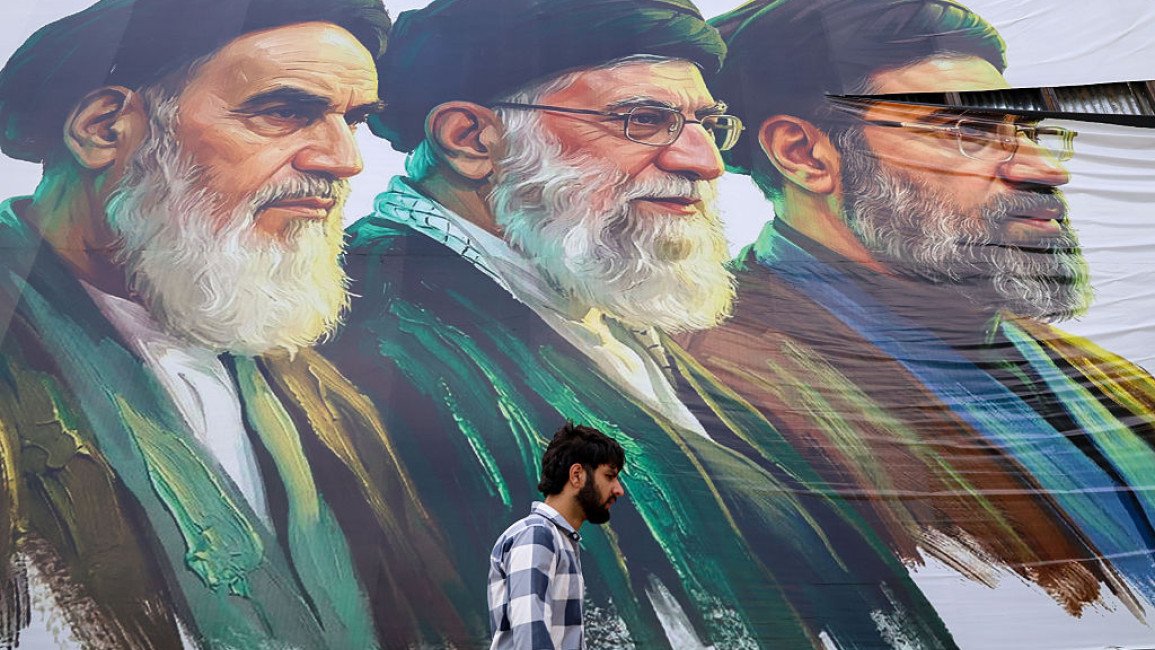
Trump rewrite the Iran deal
The removal of oil sanctions waivers widened the confrontation further. Economic pressure has always been central to Washington’s Iran policy, but restoring it after signing the memorandum reinforced Tehran’s belief that Trump was returning to coercion rather than implementing the agreement.
The message Iran received was clear: Washington intended to keep the benefits of the memorandum – reduced Iranian military action and greater regional stability – while continuing to impose costs on Iran until it offered additional concessions.
This was followed by renewed threats of force and, eventually, a return to direct military escalation. The sequence matters. Trump signed the memorandum, came under political criticism, and then sought to demonstrate that he had not compromised by reasserting dominance on the battlefield.
Rather than formally withdrawing from the agreement, he tried to expand its boundaries through force. The objective was to pressure Iran into capitulation without paying the costs of another full-scale war.
But this was a strategy the United States and Israel had already tried. They fought a prolonged and destructive war, targeting Iran’s military capabilities, political leadership, infrastructure, and regional allies. They used their technological and conventional superiority to impose enormous pain.
Yet Iran did not capitulate. The assumption that slightly more pressure will now produce the surrender that a much larger war failed to achieve misunderstands Iran’s political and strategic thinking.
Iranian resistance and strategic leverage
Tehran does not interpret American escalation as evidence that resistance is futile. It sees it as proof that Washington respects only the limits it is forced to respect. Iranian leaders believe that restraint under pressure invites more pressure, while retaliation establishes the costs necessary for negotiations.
This explains why Iran is combining escalation with continued diplomatic signalling. Tehran is not trying to defeat the United States militarily; it knows it cannot match American firepower. Its objective is to demonstrate that military supremacy cannot produce a politically acceptable victory.
Iran is willing to absorb damage and impose costs long enough to convince Trump that additional pressure will not produce capitulation. Tehran is betting that while the United States possesses greater military power, it has less tolerance for an open-ended conflict, economic disruption, rising energy prices, and the political consequences of another Middle Eastern war.
This does not mean Iran wants the war to resume. The memorandum remains valuable precisely because it offers an end to the conflict and relief from military and economic pressure. But Tehran does not want an agreement that functions as an instrument of surrender.
For Iran, accepting Trump’s expanded interpretation would create a dangerous precedent. It would mean the United States could sign an agreement, reduce the immediate costs of war, and then continue applying pressure until Iran gradually conceded everything it had refused to surrender on the battlefield.
That is why trust in Trump is so low. Iranian officials already remember Trump’s withdrawal from the nuclear agreement during his first presidency. The current experience reinforces the same concern: that an agreement with Trump is not a final settlement but a temporary tactical arrangement he may reinterpret whenever domestic or political pressures change.
“Dozens of Iranian military personnel and civilians have been killed or wounded in recent US attacks. Hundreds of sites and pieces of infrastructure across the country have been attacked,” a senior Iranian official told The New Arab.
“The US, contrary to its firm commitments, has revoked the oil sanctions waivers and has also violated other provisions of the MOU, including Article 5 concerning the Strait of Hormuz. Therefore, in practice, the ceasefire based on the MOU is no longer in effect.”
Escalation risks and future prospects
The central question, therefore, is not whether Iran and the United States have different readings of an ambiguous document. It is whether Trump intends to honour the limits of what he signed. So far, his actions suggest he is trying to move those limits.
The United States is using Lebanon, Hormuz, sanctions, and military threats to improve the outcome it accepted in negotiations. It is trying to transform a memorandum based on compromise into a framework for continued Iranian concessions under pressure.
Iran’s response is to make that strategy fail. Tehran wants Washington to understand that it cannot end the war on paper while continuing it by other means. It cannot demand Iranian restraint while preserving military freedom for itself and Israel. Nor can it expect economic and military pressure to produce the capitulation that a far larger war failed to achieve.
The danger is that Trump may continue escalating in search of a victory that is not available. Iran, determined not to surrender under pressure, will continue responding. Each side may attempt to control the escalation, but repeated military exchanges carry their own momentum.
The memorandum did not fail because the two countries could not understand its language. It is under threat because the US president appears unwilling to accept the limits of the compromise he signed.
Trump ended the war without achieving capitulation from Tehran. Now he is trying to rewrite that outcome on the battlefield.