
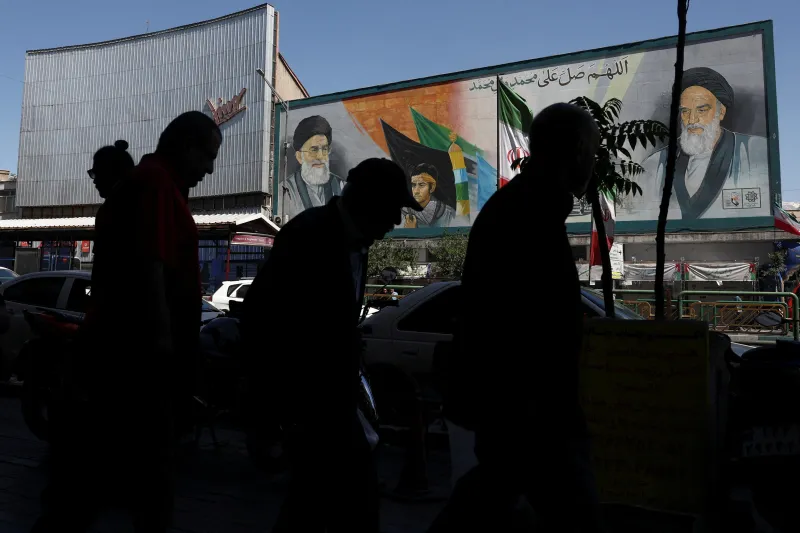
A deep strategic assessment of the U.S.-Iran war, detailing how Washington must trade maximalist nuclear demands for realistic concessions to reopen the Strait of Hormuz and secure regional stability amid severe global economic risks.
Forcing a highly resilient adversary into submission through raw military leverage has yielded a dangerous strategic impasse rather than a swift diplomatic victory. To successfully break this deadlock, Washington must recognize that extracting critical non-proliferation and maritime concessions depends entirely on providing tangible reciprocal commitments to a deeply distrustful adversary. Navigating the choices at hand reveals that sticking to a maximalist strategy will continuously leave Washington with a fundamentally unviable and bad option in Iran, closing off any remaining paths toward durable regional stabilization.
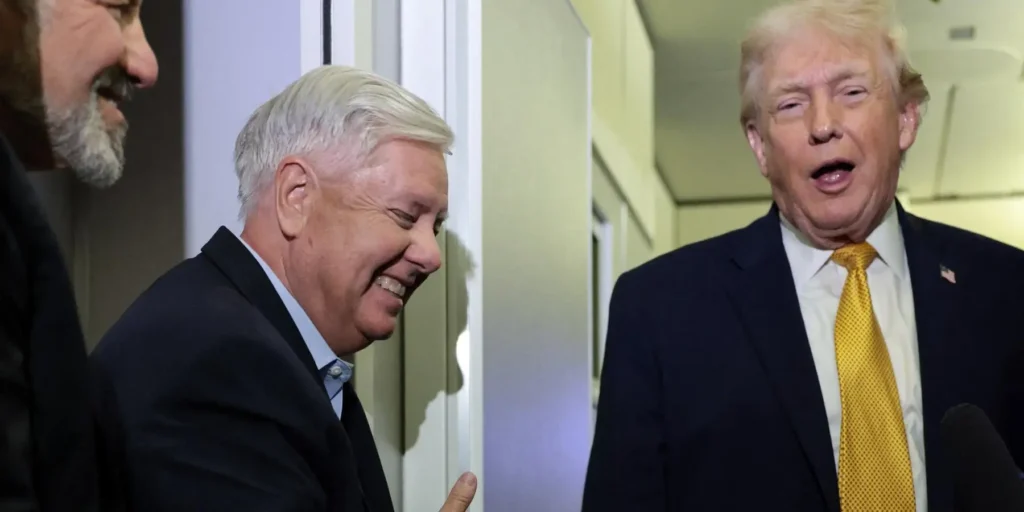
Bad Option in Iran looms over breakthrough
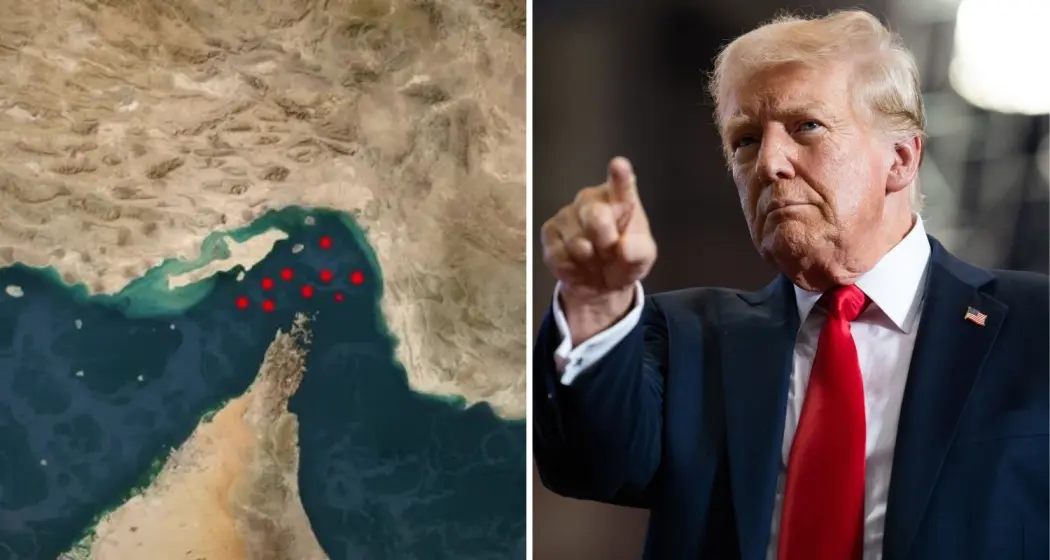
Three months after joint U.S.-Israeli attacks on Iran started a war in the Middle East, the United States remains stuck in strategic limbo, with no clear resolution to the conflict in sight. Dueling U.S. and Iranian blockades have closed the Strait of Hormuz to nearly all maritime traffic, removing some 14 million barrels per day of Persian Gulf oil from world markets.
Despite weeks of punishing airstrikes, the Islamic Republic remains intact and defiant. Diplomatic exchanges mediated by Pakistan are ongoing, and both American and Iranian officials have suggested that a deal is in the works. But the U.S. and Iranian negotiating positions remain far apart, not least because the United States continues to strike Iranian military targets amid the peace talks, with recent rounds of bombings earning threats of retaliation from Tehran.
The situation with Iran is untenable—yet as badly as Trump needs and wants a deal to end the impasse, his own decisions continue to sabotage the bargaining process. For an agreement to be reached, Trump will first need to recalibrate his demands to match the strategic reality, which now favors Iran. That means dropping maximalist positions on Iran’s nuclear program and giving up for good any hope of imposing constraints on Iran’s missile capabilities or support for proxy forces. For a deal to stick, Trump will also need to grapple with a problem created by U.S. actions over the past 18 months: a lack of credible assurances, which we wrote about in Foreign Affairs last year.
Pushing Iran into a deal requires more than just military threats. It also requires convincing the Iranian regime that by cooperating with U.S. demands and giving up its nuclear program, Tehran can prevent future aggression from the United States and Israel. By attacking Iran during negotiations and engaging in maximalist online rhetoric, such as his threat to erase a “whole civilization,” Trump has made it increasingly difficult for Washington to offer the types of commitments that Tehran will require before it agrees to even a minimal version of U.S. demands.
A narrow path to a deal still exists, but it will require U.S. concessions, on both the Strait of Hormuz and the nuclear file. Necessary, credible assurances could come in several forms, including a phased process that separates the status of the Strait of Hormuz from nuclear negotiations and rewards Iran for moving on either issue or for using third-party guarantors such as the International Atomic Energy Agency (IAEA). This type of deal may be unpalatable to Trump, but at this point Washington faces only bad options.
An indefinite standoff over the strait will only weaken the U.S. bargaining position as the delayed consequences of removing Persian Gulf oil from world markets compound and worsen. Further military escalation through additional strikes is also unlikely to induce Iranian surrender. Instead, Iran will likely retaliate by targeting Gulf oil infrastructure. And after triggering such escalation, Trump will still need a deal, forcing the same credible assurance problem back to the forefront. Trump could just walk away, ending strikes and leaving the region to resolve the remaining fallout on its own.
But this option is probably the least politically viable for a president who has made preventing a nuclear Iran part of his mantra. Reaching a narrow and enduring deal now that gets the United States out of the current quagmire and guards against future rounds of conflict between the United States, Israel, and Iran is Trump’s least bad outcome, even if it requires uncomfortable U.S. concessions. Unfortunately, those concessions are the price of a failed war that has left the United States worse off than when it began.
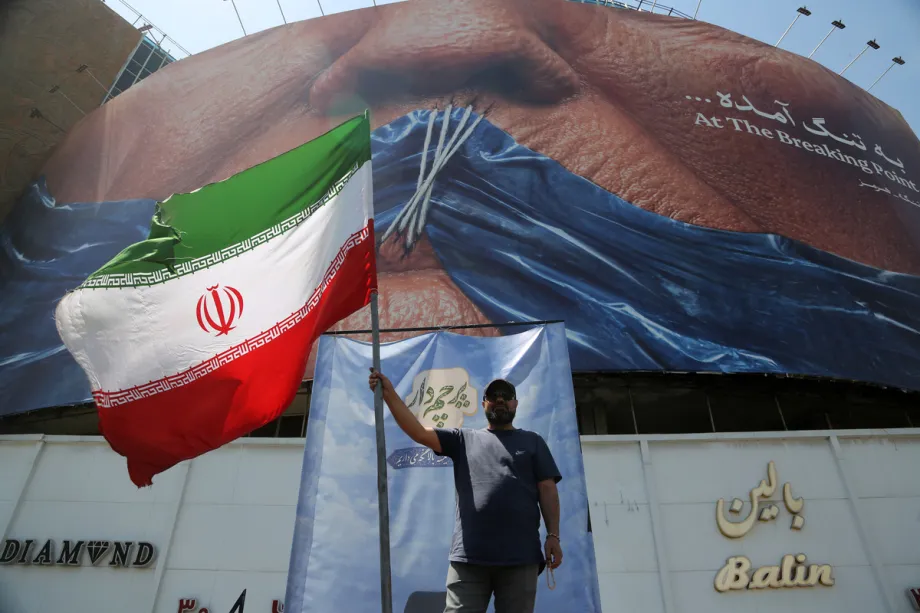
Reassessing strategic costs of a bad option in Iran
SHIFTING SANDS When the United States launched Operation Epic Fury, on February 28, amid ongoing negotiations with Iran, the Trump administration believed that it could force Tehran into a better deal than the one it was willing to accept at the bargaining table.
Though the operation’s objectives have changed almost daily since then, Trump’s underlying desire remains mostly the same: a better nuclear agreement than anything Tehran previously offered, including the now defunct Joint Comprehensive Plan of Action, the Obama administration’s Iran nuclear deal. Trump now faces a higher priority concern—reopening the Strait of Hormuz, which Iran has kept effectively shut since the war started. On its current trajectory, Washington is not positioned to get a deal that meets either of these goals.
The nuclear concessions that Trump expected to achieve by originally striking Iran are nowhere on the horizon, for the simple reason that the U.S. bargaining position is now worse than it was before the war. The Iranian regime proved to be more resilient than the president expected, dashing hopes of a quick U.S. victory like the one he achieved with the Maduro raid in Venezuela.
In addition, the war has demonstrated that Iran’s missile and drone capabilities give it enormous leverage to deny the transit of crucial global energy supplies and to inflict painful damage on U.S. military installations and neighboring states.
The Trump administration’s stated position is that any agreement must see Iran commit to a moratorium on nuclear enrichment, turn over its remaining stockpile of highly enriched uranium (likely to either the United States or the IAEA), and reopen the Strait of Hormuz without tolls or fees. In return, the United States will lift its blockade of Iranian ports.
Sanctions relief and the unfreezing of Iranian assets will occur only as Iran complies with its nuclear commitments and decommissions its nuclear facilities. For the Iranian regime, this arrangement is unacceptable. For a start, the U.S. demands are inconsistent with the balance of power, which has shifted decisively in Iran’s favor since the war began.
The United States has not defeated Iran, and thus cannot dictate a victor’s terms or expect Iran’s total capitulation. Iran has also not won the war, but it justifiably wants a final deal that reflects its stronger bargaining position—namely, that it now has not one but two sources of leverage, in its nuclear program and its control of the strait. If U.S. negotiators could not achieve their maximalist aims in Geneva before the war, when Iran was in a seemingly weaker position, it is unsurprising that those same terms are nonstarters today. Unrealistic U.S. expectations are not the only problem.
Iran’s leadership also cannot accept U.S. demands because they are accompanied only by coercive threats and entirely lack the credible assurances required to give Tehran confidence that the United States is negotiating in good faith and will adhere to its side of any bargain. After his administration repeatedly misled Iranian counterparts and disrupted multiple rounds of negotiations with military assaults, Trump’s word is worth little to Iran’s new leaders.
Tehran has every reason to fear that once it has reopened the Strait of Hormuz and turned over its nuclear stockpile, the United States will renege on its own commitments or, worse, threaten renewed aggression unless Iran meets additional stipulations. To get a deal, Trump will have to repair, or at least account for, the distrust that U.S. actions have caused. This will require costly U.S. concessions intended to convince the Iranian regime that a deal with the United States will leave Tehran more secure than before the war, not less.
These concessions could include frontloading the benefits offered to Iran by immediately removing the U.S. blockade or unfreezing Iranian assets held in foreign banks in exchange for Tehran reopening the Strait of Hormuz. The United States might also consider offering Iran limited sanctions relief upfront if Tehran agrees to surrender its highly enriched uranium.
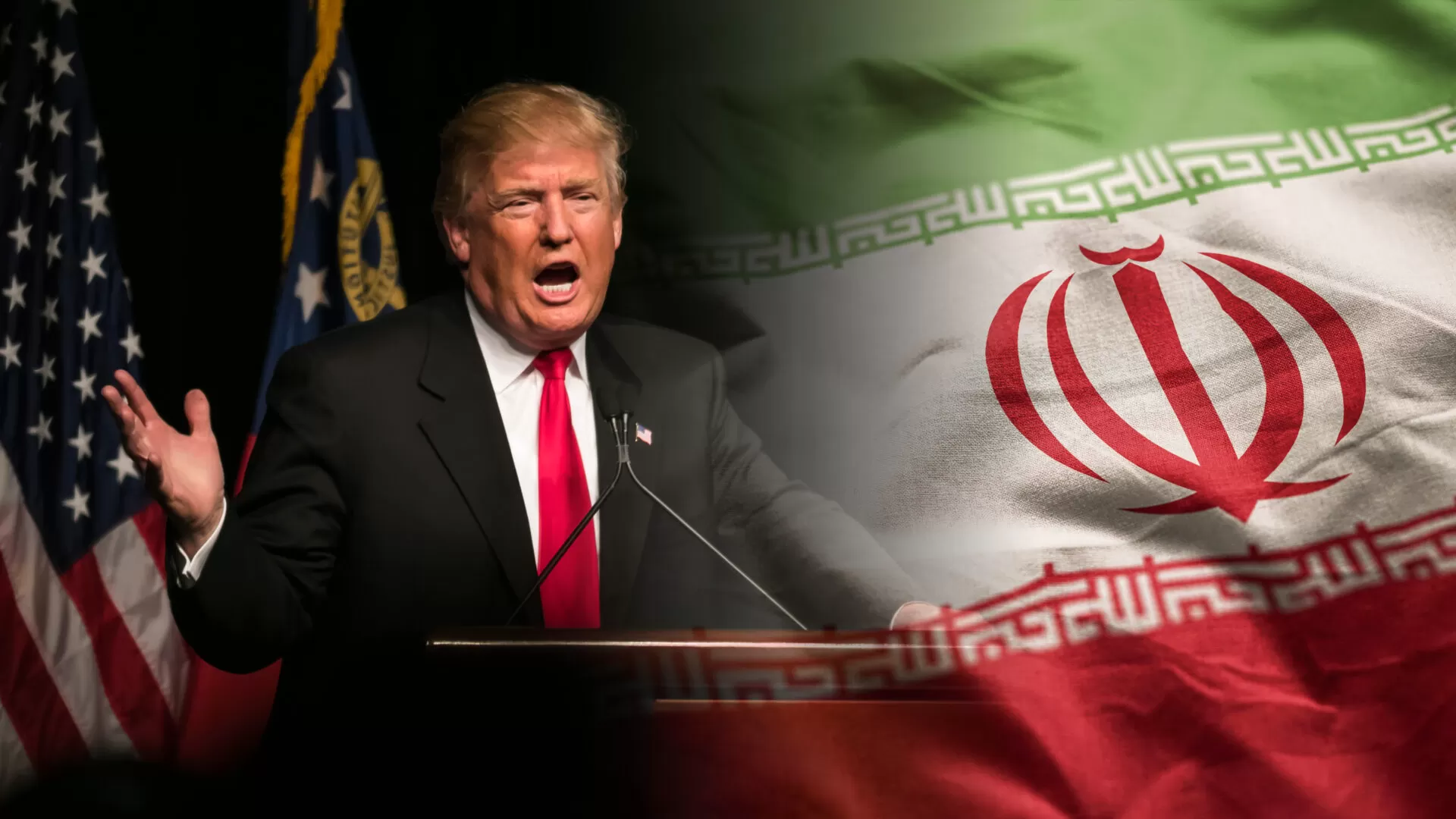
Escalation defines every bad option in Iran
NO GOOD, VERY BAD OPTIONS
Any deal that includes U.S. concessions is sure to receive fierce pushback from the war’s staunchest advocates in Washington, who continue to demand unrealistic, extreme terms. Such an agreement is decisively out of reach, however, and if Trump rejects compromise at the behest of his hawks he must grapple with his remaining alternatives, each of which comes with risks, ranging from economic disaster to reputational and political harm.
One bad option is to extend the U.S. blockade in the hope that it eventually forces a weakened Iran to accept steeper concessions. But such a move is unlikely to be successful and may even undermine U.S. leverage over time. Six weeks of a blockade have imposed economic hardship on Iran but have failed to measurably change Tehran’s bargaining position. Despite decreased oil revenues, Iran is not approaching the kind of economic collapse that Trump envisioned or that would demand surrender, especially given that Tehran considers the conflict an existential one.
Although Iran can weather a continuation of the current deadlock, the costs of an indefinite standoff over Hormuz to the United States and the global economy may soon rise sharply. According to the International Energy Agency, the global oil inventories that have thus far cushioned against worse price spikes are being depleted at a record pace, with world markets having cumulatively lost over one billion barrels of Persian Gulf oil production.
Industry experts warn that if the Strait of Hormuz stays closed past June, global oil inventories will fall to levels so critical that markets will rapidly drive up prices to preserve the energy system, crippling the global economy. If the U.S. economy is even more visibly unsettled by summer, Trump’s credibility to maintain the standoff will rapidly diminish, along with U.S. negotiating power. Military escalation presents another undesirable option.
Trump might hope that airstrikes targeting Iran’s energy infrastructure or a series of Special Forces raids might bring Tehran to its knees, but those, too, are unlikely to produce the intended outcome. Strikes on Iran’s power grid or oil facilities, for instance, are almost certain to lead to retaliatory attacks by Iran on its neighbors, resulting in long-term damage to the region’s oil production, lasting increases in oil prices, and further harm to Trump’s domestic political standing.
Meanwhile, ground operations inside Iran could result in high U.S. casualties and are liable to fail, given the difficulty of operating effectively inside a still militarily capable Iran. Finally, there is the concern of badly depleted U.S. military stockpiles. A renewed military campaign would only exacerbate questions about U.S. readiness for future military operations, including in the Western Pacific, which is still ostensibly the Pentagon’s priority.
The fact that Trump has largely avoided the full-scale resumption of the war up to now suggests that he and his advisers, along with Gulf state leaders, understand the high risk and low expected return. A third bad alternative for Trump is to simply cut his losses and walk away, declaring victory and ending the U.S. blockade.
Though it would leave the issues of the Strait of Hormuz and Iran’s nuclear capabilities unresolved, this outcome would be acceptable from the standpoint of U.S. interests. U.S. strikes have, by Trump’s own admission, set back Iran’s nuclear program, possibly by years. Furthermore, while a nuclear Iran is undesirable, it would not pose an existential threat to the United States, which has its own nuclear arsenal to deter Iran that is much larger and more powerful than anything Iran could reasonably build.
At the same time, with the U.S. blockade over, Iran would face substantial international pressure to reopen the Strait of Hormuz, possibly with some kind of toll system. Although a new source of revenue for Iran would be suboptimal, the reported fees that Iran has charged for transit through the strait are modest, and monetizing safe passage would incentivize Iran to keep the Strait of Hormuz open. Walking away could be politically difficult for Trump, however, as it would be seen as an effective retreat and a sign of U.S. weakness and irresponsibility. Trump has thus shown little interest in this option, even as his impatience for some kind of off-ramp is increasingly apparent.
Compromise averts a bad option in Iran
SAYING YES
Compared to the poor alternatives, a narrow deal that offers some real U.S. concessions in exchange for equally important Iranian compromises is much more tenable.
A workable off-ramp will have several characteristics: its terms should allow Iran to preserve a degree of the deterrence that it has won during the war; it will need to be structured so that Iran is guaranteed security, economic, and diplomatic benefits that are better than the current status quo; and it must give Iran protections against attempts by the United States or Israel to renege on the agreement or change it down the road. To reach this type of arrangement, the Trump administration will have to calibrate its demands of Iran with concessions of its own.
If Washington asks Tehran to commit to reopening the Strait of Hormuz and not charging tolls, for instance, it will need to make comparable sacrifices such as quickly lifting its blockade and giving Iran access to frozen funds upfront. Iran’s concessions on its nuclear program should come with additional U.S. rewards. If Iran accepts an extended moratorium on nuclear enrichment, for example, it should receive phased but immediate sanctions relief.
To assure Iran of its safety from future attacks if it complies with a deal, Washington will also need to give some ground on Iran’s missile capabilities and highly enriched uranium. Iran should be allowed to retain its conventional missile arsenal and infrastructure, without limits, for two reasons. Forcibly depriving Iran of its missiles simply isn’t realistic; some 70 percent of Iran’s missile stockpiles and launchers survived the war, according to U.S. intelligence, and Iran can quickly rebuild with help from Russia and China.
Leaving Iran’s core retaliatory capabilities intact would also send a strong signal that the United States does not intend to attack Iran again. Missiles provide Iran with the capability to punish violations of any deal, as does Iran’s demonstrated—and, owing to geography, permanent—leverage over the Strait of Hormuz. Washington may not like leaving Iran with these capabilities, but it has little choice, and they are necessary deterrents against U.S. attack that Iran will likely require before it is willing to relinquish core components of its nuclear program.
The issue of Iran’s highly enriched uranium is more complicated, but a middle ground exists for credible assurances. Rather than exporting Iran’s stockpile to the United States, the IAEA might take custody of the enriched material, diluting some onsite and holding the rest outside of Iran. A promise that Iran would have the right to this material should it face U.S. or Israeli aggression in the future could serve as a further security guarantee.
Dismantling tension prevents bad option in Iran
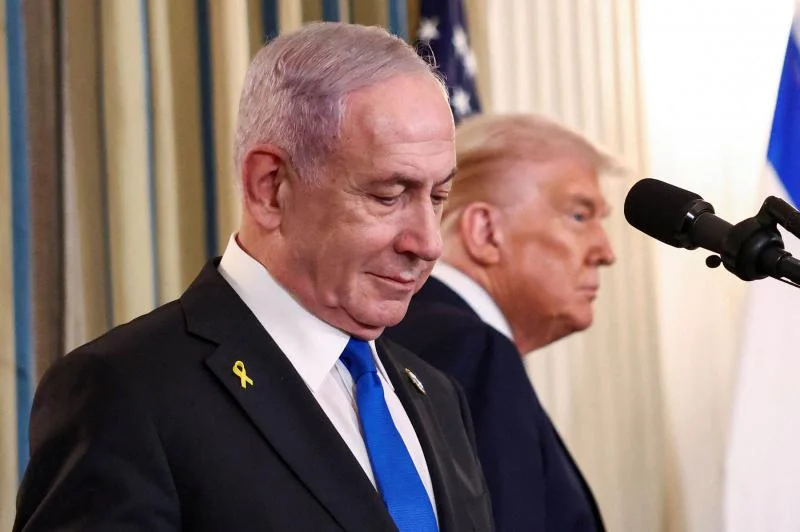
Trump will also need to credibly assure Tehran that he can restrain Israel from attacking Iran in the future. That task is difficult given the crucial role that Israeli Prime Minister Benjamin Netanyahu seems to have played in encouraging Trump to attack Iran. Although Israel’s military forces are highly capable, they rely heavily on the United States for missile defense and other crucial systems, meaning that Israel does not have the military power to fight Iran without U.S. support.
To allay Iranian doubts about U.S. willingness to restrain Israel, Washington might agree to restrict military sales and withhold military support to Israel should the latter act aggressively toward Iran in the future. It could also include a provision that allows Iran to charge tolls in the strait in the event of a U.S. or Israeli attack on its territory.
For its part, if Iran goes back on its commitments, it would also suffer consequences, including forfeiture of financial and diplomatic benefits, as well as protections against future attack. This type of deal would be an unpleasant one for many U.S. officials who are used to accepting only favorable agreements with few constraints on U.S. action. But after starting an ill-conceived war of choice without an exit strategy, it is Trump’s least bad—and only viable—option to stop the pain from what has become a festering wound in his second term.
A deal that reopens the Strait of Hormuz and achieves some Iranian nuclear concessions in return for guarantees of security and economic recovery will come at a cost for the United States. But if done successfully, such a deal could lay the foundation for a more stable Middle East, with less U.S. involvement over the long term.