
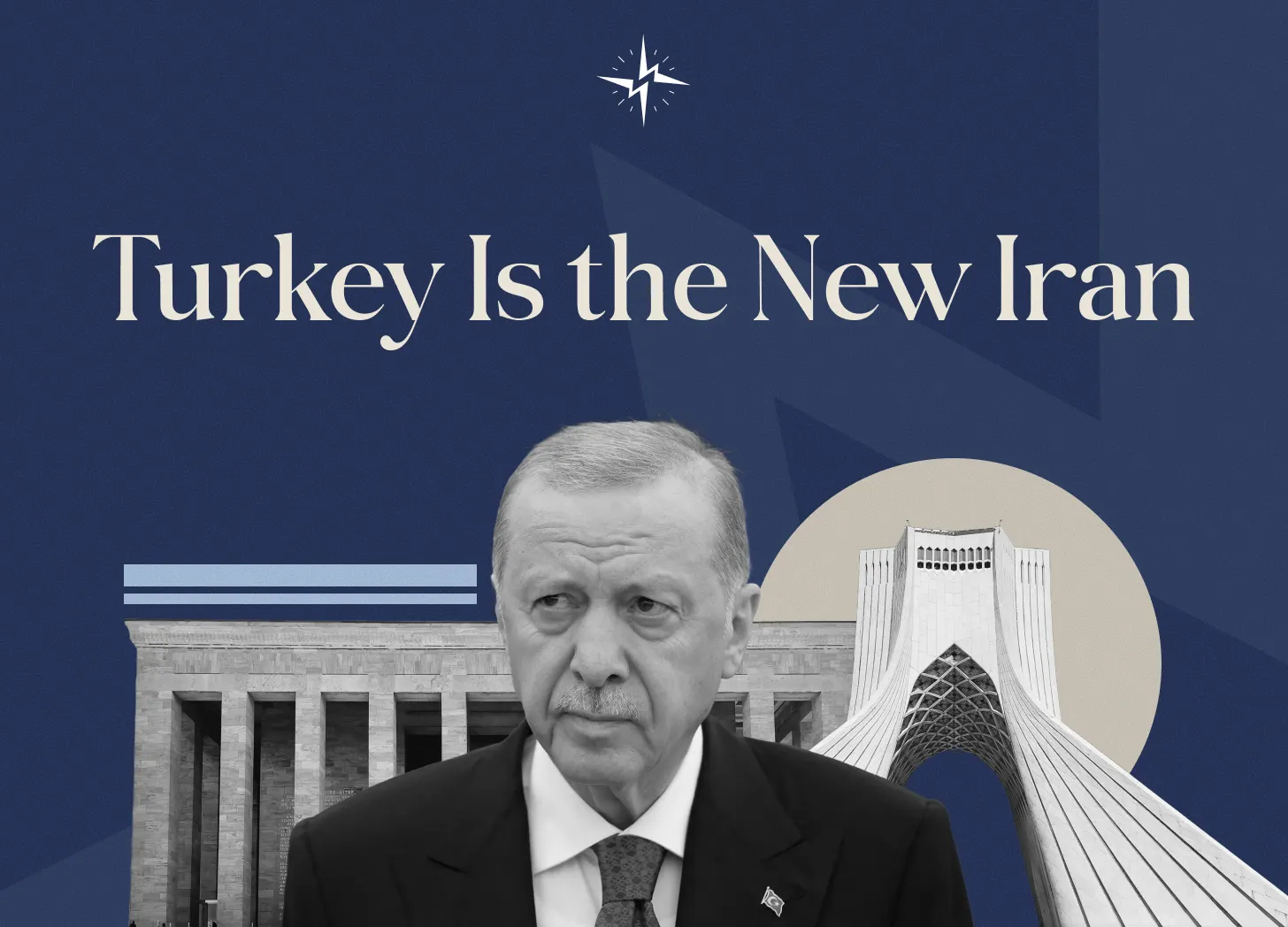
Turkey’s growing cooperation with Iran, tolerance of Hamas networks, expanding ties with Russia and China, and repeated challenges to NATO priorities raise questions about alliance cohesion. As strategic trust erodes, the gap between Turkey’s formal Western alignment and its regional behavior may become a growing source of friction within the transatlantic security architecture.
Turkey-Iran Ties and Western Perceptions
Turkey has perfected what Iran never could: looking like an ally while acting like an adversary. The West’s failure to see through that disguise only deepens the threat. Ankara shelters behind the respectability of NATO membership while pursuing a radical Islamist foreign policy, aligning with Washington’s geopolitical enemies and backing forces sworn to the destruction of Israel and the West.
Western leaders have a dangerous blind spot: they see the enemy who declares himself, not the one disguised as an ally. When Tehran chants “Death to America” and parades ballistic missiles through Azadi Square, Western policymakers know how to respond. They know the rules of engagement with a declared enemy.
Their blind spot is the enemy already inside the perimeter.
Erdogan poses a far more insidious threat to Western security than the Iranian regime ever could. Tehran operates from the outside, hemmed in by sanctions and diplomatic isolation. Turkey operates from within, sitting at NATO headquarters in Brussels while undermining the alliance’s core strategic interest. Turkey is Iran with institutional legitimacy: an Islamist power masquerading as an ally, protected by the West while strengthening its fiercest enemies.
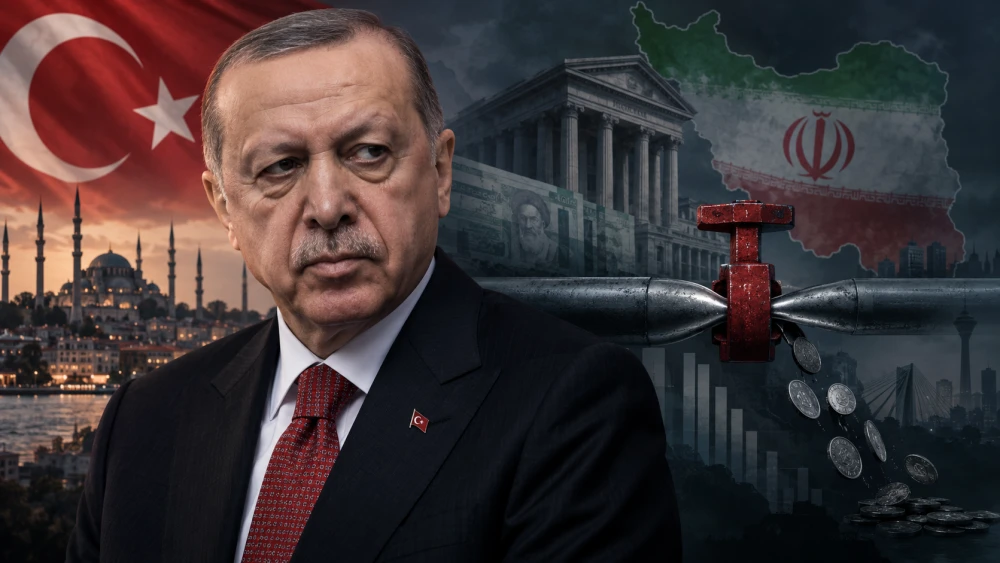
In July 2025, the U.S. Department of the Treasury sanctioned entities in Turkey for facilitating Iranian oil sales designed to fund the Islamic Revolutionary Guard Corps-Quds Force (IRGC). The absurdity is stark: a NATO member state serves as a financial clearinghouse for Iran’s primary terrorist wing. The IRGC-Quds Force uses Turkish entities to evade U.S. sanctions, convert foreign currency, and funnel revenues into regional proxy wars. Tehran supplies the revolutionary violence. Ankara moves the money through respectable institutions. Erdogan flaunts the contradiction while the West mistakes NATO membership for Western allegiance.
Financial Networks and Hamas Links
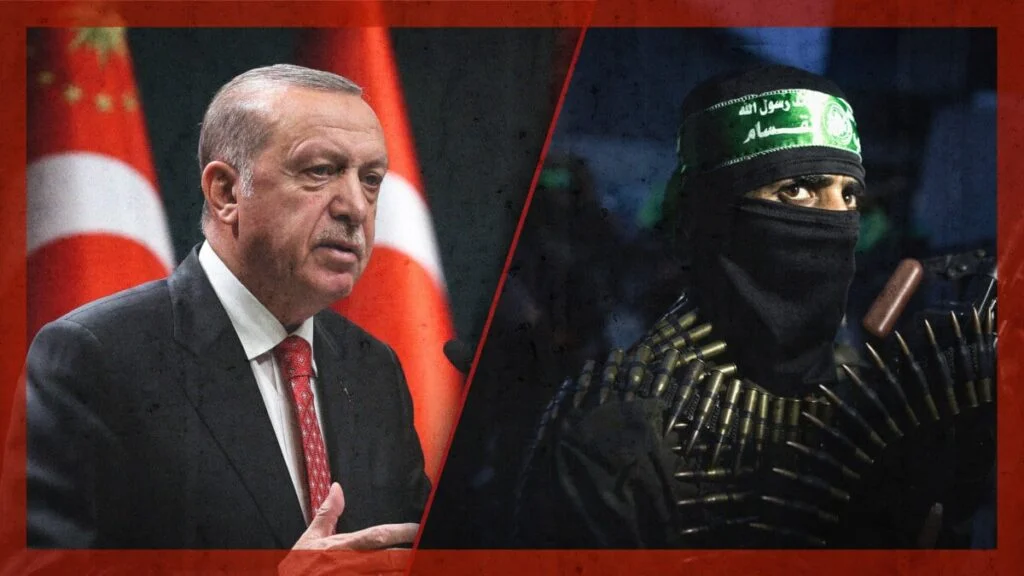
The same financial complicity extends to Hamas. Western capitals spend millions tracking terrorist financing, yet Hamas leaders operate freely in Istanbul. Turkey has even issued passports to some members, granting wanted terrorists the cover and mobility of legitimate citizens.
The U.S. Treasury’s terrorist-financing assessment has identified Turkey-based sham charities and financial operatives as vital to Hamas’s international fundraising. The Treasury previously identified Turkey-based Hamas finance chief Zaher Jabarin as a key figure who built networks in the country to raise, invest, and launder funds. While American and European intelligence agencies hunt Hamas assets in the shadows, Jabarin and his associates enjoy the hospitality of the Turkish state.
None of this is accidental. Erdogan is deliberately reorienting Turkey away from the West. Erdogan’s worldview rests on a visceral contempt for Western leadership. He views the United States and Europe not as principled defenders of international law but as declining, hypocritical powers clinging to the remnants of a moral authority they no longer possess.
Turning Toward Rival Powers
Erdogan turns that contempt into an embrace of the West’s adversaries. While Western capitals view Vladimir Putin’s Russia as an existential threat to European stability, Erdogan cultivates Moscow as a counterweight to Western power.
The Russian S-400 purchase was more than an arms deal; it openly defied NATO’s security architecture. Erdogan sacrificed Turkey’s place in the F-35 stealth fighter program to show his domestic base and the broader Islamic world that Turkey answers to no Western authority. His recent moves toward the China- and Russia-led Shanghai Cooperation Organisation mark Turkey’s turn from Western integration toward a multipolar order that challenges American dominance.
While NATO soldiers train to counter Russian aggression in Eastern Europe, the leader of a NATO member meets Putin and Xi Jinping to deepen economic and military ties. Tehran must deploy regional proxies to challenge the West. Erdogan does it through bilateral agreements and a seat at Beijing’s summit tables.
Exporting Influence Beyond Borders
Through the Directorate of Religious Affairs (Diyanet), Erdogan exports his anti-Western ideology far beyond Turkey’s borders. In Germany, home to millions of Turks, state-funded Diyanet mosques led by hardline Islamists routinely cast Western nations as oppressors and glorify acts of terror. Following the October 7, 2023 massacres in Israel, where over 1,200 civilians were murdered, Erdogan defended Hamas as “liberators” while branding Israel as a rogue nation that had brought the massacre upon itself.
This is what makes Erdogan so dangerous. He has turned Turkey into a base where terrorists can indoctrinate and recruit the next generation of Islamic extremists. When an Iranian agent or Hamas operative needs to move funds across borders, Turkey’s banking sector provides the bridge. Tehran must rely on shadow fleets, illegal smuggling routes, and covert networks in places like the Bab al-Mandab Strait. Turkey opens the doors to European markets, international banking clearings, and diplomatic passports.
Geography Does Not Guarantee Loyalty
When challenged, Western diplomats retreat to geography. They point to the Bosporus Strait and Incirlik Air Base in Adana Province as if strategic location guaranteed strategic loyalty. This is an asinine way to judge an ally. Geography does not confer loyalty, and control of a strategic waterway does not make a regime trustworthy. In the hands of an ideological adversary, strategic geography becomes leverage for geopolitical blackmail.
Erdogan understands this fear and exploits it. He knows Western leaders are terrified of losing Turkey to the Russian or Chinese spheres of influence, and turns that fear into concessions while giving little of real value in return. When Turkey purchased the Russian S-400 missile defense system from Moscow, Washington responded with CAATSA sanctions, but Erdogan did not back down. He kept the Russian systems on Turkish soil, showing Putin that NATO’s southern flank could be breached without firing a single shot.
Turkey-Iran Ties and Alliance Risks
This is why Erdogan poses a more insidious threat than Mojtaba Khamenei. Tehran has built its national identity on the obliteration of the United States and Israel. Its hostility is explicit. Erdogan conceals his behind the privileges of alliance. He keeps one foot in Brussels while the other reaches toward Moscow and Beijing. He uses NATO’s intelligence-sharing systems and political cover as a shield while undermining Western interests across the Middle East, the Caucasus, and North Africa.
Western leaders must stop treating Turkey as a temperamental ally that diplomacy can coax back into line. Under Erdogan, Turkey has become a serious security liability. It shelters terrorist financiers, purchases advanced Russian weaponry, enables Iranian sanction evasion, and seeks membership in China-led military blocs. The West needs to decide whether Turkey still behaves like a trusted partner or merely enjoys the privileges of being treated as one. The evidence is staring us in the face.
The Threat Within the Gates
The Western has appeased Ankara for fear of driving it East. That policy has failed. Turkey has already made its choice. It has aligned its strategic interests with forces seeking to destroy the Western order. Appeasement has not kept Turkey in the West; it has only spared Erdogan the consequences of leaving it.
When Erdogan looks at European leaders like Emmanuel Macron and Andy Burnham, he sees a timid, exhausted establishment: men too weak to defend their own heritage, much less confront an expanding Islamist power. Western appeasement only feeds his contempt. The West must stop treating Ankara as a wayward ally. The threat is no longer at the gates. It is already inside them.