
A 40-day military campaign aimed at regime change backfires, allowing Tehran’s leadership to consolidate power amid massive public solidarity following the death of Ayatollah Ali Khamenei, shifting negotiations and economic relief terms in Iran’s favor.
An unexpected strategic consolidation has occurred in Tehran following the high-stakes offensive launched by Washington and Jerusalem.
While intended to induce rapid regime collapse, the 40-day campaign has instead sparked a profound nationalistic closing of ranks, proving that the US-Israeli war has fundamentally transformed the domestic survival calculus for the Islamic Republic. As regional tensions recalibrate, this highly destructive US-Israeli war has ironically offered a lifeline to the ruling clerics by converting external vulnerability into sudden domestic leverage.
US-Israeli War Against Iran Reshapes Regional Power
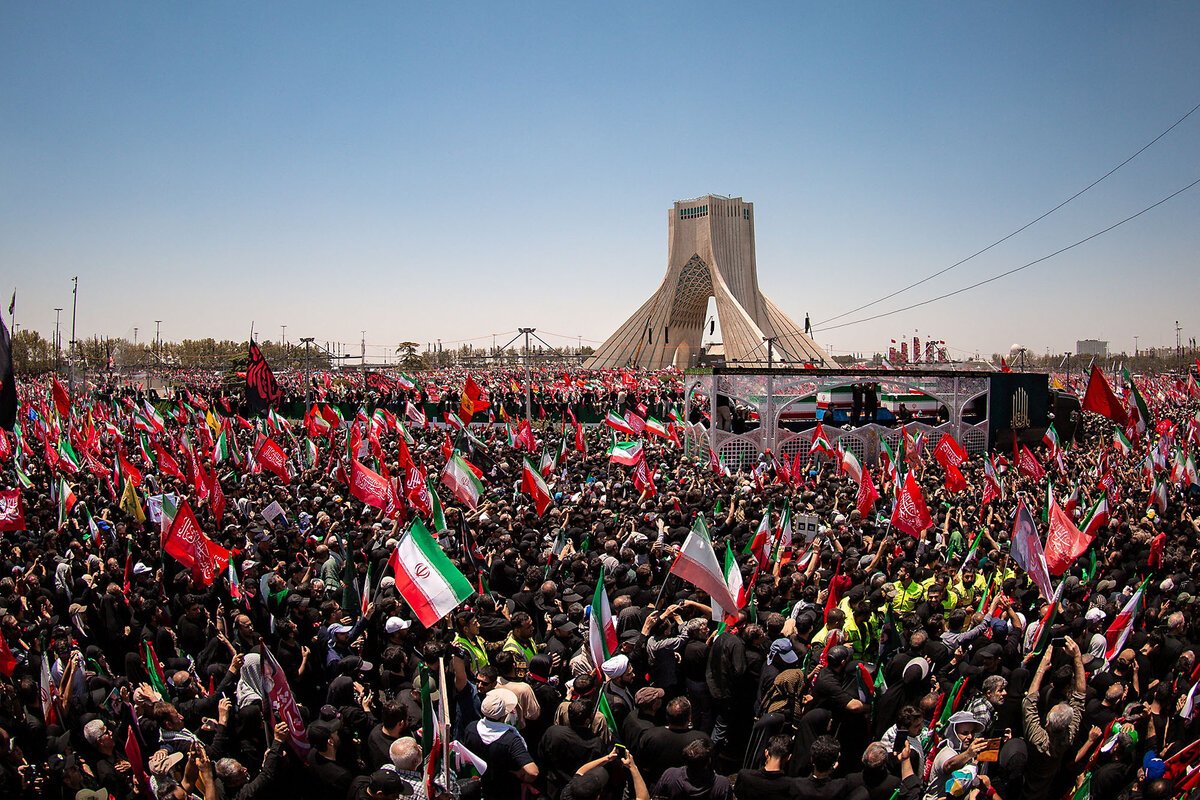
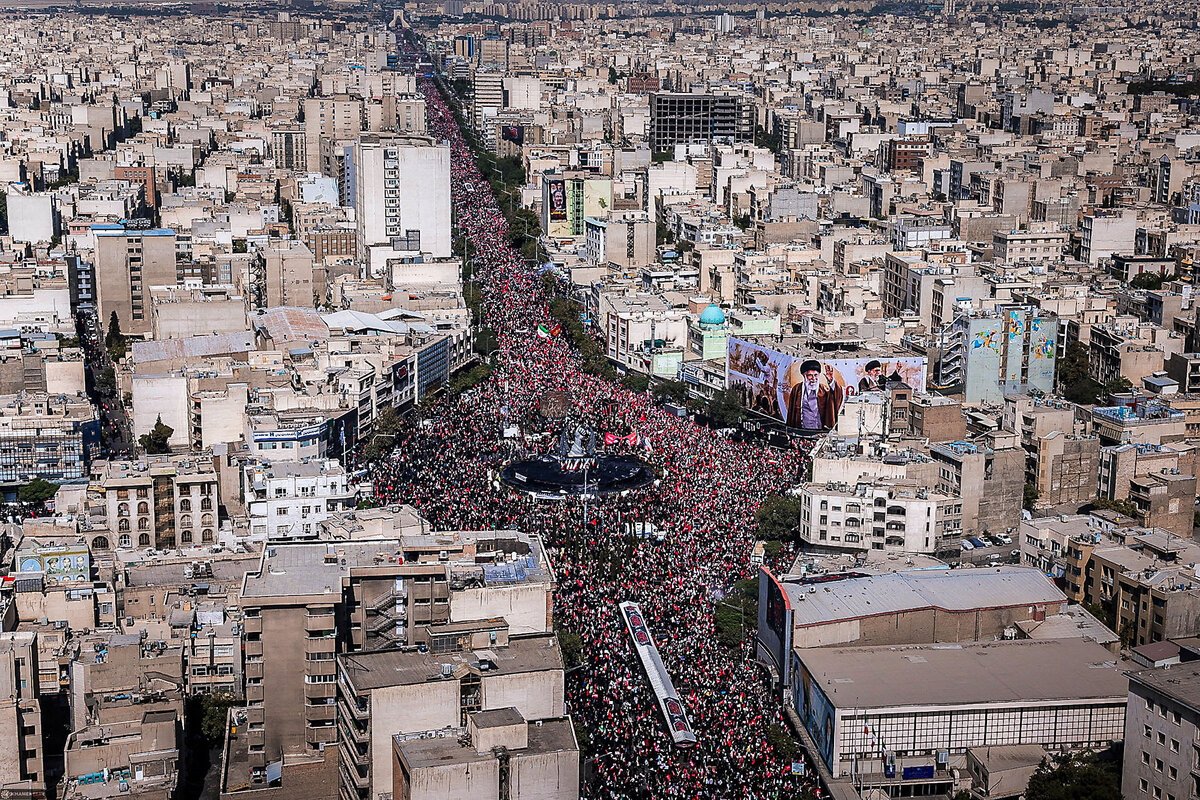
Repeated calls for revenge against U.S. President Donald Trump and Israel erupted from mourners Monday as hundreds of thousands marched through Tehran in a funeral procession for Iran’s slain supreme leader, Ayatollah Ali Khamenei.
Flags were burned, and chants of “Death to America!” and “Death to Israel” echoed repeatedly as the mourners sweltered beneath a cascade of flower petals and sprayed rose water. Some signs pledged lethal violence against Mr. Trump and Israeli Prime Minister Benjamin Netanyahu, who were shown with crosshair targets on their faces.
Among true believers of Iran’s 1979 Islamic Revolution, the outpouring of grief on the streets is real for Mr. Khamenei, who ruled Iran for 37 years with an iron grip and was targeted in the first Israeli salvo of the war in late February.
Yet the massive participation in the funeral sends a message that is about more than mourning. The Islamic Republic’s leaders and commanders survived a 40-day onslaught aimed both at regime change and at decimating Iran’s nuclear and missile programs.
And they did so just weeks after their own unprecedented crackdown on street protests in January had left thousands dead. That violent repression of dissent, along with widespread corruption and economic mismanagement, had appeared to pose an existential internal threat.
Surviving US-Israeli war against Iran intact
Even as Iran stages a weeklong funeral for its slain leader, the Islamic Republic today is acting with a bold and newfound confidence born of a war that analysts say may have saved the regime from a post-protest erosion of legitimacy.
The growing sense of triumph is reflected in Iran’s tough stances in negotiations now underway with the United States, since a 14-point memorandum of understanding, or MoU, was signed June 17.
Iran states publicly it will maintain its new leverage over the global economy and energy supplies – with its grip over the Strait of Hormuz – as well as insist on linking the ceasefire in the Persian Gulf to all other regional front lines with Israel, including Lebanon.
Citizens Appraise the US-Israeli War Outcome
“They were on the brink”
For Iranian critics of the government, its new standing is a sobering pivot away from vulnerability.
“The regime is now far stronger. In my view, they themselves had not imagined this outcome. I mean, who did? They were on the brink before the war began,” says an Iranian university student who gives the name Mohammad for his security. He joined the protests in January and then welcomed the U.S.-Israeli offensive – with the expectation that the attacks would topple the regime, when street protests could not.
“I was really thinking that they were counting their days, and it was only a matter of a fortnight for them to collapse,” says the bookish civil engineering student at Amirkabir University of Technology in Tehran, whom the Monitor interviewed during the protests and the war.
“Like many others, I learned the hard way,” he says. “This apparent victory is by no means welfare and happiness for us, the people. As for the economy, what I predict is only more corruption and more money to be spent on military reconstruction.”
US-Israeli War Leverage Drives Economic Bargaining
Iran’s new crop of senior officials and commanders – nominally led by supreme leader Ayatollah Mojtaba Khamenei, who did not attend the funeral and has not been seen in public since reportedly being badly wounded in the strike that killed his father – appear to recognize the need to ease economic grievances.
Improving the economy was a talking point, for example, when Parliament Speaker Mohammad Baqer Qalibaf held a recent video call with the family of a child killed by an American airstrike on a primary school that killed 156 people, mostly pupils.
Mr. Qalibaf, a former commander of the Islamic Revolutionary Guard Corps (IRGC), is now Iran’s lead negotiator with the U.S. The Strait of Hormuz, he said last week, was a “divine blessing,” and that controlling it was Iran’s ”greatest means of power.”
The MoU describes American waivers for Iran to sell its oil for 60 days, the release of some $12 billion in frozen Iranian assets, the creation of a $300 billion reconstruction fund, and lifting sanctions that have throttled Iran’s economy for decades.
For Iran, this represents a dramatic shift in fortunes.
War’s “drastic sharp turn”
“If the January [crackdown] had remained standing as the last experience of the Iranian people, then it would have defined the next chapter,” says Vali Nasr, an Iran expert at Johns Hopkins School of Advanced International Studies.
“There was a drastic sharp turn by the intervention of this war,” says Dr. Nasr, author most recently of “Iran’s Grand Strategy: A Political History.” “It doesn’t mean that the memory of what happened in January is gone, by no means, or the issues that were on the table are gone. But this war is so big, it’s so momentous, that it complicates the picture dramatically.”
The country is different, the leadership is different, and society is different, he says, after the U.S. and Israel “came up short” in achieving their war aims.
“In some ways, for now, the threat of war has been lifted from Iran,” says Dr. Nasr. “The Iranian overconfidence reflects this.”
Control of the Strait of Hormuz – which Iran had not exercised, prior to the conflict – has put Iran in a position “to dictate a very different economic outcome,” he says.
“We’re all focused on the nuclear issue,” adds Dr. Nasr. “But the U.S. has to contemplate sanctions dismantling, giving Iran frozen assets, and talk about an investment fund; things that would have been unfathomable before.”
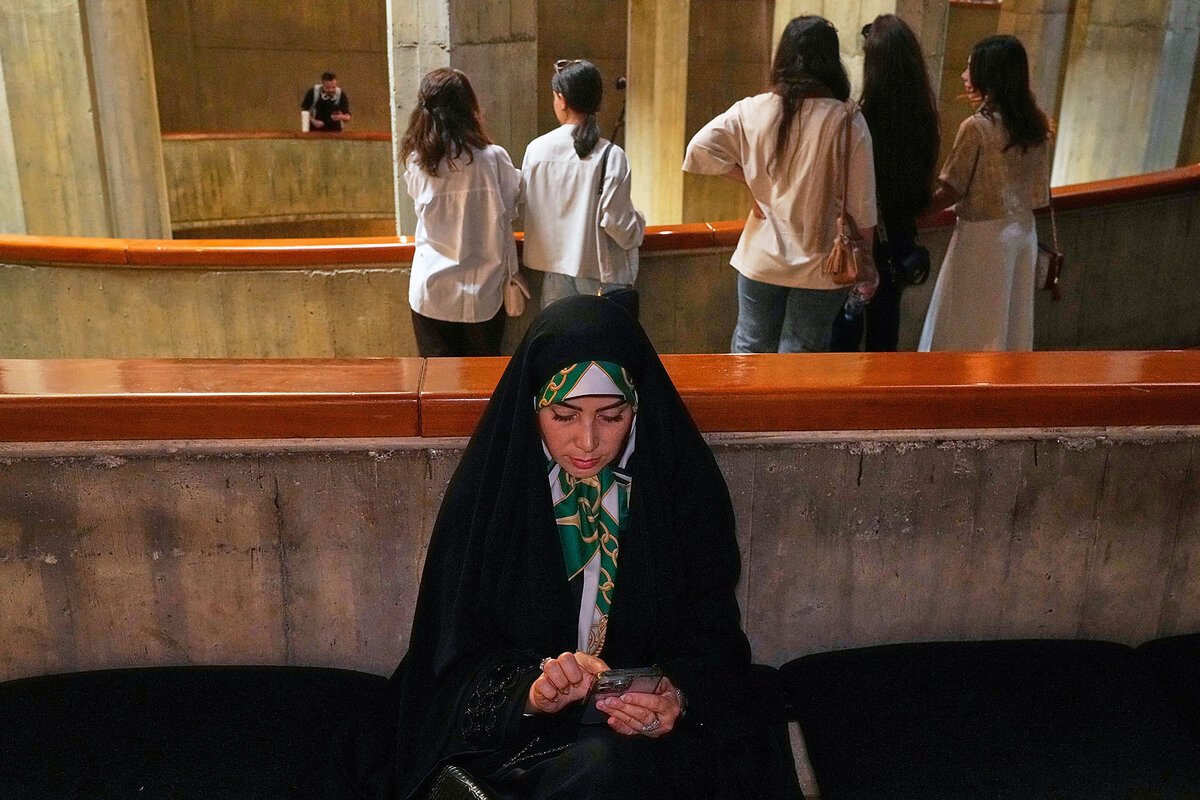
Indeed, the war has shifted the internal narrative in Iran in other ways. Since the widespread “Woman, Life, Freedom” protests of 2022 and 2023, the previous mass protests to rock Iran, officials had quietly sought to ease public anger by easing enforcement of social restrictions, such as mandatory hijab head covering for women.
Today, many Iranian women do not wear a head covering at all, and in some districts of Tehran wear wholly Western dress.
Before the latest protests and the war, there was a “process of internal change that had been gaining momentum,” writes Danny Citrinowicz, an Iran expert at Israel’s Institute for National Security Studies, in a Foreign Affairs article titled, “How the War Saved the Iranian Regime”.
“Instead of accelerating that change, the U.S.-Israeli war set it back,” writes Mr. Citrinowicz, a former head of research for Iran in the Israel Defense Forces’ intelligence unit. “Khamenei’s death disrupted Iran’s evolution and provided the regime with an opportunity to consolidate. Paradoxically, the external pressure meant to topple the Iranian regime has helped preserve it”.
That result was not lost on hard-line Iranian news outlets such as Kayhan, which has been jubilant about the “collapse of … America’s invincibility.”
“Iran proved that the language of force is ineffective against a nation that believes in its own power,” wrote Kayhan in a recent editorial.
Resolve of the Regime After the US-Israeli War
Grievances remain
Yet while the Islamic Republic revels in its survival, the reckoning with Iranian citizens continues to play out.
The leaders “have made their case, shown how strong Iran is capable of defending itself,” says an Iranian analyst with close access to policy circles, who asked not to be further identified.
“But the discontent and the grievances and the hardship will have gone nowhere; in some instances they have actually worsened,” he says. “The question will be: What will people do with this hardship?”
Economic improvements could lower popular discontent, especially if social restrictions continue to ease. He notes that unveiled women attending nightly pro-regime rallies have been featured speaking at length to state-run news channels, normalizing their appearance.
“That genie is absolutely out of the bottle,” says the analyst. “Should the regime be capable of [also] improving the economy, this could settle the whole [internal] regime-change agenda.”
While some Iranians now give the regime the benefit of the doubt after its war performance, others remain unconvinced.
“The initial hopes I had in the regime’s collapse are completely gone. These guys always find a last-minute off-ramp to survive,” says a butcher in Tehran whose debts have grown and says he has little hope for economic change.
“I have never felt this desperate,” says the young father. “I don’t really mean to be such a pessimist, but you know right now, with the regime’s compromise with the U.S., I feel like they have got insurance coverage for decades to come.
“Yes, I have put my earlier hopes right back into the box.”