
Low-cost Iranian drones and ballistic missiles disrupt Gulf shipping, exposing how technological saturation tactics challenge western naval supremacy and invalidate historical military doctrine in vital maritime choke points.
Doctrine in modern military planning relies heavily on technological superiority to deter regional adversaries and secure global maritime trade choke points. However, the operational reality across the Middle East demonstrates that cheap autonomous systems and precision ballistic munitions can neutralize conventional naval dominance. Historical iterations of defense planning prioritized technical advantages to compensate for numerical disadvantages, establishing a doctrine that defined global security architectures for decades.
In the current conflict environment, cheap strike platforms deployed by regional actors invert traditional cost-exchange ratios, forcing high-value naval assets into defensive posture against low-cost saturation tactics. The structural failure of the US Offset Strategy in the Strait of Hormuz highlights a critical vulnerability in western power projection when confronted with high-density uncrewed aerial capabilities.
Defense planners now face systemic dilemmas as legacy air defense systems consume multi-million dollar interceptors against inexpensive loitering munitions. Consequently, the inability of the US Offset Strategy to secure vital sea lines of communication signals a fundamental doctrine shift, where low-cost precision weapons diminish the strategic deterrence long exercised by major naval powers across critical maritime corridors.
Why US Offset Strategy Stalls in Hormuz
After mixed results in Iraq and an unsuccessful 20-year campaign to keep the Taliban from taking power in Afghanistan, the US military faces frustrations again, now in the Strait of Hormuz with Iran. This time the challenge is not asymmetric IEDs and guerrilla-style warfare, but high-tech, precision-guided drone and missile systems that have revolutionized modern combat. So far, US air and naval power have been unable to keep the Strait of Hormuz decisively open in the face of such weapons.

Houthi Warfare Exposes US Offset Strategy Flaws
The fact that the US military has problems with Iranian drones and missiles should come as no surprise. In 2024, the United States launched an air and naval campaign to suppress Houthi drone and missile attacks on shipping passing through the Strait of Bab El-Mandeb. A truce was obtained after months of fighting involving as many as two US carrier battle groups.
However, the strategic result achieved by US forces was not decisive. Commercial transit never bounced back. Red Sea shipping declined by as much as 50 percent compared with 2023, before Houthi attacks began. Commercial carriers remained cautious about the safety of moving their vessels through the Red Sea. Insurance premiums soared. That reluctance looks even more justified today as the Houthis, at the urging of Iran, have now resumed attacking ships trading with Israel.
Small Powers Undermine the US Offset Strategy
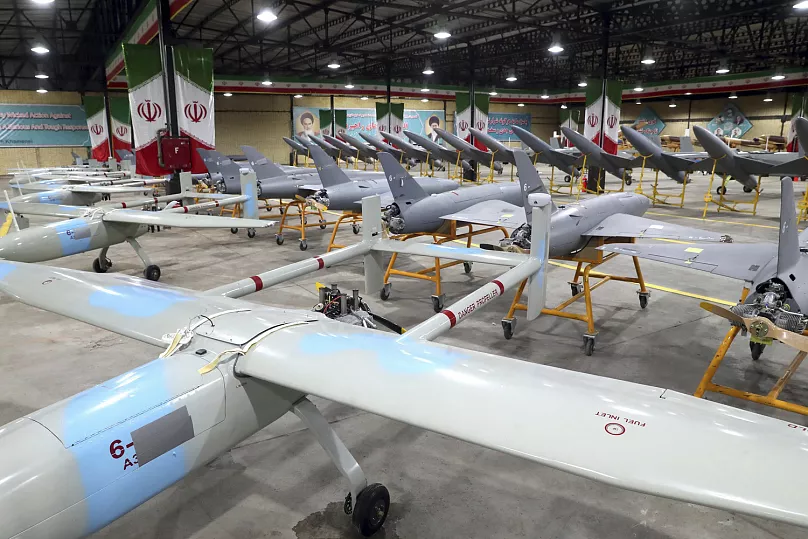
The Houthis’ campaign foreshadowed the challenges now faced against Iran. The fight for control of the Strait of Hormuz has so far gone no better. If the United States cannot ultimately suppress Iranian drone and missile attacks on Persian Gulf shipping, the negative consequences will be significant. It will further confirm that middle and small powers can, armed with drones and proliferating conventional missiles, challenge the United States. The US fleet’s long-accepted ability to keep open strategic maritime passageways will no longer be a safe assumption, with negative consequences for the South China Sea and the Strait of Malacca. The Pentagon clearly lacks critical fighting capabilities for dealing with modern drone and missile warfare.
Evolution of the US Offset Strategy Concept
A central premise of US military doctrine since the 1940s has been offset strategy: using technological innovation to stay ahead of adversaries who might otherwise achieve some degree of parity with US military power. The first offset strategy, set in World War II, was nuclear deterrence. The second was the 1970s–1980s reconnaissance-strike complex—stealth, smart bombs, GPS, JSTARS, cruise missiles, digital command-and-control systems. The third and most recent offset focuses on human-machine teaming, including artificial intelligence, cyber warfare, robotics, and digital command and control. Unlike prior offsets, the third has not delivered decisive results for the United States in the Strait of Hormuz.
Ironically, lesser powers such as Iran and Russia have now developed their own drone and missile “offset” against US might. The Houthi and Iran wars point to the reality that the United States has fallen behind in a game-changing area of combat. It marks the first time since the beginning of World War II that the US military finds itself a major step behind.

Cheap Munitions Overwhelm the US Offset Strategy
The Iranians, for example, have developed the Kheibar Shekan ballistic missile, possessing a range of up to 900 miles. It contains 500 kilograms of explosives integrated into a maneuverable reentry vehicle that can evade costly US defense systems at forward operating bases, as happened recently in Jordan. To date, the United States has been unable to eliminate this threat, either with air defenses or by offensive strikes against Kheibar Shekan missiles that can be moved on mobile, ten-wheeled Transporter-Erector-Launchers (TELs).
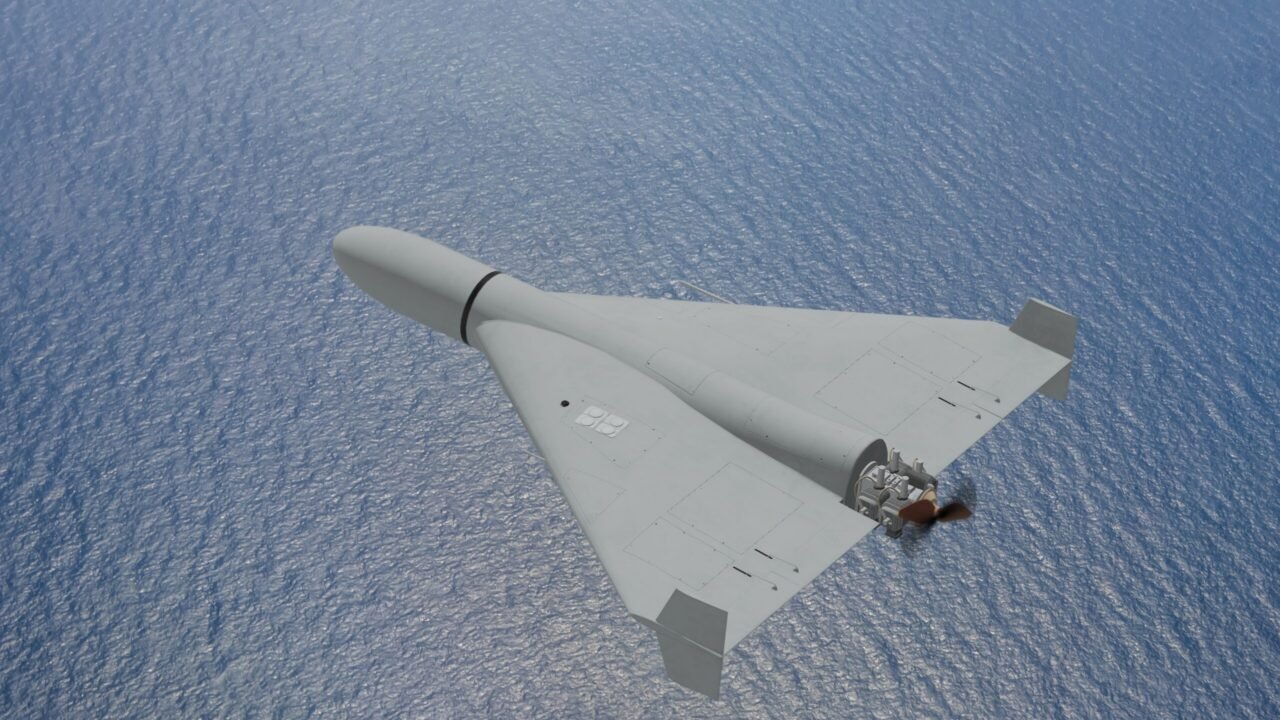
Likewise, Iran has developed the $30,000 Shahed, a one-way attack drone, that can be flown in swarms up to a range of 1600 miles, packing a high-explosive warhead of up to 90 kilograms. The challenge they pose is magazine depth—the ability to overwhelm air defenses by sheer numbers. The United States is only beginning to develop a range of more cost-effective air defense solutions. The Pentagon has learned the hard way from the Houthis and Iranian campaigns that the use of multi-million dollar missile interceptors to take out $30,000 threats is unsustainable.
Can the US Offset Strategy Overcome the Iranian Threat?
It is not yet clear whether US forces with their existing tactics and capabilities will be able to categorically defeat Iran by forcing the complete reopening of the Strait of Hormuz and the eradication of its nuclear program. The start-and-stop US campaign, acting under political constraints, has not yet culminated. At least in theory, a favorable diplomatic resolution also remains a possibility. What the results so far do show, however, is that the United States went to war with Iran (as it did with the Houthis) with capabilities that were less than optimal for the realities of drone and missile warfare.

Rebuilding US Offset Strategy for Modern Combat
The Pentagon has embarked on a crash program to address this, developing new systems, platforms, and doctrines for drone and missile combat. The Navy, for example, plans to reequip destroyers for drone warfare. The Air Force is imagining a drone force operating in close coordination with advanced F-35 fighters. The Army and Marines are closely watching the war in Ukraine to learn lessons for the infantry.
New approaches must be developed from the ground up to transform the United States into a strategic drone and conventional missile superpower. Russian and Iranian drones and missiles are now appearing in conflicts across the Black Sea, Caspian Sea, Eastern Europe, the Baltics, the Persian Gulf, and the greater Middle East. If the United States cannot develop effective military solutions to these threats, conflict and multipolar instability will inevitably spread to other regions.