
This analysis walks through the six US options against Iran under discussion in Washington — Kharg Island, the Strait of Hormuz, the disputed islands, Chabahar, Khuzestan, and a Kurdish front — and shows why each deepens entanglement rather than producing an exit.
Washington keeps circling back to the same shortlist — Kharg Island, the strait, the disputed islands, a southeastern port, an oil-rich province, a Kurdish flank — as if one of them might finally open a way out. But the deeper problem isn’t which target to strike next; it’s that the underlying geography offers no exit at all.
Every path Washington has floated pulls forces further into Iranian territory rather than out of it, a pattern with uncomfortable echoes of Korea in 1950. The full range of US options against Iran, weighed together rather than one at a time, exposes a force posture built for maritime pressure, not for holding ground. What follows is a tour through each option and why none of them resolves the underlying constraint.
US Options Against Iran Begin With Kharg Island
These days in Washington, the same list keeps resurfacing. Kharg Island, the Strait of Hormuz, the three disputed islands (Abu Musa and the Greater and Lesser Tunbs), Chabahar, Khuzestan, and a Kurdish front. The debate still circles which can be forced open – a framing that obscures the problem.
The geography does not present a series of exits. Each point of entry folds back into the same space, drawing any intervention further into Iran’s depth rather than out of it.
In 1950, only one of former US president Harry Truman’s advisors objected to a ground war in Korea. General Omar Bradley warned that the US Army was too small for the Asian landmass. Three years of stalemate followed. More than seven decades later, the same constraint hangs over another Asian coastline, largely unspoken in policy circles.
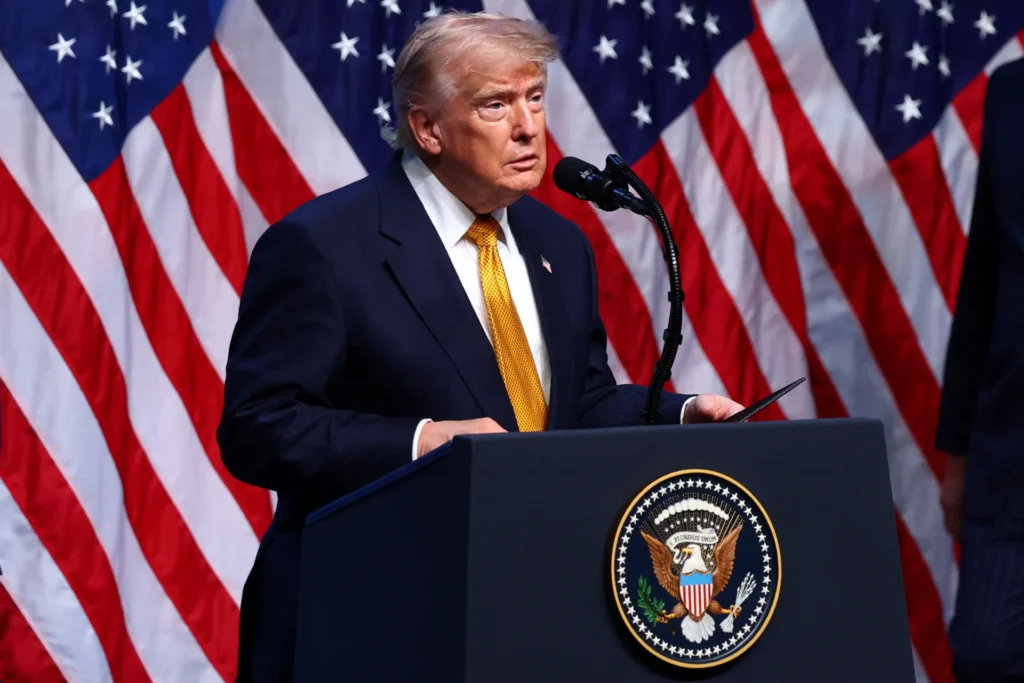
On 8 July, at the NATO summit in Ankara, US President Donald Trump declared the ceasefire with Iran dead and renewed his favorite threat: to seize Kharg Island, boasting that “there’s not a thing they can do about it.” Twelve days and nine consecutive nights of strikes later, the Strait of Hormuz is still closed.
The warning now comes from outside official channels. Douglas Macgregor, the retired US colonel who commanded armored forces at 73 Easting and later advised within Trump’s Pentagon orbit, has reiterated a point Washington avoids confronting: in the Eastern Hemisphere, the US is not configured as a land power.
Without a vastly larger force presence, he argues, victory against Iran is “virtually impossible.” Since late February, US moves have settled into a cycle of striking visible targets – including assassinating the supreme leader – and waiting for a strategic opening that never quite arrives. The closure of the strait has held.
A map that leads inward
When Foreign Policy surveyed US options in March, it concluded they amounted to “not a strategy for victory but a map of escalation.”
The US Navy can reach Iran’s coastline, which stretches roughly 1,500 kilometers along the Persian Gulf and Gulf of Oman. Holding ground, however, presents a different order of challenge. Each option functions less as an exit than as a deeper entry point.
Kharg Island: Target without strategic resolution
On 11 June, Trump pledged on Truth Social to take “Kharg Island, and other oil infrastructure points.”
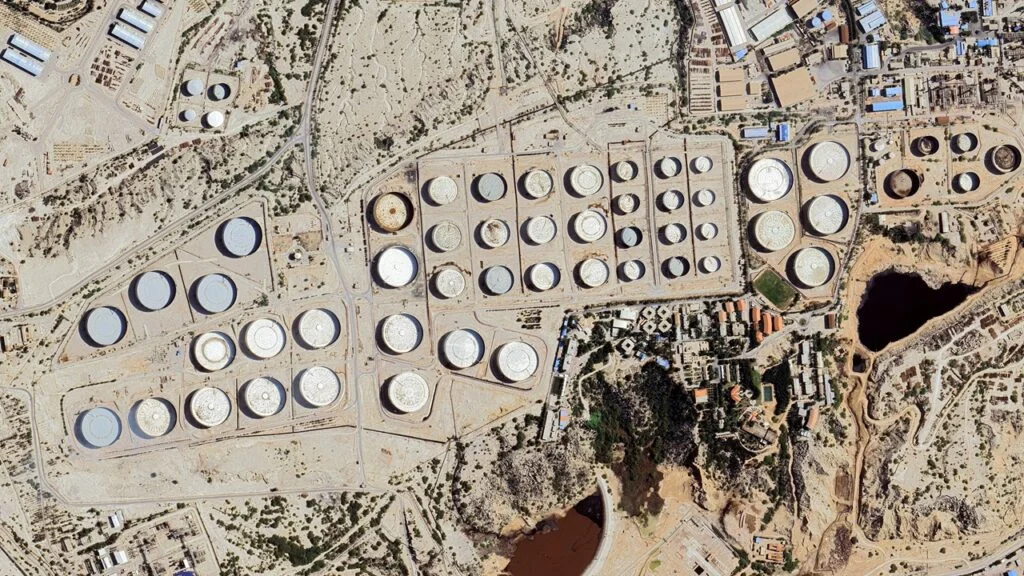
The island handles close to 90 percent of Iran’s crude exports, sitting about 25 kilometers off the coast and roughly 480 kilometers from the Strait of Hormuz. Taking Kharg would do little to reopen traffic through the strait.
MIT scholar Caitlin Talmadge described the concept to NPR as “a military mission in search of a strategic rationale.” Interdiction efforts have already escalated. On 15 July, US Central Command (CENTCOM) reported disabling a tanker approaching the island.
As The Cradle has noted, any landing risks widening beyond its initial objective, with control of the facility only shifting the fight across the theater.
Why US Options Against Iran Stall at Hormuz
This front has seen sustained pressure. Since mid-July, US strikes have reportedly reached dozens of sites in single-night operations. Iran’s military says it disabled two supertankers, the UAE says missiles hit two of its own, and Brent posted its biggest one-day jump in six years.
Trump admitted in March he was “thinking about taking over” the strait while conceding that 150 mobile anti-ship launchers had survived weeks of bombing. Suppressing them means seizing the coast.
Bandar Abbas, a city approaching 600,000 residents, anchors that coastline. It is defended by layered systems, including Khalij Fars anti-ship missiles and extensive naval mining capacity. Engagement here shifts the theater from maritime pressure to urban confrontation.
Abu Musa and the Tunbs: Contested ground, limited gain
US planning discussions have reportedly included options involving Abu Musa and the Greater and Lesser Tunbs, three islands under Iranian control but claimed by the UAE since 1971. Their location forms part of Iran’s forward defensive arc across the Strait of Hormuz.
Former Pacific Command intelligence chief Carl Schuster estimates holding them will require up to 2,000 troops. For Macgregor, without control of the mainland coast, the smaller islands quickly become untenable.
Iran could allow a landing and then bring sustained fire to bear on the islands, leaving an exposed position cut off from the mainland. Iranian media reports the arc of bombardment widening across nearby islands, including Qeshm, Kish, Hengam, and Abu Musa.
The question then shifts to whose objective this serves. Abu Dhabi stands to benefit from a move it cannot pursue on its own, drawing US forces into a long-standing territorial dispute.
The port of Chabahar sits on Iran’s southeastern coast, outside the immediate Gulf theater. Its distance from central infrastructure limits its immediate strategic impact. Any operation there would require a sustained inland advance to carry weight.
The port also carries international entanglements. Its main terminal has been developed with Indian investment and management through India Ports Global. Strikes in the port city have already raised concerns about escalation beyond the immediate US–Iran axis. Geography, in this case, stretches logistics without resolving core constraints.
Khuzestan: The precedent that holds
Khuzestan offers the most direct land corridor into Iran’s energy heartland. It is also the most historically tested. Iraq’s 1980 invasion followed a similar axis, reaching Khorramshahr before stalling.
The terrain remains heavily contested and politically charged. Reports indicate that allied Iraqi Popular Mobilization Units (PMU) have positioned themselves along key crossings such as Shalamcheh, extending defensive depth. Any advance would encounter both geography and precedent. Previous attempts to force this route did not produce decisive outcomes.
The Kurdish front: Leverage that reverses
The final option centers on expanding pressure through Kurdish factions along Iran’s western frontier. Israel’s own Channel 12 reported that leaks, allied pressure, and Kurdish demands for guarantees ultimately killed the plan.
A Kurdish front hands Tehran a war it wins politically – territorial defense that rallies the country. What appears as a means of fragmentation can in fact reinforce cohesion.
US Options Against Iran Face a Rising Cost Curve
Before the April ceasefire, Iran and its allies launched some 4,400 one-way drones – roughly 120 a day – according to the Washington Institute. More than 90 percent were intercepted, which is precisely the problem.
A JINSA report notes that Iran’s cheapest systems are drawing down the most expensive interceptors in use. As Macgregor put it in February, “they’re on land, they can resupply quickly, they can continue to manufacture.” One side fights on its own ground and replenishes locally, while the other moves everything across an ocean.
Casualty figures, while limited relative to large-scale conflict, have begun to register across multiple locations, including Jordan and Iraq, in addition to strikes on regional bases. The operational vocabulary has shifted in parallel, from limited strikes to extended campaigns, reflecting an expanding scope without a defined endpoint.
No exit, only deeper entry
An escape room runs on the clock. This confrontation has already dragged on for months. Each option leads further into the same pattern, with greater exposure, heavier demands, and less clarity about how it ends.
Two conditions define the outer boundary of this equation. One is the scale of force required to impose control across Iran’s terrain. The other is the political threshold for abandoning escalation. Neither appears within immediate reach.
What remains is not a set of doors leading outward, but a system that draws any intervention further inward, where each move narrows rather than expands the available choices.