
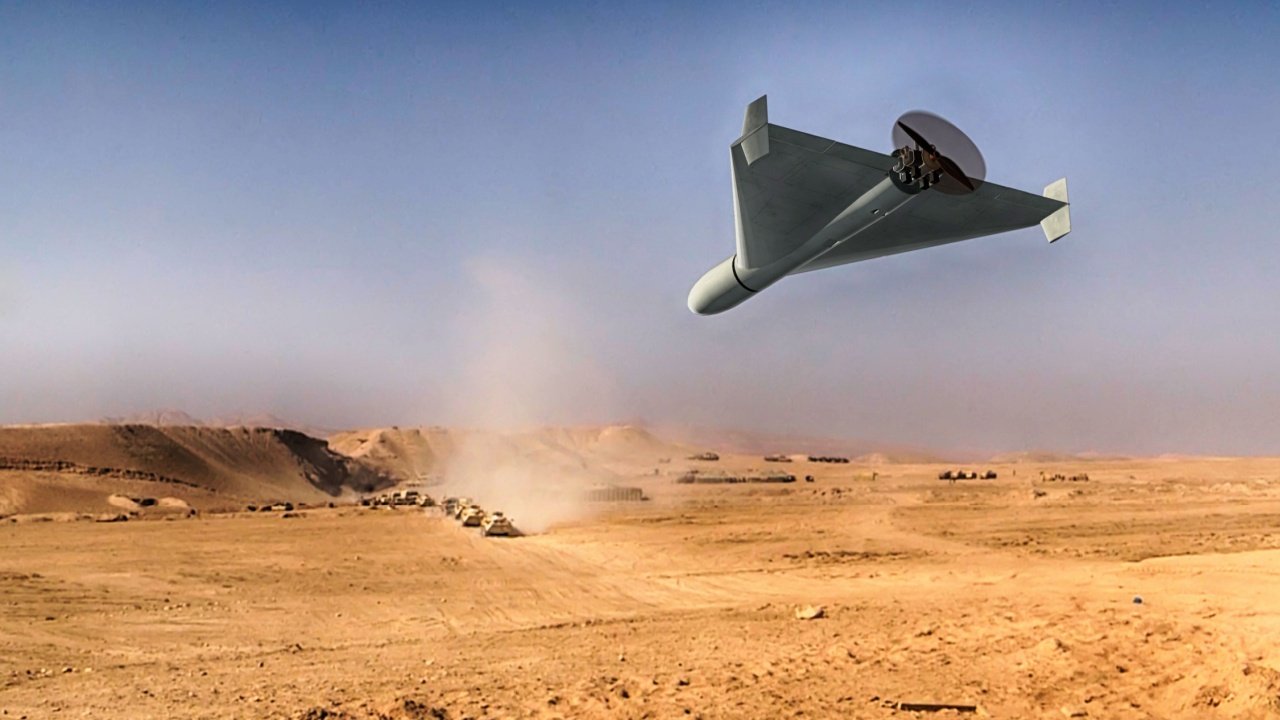
Iran has been politically decapitated. The Iranian navy’s warships have been sunk. Thousands of targets in Iran have been destroyed by air strikes, and thousands of drones and missiles from Iran have been intercepted. Nevertheless, behind the scenes, Israel, the United States, and the Gulf states are feeling uneasy despite the reports of success. What if the Islamic Revolutionary Guard Corps (IRGC) does not break? What if they continue to attack with ever more cheap drones, missiles, and small boats?
Scenes like this are playing out throughout the Persian Gulf battlespace: a small drone approaches a US destroyer at high speed; the vessel sounds the alarm, and its defenses react immediately with expensive sensors, missiles, and maneuvers. An above-water drone costs a few thousand dollars. The response can cost millions. And the destroyer vessel is just one of many that require multi-domain defenses.
This reveals a new economy of war. Cheap beats expensive. Mass beats perfection. Speed beats tradition. Iran relies on large quantities of drones, missiles, and small boats. This is not because they have been perfected over decades, produced for years, or operated without malfunction. Rather, they are sufficient for the task of overloading defense systems. They force the enemy to respond at great expense. And they reverse the cost ratios.
Every successful defense ultimately results in an economic loss. If, in addition, expensive radars and sensors, which can cost billions and can only be replaced after years, are destroyed by comparatively simple drones, a tactical victory in this war may ultimately even include strategic defeats.
Whether Tehran will ultimately succeed in betting on the new economics of war remains to be seen. There is much to suggest that it will not. Nevertheless, this war already marks a turning point. The old American and Western idea of a technologically superior, fast, and clean military strike is crumbling. Opponents such as Iran and Russia are forcing defenders to respond to waves of low-cost attacks with expensive countermeasures repeatedly.
This is nothing new. The new military reality has been on display for years in Ukraine and elsewhere. But Western political decision-makers, military planners, and armament manufacturers have largely turned a blind eye to this until now, out of excessive complacency, arrogance, and bureaucratic paralysis.
Those who assert themselves militarily at too high a cost also lose at the same time. And those who lose cheaply remain capable of acting in the end. Those who lose too expensively lose too much anyway. In the Gulf, we are currently seeing how this can change the geopolitical balance of power.
As has been the case in Ukraine for years, this is most evident in the Gulf in terms of air defense. While Iran and Russia are producing drones and missiles in industrial quantities and constantly expanding production, the few manufacturers of air defense systems and guided missiles have barely increased their industrial output in the four years of Russia’s war of aggression. Entire annual production runs of missiles for high-performance systems such as THAAD and Patriot missile systems are currently being fired off in just a few days.
Around the world, Ukraine, the Europeans, the Americans, and now even the Gulf states are scrambling for the meager supplies available, but all the money in the world seems unable to speed up the process. Iranian and Russian drone and missile production, on the other hand, will quickly replenish their depots. China will observe this with interest and seek to learn its lessons.
Against this backdrop, the NATO countries, especially the European NATO members, are not in a good position. We have built high-end systems and continue to order high-end systems. We have loved complexity and continue to love complexity. “Everything is complicated, nothing is that simple, nothing is that fast”—that is the familiar message of the system. But high-end quality without quantity does not protect. And complexity without speed is ineffective. Efficiency remains a fantasy in the end if the enemy relies on favorable mass.
A perfect system is no longer the deciding factor. The Patriot missile is a high-performance system. Yet, if we don’t have enough guided missiles, can’t replace them quickly, or buy them without breaking the bank, then even the Patriot will ultimately fall victim to asymmetric overload.
The new economics of war are forcing us to think differently. This week, the US military announced that it will replicate and deploy cheap drones imitating the Iranian Shahed drones. Today, warfare also requires simple, robust systems in large quantities. And defense and deterrence require industrial production that can breathe and grow quickly when things get serious. This absolutely requires political decisions that allow for speed. This includes an offensive technology and industrial policy that sees security as its core task.