
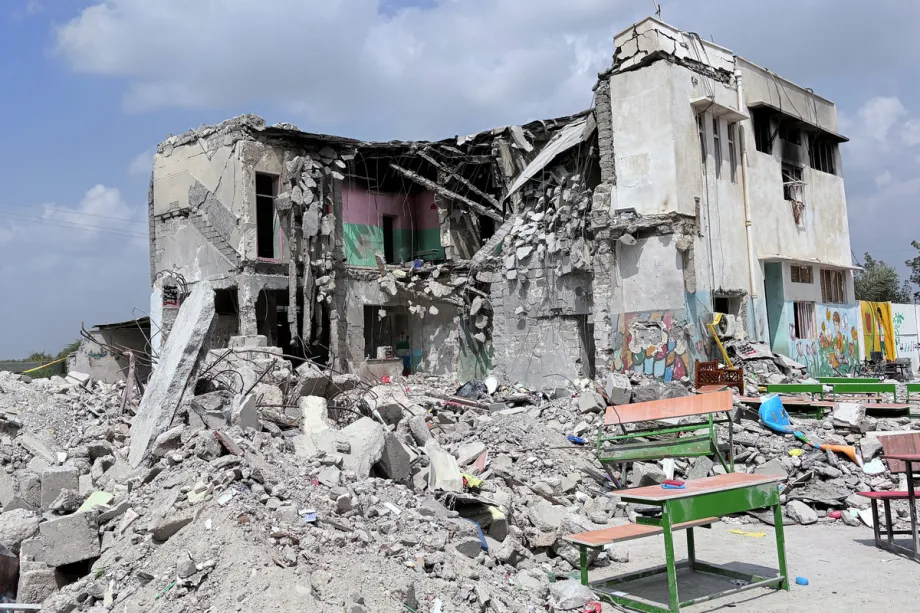
On International Women’s Day eve, airstrikes on an Iranian girls’ school killed dozens, shattering dreams and highlighting war’s brutal toll on the most vulnerable. True women’s rights cannot coexist with militarism that treats classrooms as targets and girls’ lives as expendable.
International Women’s Day is often marked by speeches about equality and symbolic gestures celebrating women’s progress. But these rituals ring hollow when girls are still losing their lives to war. The bombing of a girls’ school in Minab, Iran, is a stark reminder that discussions about women’s rights cannot be separated from the violence and militarism that continue to threaten their lives.
International Women’s Day on 8th March is recognised around the world as a symbol of women’s struggle for equality, rights and dignity. Each year, discussions about women’s rights, freedoms and social justice take place in many countries. Civil society organisations hold demonstrations; institutions publish statements and social media fills with messages celebrating women.
Inside that school were girls studying during class hours – girls who were preparing themselves for the future. They were learning so that one day they could defend their rights, shape their own lives and contribute to their communities. In that classroom there were school bags, notebooks, words written on the blackboard and the hopes of a generation.
Those girls had dreams about the future. Some hoped to become doctors and save lives. Others wanted to become teachers, to educate the next generation. Some imagined becoming activists, defending justice and equality. Instead, their futures were violently interrupted.
History carries a painful irony. On the eve of International Women’s Day – a day that symbolises women’s struggle for rights and equality – dozens of girls lost the chance to see their future. In war, the first victims are often the most vulnerable.
The language of war rarely reflects these human realities.
Women and children are among the most invisible victims of conflict. War does not only destroy buildings and cities; it destroys dreams, education and the possibility of a future. The bombing of a girls’ school is not simply a military incident. It represents the darkest intersection of militarism and patriarchal structures that devalue women’s lives.
International Women’s Day should not merely be a day when flowers are handed out. It should be a moment of protest against systems that treat women’s lives as expendable. The girls in Minab remind us of something essential: conversations about women’s freedom cannot ignore the realities of war.
A girl’s most basic right is to go to school.
A girl’s most basic right is to stay alive.
As people march in the streets on 8 March calling for equality, they must also remember that classroom in Minab. An International Women’s Day that forgets the women and girls paying the price of war loses its meaning.
The unfinished notebooks of the girls in Minab send a clear message: if somewhere in the world a girl going to school is met with bombs, then true freedom for women does not exist anywhere.
War does not only violate borders; it violates the most fundamental principles of human rights. International conventions, child protection treaties and humanitarian law all recognise the right of children to life, safety and education. Yet in practice, these rights often collapse under the weight of bombs and military strategies.
When a school is destroyed, it is not only a building that disappears. It is a space of learning, safety and possibility. For girls in particular, education is often the most powerful path to independence, dignity and social participation. To bomb a school is therefore not only an attack on infrastructure; it is an attack on the future.
International Women’s Day cannot simply celebrate progress while ignoring the violence that continues to shape the lives of women and girls in many parts of the world. If the global community truly believes in equality, justice and human rights, then it must confront the realities of war with the same urgency.
Because women’s liberation cannot exist where the right to live is constantly under threat.
And a world in which girls cannot walk safely to school is a world that has already failed its most basic promise: the protection of human dignity.
Ultimately, the question is not only about one city or one school. It is about whether the international community is willing to defend the universal principles it claims to uphold. Human rights cannot be selective, and the protection of children cannot depend on geography or political interests. If the world remains silent when girls’ classrooms are turned into targets, then the language of rights becomes little more than rhetoric. The true test of our commitment to equality and justice lies not in speeches on commemorative days, but in the willingness to protect the lives and futures of the most vulnerable.