
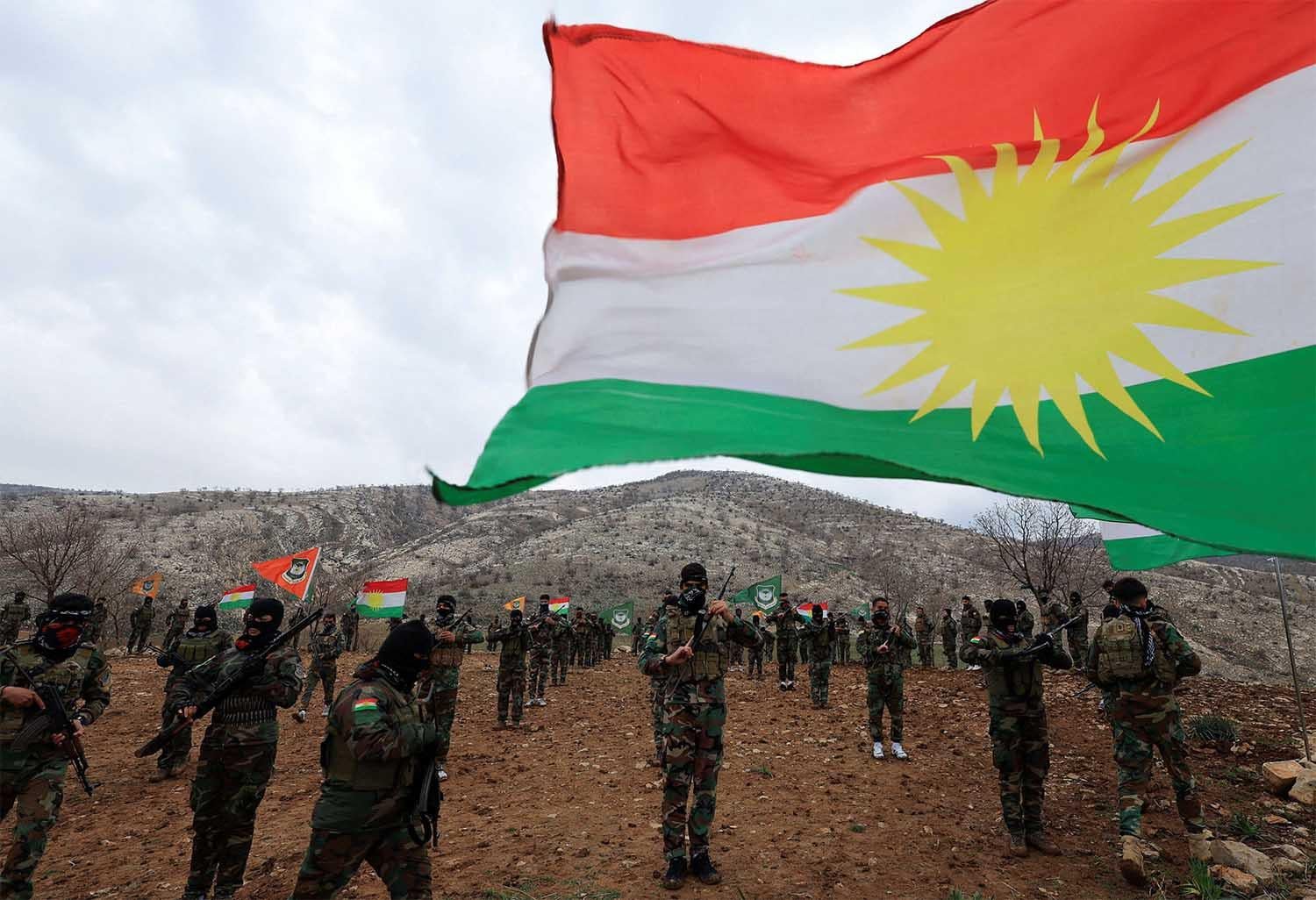
Iran’s political system has traditionally been highly centralized, making the idea of autonomy or federalism extremely sensitive.
In moments of major crises, not only do balances of power between states change, but the relationship between a state and its internal components may also be reshaped. With the growing political and military pressures facing Iran, a fundamental question emerges: could the ongoing war and mounting pressures create an opportunity to open the door to a historic settlement with the Kurds within the country?
The traditional assumption in such circumstances is to wait for the collapse or
transformation of regimes, hoping that the post-regime phase will allow the state to be restructured. However, regional experiences show that the fall of regimes does not necessarily lead to rapid political stability; it can open the door to long periods of instability and internal conflict, where security and state-building priorities overshadow other issues.
It is true that the Kurds in Iraq managed, after the fall of Saddam Hussein following the 2003 invasion of Iraq, to secure a recognized constitutional status within the Kurdistan Region. Yet that experience emerged from very specific political and regional circumstances and cannot simply be assumed to be replicated elsewhere in the same way.
From this perspective, another less discussed possibility appears: the potential to reach an internal settlement with the state itself at a moment of weakness. In times of major crises, states often seek to reduce the number of open fronts, and internal settlements may become a pragmatic option to ease pressure.
For the government in Iran, calming the Kurdish front could serve several objectives simultaneously, including:
– Reducing internal tensions and closing a sensitive front.
– Preventing Kurdish areas from becoming an additional arena of external pressure.
– Sending reformist signals that might alleviate domestic and international pressures.
On the other hand, Kurdish political forces may see moments of major transformation as a rare opportunity to achieve gains that were previously unattainable, such as:
– Expanding local administrative powers in Kurdish areas.
– Broader recognition of the Kurdish language and culture in education and
administration.
– Enhancing Kurdish participation in national institutions.
– Gradually paving the way toward a broader form of political decentralization.
Nevertheless, the path toward such a settlement is not easy. Iran’s political system has traditionally been highly centralized, making the idea of autonomy or federalism extremely sensitive. Moreover, such a step could raise concerns that similar demands might emerge from other ethnic groups within the country.
In addition, the regional dimension of the Kurdish issue adds further complexity.
Neighboring states, particularly Turkey, closely monitor any developments related to the Kurdish question due to their potential impact on regional balances.
The central question remains: could major crises push Iran to reconsider the nature of the relationship between the state and its ethnic components?
The answer is not definitive. However, political history shows that major transformations often open paths that previously seemed impossible. In such moments, negotiation may become a more realistic political option than waiting for a total collapse that may never come—or may come at a far higher cost to all involved.
Ultimately, the future of the relationship between the Kurds and the Iranian state will not be determined by war alone, but by the ability of the different actors to read the moment of transformation and turn it into a political project capable of redefining the relationship between the state and its components on more balanced and stable foundations.