
The strategy targets militia economies, not leaders. Without payroll, fighters leave. Trump’s tweet blacklisting Maliki has paralyzed government formation, forcing a litmus test for any new prime minister: acceptability to Washington. This dismantles Tehran’s proxy warfare model without kinetic escalation—but risks punishing Iraqi civilians.
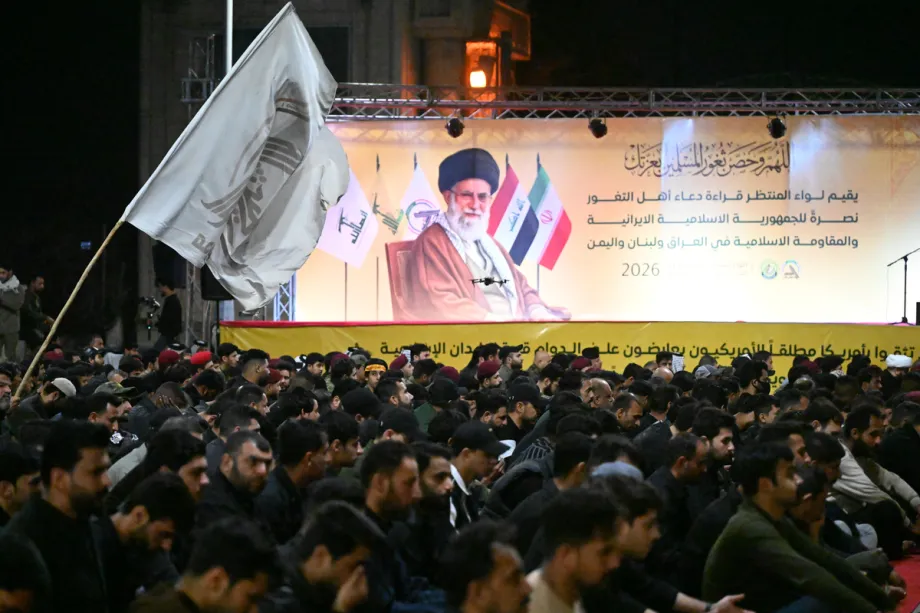
Tehran’s regional hegemony was not forged through the deployment of its own conventional divisions, but through the cultivation of a sprawling network of proxies and paramilitary franchises, funded, trained, and commanded by Iran to wage its battles. In Iraq, these groups have lobbed missiles at Israel, sent drones across borders, and terrorised civilians. For years, the international community responded with kinetic strikes that often only served to martyr militia leaders and fuel recruitment. Now, however, Washington has found the pressure point that hurts most: their wallets.
No dramatic military strikes. No ground troops. Just the cold logic of economic suffocation.
The power of the purse
The strategy is rooted in the realization that these groups are as much commercial enterprises as they are ideological ones. The militia economy in Iraq is parasitic; it requires a host with deep pockets. By restricting the flow of dollars from the New York Fed to Baghdad, Washington is effectively cutting the oxygen to the IRGC’s most lethal lung.
It works: Without funds, armed groups lose loyalty, split apart, and fighters leave. Commanders quarrel. The ideology that once held them together gives way to the more pressing question: who will get paid? Washington understands this. Starve the beast, and the beast turns on itself.
The pressure doesn’t stop there.
The Trump tweet and the political vacuum
The current political paralysis in Baghdad is not merely a localized dispute; it is the direct result of a fundamental shift in American red lines. The deadlock stems from a single, seismic tweet by President Trump declaring former Prime Minister Nouri al-Maliki persona non grata. In Washington’s eyes, al-Maliki represents the bridge through which Iranian influence solidified its grip on the Iraqi state apparatus.
This declaration has created an intractable wall in government formation.
The selection of Iraq’s next Prime Minister has shifted from a local political exercise to a mandatory litmus test for Washington; the office must be occupied by a figure capable of genuine bilateral cooperation, effectively blacklisting the “old guard” establishment that facilitated the institutionalization of the Popular Mobilization Forces (PMFs).
Unlike the era of al-Maliki, where the US often looked the other way in exchange for a semblance of stability, the current administration views “stability” under Iranian-aligned leaders as a strategic threat. The message to the Iraqi political class is blunt: choose a leader acceptable to the West, or watch the state’s financial foundations crumble.
Precision pressure and military logic
US military commanders have long advocated for this non-kinetic approach. General (Ret.) Joseph Votel and other strategic minds have frequently pointed out that you cannot “kill your way” out of a proxy insurgency. The US has transitioned from a war of attrition to a war of accounting. Every dollar withheld is a rocket that doesn’t get launched at US allies.
The militias know what’s coming. Many of their leaders are now convinced they face physical elimination.
Managing the fallout
Critics argue that squeezing Iraq’s oil revenues punishes the Iraqi people along with the militias. This is a fair concern. Washington must manage carefully through targeted relief and clear communication with Baghdad. The goal is to defund Iran’s armed clients, not to destabilise a sovereign partner. However, the administration’s stance is that the militias themselves are the primary cause of Iraq’s instability.
Dismantling the model
Maximum pressure, applied with precision, is the right tool. The era of allowing Tehran to project power on the cheap, using Iraqi soil, Iraqi instability, and international inaction as cover is over.
The path forward for Iraq is narrow. It requires a leadership that prioritizes Iraqi sovereignty over Iranian regional ambitions. Until Baghdad can produce a Prime Minister who is not an agent of the status quo, the financial suppression will remain tight. Washington isn’t just squeezing a militia; it is dismantling a model of proxy warfare that has plagued the Middle East for decades. The “Maliki era” of double-dealing is dead; the “Acceptability era” has begun.