
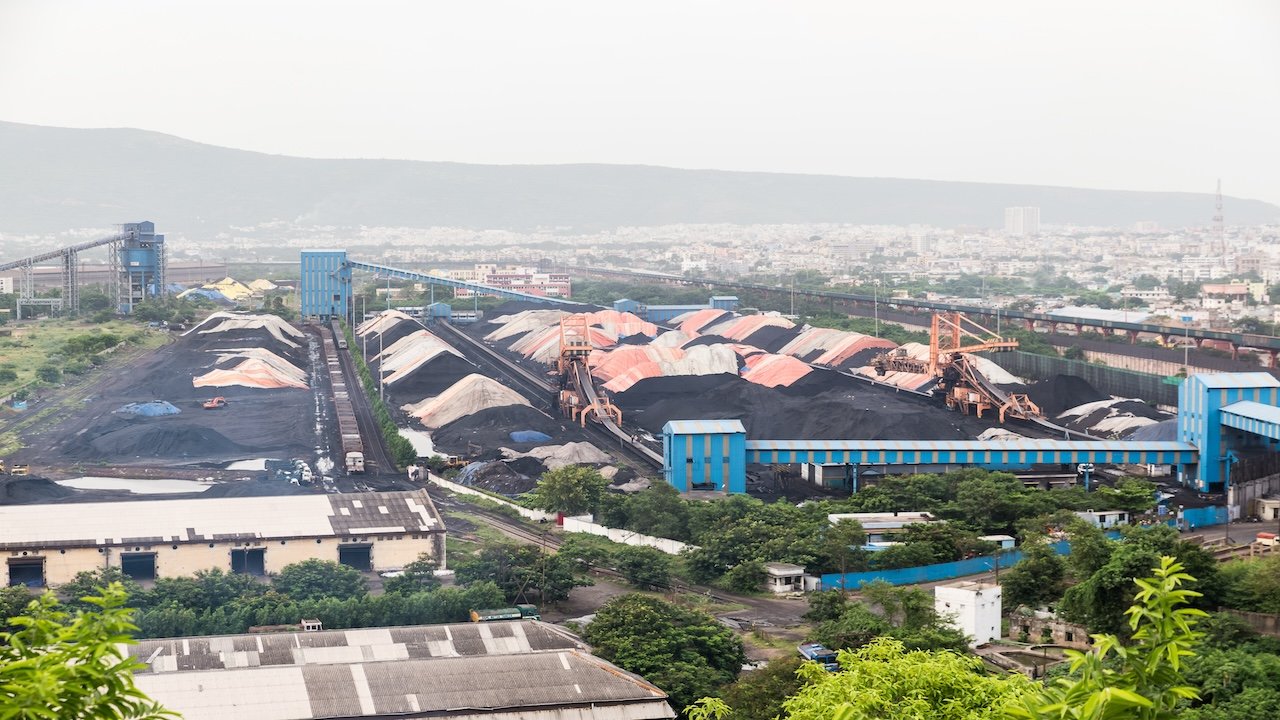
LNG and oil chokepoint risks compel India, South Korea, and Indonesia to boost coal power. China’s coal-to-liquids sector grew 24% in 2023. Pakistan and Bangladesh face severe supply emergencies without established coal infrastructure.
Disruptions of oil and natural gas shipments in the Strait of Hormuz are pushing Asian governments to preserve and expand coal capacity as strategic insurance.
In my previous piece written last November, I argued that coal would remain a transition fuel for much of Emerging Asia by the logic of the Four As: availability, affordability, accessibility, and acceptability. That argument rests on structural conditions: the region’s coal reserves, the cost gap between coal and alternatives, and the political durability of an energy source that supports jobs and grid reliability across dozens of developing economies. The Russian invasion of Ukraineprovided a new live stress test of that thesis, as energy shortages hit Asian countries in 2021 and 2022. Events since have added to the evidence.
The Strait of Hormuz Chokepoint and Its Consequences
The Strait of Hormuz carries roughly 20 percent of global oil consumption, 27 percent of seaborne oil trade, and 20 percent of global liquefied natural gas (LNG) trade. Some 89 percent of the crude oil that transits the strait is destined for Asian markets, and China alone absorbs 37.7 percent of total Hormuz crude flows, the largest share of any single nation.On the LNG side, 83 percent of Hormuz LNG flows to Asia, and Qatar, which declared force majeure on all its export contracts after attacks on the Ras Laffan complex, accounted for roughly 20 percent of global LNG supply before the crisis.
But the overall numbers hide very different stories at the country level as system dependence and portfolio dependents diverge. Pakistan is in the most vulnerable position: Qatar supplies almost all its LNG and roughly a fifth of its total gas needs, with virtually no alternative suppliers to fall back on. Kuwait and Bangladesh face similarly concentrated risk. India and Singapore are heavily reliant on Qatari LNG within their import mix, but at least have some other suppliers in the picture. China, Japan, South Korea, and Italy import large volumes but are less dependent on Qatar specifically and have more options if supply were disrupted. Taiwan is an interesting outlier: it leans heavily on Qatari LNG for its overall gas supply, yet has managed to diversify its roster of suppliers more than its exposure level might suggest.
Switching Back to Coal: Who Can and Who Cannot
As I argued before, fuel switching is the primary near-term adjustment mechanism in any gas shortage, and coal is the primary substitute given its characteristics and, often, already existing infrastructure. The current crisis highlights this relationship as India is burning more coal to meet higher summer demand; South Korea has lifted caps on coal-fired electricity generation; Indonesia is prioritizing domestic coal supply over exports, while Thailand, the Philippines, and Vietnam are all boosting coal-fired power.
Countries with established coal infrastructure and domestic or regional supply, including India, Indonesia, China, and, to a degree, South Korea, can absorb the shock with relative speed. The situation is fundamentally different for Bangladesh, Pakistan, Singapore, and other economies where domestic gas or coal are either unavailable or insufficient to cover the natural gas shortfalls. For these poorer importers, the crisis is not merely an energy price shock but a genuine supply security emergency. Coal is often the most accessible substitute, but it is not always accessible enough.
But coal resources are essentially present in the region. As such, we may expect countries that lack the generation infrastructure to scale coal quickly or that face additional logistics costs to look to resolve those issues. This does not mean they will completely give up on imports of LNG, but they will focus more on redundancy to support their energy security.
China has gone further than any other country in building an industrial and strategic redundancy around domestic coal, including through its rapidly expanding coal-to-gas (CTG), coal-to-liquids (CTL), and coal-to-chemicals (CTC) sectors. With approximately 380 million tonnes of coal consumed annually as a chemical and fuel feedstock, and a CTL sector that grew 24 percent in 2023 alone, China has turned domestic coal into a strategic substitute for natural gas (in power generation and beyond) but also for oil, otherwise extremely difficult to substitute.
Energy Security Lessons for Asia’s Coal Transition
At the time, as the notion of globalization retreats, systems that rely too heavily on imported fuels without redundancy remain exposed. The experience of the current crisis is likely to make governments across Asia reluctant to fully retire coal-fired generation capacity even as their renewable buildouts accelerate, and some may even expand it. The logic mirrors the “credible threat” principle familiar from European gas security debates: the mere existence of dispatchable backup capacity confers stability, independent of how often it is used. A country that retains coal as a standby resource, even at low utilization rates, is in a fundamentally different position from one that has decommissioned it entirely when an unexpected disruption hits. Coal plants that might otherwise have been scheduled for early retirement are being reconsidered, not as the primary generation source of the future, but as insurance against a world where energy supply routes cannot be taken for granted. And some new coal plants will be built to make sure countries have access to reliable energy resources as they develop economically.