
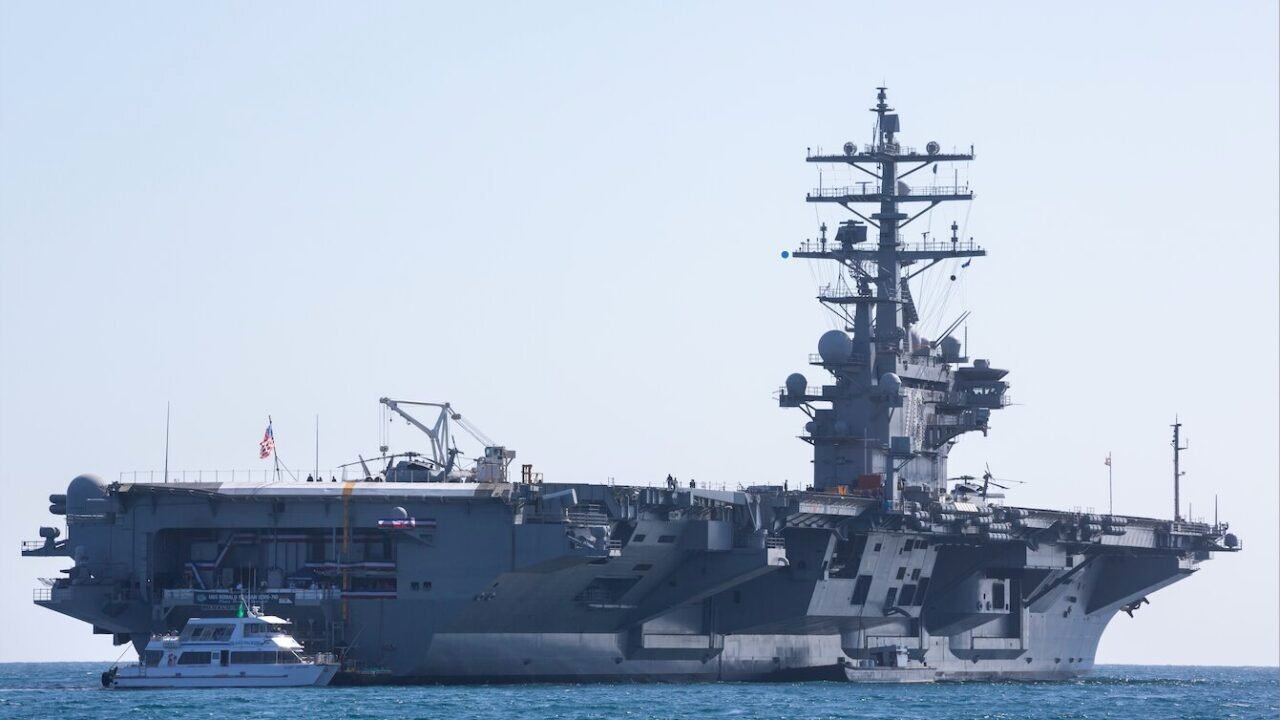
The US naval blockade of Iran pressures the regime economically but fails to threaten its survival. Without backing anti-regime forces and resuming military action, Washington cannot achieve collapse—only a bad deal. Regime change is the only permanent solution.
The current debate surrounding the Iran blockade regime collapse strategy highlights a critical gap between economic pressure and political outcomes. To be effective, the Iran blockade regime collapse strategy must move beyond simple oil industry metrics to actively support internal resistance and external military leverage.
Implementing an Effective Iran blockade regime collapse strategy
The US naval blockade of Iran is a good policy, but its potential effectiveness appears overstated and its purpose misguided. Rather than back down from efforts to reopen the Strait of Hormuz (as the Trump administration appears to be doing), the United States needs to double down on creating real leverage against Iran. That means maintaining the blockade, rejecting any further negotiations with Iran, and taking actions to make regime collapse more likely.
After 40 days of war and five days of ceasefire, President Donald Trump initiated a blockade of Iranian ports to pressure the regime to negotiate an acceptable deal. Experts and administration officials declared that the stoppage of Iranian oil exports would clog the country’s oil industry within about 13 days, which in turn would lead to the shutdown of its oil production and even damage to its oil fields. This, it was argued, would further strain the regime’s dire finances and force it to make concessions, if not capitulate fully to US demands.
More than 21 days later, the administration is still making the same claims of Iran’s imminent energy and economic collapse. Pentagon officials have estimated that the blockade has cost Iran $4.8 billion in lost revenue. “We are suffocating the regime,” Treasury Secretary Scott Bessent said on May 3, “and they are not able to pay their soldiers.”
The blockade’s economic damage might very well be severe. And perhaps Iran will soon run out of spare storage capacity and have to shut down its oil production. Though the Central Intelligence Agency estimates Iran could hold out for several months still, according to recent reports.
But the debate over whether and how much Iran is hurting economically is, at best, misleading. It mistakes means for ends. The purpose of the blockade is not to empty Iranian coffers; it is to build leverage. That leverage only comes from putting at risk something the regime values. Running out of money or losing oil production, however painful, is not, in and of itself, what the Islamic Republic’s new leaders fear. It does not, by itself, create pressure or leverage.
Assessing the Limits of Economic Leverage
If accurate, the outline of the latest potential deal, revealed in reports on May 6, seems to demonstrate that Tehran, rather than caving, is dictating terms to Washington. That perception is only further reinforced, at least in Tehran’s mind, by the US willingness to tolerate attacks against the United Arab Emirates and US Navy ships, which are clear violations of the ceasefire, and keep pressing forward with a deal.
Rather than giving up its nuclear program, Iran would potentially only freeze it for 12 to 20 years. In exchange, Iran would get tens of billions of dollars in frozen assets and many more in sanctions relief—an economic lifeline that would demoralize the people and enable the regime to retain power, thereby giving it exactly what it wants most.
What the regime fears is losing power. That can only happen if the Iranian people are willing to go back on the streets and demand regime change, and the regime is unwilling or unable to stop them. A blockade can help contribute to that eventuality, but it alone is unlikely to cause it. And, right now, due in part to the Trump administration’s own policy decisions, it is possible that regime leadership feels more secure against a popular uprising than they did during the war.
They have little reason to fear a popular uprising, no matter how bad things get inside Iran, because the Iranian people have little reason to believe they will get the assistance they need to avoid suffering a massacre, as they did in January, and succeed in toppling the regime. By fixating on waiting for Iran’s oil storage to fill up, while expressing willingness to negotiate with Iran’s leaders, rather than on creating the conditions for the Iranian people to take control of their country, the administration is undermining its own blockade and war effort.
Historical Context of the Iran blockade regime collapse strategy
A blockade is not a new idea. We first proposed a naval blockade of Iran’s oil exports in January. The logic for it at the time—as the Iranian regime was brutally putting down massive public uprisings against it—was two-fold.
First, President Donald Trump had threatened consequences if the regime killed any protestors, which it did by the tens of thousands. It was clear that he was not prepared then to strike Iran, in part because the United States lacked military assets in the region.
Yet, having drawn a red line, which Iran had so blatantly violated, American credibility demanded a response. A blockade—or a quarantine, as it is called outside of a conflict—would have shown US resolve without having to take kinetic action. It was a way to retaliate against the regime for its massacre of the people and pressure it, until the United States could move more military assets to the region.
Second, Trump had also promised the Iranian people, who were demanding their freedom from the Islamic Republic, that “help was on the way” in January. A blockade would have delivered that help, both symbolically and tangibly. It would have been a clear demonstration of the United States taking the side of the Iranian people, standing with them against the mullahs, and setting the collapse of the regime as its objective.
Toward that goal, a blockade would have weakened the regime by starving it, over time, of the oil revenues on which it depended to maintain both its domestic repression and external aggression. This might have given the popular protests the fighting chance they needed. With moral courage supplied by knowing that the world’s greatest power stood behind them, their ranks swelled by ever more people as the country’s already dire economy spiraled downward, and, facing a regime that might no longer have been able to pay its thugs, the Iranian people might have been able to bring down the Islamic Republic.
Shifting Tactical Goals and Strategic Impact
But while the United States is now pursuing the same tactic—a naval blockade—it is doing it at a very different moment and in a very different way, to much lesser strategic effect. Rather than imposing a blockade to demonstrate resolve, it is now a testament to US indecision, an attempt to get out of having to finish the war. And instead of being conducted to aid the Iranian people and bring about regime collapse, the blockade is now being used, in essence, to keep the current regime in place to negotiate with it.
Trump opened Operation Epic Fury on February 28, reaffirming the promises he made to the Iranian people in January, offering them a chance to seize their own destiny: “When we are finished, take over your government. It will be yours to take. This will be, probably, your only chance for generations.”
But by March 17, any concern for the Iranian people seemed to have been forgotten in Washington. There were plans to assist the Iranian Kurdish rebels in fighting the regime and take over territory, hoping it would trigger other anti-regime ethnic groups to do the same. These plans were shelved, possibly and partially as a result of pressure from Turkish President Recep Tayyip Erdogan, who does not want to see Kurds anywhere (including in Turkey) rise up.
Instead, Trump announced that the United States had already accomplished “regime change” and that he was willing to negotiate with the new leaders in Tehran. In reality, there was no such “regime change,” beyond some regime officials replacing others whom Israel and the United States killed. The administration’s willingness to negotiate with the regime—and its encouragement of the regime to consolidate and resolve its internal squabbles so it can present a more coherent negotiating position—only serves to highlight its interest in the regime succeeding and sticking around. A deal with the regime, which would involve some economic relief, would extend its life.
And this is for a deal that would not be worth the paper it is written on, given the regime’s historic mendacity. The ceasefire put an end to Israeli strikes targeting the instruments of regime oppression—the Islamic Revolutionary Guard Corps (IRGC) and Basij—that might have given the people hope. Furthermore, it signaled to the regime that the United States was buckling to Iranian pressure. An extended ceasefire signaled this further.
All this broke Trump’s promise to aid the Iranian people, demoralizing them. He had evidently given up on his hope for the regime’s collapse. Iranians have understood they are on their own and at the mercy of the regime. The continued executions of innocent protesters, with little to no American outcry, have added to that feeling of isolation.
Avoiding Repeating Failed Policies of the Past
The entire policy debate in Washington now belies the abandonment of the Iranian people and their aspirations for a new government. The discussion of the blockade fixated entirely on its energy impacts and ignored the purpose of the blockade—namely, increasing the likelihood that the regime might be challenged internally and have its grip on power weakened.
This shift in US policy repeats past mistakes. Repeatedly, choosing the path of least resistance, American presidents, supported by many in Congress, have attempted to prevent a nuclear Iran by pairing economic sanctions with negotiation, without bringing military threats to bear. Sanctions work on the same logic as a blockade—creating poor economic conditions that might spur popular unrest and weaken the regime’s standing, pressuring it to negotiate rather than risk a threat to its existence. But the very strategy of seeking a negotiated solution obviates the threat posed by sanctions.
This was clearly demonstrated by the Obama administration, whose ardent desire to sit across the table from Islamic Republic officials led it to ignore the mass protests of the 2009 Green Movement, in which Iranians begged for American help to no avail. But in turning a blind eye to those appeals, Obama signaled to Tehran that it had no reason to fear for its survival. The ineluctable result was the JCPOA, a deal that only enriched Iran while paving the way to a legalized Iranian nuclear weapons capability.
Now, Trump is repeating an element of President Barack Obama’s playbook by turning his back on the Iranian people and seeking negotiations with the regime. To be sure, the blockade is squeezing Tehran harder than Obama’s (and Trump’s) sanctions ever did. And it follows something Obama would never have done: striking Iran’s nuclear facilities, as Trump did last June, and collaborating with Israel in a 40-day military campaign against Iran.
Yet, for all his admirable military action against Iran and his declared support for regime collapse at the start of the year, Trump has fallen into the same path Obama followed. And the result will be the same, too. Maybe a blockade alone will result in a deal. But it will not be a good deal—one that prevents a nuclear Iran or ends its missile program and support for terrorism—no matter how quickly Iran’s oil storage fills up.
Necessary Military Support for Political Change
The best way forward is to maintain the blockade, whether it constipates Iran’s oil industry or not, as a way of pressuring the regime. But at the same time, the Iranian regime must be made to feel that its survival is at risk, that poor economic conditions could lead to a popular uprising that would sweep the Islamic Republic away.
To build that existential fear inside Tehran, Trump should make clear that the US objective is regime collapse. The United States and Israel should immediately resume military action against Iran’s leadership, organs of oppression, and conventional military capabilities. Further, they should dust off and implement their original plan to arm the Kurds and any other group inside Iran that is willing to fight the regime and remove it from power, territory by territory. That might not topple the Islamic Republic, but arming anti-regime forces should help the Iranian people begin to even the playing field against the regime, and it would be a concrete signal of US support for regime collapse.
Finally, Trump should declare that the United States and Israel will seek to protect the people when they decide to rise again, after major military operations end. This would not just uphold his credibility, but it would be strategically smart—regime collapse is the only permanent means to solving the Islamic Republic’s nuclear threat, as well as the threat to American forces and people.
Taken together, these actions just might instill sufficient fear in the regime to convince it to give up its nuclear program as the only way to stave off regime collapse. That still seems unlikely, because the regime views the nuclear program as integral to it and its survival. In that case, assuming the risks of extracting Iran’s enriched uranium and destroying all its nuclear facilities, including those that were not hit in June, are too great, the United States should, after the above actions are taken, conclude military operations without a deal.
Long Term Goals for Regional Security
It should, however, maintain the blockade to squeeze the regime and deepen conditions for another popular uprising. Additionally, it should keep enough assets in the region to monitor and, if necessary, strike any attempt to reconstitute Iran’s nuclear program and to help protect the Iranian people should an uprising begin.
The objective of US policy must be to ensure Iran no longer poses a threat to America, neither with its nuclear program, nor its missiles and drones, nor its terrorist proxies. Ideally, it would end the threat of the Islamic Republic once and for all by fomenting regime collapse. The blockade can help accomplish that goal, but not by itself.