
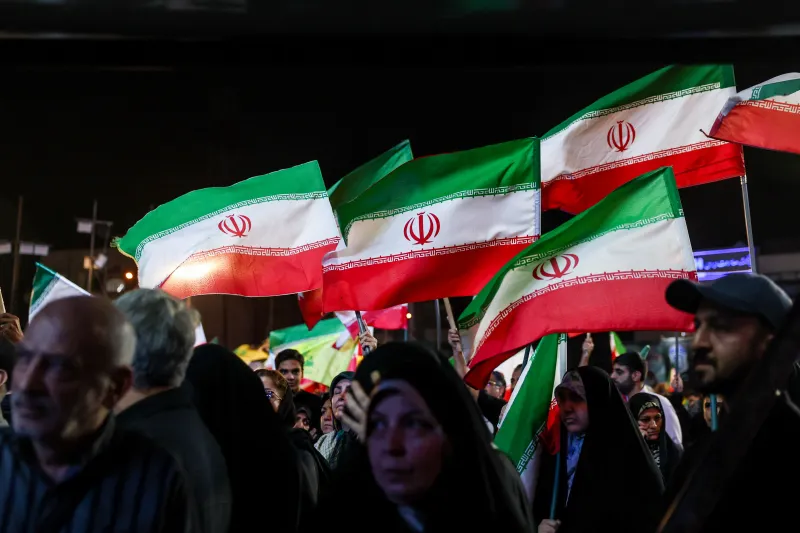
A profound exploration of Iran’s grand strategy, demonstrating how Tehran utilizes systemic conflict and the closure of the Strait of Hormuz as calculated instruments to force a multipolar order and dismantle long-standing Western economic dominance.
The geopolitical landscape of the Middle East is undergoing a tectonic realignment as Tehran intentionally shifts its grand strategy away from traditional diplomatic stabilization toward sustained, calculated geopolitical friction. This deliberate pivot ensures that the strategic doctrine of a forever war becomes an active instrument of statecraft rather than a symptom of systemic failure. By institutionalizing conflict, the Islamic Republic aims to systematically erode Western hegemony, project unyielding regional power, and dismantle the established security architecture of the Persian Gulf. Through this lens, a forever war serves not as a desperate survival mechanism, but as a sophisticated, revisionist vehicle designed to force global powers to permanently accommodate Tehran’s sovereign demands.
Iran Embraces a Forever War: Structural Geopolitical Friction
For the last two months, Iran and the United States have carried out fitful, unsuccessful peace negotiations. After striking a very shaky ceasefire agreement at the beginning of April, officials from both countries have traded- and then rejected- long-term proposals. They have announced that they are nearing some kind of deal, and then hit each other with a volley of drones and missiles. “I don’t care if they’re over, honestly,” Trump said on Monday, when asked about the reports that Iran was cutting off talks. The discussions, he declared, had “started to get very boring.”
Tehran and Washington may still reach some kind of agreement in the coming months; neither side’s top leaders seem to be itching for a return to intensive combat (although within Iran, some senior officials are). But even if they do reach a deal, Iran and the United States will remain locked in a broader conflict, trading barbs and perhaps kinetic attacks.
That is, in part, because the countries remain far apart on their core disputes. Washington is still demanding that Tehran completely dismantle its nuclear enrichment program, surrender all enriched uranium, end support for regional allies, and reopen the Strait of Hormuz. Iran, however, has repeatedly refused to give up on enrichment. It says it will probably consider Washington’s other demands only after the United States recognizes Iranian control over the Strait of Hormuz, compensates Iranians for wartime damages, ends Israel’s war in Lebanon, and unfreezes Iranian assets.
But there is another reason why the sides won’t make real peace: Iran has concluded that conflict is preferable to diplomacy. The war, after all, seems to be helping Tehran increase its international power. By striking Arab states that host American bases, Iran has succeeded in driving a wedge between U.S. officials and their Persian Gulf partners, who desperately want a lasting settlement. By closing the Strait of Hormuz, it has forced a collection of countries around the planet to acknowledge its power and negotiate over the fate of their ships. Previous agreements with the United States, meanwhile, have always unraveled.
The Islamic Republic’s strategy, then, is not merely to survive and outlast the United States, as is commonly assumed. The country is not even really trying to resolve its disputes with Washington. Instead, it wants to fundamentally alter how Tehran is dealt with by the United States, U.S. allies, and indeed, the wider world. It aspires to be a pole in a multipolar order, and it believes that the war is helping it achieve that goal.
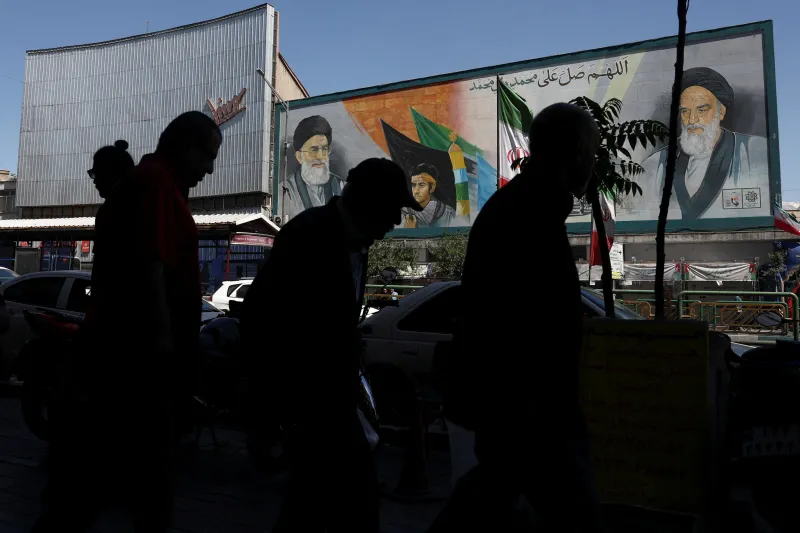
Regional Hegemony and Iran Embraces a Forever War
UNDER THE INFLUENCE
The Islamic Republic is no stranger to conflict with Washington. Indeed, from its earliest days, the regime has centered much of its foreign policy on confronting the United States. But traditionally, the country’s internal political competition constrained that impulse and periodically compelled the regime to pursue diplomatic openings.
This pattern culminated in 2015, when Iran’s pragmatic president, Hassan Rouhani, leveraged his landslide electoral victory to negotiate a nuclear deal with the United States, despite Iranian Supreme Leader Ali Khamenei’s objections. But the collapse of that agreement, prompted by the United States’s withdrawal, and the subsequent wars with Washington have shifted the internal balance of power almost entirely toward leaders who see greater danger in compromise than in confrontation. After the United States began its protracted bombing campaign on February 28, in particular, the regime’s more cautious voices either largely went quiet or joined the ranks of the hard-liners.
As a result, the hard-liners are now firmly in command of the country. They already feel vindicated by the war’s outcomes. Many, for example, have spent decades threatening to close the Strait of Hormuz and strike at infrastructure across the region. But they were held back by more pragmatic colleagues, who feared that doing so would invite massive military retaliation and thus prompt domestic backlash. Yet when Tehran finally followed through after the United States and Israel killed Khamenei and devastated military and civilian infrastructure across the country, many Iranian elites and citizens cheered. The Islamic Republic, meanwhile, quickly gained leverage. Arab countries, fearing economic calamity, have pushed the United States to seek peace.
Asian countries, in desperate need of Persian Gulf oil and gas, have pleaded with Iran to offer their ships safe passage. Even European leaders have struck a more accommodating tone. German Chancellor Friedrich Merz—who previously praised Israel for doing “our dirty work” against Iran—has distanced Berlin from the operations and stated that Tehran has “humiliated” Washington. French President Emmanuel Macron has ruled out any military deployment to the region. Multiple European officials have opened channels with their Iranian counterparts. Norway’s deputy foreign minister has even visited Tehran in search of a resolution.
This outcome isn’t surprising. Arab states do not like being attacked, and the Strait of Hormuz is a major transitway for all kinds of essential goods, including fossil fuels. Its closure has thus helped eliminate what was a decades-long asymmetry between Tehran and Washington. Previously, the latter held a clear advantage in economic warfare because it could use unilateral sanctions and control of the dollar to obstruct Iran’s access to the global economy.
The former, meanwhile, could do almost nothing in response. But now, it can—and it has. By shuttering the strait, Iran has ensured that American consumers will feel economic pain whenever they go to the gas pump and the grocery store. Iranian leaders believe that, in time, these domestic economic pressures will force Trump to relax sanctions enforcement. The closure, of course, also harms the rest of the world. But for Tehran, this is all the better, as it could compel other countries to seek bilateral trade and financial arrangements with Iran in exchange for access to the strait—circumventing U.S. sanctions.
There is a final reason why the Islamic Republic sees the war as helpful. In its view, the conflict will force Washington to reconsider its assumption that Tehran is weak. The United States, after all, has suffered more than the White House has let on; according to U.S. news reports, Iranian strikes on American bases were surprisingly effective and damaging, and even managed to disable expensive missile defense radars. Iran’s missile arsenals are also more intact than American officials have claimed. Iran has nonetheless suffered serious blows, and the U.S. and Israeli militaries remain far more sophisticated than Tehran’s armed forces.
But the Islamic Republic has concluded that no matter the prowess of its adversaries, neither Israel nor the United States can defeat Iran on the battlefield. The prolonging of the war, then, is a way to prove that Washington’s earlier assessment of Iran—that its military was hollowed out and that the regime was on the brink—was wrong.
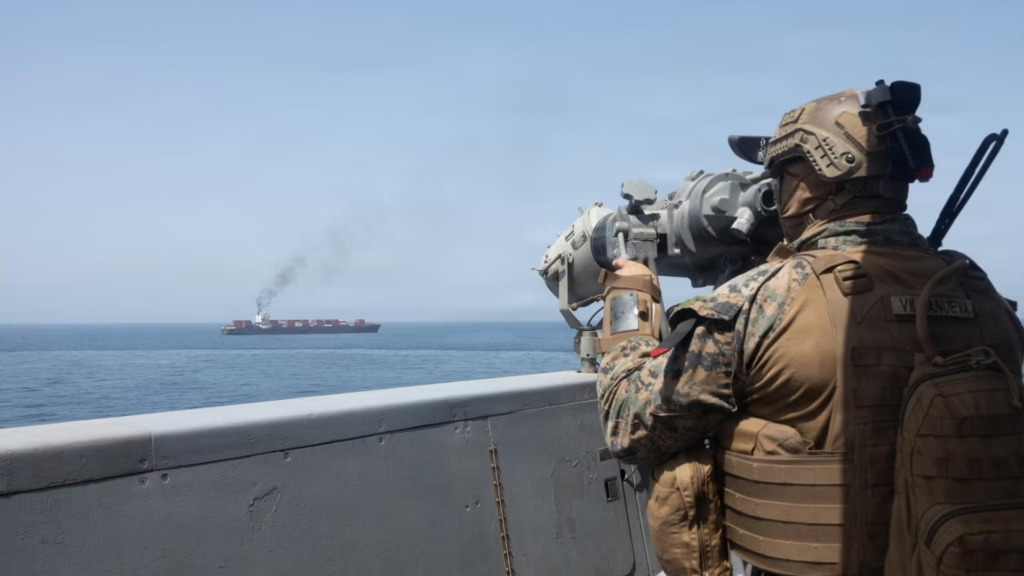
Countering Adversarial Assumptions: Iran Embraces a Forever War
PLAYING WITH FIRE
Iran’s hard-line elites may broadly agree about the need to keep confronting Washington. But they do have some tactical disagreements, particularly over just how far Tehran should go in retaliating against U.S. strikes. Some policymakers argue that Iran has been too restrained during the post-ceasefire period, and that instead of launching a few missiles and drones at American bases in the Middle East, it should be targeting American soldiers directly and continuously.
Only body bags, in their view, will force Washington to recalculate the true cost of continued confrontation. Others contend that Iran should be more focused on defending Hezbollah in Lebanon, which remains under attack from Israel, including by hitting more U.S. assets in hopes of forcing Washington to rein in its partner. Iran’s elites also occasionally squabble over how to complement military pressure with selective diplomatic engagement.
These debates play out openly on state-controlled television and at pro-government rallies, where some figures accuse others of being excessively eager for negotiations. Such accusations grow stronger with each round of unsuccessful talks, whose repeated failure has prompted Iranians to become even more suspicious of Washington. In this environment, it is becoming increasingly costly to publicly support diplomacy.
Iran Embraces a Forever War: Strategic Leveraging of Attrition
Iran does still have some politicians who worry that the country’s leadership is overplaying its hand and who favor making concessions to reach a settlement. They have warned that the continued disruption of global energy markets may unite much of the world against Tehran rather than against Washington; that the United States retains tools, including cyberattacks, it has not deployed that could prove far more paralyzing; and that the resumption of fighting could thus inflict decades worth of damage to Iranian infrastructure. The war, after all, has already devastated Iran’s steel, gas, and petrochemical industries, generating painful domestic shortages.
But Tehran has concluded that these risks will be present even if it tries to forge a grand settlement. In fact, they believe that compromise will only imperil Iran further. Israel’s and Washington’s June 2025 and February 2026 attacks both came in the midst of talks, and so many regime officials believe that the United States sees Iranian outreach as a sign of weakness. The Islamic Republic’s leadership has reoriented its strategy accordingly, using negotiations as a tool for managing warfare.
It engages in talks mostly to demonstrate to other states that it is serious about diplomacy, thereby lowering international pressure, and it does so to control the tempo of conflict. It refuses, however, to make offerings that would diminish its leverage or signal vulnerability. In this sense, it has effectively modeled its approach to diplomacy on what it sees as Washington’s own—namely, be unpredictable, negotiate only from a position of strength, and insist on major giveaways while offering very few concessions. That is why Iranian elites have mused about returning to war and refused to entertain Washington’s demands until the U.S. officials meet theirs.
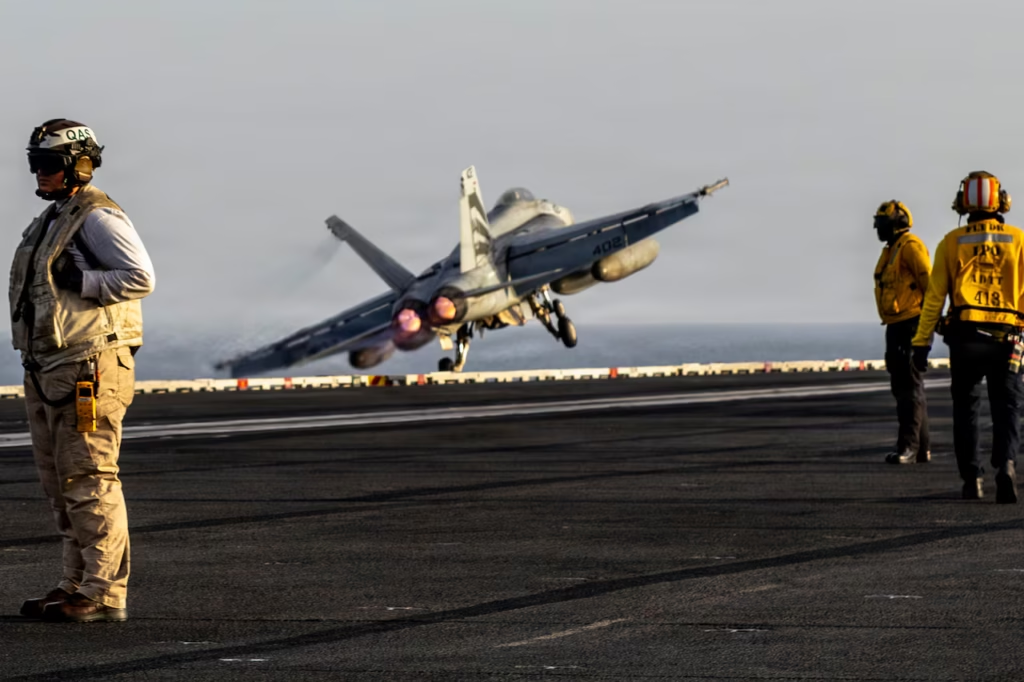
Global Economic Cohesion Midst Iran Embraces a Forever War
The result is a zero-sum dynamic that makes true peace nearly impossible, at least for now. The regime believes that confrontation strengthens its hand. It is happy to withstand economic pain if it can control the strait. The United States, by contrast, has so far refused to leave the strait in Iranian hands. The world, then, might settle into a new normal where the United States maintains some kind of blockade of Iran, Iran maintains some kind of blockade of the strait, and both sides perpetually engage in skirmishes and perhaps return to outright conflict.
Such an outcome will be terrible for Iran’s 90 million residents, who now face a continued collapse in their living standards. It will also be bad for the billions of people across the world who depend on the Strait of Hormuz for oil, gas, and fertilizers. But as far as the regime is concerned, it is not bad for Iran’s government. The Islamic Republic remains functional, operational, and cohesive. It has demonstrated that it can withstand extreme amounts of pressure. Most of all, it has proved that it can single-handedly weaken the global economy—and that it is thus a force to be reckoned with.