
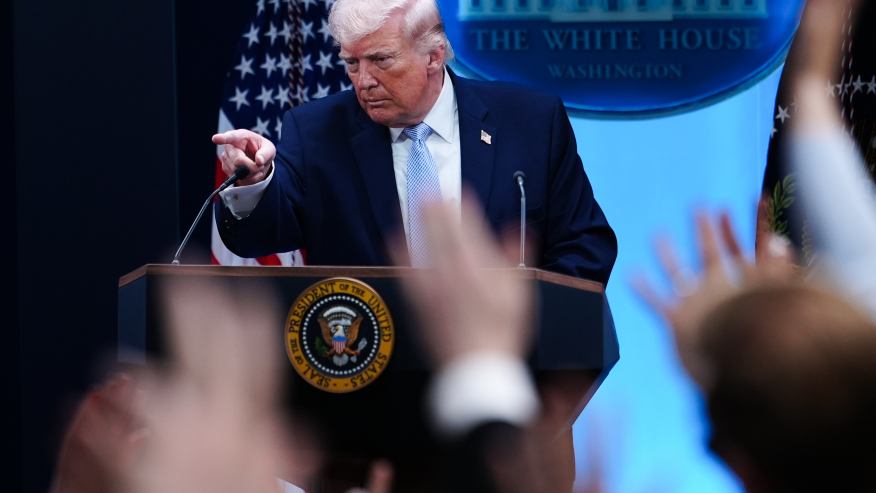
A rigorous critique of the current administration’s Middle East posture, demonstrating how premature ceasefires and an over-reliance on standard maritime blockades fail to counter Tehran’s deeply entrenched, multi-theater asymmetric warfare strategy.
The premature suspension of strategic kinetic operations against Tehran has left Washington mired in an asymmetric deadlock, exposing a fundamental disconnect between transactional diplomacy and the realities of unconventional regional warfare. To establish a position of absolute geopolitical dominance, U.S. strategy must shift from a hyper-focus on maritime blockades toward the systematic dismantling of localized regime enforcement structures, ensuring that tactical superiority on the battlefield is not bartered away for a fragile and self-defeating diplomatic pause.
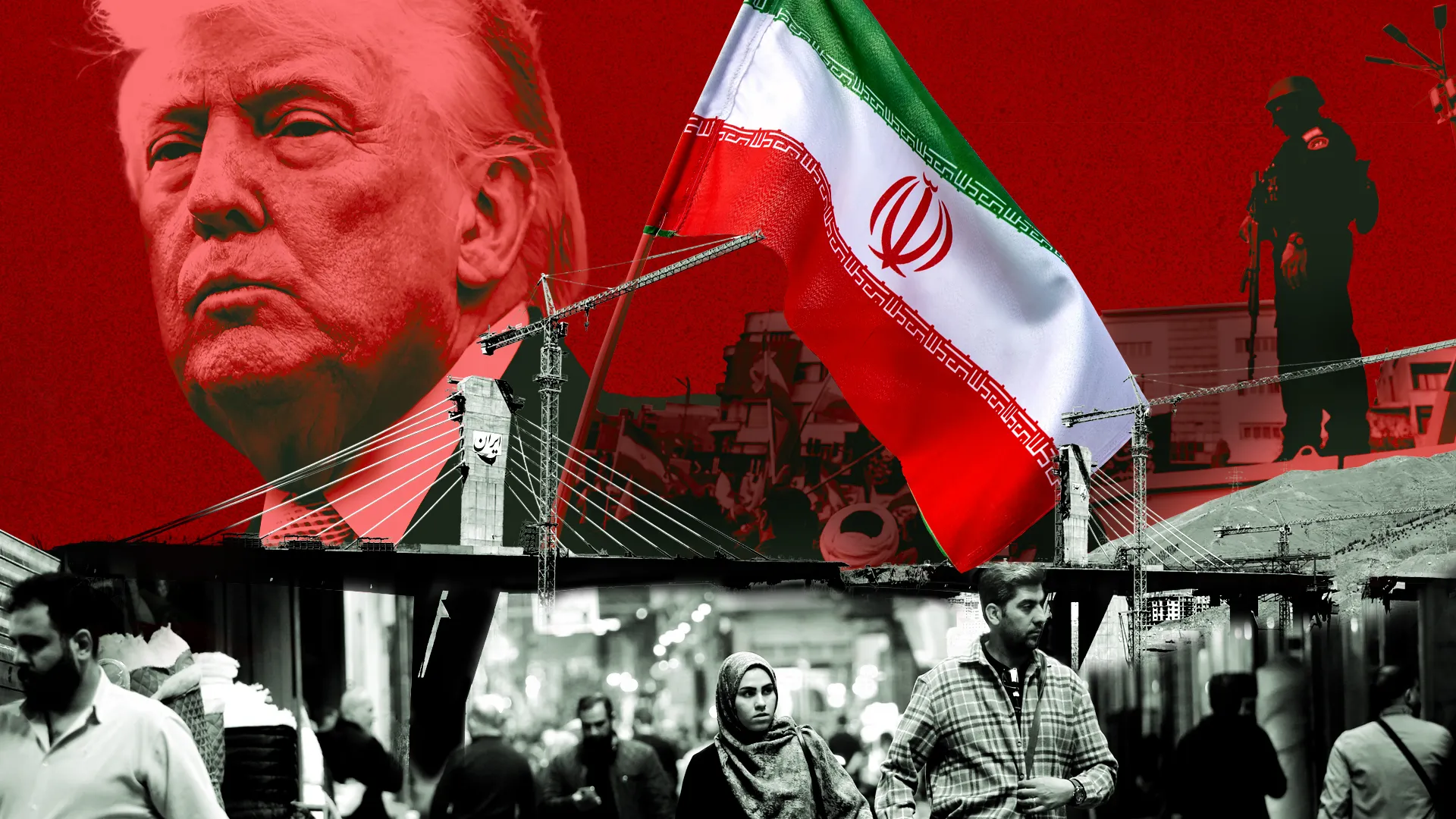
Trump simply doesn’t know how to win
The day the ceasefire began in Iran is the day President Trump’s war strategy began to fall apart.
U.S. and Israeli forces were crushing Iran’s military and were poised to begin systematically targeting the Islamic Revolutionary Guard Corps and the Basij, Iran’s street-level domestic security force and regime enforcers.
Then came Trump’s order to stand down. Operation Epic Fury came to a crashing halt, and the White House and the Persian Gulf have been mired ever since in a ceasefire that is on a road to nowhere.
Iran needed the breather. As Gen. Dan Caine, the Chairman of the Joint Chiefs of Staff, briefed reporters on April 8, U.S. forces had destroyed “80 percent of Iran’s air defense systems” and more than 150 Iranian ships “are at the bottom of the ocean.”
Countering Asymmetric Networks with Trump simply doesn’t know how to win
He also assessed that the U.S. had destroyed “95 percent” of Iran’s naval mines. Equally notable, Caine said, “We’ve devastated Iran’s command and control and logistical networks, destroying more than 2,000 command and control nodes and degrading their ability to target U.S. and friendly forces.”
Tehran was reeling. Yet, as we have witnessed, Trump’s premature ceasefire gave Brig. Gen. Ahmad Vahidi and his fellow hardliners time to regroup.
Consequently, over the last ten days, Iran was able to fire 20 ballistic missiles at Israel, strike the U.S. base at Ali Al Salem Air Base in Kuwait, down a U.S. AH-64 Apache helicopter in the Strait of Hormuz, and on Wednesday, launch 21 ballistic missiles at U.S. forces stationed in Kuwait, Bahrain and Jordan.
Iran’s military, despite Trump’s assertion Wednesday on Truth Social, is not a “complete and total mess.” Nor, as the president claimed, has Iran’s military been “completely defeated.”
Regional Escalation Targets Trump simply doesn’t know how to win
Tehran, whether Mr. Trump fully grasps it or not, has learned to fight the U.S., Israel, and its Gulf state allies on an asymmetrical basis. In that regard, a traditional air force, navy or ground army is not required.
Trump, simply put, does not know how to defeat Iran’s asymmetric war against him. Plus, he is failing to understand how the Iranian regime is using kinetic tools on a regional basis to gain leverage in the ongoing peace talks.
We have described that approach as a three-ring-circus. Mining the Strait of Hormuz is the center ring or main act. Limited ballistic missile and drone strikes against the U.S. and its allies in the region is the second ring.
The third? Linking the survival of Hezbollah, the crown jewel of Iran’s axis of resistance against Israel, to the ever-elusive deal being negotiated.
Trump simply doesn’t know how to win Strategic Blind Spots Exposed
Iran’s hardliners keep expanding the playing board, which now includes Lebanon, whereas Trump continues to be hyper-focused on reopening the Strait of Hormuz and waiting for his economic blockade of Iran’s western and southern seaports to work.
He reiterated that point yet again on Wednesday when he claimed on Truth Social that his blockade was “the most successful Blockade in the history of Naval Warfare.” Iran, however, appears unmoved.
Perhaps Trump’s biggest blind spot when it comes to winning in Iran is that he fundamentally does not understand his enemy. This is classic Sun Tzu “The Art of War” territory, as cliché as that sounds.
Trump repeatedly claims that he has effected regime change in Iran. But he has not. The faces changed when Ayatollah Ali Khamenei, Ali Larijani and other top regime leaders were killed on the opening day of the war, but the regime’s militant ideology is the same. In reality, Iran’s regime has only become more entrenched.
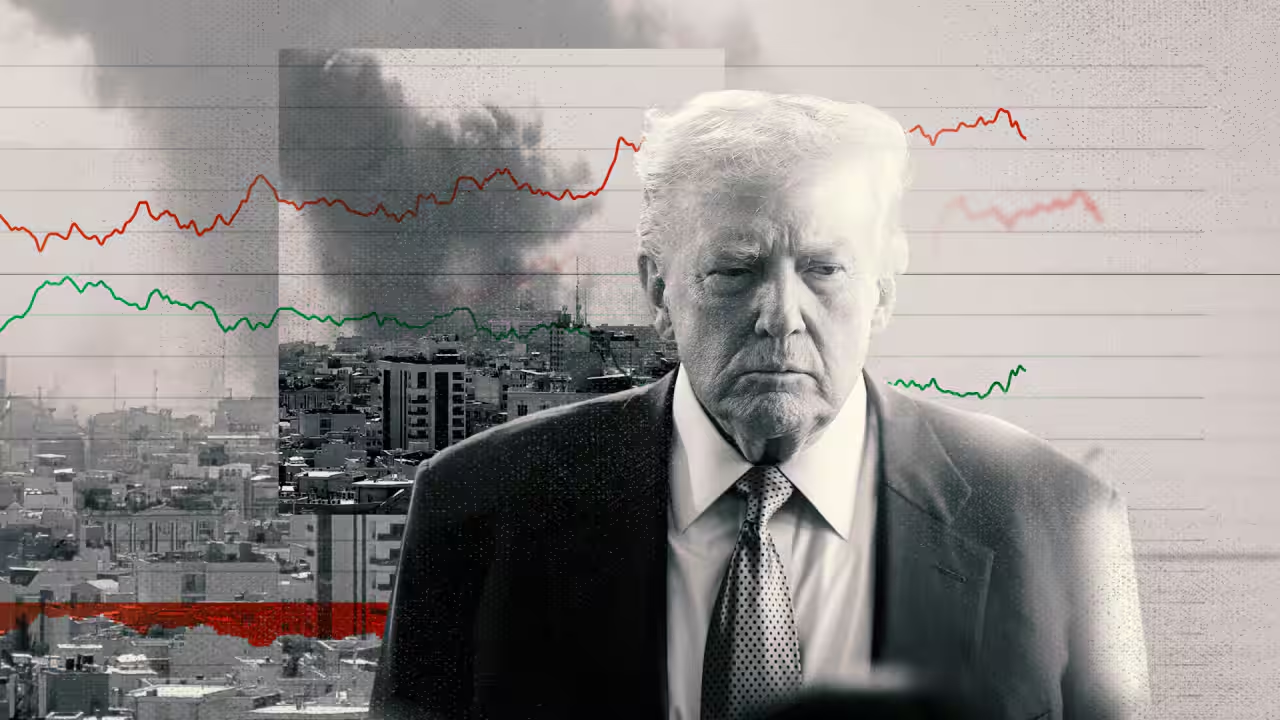
Ideological Entrenchment Defeating Trump simply doesn’t know how to win Paradigm
Most alarming, however, is that Trump seems oblivious that many of his comments, statements, and posts on Truth Social are perceived by Iran’s hardliners as signs of weakness.
Initially, perhaps, Trump’s strategic ambiguity played an effective role in keeping Iran off-balance. Yet now it is becoming self-defeating, and it is only encouraging Vahidi and the hardliners to double down on their negotiating stance.
Yes, Trump’s statement on Wednesday that he is “gonna hit [Iran] hard again today” is a step in the right direction. However, unless the U.S. directly targets the Islamic Revolutionary Guard Corps and the Basij to effect real regime change, it is not going to lead to victory.
On the day the cease-fire began, the U.S. under the leadership of Adm. Brad Cooper was getting closer to that goal. Now, 65 days later, winning in Iran seems a bridge too far for Trump.
It is time for him to stop trying for a deal the Iranians don’t want and instead to defeat them for real — not just for his own sake, but for the entirety of the Middle East.