
Evaluating presidential declarations about wartime endings requires systematic verification over reflexive belief. Trump’s claims about ending the Iran war demand disciplined analytical frameworks distinguishing tactical maneuvers from strategic breakthroughs. Without documentation, assertions remain unproven.
Evaluating presidential declarations about wartime endings requires systematic verification, not reflexive belief. When Donald Trump announces he has ended the Iran war, the gap between rhetoric and reality demands disciplined analytical frameworks. Understanding how to judge Trump’s claims about the Iran war starts with distinguishing tactical maneuvers from strategic breakthroughs. Without verifiable documentation, Trump’s claims remain exactly that — unproven assertions awaiting factual confirmation.
Trump’s claims face verification hurdles
The world whiplashed Thursday between an apparently imminent, dangerous escalation of the war in Iran and a claim of peace in our time.
At least, that’s according to President Donald Trump.
In the morning, the commander-in-chief was threatening to invade Iran’s Kharg Island oil exporting hub — an operation that would risk many American lives.
But hours later he proclaimed he’d clinched a “great” deal to end the war that will mean the Islamic Republic never gets a nuclear weapon.
Trump argued that his threats — and latest air strikes on Iran — had effectively bombed it into a negotiating climbdown.
“I don’t know if you heard, but we ended the war with Iran today,” Trump told a tele-rally for the Georgia governor’s race.
The truth, however, may be a little more complex.
A verifiable agreement to end Iran’s nuclear ambitions that secured Iranian compliance would count as a historic breakthrough. It would end a war that has rocked the Middle East and sparked an energy crisis that sent the global economy reeling and pushed up gasoline prices and inflation in the United States.
It would grant Trump a way out of a war that was supposed to last weeks when he started it in February, but that has dragged on into summertime and pummeled his domestic political standing.
Most importantly, such a deal could save the lives of American service personnel, Iranian and Israeli civilians, and others caught in the regional crossfire.
But to put it mildly, Trump has hardly been a reliable narrator of the war. He’s proclaimed an agreement was imminent nearly 40 times. He’s repeatedly claimed Iran has caved to his demands even as the Islamic Republic’s defiance has demonstrated the opposite.
So the world will await further details of the deal with due skepticism — even as Trump predicts a deal-signing ceremony could take place in Europe soon.
“At this point, there is no reliable evidence that we have a deal and if there is a deal it is still not clear if that deal will stick,” Seth Jones, president of the Defense and Security Department at the Center for Strategic and International Studies, told CNN’s Erin Burnett.
In the absence of such evidence, many will conclude that the president, a master of branding, is overselling the agreement.

Scrutinizing dubious Trump’s claims
‘This isn’t a final deal to end the war’
The White House is yet to release detailed text of the proposed memorandum of understanding. But one likely scenario is that negotiators have an understanding with Iran to reopen the Strait of Hormuz in exchange for the suspension of a US naval blockade. This would come with undertakings to push the most critical and difficult issue — the fate of its nuclear program — to future talks.
Frank Kendall, who served as secretary of the Air Force during the Biden administration, told CNN’s Jake Tapper on Thursday that Trump’s claims must be taken with “grain of salt.”
Kendall added: “It’s really important to realize that this isn’t a final deal to end this war. This is an extension of the ceasefire, presumably for 60 days or so, while the negotiations continue on the nuclear program in Iran, which is the reason we went into this — ostensibly, anyway.”
Some conservative Republicans are also skeptical, including Fox News commentator Mark Levin. “It’s difficult to discuss an MOU that is not public – the precise terms of which we do not know, “ Levin wrote on X. “If it is done and will be signed in 48-72 hours, let’s see it.”
Even if a memorandum of understanding is confirmed and signed, it will raise a new set of questions.
First, Trump will be judged against the exhaustively negotiated, intricately detailed and internationally endorsed pact to verifiably end Iran’s nuclear program negotiated by President Barack Obama’s team. Trump ripped up that deal in 2018, even though his first-term administration certified that Tehran was complying.
And ultimately, he must answer this question: Has his war, which killed 13 American service personnel, destroyed millions of dollars of US military hardware and pitched the global economy into crisis, left Americans safer or better off?
How to assess Trump’s claims
Benchmarks for a possible deal
While the president is skilled at shaping political narratives, the real-world circumstances of the war and and an implacable adversary mean the proposed deal’s true character will soon come to light.
When the full details are released, Trump will face a set of questions and benchmarks that will test whether it’s genuine and likely to last.
Is this merely a deal to reopen the strait and end the blockade or does it get to the substance of the underlying nuclear question?
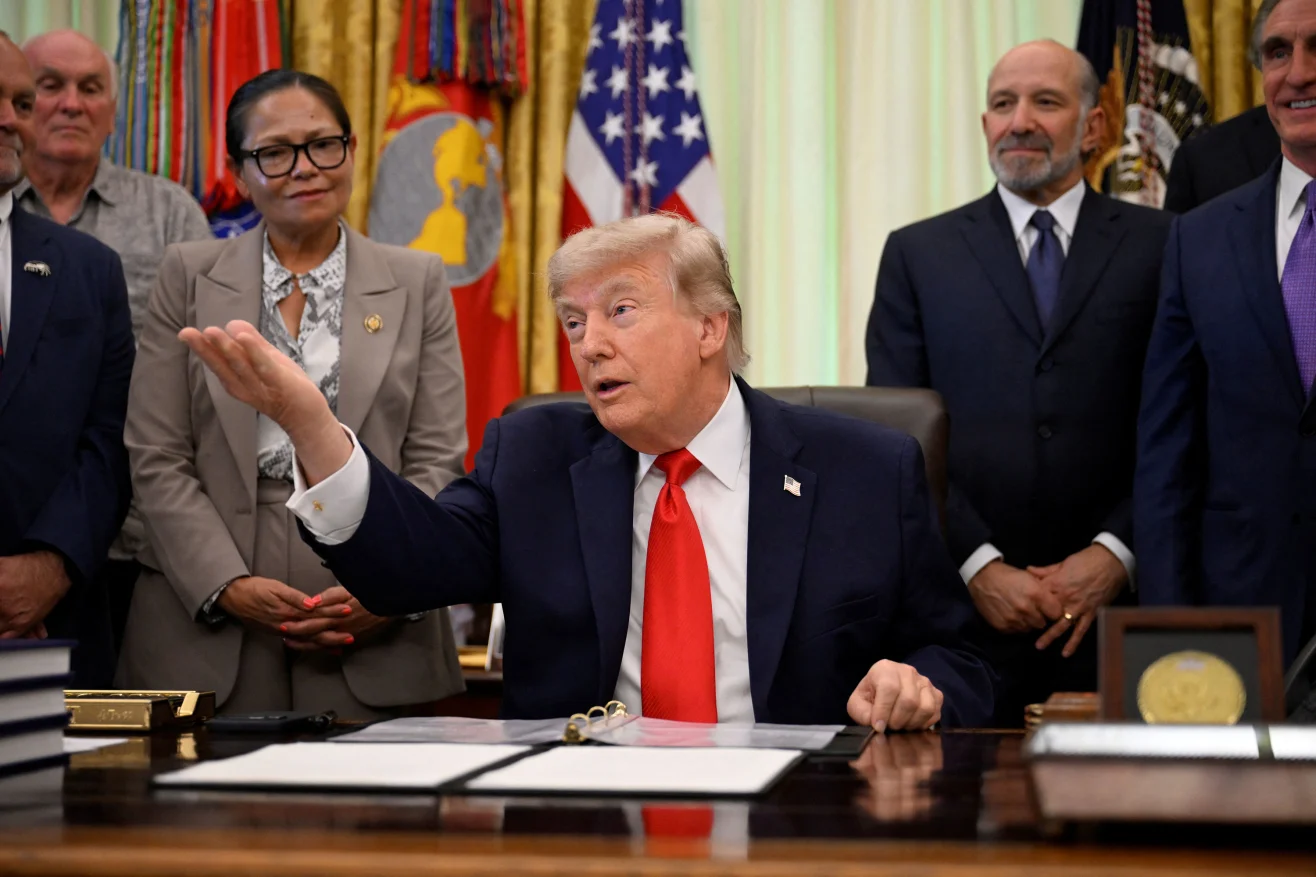
Trump set off alarm bells when he referred to the proposed memorandum of understanding on Thursday in the Oval Office as “a little conceptual.” This framing implies the agreement may be superficial and far from finalized.
The scope of the deal is also important.
Opening the strait would come as an enormous relief to regional governments, oil producers and global consumers. Ending the US blockade might mitigate some of the grinding hardship enforced on Iran’s civilians by their repressive rulers.
But such a deal would represent only a turning-back of the clock to the start of the war.
And it would not negate an important Iranian strategic breakthrough — its demonstrated new capacity to close the strait and strangle the global economy at any moment.
How strong is the language on limiting Iran’s nuclear ambitions?
An agreement to talk about Iran’s nuclear program would hardly be a “great deal.” History shows such talks would likely drag on for weeks or months with no guarantee of success.
They’d include intricate haggling over the verification of any Iranian commitments not to enrich uranium.
The issue of removing Tehran’s stocks of highly enriched uranium that it produced after Trump trashed the Obama deal could scuttle the talks at any time. Iran has long said it won’t produce a nuclear weapon. So merely obtaining its signature on a document to that effect would not mean much, however Trump might try to spin it.
The White House’s lack of specificity is already stirring skepticism on Capitol Hill.
“I want to read it,” said Louisiana Sen. John Kennedy, when asked by CNN’s Kasie Hunt for his reaction to Trump’s announcement of a deal. “I trust the … political leadership in Iran like I trust the rest-stop bathroom.”
Republican reaction to eventual details of the memorandum will be important. A GOP backlash to a previous language apparently prompted Trump to send it back to Iran with edits.
Trump’s claims face financial tests
How much money or sanctions relief is Iran getting to move forward?
Iran’s economy was already in dire trouble before Trump laid down a blockade of its ships and ports. Years of sanctions had pulverized its economy. It has therefore demanded a substantial financial incentive to engage diplomatically. CNN reported in May that Tehran wants the immediate unfreezing of billions of dollars in overseas banks.
Any impression that Iran is buying off Trump would be politically disastrous for the president. After all, he’s endlessly criticized the financial concessions extracted from Obama in return for freezing its nuclear program. It would also be a dealbreaker for GOP senators whose help the president would need to lift some sanctions in order to solidify a final deal.
“I also want to know how much money we’re releasing to Iran,” Kennedy said.
Will Israel be on board?
Trump launched the war in partnership with Israeli Prime Minister Benjamin Netanyahu. But their interests have diverged in recent weeks. Trump forced Israel to limit its attacks on Iran-backed Hezbollah in Beirut that were threatening prospects for a deal.
The two leaders spoke again on Thursday, and an Israeli readout artfully did not criticize Trump but implied that the initial agreement would not satisfy Israel’s most critical interests.
Netanyahu “expressed his appreciation” to Trump for his commitment that a final agreement would remove Tehran’s enriched uranium, dismantle its nuclear infrastructure, limit missile production and end support for regional proxies.
Israel’s view that Hezbollah forces embedded in Lebanon and Iran’s determination to revive the militia as a powerful arm of its regional power almost torpedoed US-Iran talks last week.
It could still do so at any time in future.
Reality contradicts Trump’s claims
Does Iran share Trump’s view of progress?
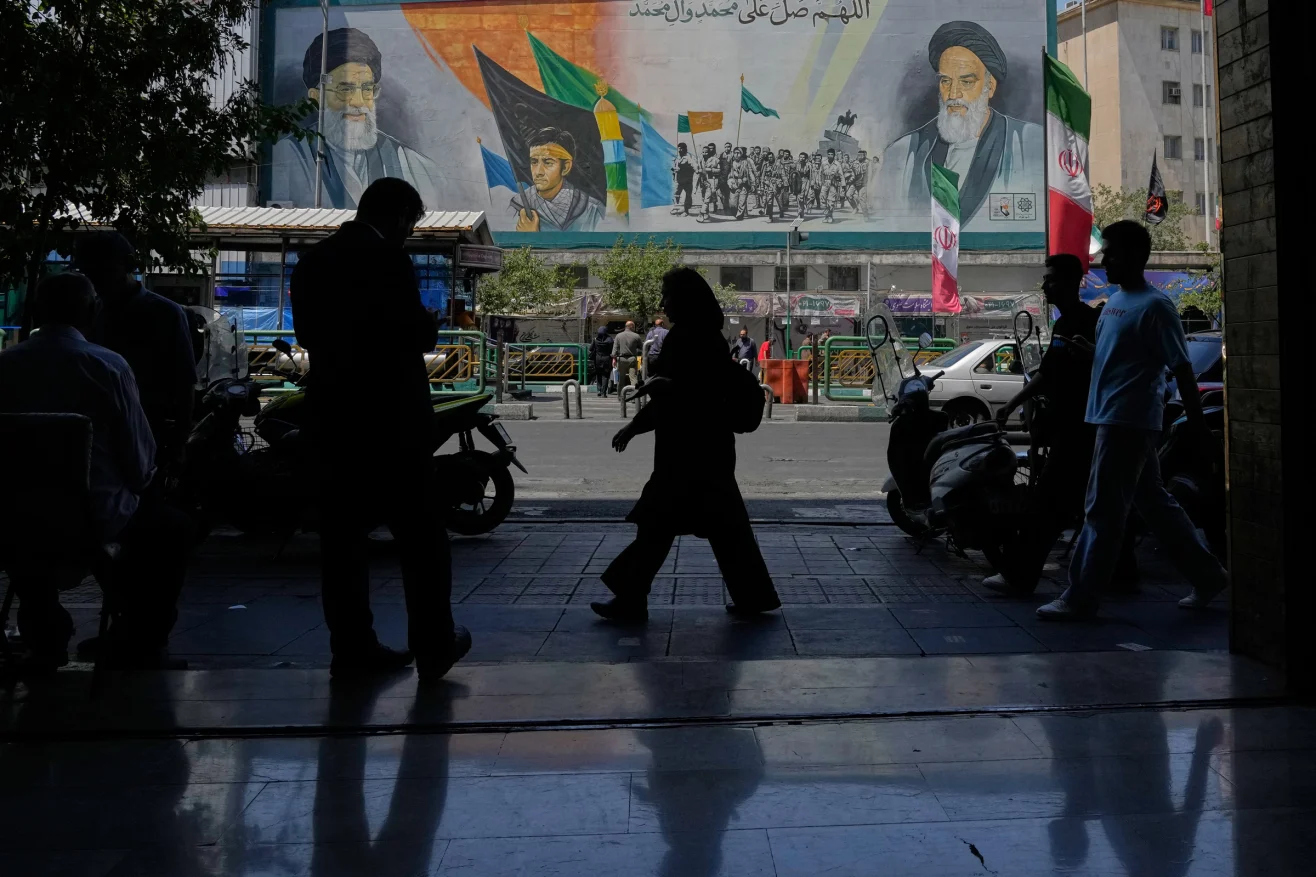
Trump suggested Thursday that Iran’s new supreme leader had signed off on the deal.
But there is little evidence to back up Trump’s claims that he’s negotiating with more “rational” regime leaders following the deaths of multiple top officials in US and Israeli raids.
So far, US attacks have tended to deepen the regime’s resistance, despite Trump’s claims on Thursday that his latest air strikes had forced it to offer concessions.
There’s no sign that has changed.
In a first reaction to Trump’s upbeat predictions that a deal is close, Iran’s Foreign Ministry spokesperson Esmail Baghaei told Iran’s state-run news agency IRNA that such reports were “merely speculation.”
He added: “So far, Iran has not reached a final decision regarding any agreement,” he said.
In the end, what will matter is not what Trump says the deal will entail, but whether Iran signs and complies with it.
Despite the president’s bullishness on a wild Thursday, that moment still seems a long way away.