
China’s supply of advanced MANPADS to Iran neutralizes low-altitude Western air operations, reshaping Middle Eastern defense dynamics and forcing high-cost standoff tactics without triggering direct military conflict with the United States.
The strategic landscape of the Persian Gulf is undergoing a profound structural transformation as asymmetrical short-range defense networks erode established Western air dominance. As intense aerial operations dismantle centralized command nodes and fixed surface-to-air missile installations across the Iranian theater, new vectors of China Iran military support provide critical operational resilience to threatened defensive infrastructure.
Recent transfers of low-altitude defense platforms demonstrate how covert logistical channels through Central Asia bypass traditional surveillance mechanisms to reinforce local forces during high-intensity operational campaigns. This targeted form of China Iran military support deliberately avoids heavy strategic weapons systems, choosing instead to supply highly mobile, passive interceptors that operate outside standard electronic detection spectra.
Consequently, Western strike packages encounter an increasingly opaque threat environment where low-altitude flight regimes face elevated operational risks from un-networked infantry cells. By stabilizing Iranian defensive viability without triggering direct superpower confrontation, such covert transfers complicate Western military planning while securing critical Eurasian transit nodes. Ultimately, these expanded defensive capabilities restrict Western operational freedom, reshaping long-term strategic calculations throughout the broader Middle Eastern security architecture.
How China Iran Military Support Reshapes Airspace
The quiet arrival of hundreds of Chinese shoulder-fired air defense missiles in Iran marks a decisive inflection point in the high-stakes confrontation between Washington and Tehran. As Iranian military infrastructure reels from months of unrelenting American and Israeli aerial bombardment, Beijing has intervened not with grand diplomatic summits or heavy battle tanks, but with portable, low-altitude lethality. This covert infusion of short-range air defense capabilities directly challenges Western air supremacy in the Persian Gulf, transforming what Washington envisioned as a swift campaign of air dominance into a fraught, asymmetric war of attrition.
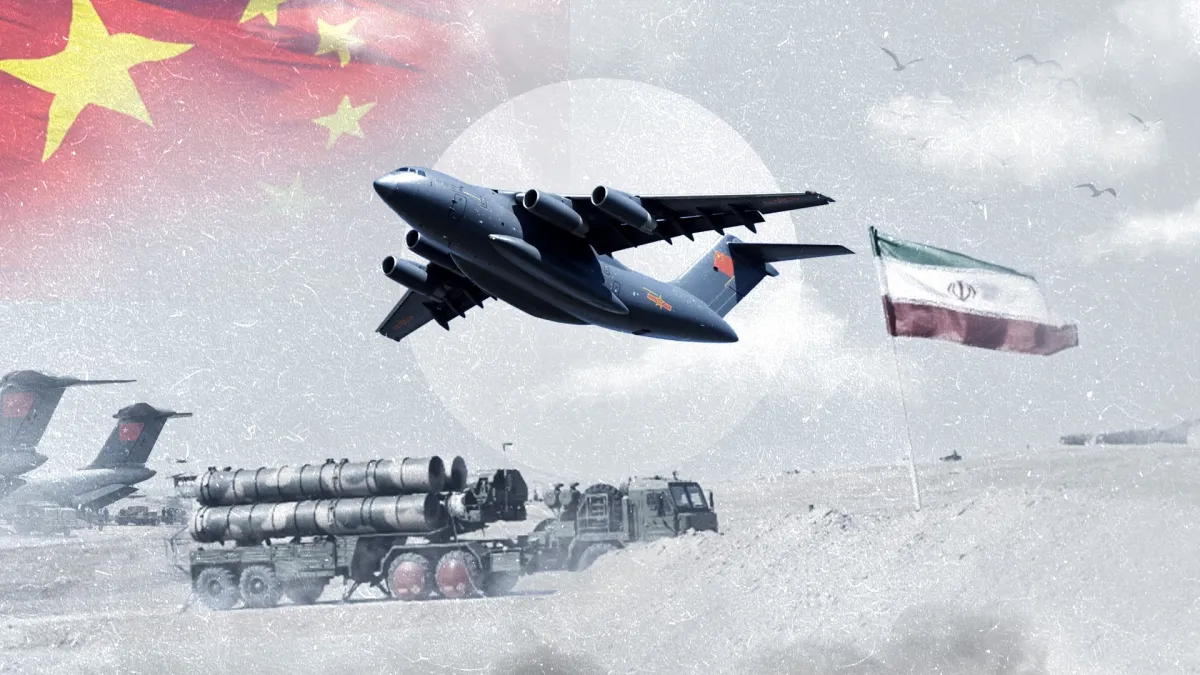
The procurement was quietly brokered through Zhongqing Baoshang International Investment, a Hong Kong-registered intermediary acting on behalf of its Beijing-based parent company, Zhong Qing Bao Shang Group. Transported via an integrated air corridor from Urumqi in western Xinjiang through Pakistani airspace, alongside supplementary overland rail connections through Central Asia, these systems are being deployed directly into the hands of Iranian regular forces and Islamic Revolutionary Guard Corps (IRGC) units.
Predictably, official channels in Beijing have maintained a posture of plausible deniability. The Chinese Foreign Ministry swiftly dismissed reports of the missile transfer as “completely groundless,” reaffirming China’s commitment to regional peace and conflict resolution. Yet behind this diplomatic shield lies a calculated strategic maneuver. By supplying defensive weaponry designed to destroy low-flying threats, Beijing balances its desire to avoid direct military confrontation with the United States while ensuring that Tehran does not suffer a catastrophic military collapse or forced regime change.
This re-armament comes at a critical juncture for Iran’s military command. Months of precision strikes using standoff munitions and Suppression of Enemy Air Defenses (SEAD) tactics have severely degraded Iran’s centralized radar networks and long-range surface-to-air missile (SAM) batteries, including its Russian-supplied S-300s and domestic Bavar-373 platforms. The sudden influx of hundreds of mobile, shoulder-fired interceptors provides immediate coverage for vulnerable, un-radar-networked gaps, allowing Iranian forces to build a resilient, decentralized low-altitude defensive umbrella around critical nuclear, military, and energy assets.
Dual-Spectrum Physics Powers China Iran Military Support
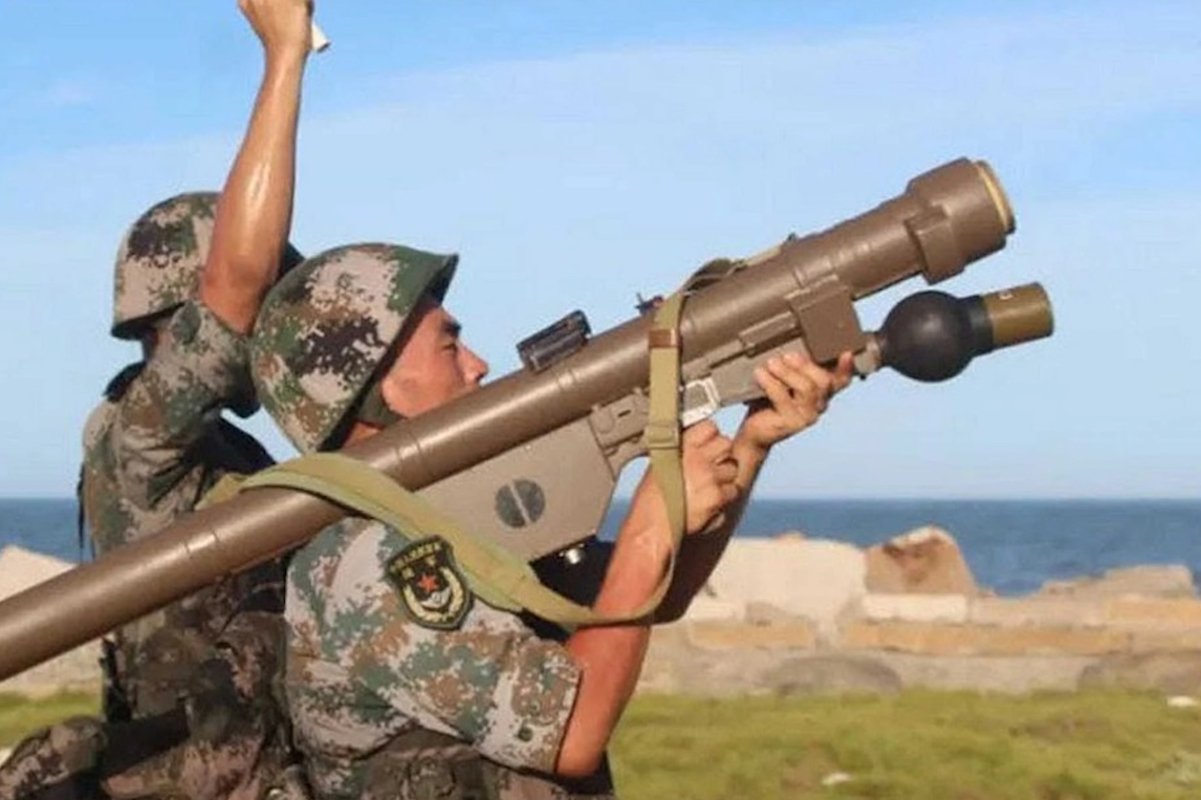
A Tactical Shield Built on Dual-Spectrum Physics The technological sophistication of the QW-12 and FN-16 represents a quantum leap over earlier generation shoulder-fired missiles, posing a direct threat to modern Western military aircraft. Developed by state defense giants CASIC and CASC respectively, these fourth-generation MANPADS were specifically engineered to bypass conventional infrared countermeasures (IRCM). Unlike legacy systems that are easily decoyed by magnesium pyrotechnic flares, the QW-12 integrates a mid-infrared dual-band digital filtering seeker, while the FN-16 utilizes a dual-color infrared and ultraviolet (IR/UV) rosette-scan quasi-imaging seeker. These advanced guidance suites evaluate target velocity, motion patterns, and spectral signatures simultaneously, enabling the missile to ignore decoy flares and lock directly onto the airframe of an incoming target.
Furthermore, both the QW-12 and FN-16 feature integrated laser and radio proximity fuzes alongside impact detonators. This capability allows the warhead to detonate within meters of low-signature targets, such as small reconnaissance drones, loitering munitions, and cruise missiles, that lack the thermal output required for direct kinetic impact by older seekers.
Equally crucial is the passive operational nature of these systems. Because shoulder-launched missiles do not emit electromagnetic radar signals, they remain invisible to airborne signal intelligence platforms and radar-homing anti-radiation missiles. Infantry teams operating in small, mobile cells can conceal themselves within urban structures or rugged mountainous terrain, acquire targets visually or via optical sights, and launch missiles within seconds. This creates a lethal, unmapped threat environment where attacking aircraft receive no electronic warning prior to missile ignition.
China Iran Military Support Faces Strategic Red Lines
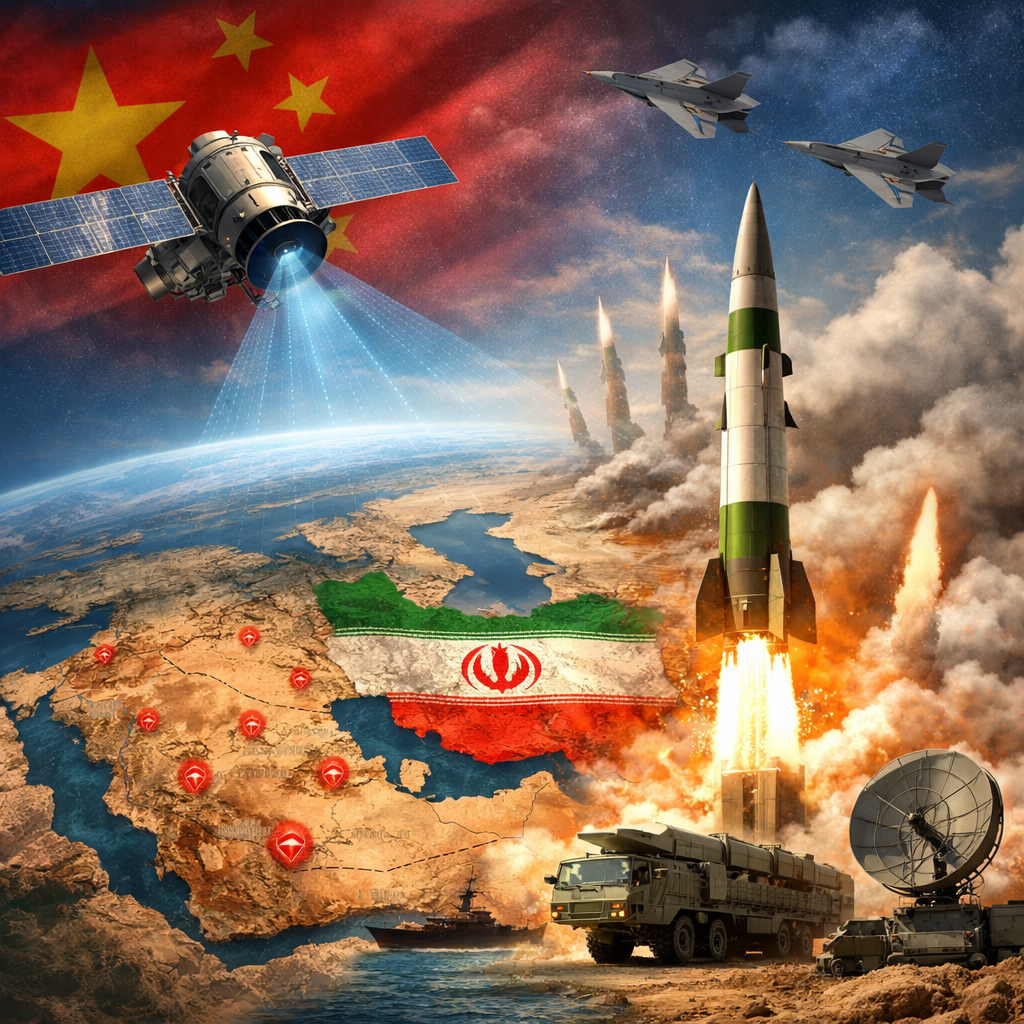
Beijing’s decision to limit its military supply to SHORAD (Short-Range Air Defense) platforms rather than long-range heavy systems like the HQ-9B reflects an acute awareness of strategic red lines. Transferring heavy SAM batteries would require massive naval or airlift operations impossible to conceal, inviting immediate U.S. sanctions on Chinese financial institutions or direct naval interdictions. Moreover, heavy systems require months of crew training and radar integration. In contrast, MANPADS require minimal operational training, carry a negligible logistical footprint, and allow Beijing to claim that its transfers are strictly defensive, aimed solely at short-range self-preservation rather than offensive force projection.
Cold Geo-Economics Drives China Iran Military Support
Beijing’s Cold Geo-Economic Calculus and the Mosaic Shift From a geopolitical perspective, Tiongkok’s military aid to Tehran is driven by hard-headed geo-economic necessity rather than ideological alignment. Iran serves as a vital anchor in Beijing’s Belt and Road Initiative (BRI) and remains a key supplier of non-petrodollar crude oil to Chinese industrial hubs. A complete military collapse of the Iranian state would leave the Middle East under unchallenged American hegemony, threatening Chinese energy security and land-based trade corridors across Central Asia. By keeping Iranian defenses operational, Beijing ensures that American military bandwidth, intelligence assets, and financial resources remain consumed in the Middle East, diverting strategic focus away from the Indo-Pacific theater.
Simultaneously, the war zone serves as an invaluable real-world proving ground for Chinese defense technology. Deploying QW-12 and FN-16 missiles against the world’s most advanced air force provides Chinese defense contractors with telemetry and operational data on how their IIR/UV seekers perform against cutting-edge Western Electronic Warfare (EW) suites and Directed Infrared Countermeasures (DIRCM). This operational feedback loop directly accelerates Beijing’s own military modernization efforts in anticipation of potential regional flashpoints.
Does China Iran Military Support Enable Decentralization
For Iran, the acquisition of these Chinese MANPADS accelerates a fundamental evolution in air defense doctrine: the transition to a “Mosaic Air Defense” architecture. Having learned that centralized command nodes and fixed radar sites are rapidly destroyed by Western precision strike packages, Tehran has decentralized its airspace protection. Without reliance on central radar nodes, these dispersed units present an elusive target network that cannot be systematically dismantled through standard SEAD/DEAD tactics.
Tactical Traps Created By China Iran Military Support
The Standoff Trap The operational consequences for the U.S. Air Force and Navy are immediate and severe. While Chinese MANPADS cannot reach high-altitude stealth platforms like B-2A bombers or F-35 fighters operating above 15,000 feet, they effectively seal off the low-altitude battlespace below 13,000 feet. This height restriction severely impairs Close Air Support (CAS) platforms such as A-10 Warthogs, AH-64 Apache attack helicopters, and Medium-Altitude Long-Endurance (MALE) drones like the MQ-9 Reaper. To survive, U.S. forces are forced to shift almost entirely to high-altitude standoff strikes utilizing expensive precision-guided munitions like Joint Standoff Weapons (JSOW) and Small Diameter Bombs (SDB).
This tactical shift creates a profound cost asymmetry. Furthermore, existing U.S. countermeasure technologies, such as laser-based DIRCM systems, face severe saturation risks when confronted by simultaneous salvoes of dual-spectrum IIR/UV missiles fired from multiple ambush vectors.
China Iran Military Support Accelerates Proliferation Risks
Perhaps the most chilling projection lies in the sphere of Combat Search and Rescue (CSAR) and regional proliferation. The presence of hundreds of untraceable, shoulder-fired missiles makes helicopter-borne pilot extraction missions inside Iranian territory extraordinarily hazardous, creating the constant specter of downed crews and political hostage crises.
Moreover, the potential leakage of these fourth-generation MANPADS to non-state allies within the “Axis of Resistance”, including Houthi forces in Yemen or militias in Iraq and Lebanon, threatens to extend this low-altitude danger zone across vital global maritime choke points. Ultimately, China’s delivery of MANPADS to Iran has quietly redefined the parameters of the conflict, ensuring that even without air superiority, Tehran can impose a crippling tax on Western airpower for the foreseeable future.