
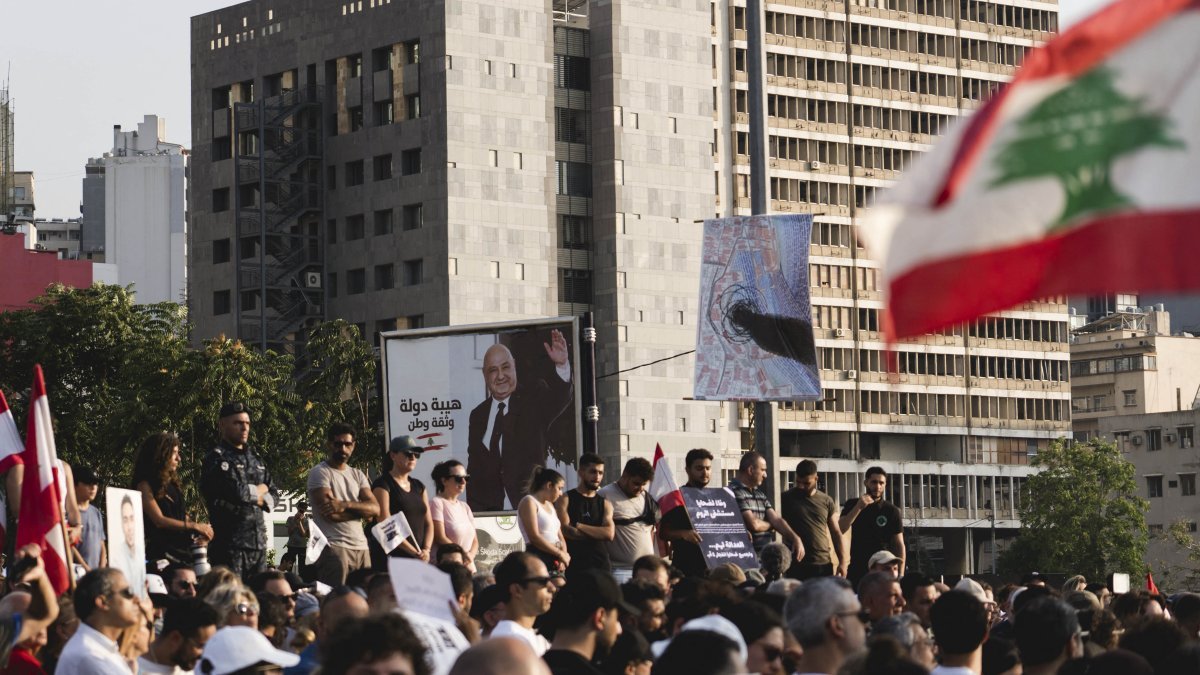
Lebanon’s leadership promised sovereignty and reform, but the Lebanon Transition stalls as president, prime minister, and speaker split on disarmament, banking recovery, and negotiations with Israel. Public support remains unmobilized.
Promises Collide With Entrenched Interests
Lebanon’s new leadership came into office last year with an ambitious promise: to restore state sovereignty and independence after years of Syrian and Iranian domination, rebuild institutions weakened by decades of corruption and political dysfunction, and pursue reforms to address the economic and banking collapse that began in 2019. Changes in the regional environment, particularly in Syria and in Hezbollah’s strategic position, offered Lebanon an unusual opening to make progress on these long-delayed objectives.
Important steps have followed. The Lebanese Armed Forces began expanding state authority in the south and developed a phased plan for wider deployment, but renewed war interrupted implementation. The government took significant decisions concerning Hezbollah’s military and security activities and the presence of Iranian military personnel. Long-vacant public positions were filled, ministers advanced reforms in several sectors, and efforts began to strengthen the judiciary and other institutions. Diplomatically, the president and government worked to repair Lebanon’s relations with Arab states and international partners, particularly the United States. The decision to enter direct negotiations with Israel was a bold initiative and opened a possible route toward more durable security arrangements.
Yet, as we approach the two-year mark of the new leadership’s mandate, progress toward real sovereignty and fundamental reform appears dangerously stalled. Progress toward achieving the state’s monopoly over the use of force is fitful and there is no clear goal horizon in sight; banking restructuring and an International Monetary Fund–supported recovery remain unresolved; and negotiations with Israel have yet to produce the security and territorial outcomes Lebanon needs.
The talks have reduced attacks on Beirut, but escalation and occupation in the south have continued; the first pilot zones agreed upon included only three small villages, and no progress has been made to agree on new ones. Furthermore, renewed regional conflict—which appears dangerously likely—could include Lebanon and would further undo limited gains that have been made.
The problem is not simply a deficit of effort, nor can it be attributed solely to domestic leadership. Lebanon faces powerful entrenched interests—armed and not armed—and a difficult external environment. But the absence of a coordinated national strategy has made these obstacles harder to overcome.
This is not a time for business as usual. The promises made last year reflected real possibilities, and the historic opportunity for Lebanon, especially given the changes in the region and Syria, remains real. But the country will not get there by continuing the divided and hesitant politics of the past year. An urgent strategic reboot is necessary.
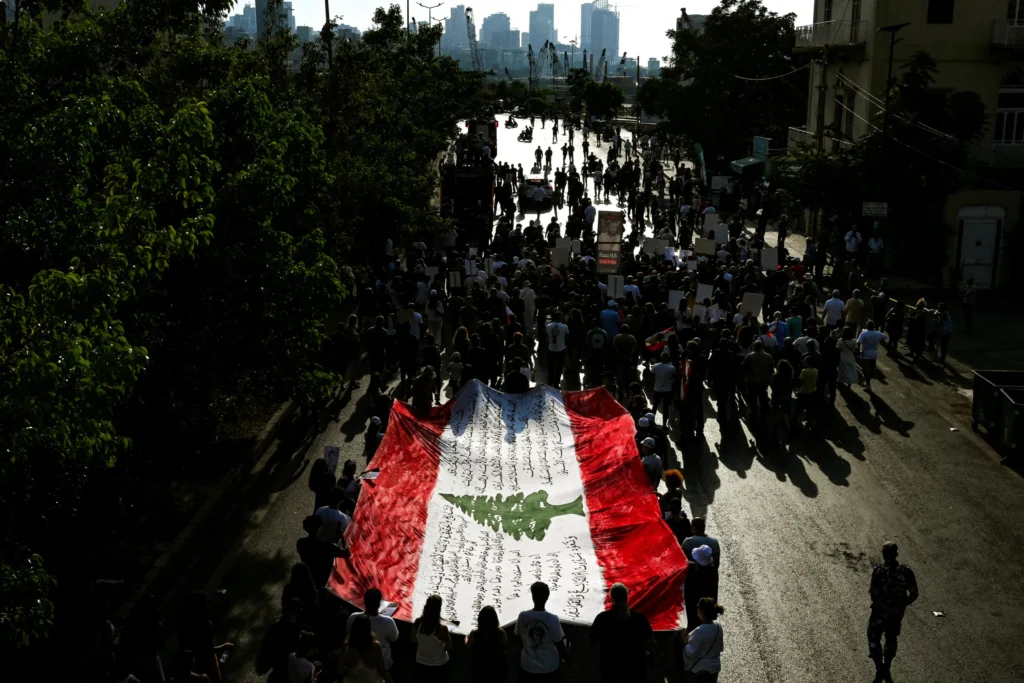
Lebanon Transition Stalls on Disarmament
A key challenge is that the three principal players in the state—the president, the prime minister, and, given the importance of parliament in legislating fundamental change and the weight of the Shiite community, the speaker of the parliament—are not fully aligned. This absence of alignment includes differences over restoring the state’s monopoly over force and the financial reforms needed for an IMF-supported recovery. Differences over senior appointments and institutional responsibilities have further complicated implementation.
Part of the challenge is that the president and prime minister rose on a wave of public support for fundamental change, but they did not sufficiently sustain or build on that public support; instead, they relied on state insiders to deliver it.
It’s true that both leaders are technocrats and not politicians, but they could and should have—and still can—rally public support for the changes they want to bring about. A popular majority wants fundamental change. But the bulk of the incumbent parties, politicians, special interest groups, and deep-state denizens are creatures of the old status quo and resist change. The president and prime minister need to work together to rebuild and actively mobilize the significant public support for change, without which the established forces of the status quo will win out.
As the head of parliament and the senior leader of the devastated Shiite community and one of its two main parties, Amal, Speaker of the Parliament Nabih Berri also has a critical role to play.
He needs to decide whether he wants to maintain the old ruinous status quo, with Iran—especially the Islamic Revolutionary Guard Corps (IRGC)—and Hezbollah dragging the country into repeated wars for years and decades to come, or whether he wants to participate in building a state that can return sovereignty to the south, bring peace to the country, and serve its people—including his community—through capable state institutions and a vigorously revived economy.
He is surely deeply pained by the ruin that Hezbollah and the IRGC have wrought on the south and the Shiite community, yet he seems to continue to put off difficult decisions, even as the south and his community spiral deeper into ruin. Significant progress on security or reform cannot be achieved without a proactive parliament and much bolder and more accountable leadership from the speaker.
The stakes extend beyond elite coordination. Many Lebanese people remain unable to recover their deposits; public services are still far from adequate, and accountability for the financial collapse and the Beirut port explosion remains incomplete. If the transition produces only negligible improvements in daily life, public confidence in the state may erode further. Internationally, despite historic goodwill and important support from the United States, Europe, and the Gulf states, there is mounting skepticism and dismay that perhaps Lebanon’s commendable leadership will not be able to fully achieve sovereignty and reform.
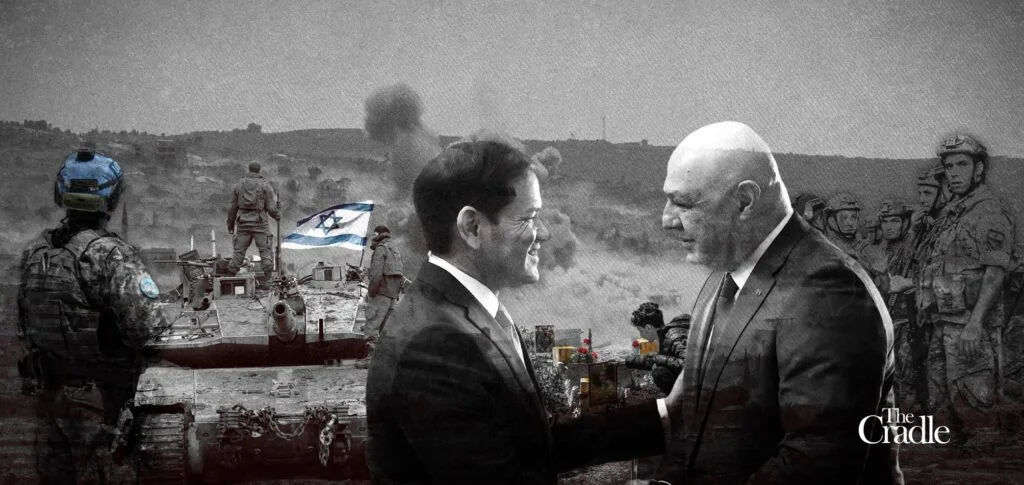
Need for Urgent Action
Lebanon’s historic opportunity risks slipping away. Rather than reemerging as a sovereign state and vibrant economy, the country risks sinking back into its familiar pattern of a state without real sovereignty that is riven with corruption, unable to effectively determine its own fate or to protect its own people. That pattern suits nonstate and illicit financial actors just fine, and some regional actors, including Iran and Israel, might also find it convenient.
Rescuing the transition will require a strategic reset. The president, in his institutional capacity and as the leader who first articulated the promise of this historic transition, is well placed to help lead this effort.
He could use the upcoming November 22 Independence Day occasion to deliver a major national address, taking stock of what has been achieved since his inaugural speech, acknowledging the important goals that remain unfulfilled, and announcing an effort to put the transition back on track.
Specifically, the president could propose a three-month emergency initiative, working closely with the prime minister, cabinet, parliament, and speaker, to agree on a time-bound and actionable national rescue and recovery plan that includes security, economic reform, and diplomatic components. The president and prime minister would provide executive leadership, the cabinet would be responsible for developing and implementing the necessary policy measures, and parliament would commit to a corresponding legislative calendar.
This would not require any extraconstitutional mechanism but would rather involve an intensive period of coordination among the presidency, the prime ministership, the council of ministers, and parliament, aimed at overcoming political obstacles, reaching agreement on outstanding priorities, and accelerating decisions that have been delayed.
The initiative should produce concrete commitments in three priority areas.
Economic and Financial Reform: The government and parliament should agree on a clear legislative and implementation timetable to complete the remaining banking, fiscal, and financial reforms required to advance an IMF agreement, with the necessary legislation adopted by February 2027.
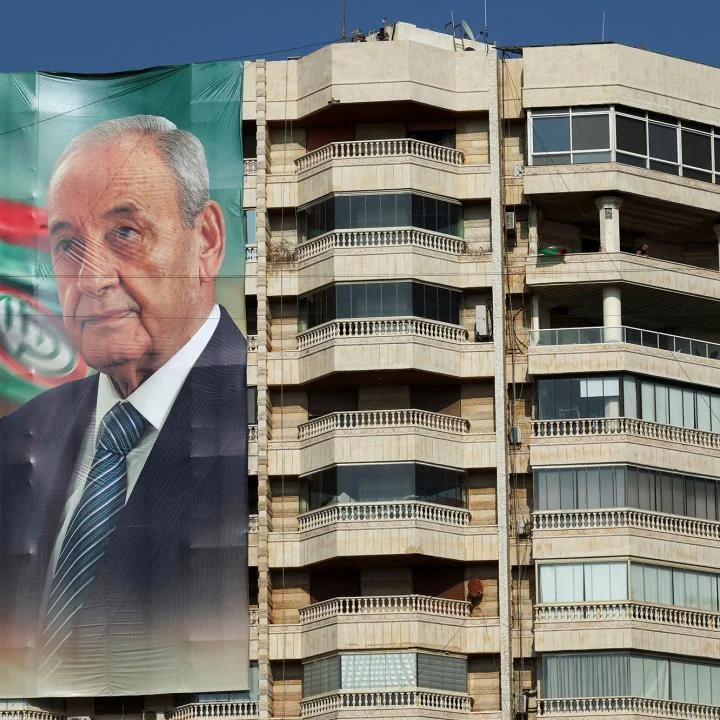
Lebanon Transition Needs Strategic Reset
Sovereignty and Security: The government should consolidate state authority, security, and public services in the initial pilot zones, while adopting and beginning to implement a phased, geographically sequenced plan to establish the state’s monopoly over arms and the use of force. This effort should extend beyond the south, beginning with the capital, Beirut, and progressively encompassing the rest of the country, with clear benchmarks, responsibilities, and timelines.
Diplomacy and International Support: The implementation of long-overdue decisions and reforms will strengthen Lebanon’s weakening hand in international and regional diplomacy. In such an environment of reinvigorated confidence, Lebanon can more effectively collaborate with the United States to move negotiations with Israel toward a full Israeli withdrawal and sustainable security arrangements. At the same time, Lebanon would be able to engage more convincingly with the regional and international community to increase support for strengthening state institutions and reviving its economy. International support should include expanded assistance to the Lebanese Armed Forces, Internal Security Forces, border control, and intelligence capabilities, as well as accelerated infrastructure reconstruction and measures to encourage private investment.
Such an initiative would not eliminate Lebanon’s political differences or the very real external constraints it faces. It would, however, establish a clearer national direction, create measurable commitments against which progress could be assessed, strengthen the credibility of state institutions, and mobilize greater regional and international support.
The Lebanese people have waited decades for a chance to reclaim an effective and sovereign state. That chance remains within reach, but it will not remain so indefinitely. Urgent and coordinated action is needed to renew the promise of Lebanon’s historic transition.