
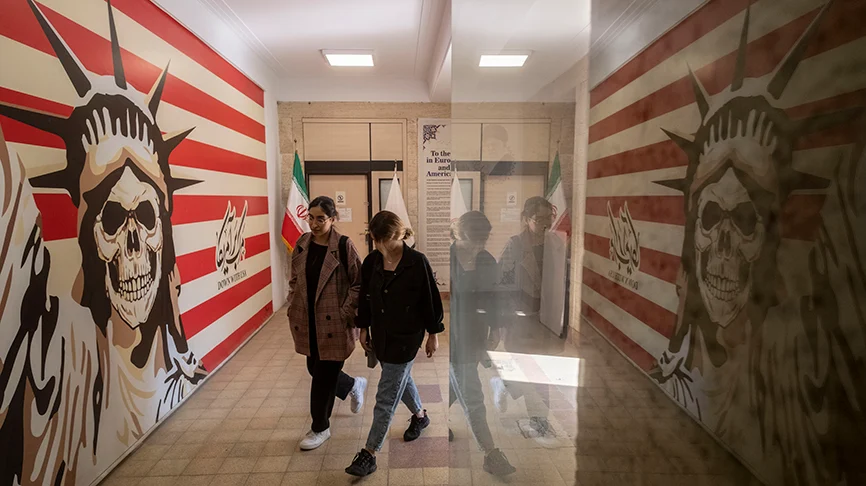
Washington’s war against Iran rested on flawed assumptions about irrationality, religious fanaticism, and nuclear intent. Intelligence assessments never confirmed a final bomb decision, while state behaviour indicates strategic caution rather than suicidal aggression.
Western threat assessments often collapse under the weight of their own assumptions. The Iran threat, as framed in Washington, rests less on hard capability and more on a presumed irrationality that has never survived empirical scrutiny. Capability and intent must both be present for danger to be real, yet the recent US–Israeli war against Iran proceeded as if rhetoric and religiosity were sufficient proxies for aggressive intent. A realist analysis reveals a regime that is repressive and hostile but nonetheless behaves with strategic caution.
The Islamic Republic has enriched uranium far beyond civilian needs, but no intelligence assessment has ever confirmed a final decision to build a nuclear weapon. Its leaders issue incendiary slogans, but their operational choices reflect persistent rivalry rather than suicidal ambition. The Iran threat, therefore, needs to be measured against observable state behaviour, not against provocative statements aimed at domestic audiences. This requires discarding deeply embedded narratives that equate difference with danger. The assumptions guiding Washington’s policy have magnified every action in Tehran into proof of an implacable enemy. Such selective perception has already produced tragic consequences and will continue to do so unless replaced by a sober calculus of interests.
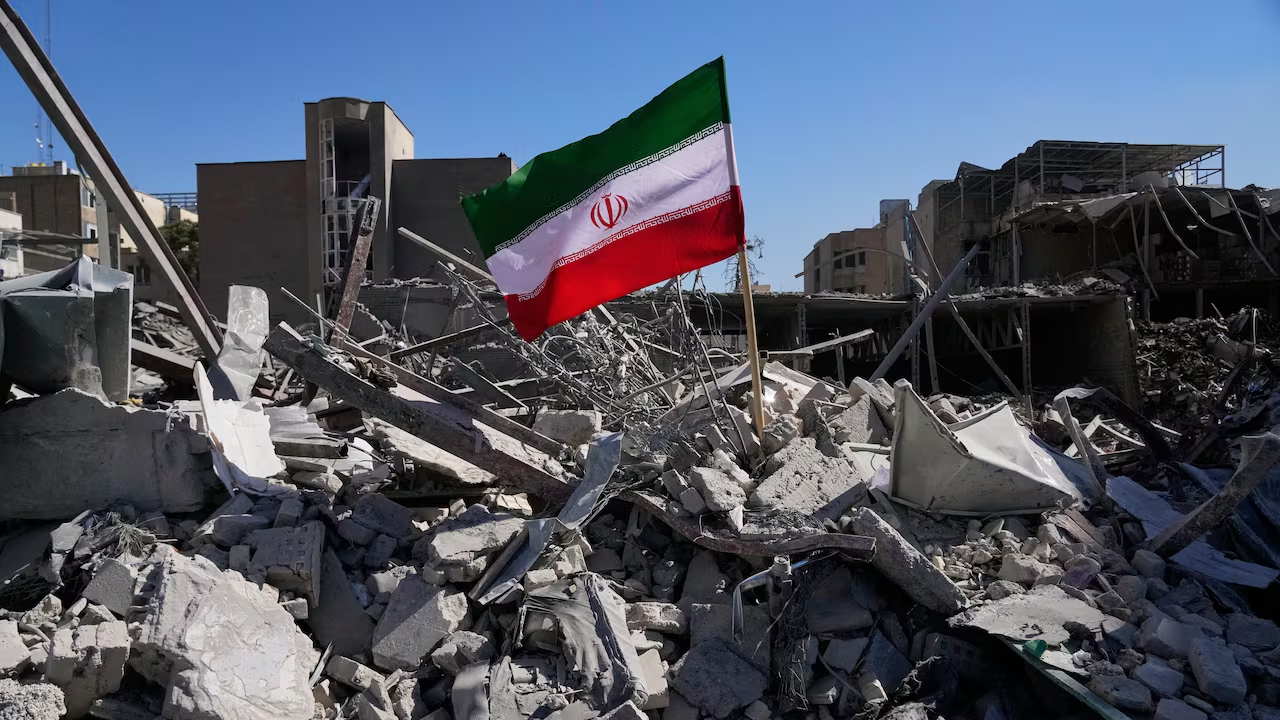
Why the Iran Threat Looks Overstated
Iran’s rhetorical overreach, fitful pursuit of a nuclear capability and religiosity are not sufficient reasons for the United States to singularly fear the Islamic Republic.
It is an open question whether the US–Israeli war against Iran is really over. As this issue went to press, a US–Iran Memo of Understanding ostensibly ending the war appeared so lopsidedly in Iran’s favour as to cast doubt on whether the United States would really stick to it. Critics have reasonably blamed the Trump administration’s strategic incoherence for the blunder of the war. But there is a larger and more fundamental American problem of viewing Iran as an implacable enemy, which drives a host of misperceptions about Iranian intentions. Most of all, it magnifies the perception of the threat posed by the Islamic Republic, making its every move seem ominous and its actions irrational.
A basic realist measurement of the threat posed by a foreign power is captured by a simple formula:
Threat = Capability x Intent
This equation is not meant to provide the foundation for higher-level calculations. The rather basic point is that, if either of the factors is zero, then the threat is zero. The United Kingdom has the capability to cause enormous harm to the United States but no intent to do so, which makes the threat it poses zero.
Prior to the US and Israel’s recent war against Iran, the Islamic Republic may or may not have had the intent to harm the United States, but it had little capability to do so. Despite US President Donald Trump’s cavalier claim that Iran could build a nuclear weapon within weeks, senior officials and experts in both the US and Israel understood that Iran posed no immediate threat. To justify the war, the Trump administration leaned on the regime’s supposed irrationality – a much easier sell.
The Islamic Republic of Iran, to be clear, is a fairly odious regime, engaged at this moment in a programme of executions following the mass repression and killings of demonstrators in January 2026. It has backed terrorists and proxies who have wreaked havoc across the Middle East, destabilising Lebanon and propping up the murderous regime of Bashar al-Assad in Syria. Going farther back, Iran pursued and assassinated exiled Iranian dissidents and facilitated attacks against US military personnel in Lebanon and Saudi Arabia, and Jewish targets as far away as Argentina. The connection between its repression at home and its depredations abroad is clear.
Sadly, however, the United States has long maintained productive relations with comparably unpleasant regimes. The case for Iran being beyond the bounds of coexistence seems to rely on three factors: the irrationality and overreach of its rhetoric; its pursuit of a nuclear capability; and its extreme religiosity. None of these justifications stands up to scrutiny or presents reasons for the United States to singularly fear the Islamic Republic.
‘Death to America’
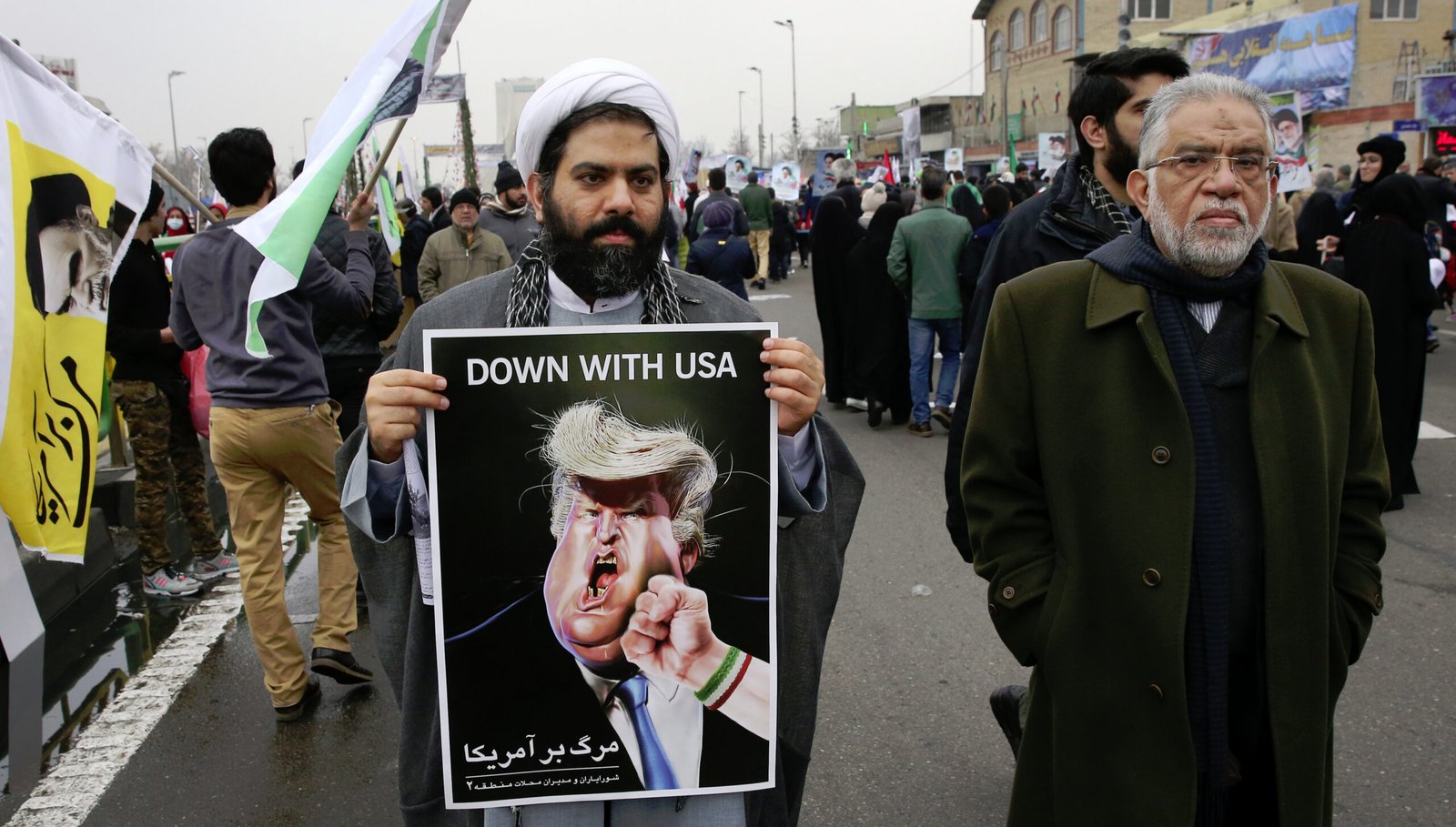
In September 2015, Ayatollah Ali Khamenei famously predicted that ‘Israel will not exist in 25 years’, echoing many similar threats his regime had made over time. Former president Mahmoud Ahmadinejad preferred using ‘disgraceful blot’ to describe Israel, adding that it should be ‘wiped off the face of the earth’. Such language is standard practice in post-revolution Iran. On Fridays, it remains commonplace at Iranian mosques and public gatherings to hear loudspeakers blare chants of ‘death to America’ and ‘death to Israel’. This repeated belligerence is often cited as proof of the regime’s implacable hostility and ultimate untrustworthiness. If this is Iran’s stated goal, the logic goes, then coexistence is impossible and preventive war is justified.
The connection between bombastic political rhetoric and Iranian policy is exaggerated and misunderstood. Iranian leaders speak in much more measured tones to international audiences, which suggests that their target for more incendiary talk is domestic. Although Iran has long sponsored and supported terrorist and militant groups opposed to the interests of the US and its allies and partners that have killed innocent civilians, its rhetoric does not imply an active plan for large-scale aggression. ‘Death to America’ has simply become a ritualistic expression of anti-imperialist sentiment. As Washington Post journalist Jason Rezaian has pointed out, most official translations have it not as ‘death to America’ but as ‘down with America’, which better captures the tenor of the chant.
While the supreme leader repeatedly called for the obliteration of Israel, the means he prescribed with equal clarity were generally political and economic rather than military. To be sure, Iran has long supported Hamas as part of its ‘axis of resistance’ to Israel and the United States. But ‘the disappearance of Israel does not mean the disappearance of the Jewish people’, Khamenei said, ‘because we have nothing against [Jews]’. Wiping Israel off the map did not imply the mass slaughter of its people, he clarified, but rather the overthrow of a government hostile to Iranian interests.
‘Death to America’ has been equally misinterpreted. According to the late ayatollah, ‘it goes without saying that the slogan does not mean death to the American nation; this slogan means death to the U.S.’s policies, death to arrogance’. A leader of the Houthis – Iran’s proxies and also enthusiastic employers of that phrase – once explained to the Washington Post that it is ‘just a slogan, we don’t mean it literally’.
Wise policy comes from observing what states do rather than what their leaders say. In the face of contradictory statements, actions are the best indicators of the truth. If a central policy goal of the regime in Tehran is to destroy the United States or Israel, it has pursued that goal in rather strange ways. An objective observer might infer that Iran has been managing a persistent rivalry rather than plotting the destruction of an entire people.
Selective perception guarantees that we hear only the statements of our enemies that confirm our preconceived notions of their intent. Their more measured – and more common – assertions tend to be ignored. Observers in the United States focus on the frightening chants meant for the Iranian masses rather than their qualifiers because doing so confirms beliefs about the enemy’s enduringly evil nature. Intoning ‘death to America’ is not particularly bothersome if the regime does not actually do anything to bring about that result.
Nuclear weapons
Israeli Prime Minister Benjamin Netanyahu has held for years that Iran was crazy enough to use a nuclear weapon. ‘The greatest danger facing the world’, he told a joint session of the US Congress in 2015, ‘is the marriage of militant Islam with nuclear weapons’. He portrays Iran as a uniquely undeterrable, suicidal actor. Trump used the same argument to justify preventive strikes.
‘We’re in a war because … we cannot let lunatics have a nuclear weapon’ is but one version of what he has said many times; he’s also claimed that ‘they would use it on a place called Israel very quickly, and they would use it in the Middle East, and they would use it in Europe, and I guess we’d be next’. It is not hard to find such sentiments in the academy as well. In an oft-quoted remark, the renowned historian Bernard Lewis argued that mutually assured destruction will not work with a religious fanatic, for whom it ‘is not a deterrent’ but ‘an inducement’.
If Iran’s desire to build and use nuclear weapons is an article of faith among hawks, intelligence services have doubts. Despite the breathless warnings from Netanyahu, no US intelligence assessment has ever concluded that Iran had made the final decision to join the nuclear club. Many in the Western security community were taken aback when, in 2007, a declassified National Intelligence Estimate stated that the United States judged with ‘high confidence’ that Iran had ‘halted its nuclear weapons program’. Israel’s Mossad shared this assessment, which the US intelligence community has periodically reconfirmed since its publication. It was current in June 2025 when the United States and Israel attacked Iran’s nuclear sites.
The ayatollah’s repeated insistence that nuclear weapons were un-Islamic was never enough to convince the regime’s international enemies. The supreme leader’s fatwa – a legal ruling against nuclear weapons dating back to the mid-1990s – was equally unpersuasive. This rhetoric would be easier to dismiss if it did not closely match Iranian behaviour.
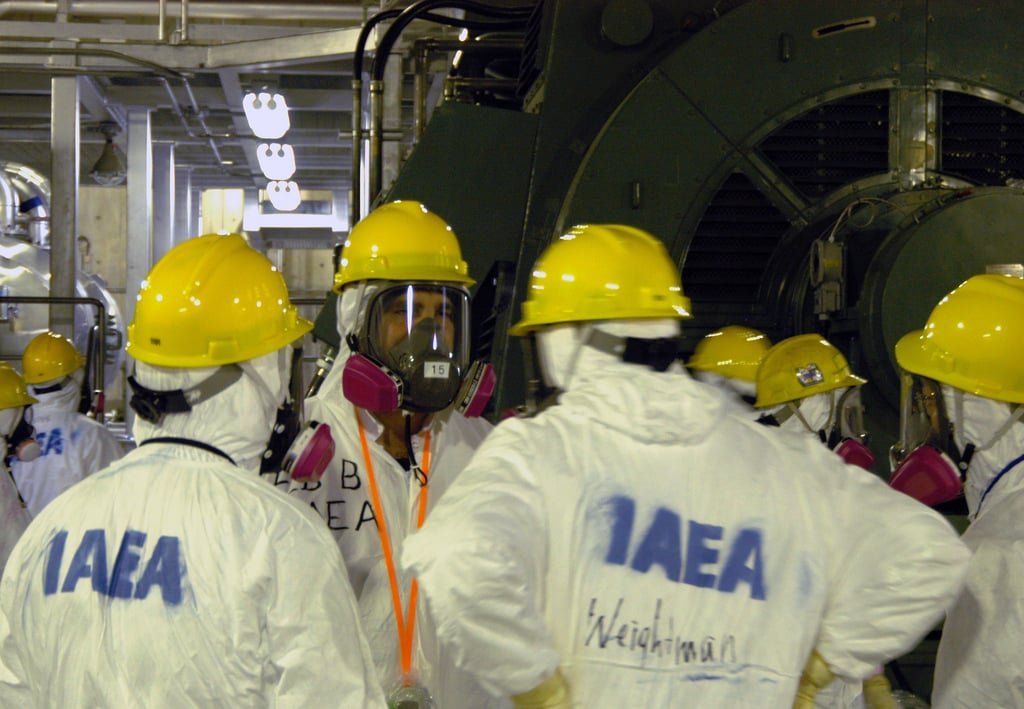
Without doubt, the regime wanted – and likely still wants – to retain the option to build nuclear weapons. The International Atomic Energy Agency confirmed that Iran had enriched uranium to 60% in 2025. Since that vastly exceeds the 3–4% needed simply for power generation, this signalled that the regime was keeping its options open. The fact that Iran has not pursued a crash nuclear-weapons programme and has been willing to negotiate the intensity of enrichment indicates that its programme is at least partly meant for diplomatic leverage.
There is less certainty about the Iranian nuclear programme than is commonly expressed by Western policymakers. When it comes to nuclear weapons, of course, uncertainty is intolerable. No irrational state can be allowed to have that capability. But should Iranian leaders decide to advance to develop a nuclear bomb, it would hardly be an irrational act.
The United States attacked the country to Iran’s east and the country to its west, changing their regimes. The US was not receptive to Iranian offers to help in those endeavours, instead including Iran in the ‘axis of evil’. Now the US has directly initiated war with Iran and attempted regime change. The rhetoric coming out of Washington more recently has been as belligerent as anything heard on Fridays outside Iranian mosques: Trump has called his counterparts in Tehran ‘lunatics’ and ‘crazy bastards’.
In this light, a good case can be made that failing to develop a nuclear weapon to firm up Iran’s strategic deterrent would be foolish. The lesson of the 1991 Gulf War – don’t fight the United States unless you have nuclear weapons – was not lost on the hardliners. By the same token, it is not rational for a regime primarily interested in its self-perpetuation to commit suicide by initiating nuclear war with the United States or Israel. History is chock-full of instances where leaders have miscalculated their way into disaster, but it contains none of witting national suicide.

Religion
Religion lies at the heart of American misperceptions about Iranians, and vice versa. It allows many on both sides to accept the simplistic notion that they are fundamentally different from us and therefore cannot be dealt with. Spurred by 9/11, Islamophobia in the United States has never fully disappeared. Christian nationalism has been on the rise in the US, and its adherents now are in many positions of power. During the recent war, Trump mocked the Islamic faith in social-media posts.
A little bit of knowledge can be a dangerous thing. To the extent that Americans know anything about Shia Islam, they know that it has an apocalyptic aspect. The majority of Iranian Shi’ites belong to the branch commonly known as ‘Twelver’, so named because of an episode from centuries ago. The first 11 successors to the Prophet Muhammad lived rather normal lives, but the next one, the Twelfth Imam, essentially disappeared, or passed into occultation. Twelver Shi’ites await his return, as the ‘Mahdi’, who will come in the world’s last days.
Nothing in Islamic theology suggests that the faithful should aid his return by bringing about those last days. Nevertheless, outsiders often suspect that Twelver Shi’ites would welcome the apocalypse insofar as it would bring back the Mahdi. Few seem to notice that the Shia notion mirrors a central Christian belief: that Jesus ascended to heaven and will return at the world’s end. Americans understand that Christians do not seek to facilitate religious redemption by provoking Armageddon, but do not extend Shia Muslims the same courtesy.
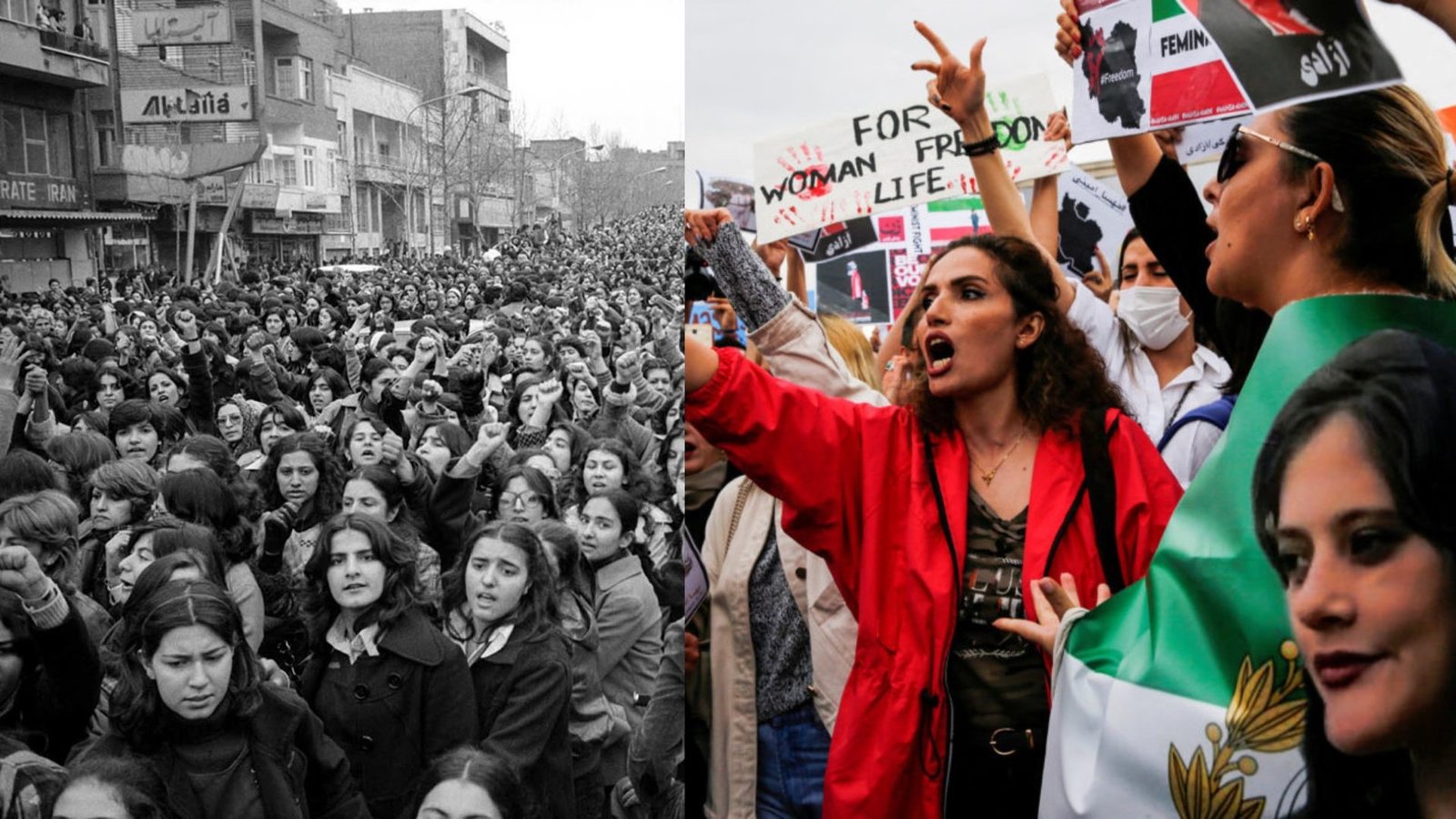
A Secular Society Under Clerical Rule
Contrary to widespread American perception, while Iran’s leadership remains clerical, it is not a particularly religious country. According to a 2020 survey, only 40% of the population identifies as Muslim, the rest being a mixture of other religions such as Zoroastrians, Christians and Jews, or either agnostic, atheist or simply without religion. While more than 70% believe in God, 72% opposed laws mandating that women wear the hijab.
In 2024, 73% of Iranians supported a separation between mosque and state, and 85% reported being less religious than they used to be. The reasons for this are not hard to understand. Like most tyrannical regimes, the one in Tehran is extremely unpopular and generates broad and intense backlash. Since the mullahs preach absolute fealty to Islam, the population has slowly turned against faith, too. According to British–Iranian historian Ali Ansari, Iran is now the most secular society in the Middle East.
Iran’s leaders often employ religious rhetoric and imagery in their official statements, but hardly more than the current leadership in Washington. Against Iran, Secretary of War Pete Hegseth openly called for ‘no quarter, no mercy’ and ‘overwhelming violence’, all in ‘the mighty and powerful name of Jesus’. Reports suggested that US troops were urged into battle with references to Christianity and Armageddon. More than 200 members of the military filed complaints with the Military Religious Freedom Foundation alleging that commanders were employing Christian-nationalist rhetoric in the opening stages, claiming it was a holy war or a biblical showdown between good and evil.
Feeling pressure to reach a deal to reopen the Strait of Hormuz in April, Trump himself threatened to target Iranian civilian infrastructure and warned on social media that ‘a whole civilization will die tonight, never to be brought back again’.
Iran is a malign regional actor, and a rival of the United States and Israel. Its medieval regime is abhorrent, especially to its own people. Its government is unjust and illegitimate. But it acts rationally in its foreign policy. It is not fanatical, loony or suicidal. We do not have to like Iran, but we also do not have to fear it. The Trump administration’s central theory of the war – that Iran is irrational and untrustworthy – has had tragic consequences that will only worsen if it remains unexamined.
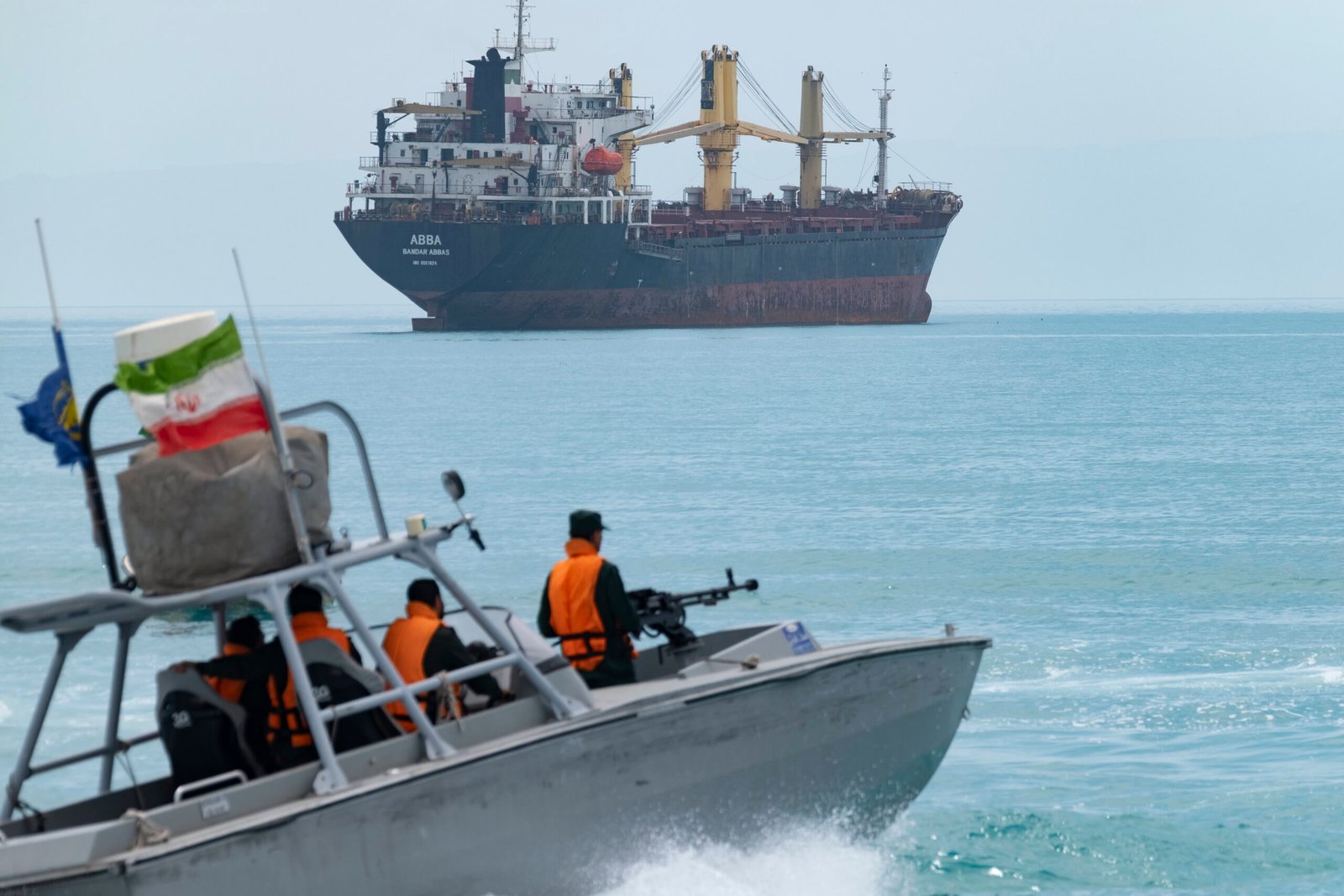
Recalibrating the Iran Threat Realistically
Iran and its 90 million people are not going anywhere. The West will have to deal with a regime now emboldened by its own stamina and intransigence, and the resounding demonstration of its main deterrent – the threat to close the Strait of Hormuz. Unless the United States wants to carry out costly and destabilising intermittent attacks indefinitely, it will have to find common ground with the Islamic Republic.
Realism counsels that peaceful coexistence almost always serves the US national interest. Such coexistence with Iran was once possible. Whether it will be after the war remains to be seen. At the very least, US officials need to return to basic realist tenets. States are generally rational actors and they do not commit suicide. Focus on what countries do, not what their leaders say. Beware of theories that suggest they are fundamentally different from us. Effective international politics is not a morality contest between good and evil. National or regime interest, not religion, is the primary motivator of state behaviour.
We have seen the irrational actor in the Gulf, and it is not Iran.