
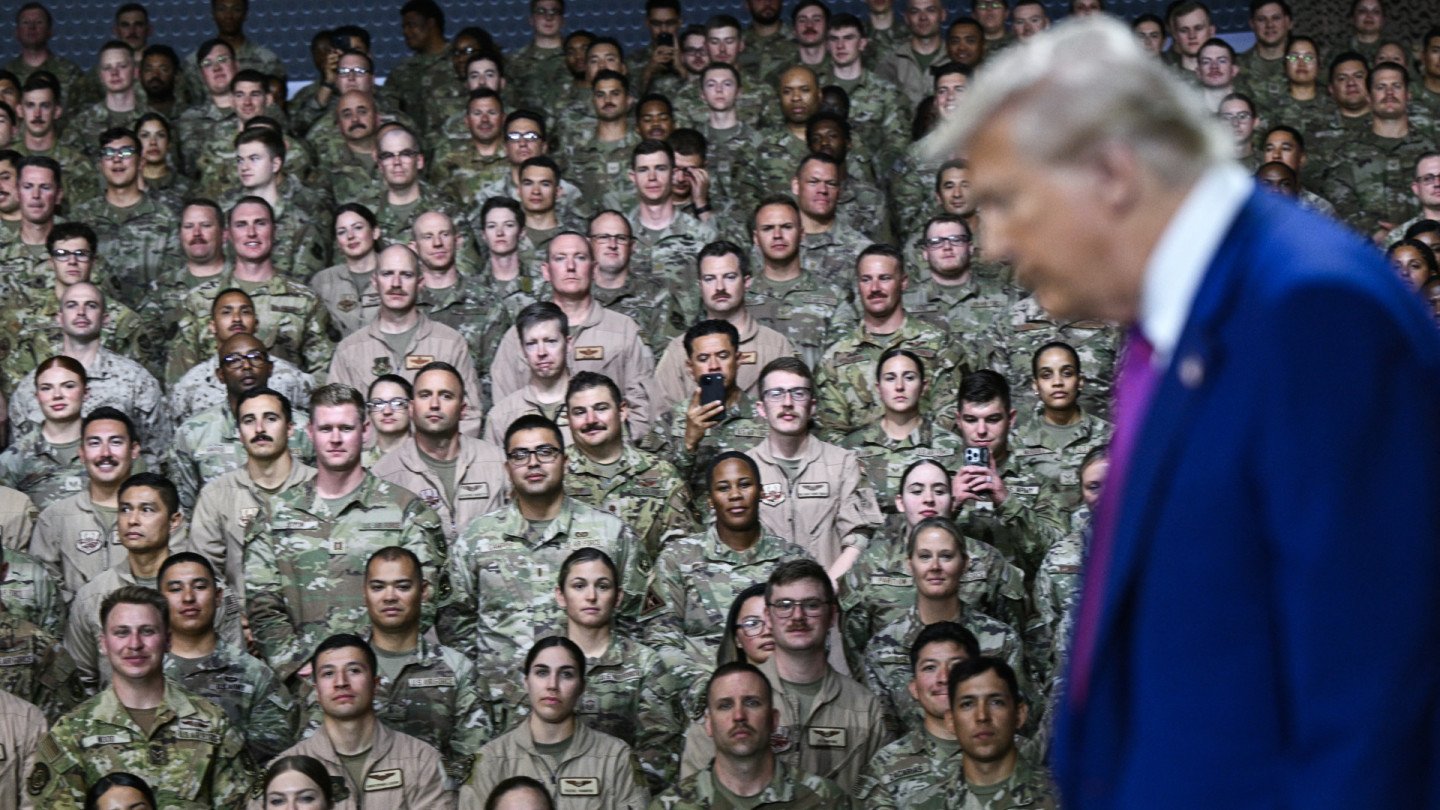
Iranian retaliatory strikes have damaged at least 15 US military sites across Qatar, Bahrain, and Kuwait since February 2026. The Pentagon is now weighing a smaller, dispersed footprint as Gulf states pursue collective defense and diversified security partnerships.
The strategic purpose of US Gulf bases has undergone a profound transformation in the months since Washington and Israel launched military operations against Iran on February 28, 2026. Facilities once designed to project power and reassure allies now draw fire as primary targets. Iranian retaliatory strikes have damaged radar installations, naval headquarters, warehouses, and logistics hubs across Qatar, Bahrain, and Kuwait, exposing the vulnerability of concentrated forward deployments.
The Pentagon is now weighing a smaller, more dispersed footprint or a westward shift of forces, a reassessment that carries implications far beyond basing logistics. The debate cuts to the core of America’s security commitment to the Gulf and tests whether decades of deterrence architecture can survive an adversary willing to strike host states directly. Gulf governments are already recalculating, pursuing collective defense through the GCC Unified Military Command while diversifying arms suppliers and exploring alternative security frameworks such as the Mecca Joint Defence Agreement.
The question is no longer whether US Gulf bases can deter Iranian aggression, but whether their presence now invites it. That inversion challenges the foundational logic of American forward presence in the region and forces a reckoning with what comes after a reduced US footprint. The future of US Gulf bases now shapes the balance of power across the entire Middle East.
US Gulf Bases Become Iranian Targets
For over four decades, US bases in the Gulf have aimed to deter threats, provide security guarantees to regional allies, and project power across the Middle East.
But the war with Iran is now casting doubt on their future.
The US and Israel’s war with Iran, which began on 28 February, has led to Iranian retaliatory attacks against US bases and assets in the Gulf, exposing their vulnerability and transforming them from strategic assets for Gulf states into targets.
As US-Iran tensions grow, with heavier economic sanctions in place and negotiations stalled amid a fragile ceasefire, Washington is now reportedly weighing the future of its bases in the region.
Recent reports suggest that the Pentagon is reassessing its Middle East military presence after Iranian strikes damaged Gulf bases, considering a smaller, more dispersed deployment or shifting forces westward.
Why Washington Is Rethinking Its Footprint
While no decision has been officially made, such an evaluation goes beyond logistics and infrastructure. The stakes are far higher, as it affects the future of US policy in the Gulf, and could reshape the balance of power across the Middle East.
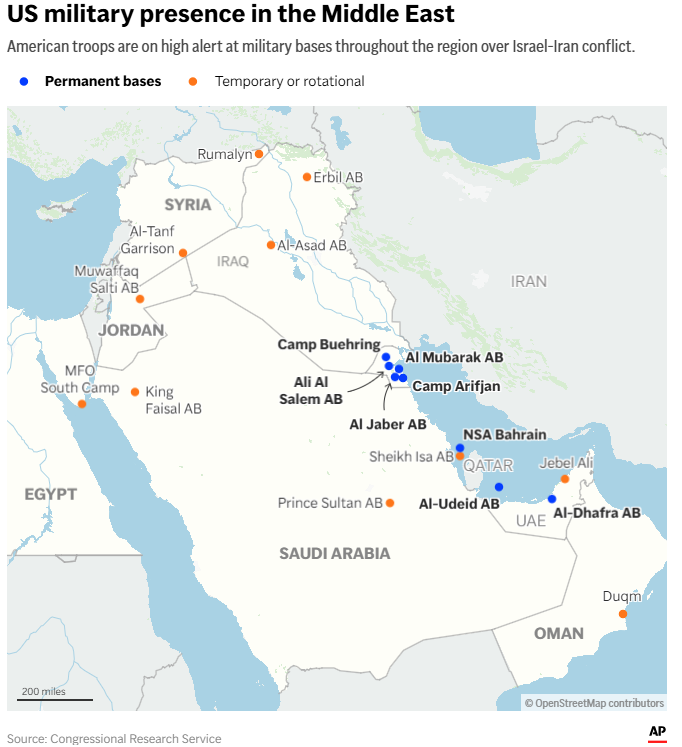
The US today maintains about 50,000 troops at nearly 20 military sites in and around the Gulf. Its main installations are Al Udeid in Qatar, NSA Bahrain, Camp Arifjan and Camp Buehring in Kuwait, Al Dhafra in the United Arab Emirates (UAE), and Prince Sultan Air Base in Saudi Arabia.
Although about 80-90% of attacks were intercepted, according to some estimates, Iran damaged at least 15 US military sites, including radar and early-warning systems at Al Udeid in Qatar, naval headquarters, warehouses and communications infrastructure in Bahrain, and aircraft, logistics and support facilities in Kuwait.
Deterrence Model Shows Its Limits
The war with Iran has exposed limits to the deterrent value of the US Gulf basing network. Its presence did not guarantee Gulf states protection from Iranian attacks; rather, hosting US forces made Gulf states a target of Iranian retaliation.
At the same time, however, the integrated air-defence system developed with US support likely prevented more serious casualties and damage.
Kristian Alexander, senior fellow at the Rabdan Security and Defence Institute, told The New Arab that Iranian retaliation exposed the limits of the traditional deterrence model, but “forward presence” still provides enormous military value.
“Deterrence now has to be complemented by dispersion, hardened infrastructure, layered missile and drone defences, redundancy, as well as much clearer political understandings over when and how US forces will defend host states,” he added.
A Weakened Commitment Worries Gulf Allies
A potential farther-reaching US military presence away from the Gulf would represent a major shift in US Gulf policy. Since the end of World War II, US military presence in the Gulf expanded gradually over the years before becoming more institutionalised after the 1990–91 Gulf War.
That conflict strengthened regional partnerships, forward deployments, logistics networks, and pre-positioned equipment to deter threats and respond rapidly to crises.
But today, uncertainty over the future of US Gulf bases hit by Iran may be seen as a weakening of the US commitment to the region. This would not be surprising, given that Trump’s National Security Strategy, published in December 2025, asserts that the Middle East is no longer Washington’s top strategic priority.
Gregory Gause III, associate fellow at the Middle East Institute, told The New Arab that US bases in Kuwait, Qatar, and Bahrain have long been viewed by those governments as evidence of Washington’s commitment to their defence.
He warned that closing the bases could therefore be interpreted as a signal that the US is no longer committed to their security, which could lead Gulf states “to recalculate most immediately their relations with Iran and find the need to follow the Iranian line much more directly than maybe they would otherwise”.
Gulf States Pursue Strategic Autonomy
Meanwhile, US Gulf allies are seeking greater strategic autonomy through collective defence.
This includes the GCC Unified Military Command, shared early-warning systems and joint exercises, while also diversifying arms purchases from Turkey, Europe, Pakistan, South Korea and China, and defence partnerships exemplified by the recent Mecca Joint Defence Agreement with Pakistan, Saudi Arabia, and Turkey.
But given their continuing reliance on US systems, training and infrastructure, these moves are unlikely to replace Washington’s role in the short term.
Some experts see any reduced US presence as temporary, and likely to be reversed. “Once the war between the US and Iran is sorted out, these bases will continue to exist as part of different arrangements,” Ahmed Aboudouh, associate fellow at Chatham House, told The New Arab.
One model, he suggested, could replicate US arrangements with European allies: not necessarily bases but deployment agreements, whereby “the US has the right to deploy its forces upon the request of these countries,” alongside continued industrial cooperation, intelligence-sharing, interoperability, and operational integration.
As a result, such moves toward independence from US military guarantees would likely bring lower American investment in Gulf bases, with Washington shifting from a guarantor to partner.
Gregory Gause III, associate fellow at the Middle East Institute, told The New Arab that US bases in Kuwait, Qatar, and Bahrain have long been viewed by those governments as evidence of Washington’s commitment to their defence.
He warned that closing the bases could therefore be interpreted as a signal that the US is no longer committed to their security, which could lead Gulf states “to recalculate most immediately their relations with Iran and find the need to follow the Iranian line much more directly than maybe they would otherwise”.
Meanwhile, US Gulf allies are seeking greater strategic autonomy through collective defence.
This includes the GCC Unified Military Command, shared early-warning systems and joint exercises, while also diversifying arms purchases from Turkey, Europe, Pakistan, South Korea and China, and defence partnerships exemplified by the recent Mecca Joint Defence Agreement with Pakistan, Saudi Arabia, and Turkey.
But given their continuing reliance on US systems, training and infrastructure, these moves are unlikely to replace Washington’s role in the short term.
“American investment in military bases in the Gulf region is likely to decrease significantly, as the region becomes more independent from the US from a security standpoint,” Dania Arayssi, program head and senior analyst at New Lines Institute for Strategy and Policy, told The New Arab.
“At the same time, US engagement will continue, shifting towards military training, partnerships and building the region’s military capacity without necessarily putting boots on the ground, alongside greater economic and energy engagement.”
New Security Order Faces Hard Limits
Besides strengthening military alliances, diversifying arms supplies, and expanding domestic weapons manufacturing, Gulf states may seek security arrangements with Iran as the US military presence declines. Aboudouh suggested China could help facilitate regional security talks, as it did in 2023 when it helped broker the Saudi-Iran rapprochement, although countries such as Pakistan, Oman, Iraq, or Qatar could undertake the core mediation.
“All these dimensions will, in my view, determine what security looks like in the future, in a post-US security structure,” he said.
Arayssi, however, argues that Gulf efforts to bypass the Strait of Hormuz and build alternative security frameworks such as the Mecca agreement would significantly weaken Iran’s economy and influence, and she believes Iran has lost the trust of key Gulf states, particularly Saudi Arabia and the UAE.
“I think the Iranians have lost the Arab and Gulf states. They can no longer get them back. That’s not an option on the table for them,” she said.
Future of US Gulf Bases Uncertain
The vision of a new Gulf security order with reduced US presence may face significant limitations. Gulf defence remains fragmented, and states still rely heavily on US support.
While other countries could provide particular capabilities, “none currently offers the combination of intelligence, logistics, maritime power, air power, command-and-control, and global force projection that Washington provides,” Alexander said. “No credible alternative presently replaces the United States at scale.”
Moreover, building domestic capabilities or forging alternative partnerships to offset the shortfall would take significant time.
In the wider region, a reduced US presence could embolden Israel to take a more assertive stance while prompting regional states to hedge against it. The shift is already sharpening Turkey-Israel tensions, particularly over Syria, as Ankara expands its political and economic influence and Israel fears growing Turkish military involvement there, whereas Gulf states may be less affected by a more assertive Israel, cushioned by the Abraham Accords.
Their approach to Iran, however, will depend on confidence in US security commitments, Gause III explained. While Gulf states are likely to seek an understanding with Tehran regardless of how the war ends, confidence in a reliable US defence relationship would make them less accommodating to Iran, while doubts about Washington’s commitment to their security could lead to much greater concessions.
Distributed Access Model Gains Traction
Alexander argues that the most plausible alternative to large, permanent US bases in the Gulf would be a distributed-access model built around rotational deployments, pre-positioned equipment, shared facilities, maritime power, and guaranteed access to dispersed locations, alongside stronger integrated Gulf air and missile defences.
This approach would preserve US access, deterrence, interoperability, and political influence while reducing the vulnerability and political exposure associated with concentrated installations.
“The goal should not be to count troops or bases, but to preserve access, deterrence, interoperability, and political influence while reducing concentration and vulnerability,” he said.
“In that sense, the future of US military presence in the Gulf may be smaller in physical footprint but deeper in integration.”