
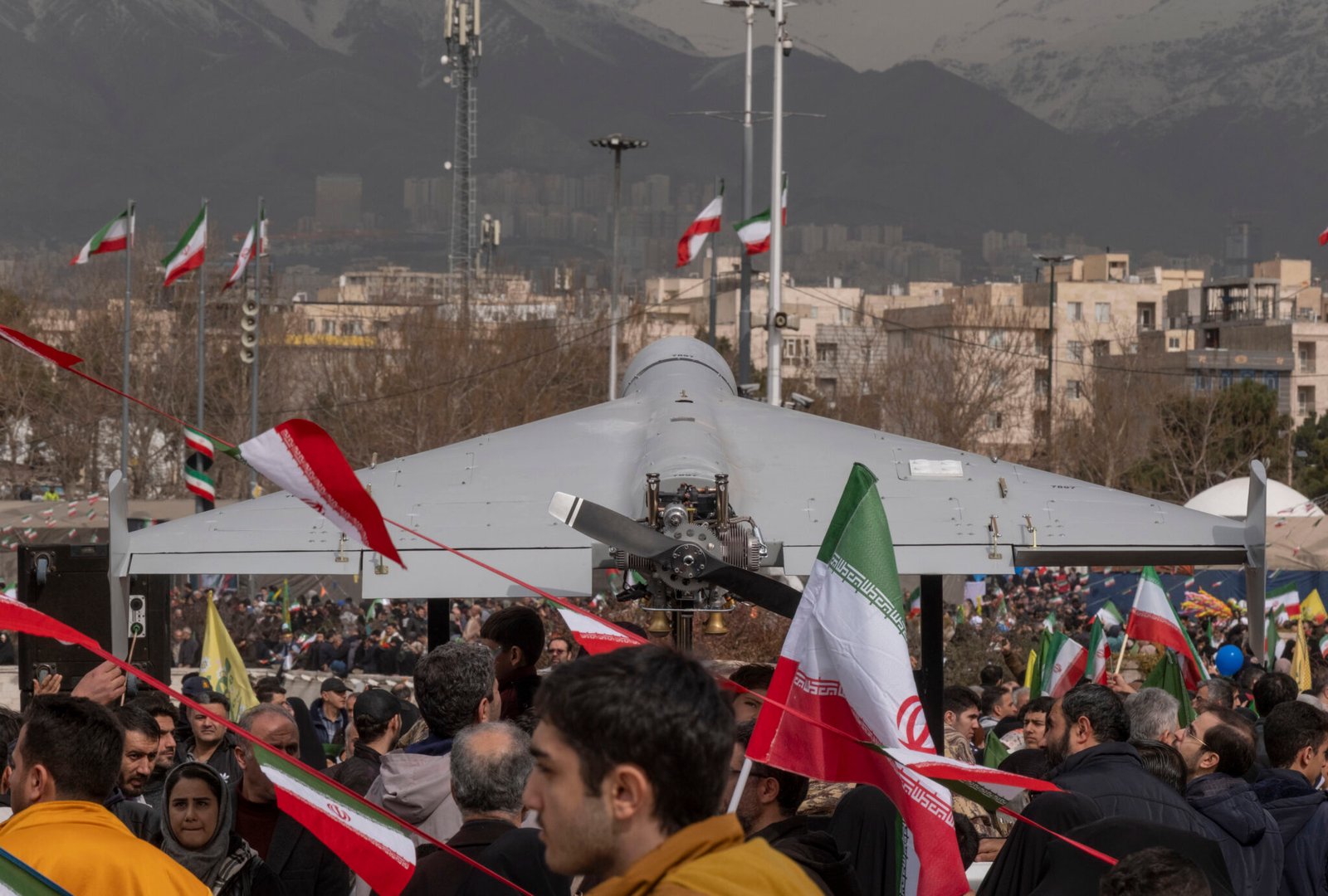
Iran’s strategic doctrine shifted from strategic patience to persistent counter-escalation after the 2025–2026 wars, emphasizing regionalized costs, missile and drone survivability, proxy networks, and Hormuz leverage, while the nuclear question remains unresolved .
The strategic posture of the Islamic Republic has undergone a profound transformation, shifting from strategic patience to persistent counter-escalation. This Iran Deterrence doctrine no longer assumes that time favors restraint; it posits that calibrated forbearance invites aggression unless every provocation is met with immediate and escalating costs across multiple theaters.
The wars of 2025 and 2026 confirmed for Tehran’s security establishment that adversaries interpreted restraint as weakness, reducing the perceived risks of further pressure. The new consensus emphasizes regionalizing conflict, imposing costs on US bases, partner states, and critical infrastructure, and converting military power into economic and political leverage.
The Iran Deterrence doctrine now rests on a mosaic of missiles, drones, proxy networks, maritime disruption, and nuclear ambiguity, designed to contest control of the escalation ladder. It seeks to make future wars strategically irrational by demonstrating that aggression will generate disproportionate costs. Understanding this shift is essential because it alters the calculus of deterrence, crisis stability, and the prospects for negotiation. The implications for US policy are profound: military superiority alone cannot interrupt a reciprocal cycle of coercion both sides claim to want to avoid, and credible off-ramps may prove as important as coercive pressure.
Iran Deterrence Doctrine Shifts
One of the most consequential analytical errors in Washington is the assumption that Iran still thinks strategically as it did between 2018 and 2025. Iranian officials, government-aligned analysts, and commentators increasingly describe a fundamental break with that period. They contrast an “old” Iran that delayed decisions, calibrated its responses, and sought to contain escalation with an Iran now determined to demonstrate that aggression will generate immediate and escalating costs across multiple theaters.
The wars of 2025 and 2026 should therefore be understood as catalysts that accelerated and consolidated Iran’s doctrinal transformation. They have strengthened a view within Iran’s security establishment that calibrated restraint, without a credible willingness to impose costs, can invite, rather than deter, escalation. Across official rhetoric, state television debates, and government-aligned media, this argument increasingly shapes retrospective assessments of the prewar period.
Tehran’s relative restraint amid the major regional shocks of the second half of 2024 — including the assassinations of Ismail Haniyeh in Tehran and Hezbollah leader Hassan Nasrallah, and the fall of Bashar al-Assad’s government in Syria — was intended in part to contain escalation and preserve space for diplomacy. Yet the prevailing postwar interpretation within Iran is that Washington and Israel drew the opposite lesson.
Rather than viewing Iranian restraint as a reason to moderate their own behavior, they came to see it as evidence of weakness and an unwillingness to escalate, reducing the perceived risks of further pressure and ultimately encouraging the very escalation Tehran had sought to avoid
This reassessment marks a deeper shift in the logic of Iranian deterrence: away from strategic patience and toward persistent counter-escalation. Strategic patience assumes that time can improve Iran’s position by preserving diplomatic options, exhausting adversary pressure, and allowing Iran to build power gradually. Persistent counter-escalation assumes that time is dangerous unless each round of pressure produces a visible and escalating cost for the opponent.
The central argument of this brief is that Iran’s strategic doctrine is undergoing a fundamental shift from the calibrated restraint of the prewar period toward persistent counter-escalation in its confrontation with the United States and Israel. This shift is not simply tactical. It reflects a broader theory of deterrence, one that combines missile power, drones, regional networks, economic coercion, maritime leverage, and nuclear ambiguity.
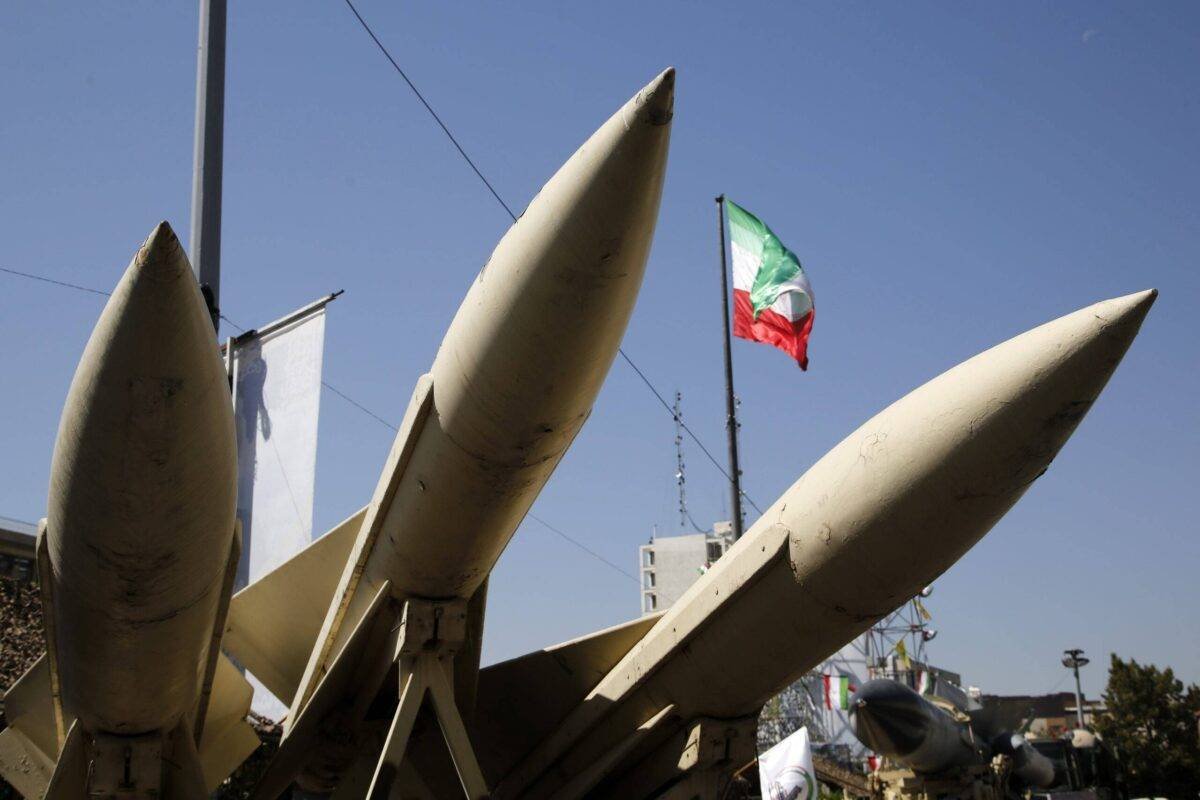
Strategic patience and its collapse, 2018–2025
Strategic patience as doctrine
Strategic patience was never synonymous with passivity. It was a strategy of calibrated counter-escalation intended to absorb pressure, avoid an uncontrolled confrontation with a conventionally superior adversary, and preserve the possibility that diplomacy could eventually deliver sanctions relief. This logic was particularly visible after US President Donald Trump withdrew from the Iran nuclear deal — officially called the Joint Comprehensive Plan of Action, or JCPOA — in May 2018 and restored sweeping economic sanctions.
Rather than immediately abandon the agreement or respond with a dramatic nuclear escalation, Iranian President Hassan Rouhani’s government initially remained within its restrictions while working with the remaining parties, particularly the European powers, to preserve the agreement and restore Iran’s economic benefits. Rouhani explicitly described this approach as one of “strategic patience,” presenting Iran’s restraint not as weakness or fear but as a prudent exercise.
For roughly a year, Tehran maintained this approach even as Washington intensified its “maximum pressure” campaign and sought to drive Iranian oil exports toward zero. Only in May 2019 did Iran begin gradually reducing its JCPOA commitments, and even then it deliberately structured its response as incremental and reversible rather than a rush toward nuclear weapons. Foreign Minister Mohammad Javad Zarif emphasized that Iran had waited 60 weeks after the US withdrawal before taking action and pledged that its steps would be reversed if the remaining parties fulfilled their commitments.
Iran subsequently exceeded the JCPOA’s 300-kilogram limit on its stockpile of low-enriched uranium. Still, it continued to frame its nuclear expansion as leverage to restore the bargain rather than abandon diplomacy altogether.
The strategy rested on a broader political calculation. Tehran hoped that time, diplomatic engagement, and carefully controlled escalation could prevent Washington’s economic campaign from becoming a wider military conflict while giving Europe, Russia, and China space to offset American pressure. This logic persisted through the Biden administration and into Trump’s second term, even as its limitations became increasingly apparent. After Trump abandoned the JCPOA, Iranian leaders initially calculated that a future Democratic administration might restore it, only to spend much of the Biden presidency negotiating over reciprocal implementation, sanctions relief, and guarantees against another US withdrawal.
Under President Masoud Pezeshkian, Tehran continued to prioritize negotiations even as military pressure intensified and the conflicts following Hamas’s Oct. 7, 2023 attack on Israel dealt significant setbacks to Iran’s regional allies and eroded important elements of its strategic depth. That commitment to diplomacy persisted through the negotiations immediately preceding the wars of 2025 and 2026, both of which began while Tehran was actively engaged in talks with Washington and signaling a willingness to make significant concessions.
Strategic patience thus sought to turn Iran’s relative weakness into an advantage of time and endurance: resist pressure without providing an easy pretext for war, accumulate leverage gradually rather than cross irreversible thresholds, and preserve diplomatic offramps until accommodation became preferable to continued confrontation. The wars of 2025 and 2026 have forced Iranian policymakers and security elites to reconsider whether those assumptions about time, restraint, and adversary behavior were correct.
The central indictment of strategic patience within Iran’s security discourse is that Iranian restraint never produced reciprocal restraint. Washington’s maximum pressure campaign continued, meaningful sanctions relief failed to materialize, and repeated efforts at diplomatic engagement produced neither a durable settlement nor credible security guarantees. Meanwhile, assassinations, sabotage, and successive Israeli military operations reinforced the perception that Iranian caution was doing little to moderate the behavior of its adversaries.
In this emerging interpretation, the failure therefore went deeper than diplomacy simply not producing the desired results. If the United States and Israel came to believe that Iran would continue exercising restraint and seeking negotiations even amid sanctions, assassinations, sabotage, and military attacks, then Tehran’s commitment to diplomacy could itself reduce the perceived risks of further escalation. Diplomacy risked becoming less a means of constraining adversary behavior than a mechanism through which Iranian restraint could be anticipated and exploited.
This argument appears repeatedly in Iranian official media and government-aligned commentary, which portrays Tehran’s previous reluctance to retaliate more forcefully as contributing to what Iranian analysts describe as a dangerous “calculation error” in Washington and Tel Aviv.
In this telling, Iran increasingly came to be viewed as an actor that, even if it possessed substantial capabilities, lacked the political will to use them. Iranian threats could therefore be dismissed as “hot air,” while further escalation appeared to carry manageable risks.
Concern about this perceived miscalculation predated the wars. Following Iran’s direct attacks on Israel in 2024, then–Supreme Leader Ali Khamenei warned that the enemy still suffered from a “miscalculation” about Iran’s power and insisted that it “must be corrected.”
The remarks were significant because Iran had already crossed a longstanding threshold by attacking Israel directly. Yet Khamenei signaled that these operations had still failed to alter adversary perceptions of Iranian power and resolve sufficiently.
The signaling problem, in turn, became a deterrence problem. Strategic patience may have preserved diplomatic space and reduced the near-term risk of a wider war. Still, Iranian strategists increasingly argue that it did so without a sufficiently credible coercive backstop. Each episode of restraint that went unanswered by reciprocal restraint reinforced the belief among Iran’s adversaries that they could raise the pressure further without provoking an intolerable response.
The wars of 2025 and 2026 are consequently understood by many within Iran not as a sudden breakdown of deterrence, but as the culmination of a much longer process in which the country’s adversaries progressively underestimated both its willingness and its ability to escalate. The lesson being drawn is therefore not that diplomacy itself is futile, but that diplomacy must be backed by demonstrated coercive leverage and a credible willingness to impose costs. Without that foundation, Iranian security thinkers increasingly contend, restraint does not moderate adversary behavior but invites the next escalation.
The emergence of a new military consensus
The emerging consensus among senior Iranian security officials, Islamic Revolutionary Guard Corps, or IRGC, figures, and government-aligned strategists can be summarized in four propositions.
Restraint that is not accompanied by a credible willingness to retaliate and impose painful costs will eventually be interpreted as weakness.
Adversaries must believe that Iran is willing and able to regionalize a conflict, extending the consequences of an attack beyond Iran to US military positions, regional partners, and critical infrastructure.
Deterrence depends not merely on surviving an adversary’s attack or demonstrating military resilience, but on changing the opponent’s decision calculus so that the anticipated costs of escalation outweigh its potential gains.
Military power must be translated into economic and political leverage. Iran’s ability to disrupt energy flows, maritime trade, and regional economic activity is therefore increasingly understood as part of its deterrent toolkit.
One Iranian military analyst on a state television program devoted to the war captured the emerging objective particularly clearly: Iran must fight in a way that makes the next war either impossible or sufficiently costly that an adversary is forced to think twice before launching it.
The aim is not simply to impose costs in the current conflict, but to make another war strategically irrational.
Institutional change
The shift in Iranian strategic thinking is also being reflected in the country’s wartime leadership. The assassination and loss of numerous senior commanders since the current war began in February 2026 forced Supreme Leader Mojtaba Khamenei to rebuild much of Iran’s military command. Still, his appointments this August suggest an effort to do more than simply replace those who were killed. They point toward greater centralization of wartime decision-making and closer coordination among military operations, diplomacy, economic policy, and domestic security.
Ahmad Vahidi’s elevation to command the IRGC is indicative of this direction. Khamenei instructed him to pursue “maximum deterrence” while maintaining readiness for “powerful offensive operations against the enemy,” language that closely tracks the emerging emphasis on responding to aggression by imposing greater costs rather than merely absorbing or containing escalation.
Ali Abdollahi’s elevation to chief of the Iranian military’s General Staff reinforces this shift.
Tasked with strengthening the integration of the Khatam al-Anbiya Central Headquarters into the General Staff, Abdollahi had already articulated its doctrinal logic in March 2026, shortly after the opening US–Israeli attacks. Then commanding Khatam al-Anbiya, he declared that Iran had adopted an “offensive” military doctrine designed to “disrupt enemy calculations,” alongside new battlefield tactics and “surprises” for future engagements. The transformation, he said at the time, was “only the beginning.”
Potentially even more consequential is Mohsen Rezaei’s return to the center of national security decision-making as secretary of the Supreme National Security Council. Rezaei commanded the IRGC for 16 years and was one of the principal architects of its development during and after the Iran–Iraq War.
Under his leadership, the Guards developed institutionalized ground, air, and naval forces, expanded the capabilities that would eventually become the Quds Force, and built the Khatam al–Anbiya headquarters for coordinating major military operations. He was therefore not simply a battlefield commander, but an important institution builder whose career has been closely associated with developing the asymmetric capabilities Iran could use to compensate for conventional military weakness.
Rezaei’s experience during the final stages of the Iran–Iraq War is particularly relevant to the current moment. As Iran’s military position deteriorated in 1988, he remained reluctant to accept an end to the conflict and instead proposed a major military buildup and a five-year plan for continuing the war.
Other senior leaders interpreted the enormous requirements in his proposal as evidence that Iran could no longer sustain the conflict, strengthening the case for accepting UN Security Council Resolution 598. Rezaei later argued that this was not his intention and that he had presented a strategy for rebuilding Iran’s strength and continuing the fight.
That history does not mean Rezaei will oppose negotiations today. It does, however, illuminate a longstanding feature of his strategic outlook: Wars should not end simply because their costs have become high, but when Iran has accumulated sufficient strength and leverage to influence the political order that follows them. His elevation is therefore significant at a moment when Tehran is again debating how much leverage it must retain, what conditions it should demand, and when the costs of continuing the conflict are outweighed by the benefits of a settlement.
The Supreme National Security Council is also an important venue for putting that approach into practice because it brings together the different instruments of Iranian state power. Civilian officials, including the president and foreign minister, sit alongside military commanders, intelligence officials, and representatives of the supreme leader. Rezaei himself brings experience beyond the military sphere, including his later work on economic policy and his service as vice president for economic affairs under President Ebrahim Raisi.
His appointment therefore fits an emerging conception of national security in which military power, economic resilience, diplomacy, and coercive leverage are increasingly treated as interconnected.
These developments should not be reduced to a simple transfer of authority from civilian officials to the IRGC. Diplomacy remains an important instrument of Iranian strategy, and civilian institutions continue to participate in national security decision-making. What appears to be changing is the relationship between diplomacy and coercion. Security institutions are assuming greater influence over how military pressure, economic leverage, and negotiations are sequenced and combined, with diplomacy increasingly expected to convert leverage accumulated during the conflict into a settlement rather than substitute for that leverage.
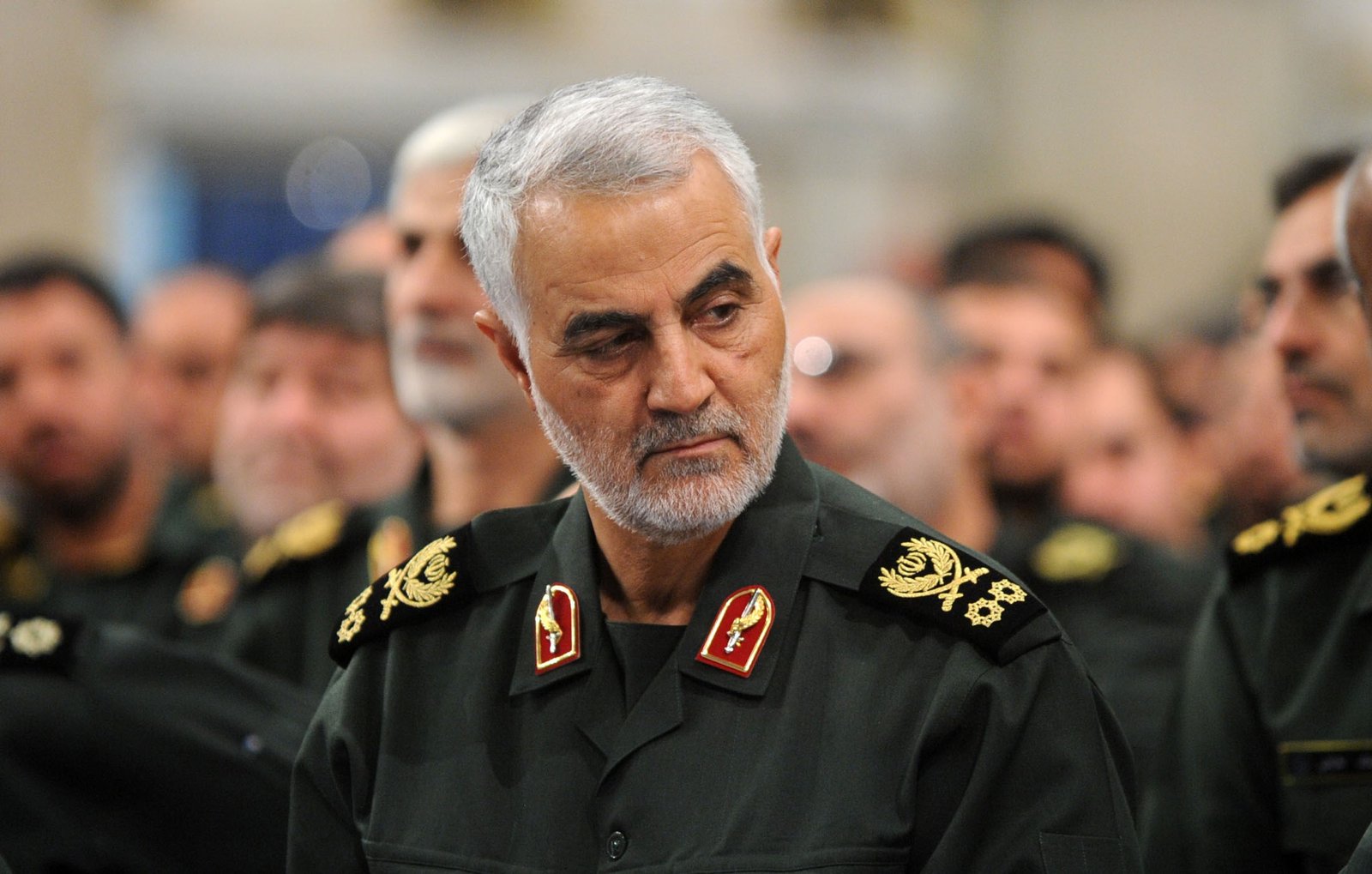
The strategic antecedents of the new doctrine
Qasem Soleimani’s strategic vision
The logic underlying persistent counter-escalation did not originate in the wars of 2025 and 2026. For years, Iran’s security establishment had prepared for a major confrontation with the United States around many of the same principles, particularly under Qasem Soleimani and within the IRGC and its extraterritorial Quds Force. At its core was the idea that Iran should not confront a conventionally superior adversary only where Iran itself was most vulnerable. Instead, Tehran could deter pressure by expanding the geography of confrontation and ensuring that attempts to impose costs on Iran generated costs and vulnerabilities elsewhere.
Soleimani articulated this strategy with unusual specificity in a 2019 speech to veterans of the IRGC’s 41st Tharallah Division, delivered as the Trump administration sought to drive Iranian oil exports toward zero. He argued that the United States could not isolate economic or military pressure on Iran from the wider region. “Any pressure on us is reflected as pressure on others,” he said, pointing first to the vulnerability of Persian Gulf energy exports and noting that tankers carrying oil from Saudi Arabia, Kuwait, Iraq, and the UAE had to pass close to Iran’s coastline.
“If our oil is not sold, no other oil is sold either,” Soleimani warned, adding that “closing the Strait of Hormuz belongs to the Islamic Republic.”
Soleimani extended the same logic to the US military presence and the economic infrastructure of Washington’s regional partners. The forces and bases the United States had concentrated in and around the Persian Gulf, he argued, did not simply increase American power; they also created targets within Iran’s reach. He made a similar point about the Gulf states themselves, invoking the “tall buildings” and “glassy places” of the UAE and Saudi Arabia as symbols of prosperity that would become vulnerable in a major war.
His broader point was that the region’s military and economic concentration created an asymmetric advantage for Iran: a conventionally superior adversary might be capable of inflicting enormous damage on Iran, but it could not assume that its bases, partners, infrastructure, and economic interests would remain insulated from retaliation.
Nor did Soleimani envision such a conflict as confined to the Persian Gulf. “Right where you assume we are not, we are at the closest point to you,” he said, before asking, “Can we not think about the Atlantic Ocean? Can we not think about the Mediterranean Sea? Can we not think about the seas?” His answer was explicit: “We have surely thought about it. We have surely provided the appropriate means.”
Taken together, Soleimani’s remarks outlined an expansive vision of asymmetric war in which pressure on Iran would expose its adversaries’ military, economic, and maritime interests across the region. That vision closely resembles the geography of the current war, from disruption in the Strait of Hormuz to Houthi operations in the Red Sea and attacks extending into the Mediterranean.The doctrinal shift underway is therefore less the invention of a new strategy than the elevation of ideas long embedded within the IRGC from contingency planning to a central principle of Iranian deterrence. What Soleimani envisioned as the architecture of a future war is increasingly being used to fight the current one and shape its end.
From regional network to regional leverage
Soleimani’s conception of asymmetric warfare depended on more than Iran’s own missile and drone capabilities. It also rested on a regional network that gave Tehran strategic depth, multiple avenues for retaliation, and the ability to transform a bilateral confrontation into a wider regional crisis. Hezbollah in Lebanon, Ansarallah, the Yemeni armed group widely known as the Houthis, Iraqi armed groups, and other regional partners could impose costs far from Iranian territory, forcing the United States and Israel to defend bases, maritime routes, and allied states across multiple theaters simultaneously.
The wars of 2025 and 2026 have reinforced the perceived importance of this network while also exposing the consequences of its erosion. Iranian commentary frequently links the weakening of Hamas and Hezbollah and the loss of Syria to Iran’s increased vulnerability to direct attack, arguing that these forward positions had helped keep military pressure geographically removed from Iran itself.
This helps explain why Tehran increasingly treats the security of its regional partners as integral to its own deterrence rather than as a separate foreign policy concern. That logic was reflected in negotiations over the memorandum of understanding that ended the earlier phase of the 2026 war, when Iranian officials insisted that a cessation of hostilities could not apply to Iran while military operations against its regional partners continued.
Lebanon was therefore incorporated into the original framework, while Mohsen Rezaei has since taken a broader position by making an end to the war in Gaza part of Iran’s conditions for a comprehensive settlement as well.
The strategic objective is therefore increasingly to convert Iran’s regional network into leverage over the shape of the regional order. Tehran seeks to demonstrate that wars cannot be ended, maritime and economic corridors cannot be secured, and new security arrangements cannot be constructed by excluding Iran or systematically weakening its partners.
In this conception, the ability to impose costs across multiple theaters is not an end in itself. Rather, it is a means of compelling adversaries to account for Iranian interests in determining the rules and arrangements that govern the region. The larger contest is therefore not simply over Iran’s deterrence, but over which regional order will emerge from the war: one organized around Iran’s containment and the dismantling of its network, or one in which Iran and its partners retain sufficient power to shape the region’s security architecture and political economy.
Survivability and the limits of air superiority
The 2025 and 2026 wars tested whether overwhelming US and Israeli airpower could degrade Iran’s strike forces below an operationally meaningful threshold. US officials described a central objective of the campaign as substantially degrading Iran’s ability to project military power, and US strikes systematically targeted the infrastructure underpinning that capability, including missile and drone launch sites and storage facilities, command-and-control systems, weapons-production facilities, and supporting military infrastructure.
The scale of the effort was extraordinary, with thousands of military and industrial targets struck and tens of thousands of attacks carried out against Iran.
The campaign demonstrated the enormous destructive capacity of US and Israeli airpower, but it did not demonstrate that Iran’s ability to retaliate could be reliably suppressed. Iranian military analysts have emphasized the distinction between destroying individual targets and disabling an operational system, arguing that mobile launchers, underground facilities, concealed assets, and redundant infrastructure allowed Iran to preserve meaningful strike capacity even after sustaining substantial losses.
As the campaign progressed, additional targets could be destroyed without eliminating the broader system that enabled Iran to continue launching missiles and drones.
Technology helps explain this resilience. The scholar Robert Pape situates Iran within what he calls the “second precision revolution,” in which inexpensive drones, precision missiles, commercial sensors, navigation systems, and mobile launch platforms have diffused capabilities once associated primarily with advanced militaries.
For Iran, the significance is not conventional parity with the United States or Israel, but the ability to disperse and preserve enough relatively inexpensive precision-strike capacity to continue imposing costs despite sustained attack. The war suggests, however, that the effectiveness of these capabilities depends not only on the technologies themselves, but on the organizational architecture through which Iran employs them.
Iran has developed what its military analysts describe as a “mosaic” structure built around dispersed forces, compartmentalized commands, underground infrastructure, and geographically distributed operational nodes. Rather than concentrating the ability to conduct military operations in a small number of headquarters or senior commanders, this architecture is intended to allow different parts of the system to continue functioning even when others are destroyed.
The same structure helped Iran absorb a sustained campaign of leadership targeting. The killing of senior commanders removed experienced personnel and forced rapid reorganization, but it did not prevent military operations from continuing as subordinate commanders and institutions assumed greater responsibility. Iranian commentators have consequently portrayed the war as demonstrating that the Islamic Republic functions as a “state of institutions” whose military capacity cannot be disabled simply by eliminating prominent individuals.
This does not make leadership targeting inconsequential, but it reduces its strategic effect when authority can be redistributed, and the wider system can regenerate command.
The broader lesson is therefore a gap between target destruction and strategic denial. US and Israeli forces could destroy substantial portions of Iran’s military infrastructure without reliably eliminating its capacity to regenerate command, adjust tactics, and sustain retaliation. Pape’s precision revolution helps explain the technological conditions that make such resilience possible. Still, Iran’s experience in the war also demonstrates the importance of how those capabilities are organized, dispersed, and employed. For Tehran, this survivability is a central material foundation of persistent counter-escalation: Iran does not need to match its adversaries’ firepower if it can absorb substantial losses while preserving sufficient capacity to ensure that military pressure continues to generate costs beyond Iran itself.
From strategic patience to persistent counter-escalation
The core principle
In the emerging Iranian conception, persistent counter-escalation is not a doctrine of unlimited escalation, but a strategy for contesting control of the escalation ladder. Tehran does not seek to match US firepower strike for strike or assume that proportional retaliation will restore deterrence. Instead, it seeks to ensure that each new level of pressure generates costs in domains and geographic areas where the United States, Israel, and their partners are more exposed, denying Washington the ability to determine unilaterally where, how, and at what cost a conflict escalates.
Iranian analysts have described this logic through the language of a “pain index.” One state television commentator argued that “the number of projectiles is not necessarily important”; if the adversary imposes one unit of pain, Iran should seek to impose two or three.
Another similarly argued that Iran should not remain within an escalation framework defined by the United States by simply answering an attack in the same domain. It should instead identify the adversary’s “pain point” and impose costs there.
The objective is therefore not symmetrical retaliation, but to shift the confrontation toward vulnerabilities where comparatively limited Iranian actions can impose disproportionate military, economic, and strategic costs.
Infrastructure warfare has become one of the clearest tests of this approach. Trump has repeatedly threatened Iranian critical infrastructure, and US forces have struck bridges and other infrastructure targets, but Washington has so far largely stopped short of a sustained campaign against Iran’s most consequential energy infrastructure as Tehran has demonstrated its willingness to retaliate higher on the escalation ladder. In March, for example, attacks on Iran’s South Pars gas field were followed by a major strike on Qatar’s Ras Laffan energy complex, after which similar attacks on South Pars did not materialize.
Iranian strikes have also targeted infrastructure in Kuwait, Bahrain, and the UAE during the war. Tehran’s apparent objective is to establish a form of mutual infrastructure vulnerability: If Washington expands the war to Iran’s energy, power, transportation, or other critical systems, Iran can retaliate against comparable, and potentially more globally consequential, infrastructure across the region.
The same logic applies to the regional architecture of US power projection. The network of bases in Bahrain, Kuwait, Qatar, and elsewhere gives Washington enormous regional reach but also presents Tehran with a dispersed target set. Sustained attacks have sought to deplete scarce US air-defense interceptors, disperse or force the evacuation of American forces, and increase pressure on host governments, a strategy that appears to have borne fruit amid US reporting of mounting munitions shortages and evacuations from regional bases.
Iran is thus attempting to counter US vertical escalation dominance with horizontal escalation; unable to match the destruction Washington can inflict inside Iran, Tehran widens the geography of conflict, exposing additional US forces, partner states, critical infrastructure, and regional economies to its consequences.
The Strait of Hormuz extends this logic into the global economy. Iran does not need to defeat the US military or permanently halt maritime traffic to generate leverage; sustained insecurity can disrupt shipping, raise costs, and make the rules governing transit themselves subject to negotiation.
Persistent counter-escalation therefore seeks to make the costs of continued pressure rise faster than the gains Iran’s adversaries expect, using military bases, regional infrastructure, allied armed groups, and maritime commerce as interconnected points of leverage. Diplomacy remains part of this strategy, but increasingly as a means of converting accumulated coercive leverage into favorable political outcomes. The departure from strategic patience can thus be understood as a rejection of unilateral restraint and, more fundamentally, of an escalation ladder controlled by Iran’s adversaries.
What Iran wants: A new regional order
Persistent counter-escalation is ultimately a means, not an end. Tehran’s larger objective is to convert wartime leverage into a regional order that makes another attack on Iran harder and more costly while creating an economic horizon that gives Iran an incentive to stabilize the confrontation. The goal is to institutionalize a new security order in the Persian Gulf and Strait of Hormuz that translates the leverage Iran has demonstrated during the war into more durable political, economic, and security arrangements. In this conception, the war is not simply a crisis to be survived, but an opportunity to establish new strategic realities that outlast the fighting.
At the center of this project is the rejection of the prewar arrangement under which Iran could be subjected to military and economic pressure while neighboring states, US bases, maritime commerce, and regional energy infrastructure remained comparatively insulated from the consequences. The program’s analysts have argued, in effect, that neither peace nor war in the region can be determined without taking Iran into account.
In other words, Iran is not seeking merely to punish attacks against itself; it is attempting to make the security and prosperity of the wider region dependent on Iranian participation and, in doing so, reshape the regional order in ways that institutionalize Iran’s influence and security interests.
The Strait of Hormuz sits at the center of this emerging vision. Foreign Minister Abbas Araghchi has described the strait as “one of the most important” tools of Iranian deterrence, and Tehran has resisted a return to the prewar transit regime.
The objective, at least overtly, is not permanent closure or exclusive control, but to institutionalize wartime leverage. Continued influence over Hormuz could provide both a deterrent against renewed US coercion and strategic insurance should Washington again abandon an agreement or reverse sanctions relief, effectively linking the security of Persian Gulf energy flows to Iran’s own security and US compliance with any settlement.
Yet Iranian officials and analysts acknowledge that prolonged disruption could accelerate efforts to bypass the strait. During the war, Saudi Arabia expanded use of its East–West pipeline while the UAE relied on its pipeline to Fujairah. Although such alternatives would take years to reduce dependence on Hormuz substantially, sustained investment could gradually erode Iran’s leverage. Iranian strategists emphasize, however, that these alternatives would not eliminate vulnerability. Pipelines depend on fixed pumping stations, electricity networks, and ports, replacing one set of strategic bottlenecks with another.
Yet Hormuz remains Iran’s greatest source of leverage over regional energy flows, giving Tehran an incentive to preserve rather than exhaust that advantage. The challenge is therefore to use its leverage without undermining the dependence that makes the strait so valuable, institutionalizing a durable role in managing transit while reducing incentives to develop alternatives.
Tehran is attempting to extend this principle beyond Hormuz by incorporating the security of its regional partners into negotiations over ending the war, including demands for an Israeli withdrawal from Lebanon and, in statements by Mohsen Rezaei, an end to fighting in both Lebanon and Gaza. This reflects a central lesson Tehran has drawn from the prewar period: The weakening of Hezbollah and Hamas and the loss of Syria did not insulate Iran from conflict, but instead eroded layers of strategic depth and brought the confrontation closer to Iranian territory. Iranian strategic commentary has accordingly described these alliances as “instruments of Iran’s power” and argued that they helped keep the threat of war away from Iran for decades.
Rebuilding deterrence therefore entails not only strengthening Iran itself, but also preventing its regional position from being dismantled piecemeal again and ensuring that any eventual settlement protects its partners’ security and political position.
But the order Tehran seeks is not simply military. Iranian positions on a diplomatic settlement have repeatedly paired regional security demands with sanctions relief, access to frozen assets, reconstruction or compensation, and renewed economic integration. The longer-term objective appears to be an equilibrium in which Iran can benefit economically from regional stability while retaining sufficient coercive leverage to make renewed isolation or attack costly for everyone else. Tehran is therefore not seeking endless escalation. It is trying to establish a more favorable basis for eventually ending it: a regional order in which Iran’s security, economic normalization, and the stability of the Persian Gulf become mutually dependent rather than separable at its expense.
The nuclear debate: The unresolved deterrence question
The most consequential unresolved question in Iran’s emerging doctrine is whether the deterrent architecture described above is sufficient without nuclear weapons. The wars of 2025 and 2026 have strengthened arguments inside Iran that remaining below the nuclear threshold left the country vulnerable to precisely the kind of attack its broader deterrence posture was intended to prevent.
Iran’s missiles and drones survived sustained attack, its regional partners widened the battlefield, and its leverage over the Strait of Hormuz imposed costs far beyond Iranian territory. Yet none prevented the initial US–Israeli attacks. Iranian strategic commentary has directly acknowledged this distinction between punishment and prevention.
As one phase of the 2026 war gave way to the next, an Iranian analyst acknowledged that “the answer we gave does not seem to have created deterrence,” while another argued that Iran had to keep imposing costs until another war became either “nonexistent” or its adversaries concluded that military force could not achieve their objectives against Iran.
This perceived deterrence gap has given new force to a question once largely confined to the margins of official discourse: whether Iran can achieve durable deterrence without a nuclear weapons capability. Some Iranian commentators increasingly see nuclear deterrence as an additional layer of protection, complementing rather than replacing Iran’s missiles, drones, regional alliances, and leverage over the Strait of Hormuz. For instance, in one state-media discussion, a participant argued explicitly that the strait should not be regarded as a substitute for nuclear capability, contending that “Iran having nuclear deterrence plus the Strait of Hormuz” could fundamentally transform the country’s regional position.
Yet the debate has not produced a consensus that acquiring nuclear weapons would solve Iran’s deterrence problem. It increasingly turns instead on what nuclear weapons can actually deter. In another televised discussion of analysts, a participant cautioned that anyone claiming Iran could simply “build it and there will be no more war” was wrong. He pointed to Russia, “the largest holder of atomic weapons,” which has nevertheless faced Ukrainian attacks on highly sensitive targets, and to India and Pakistan, which have fought despite both possessing nuclear arsenals.
The lesson, in this view, is not that nuclear weapons lack deterrent value, but that they primarily constrain nuclear, existential, or otherwise extreme escalation rather than eliminate conventional conflict. A nuclear-armed Iran could still face limited strikes, assassinations, infrastructure attacks, economic coercion, and attempts to probe its willingness to escalate.
The attacks on Iran’s nuclear facilities from June 2025 onwards have sharpened the debate further by weakening another argument for restraint: that remaining within the international nonproliferation regime and under extensive monitoring offered Iran some protection against military attack. Iranian analysts have emphasized that the nuclear facilities of a Nuclear Non–Proliferation Treaty, or NPT, member operating under “the strictest regime of agency inspections” were nevertheless bombed. One discussion raised the possibility that Tehran might therefore conclude, “At the minimum … I am coming out of the NPT,” while other commentators have asked more directly why Iran should not move toward its own nuclear deterrent after its facilities were attacked.
These statements do not establish that Iran has decided to weaponize. They do, however, illustrate how the wars have eroded assumptions that previously supported remaining below the nuclear threshold.
Official rhetoric remains more cautious, emphasizing the effectiveness of Iran’s existing capabilities rather than the need for a nuclear deterrent. Foreign Minister Araghchi has argued that Iran can no longer rely on external guarantees, including those of the UN Security Council, and must instead depend on its own capacity to deter and defend against renewed attack.
He has maintained that Iran’s military response and ability to widen the costs of war have strengthened deterrence against another attack. The nuclear question has also become inseparable from the sequencing of war termination. Iranian discussions have stressed that Tehran should not make nuclear concessions while under attack, particularly after previous negotiations were followed by military strikes. The June MOU reflected this logic by making the resumption of nuclear negotiations contingent on implementation of earlier provisions of the agreement.
Those provisions were never fully implemented; the MOU subsequently unraveled, and whether a revived settlement can establish the conditions for renewed nuclear talks remains uncertain.
The nuclear question is therefore increasingly embedded within, rather than separate from, Iran’s broader doctrinal transformation. Even advocates of a stronger nuclear deterrent cannot assume that it would substitute for missile and drone forces, regional strategic depth, the capacity to threaten US bases and critical infrastructure, or leverage over Hormuz.
Nuclear capability would instead constitute another, potentially decisive, layer of an increasingly multidimensional deterrence posture. The central debate is consequently shifting from whether Iran requires greater deterrent power, on which there appears to be growing agreement, to how far it must go to obtain it, and whether crossing the nuclear threshold would ultimately make Iran more secure.
If Tehran concludes that its existing deterrent architecture can punish attacks but cannot reliably prevent them, particularly at higher levels of escalation such as a sustained campaign against civilian infrastructure, the case for nuclear weapons as a final layer of strategic insurance is likely to grow stronger.
Iran Deterrence Doctrine and Nuclear Risk
Conclusion
Iran’s turn from strategic patience toward persistent counter-escalation marks a dangerous change in the region’s strategic environment. The lesson Tehran has drawn from the past several years is not simply that it needs greater military power, but that restraint itself can be dangerous when adversaries interpret it as an unwillingness to retaliate. The exchanges around the Strait of Hormuz in late August 2026 illustrate this emerging dynamic.
After the United States carried out what it described as “limited and precise” strikes on Larak Island aimed at preventing Iran from threatening maritime transit, Tehran responded by claiming attacks on US bases in Jordan and the UAE and the downing of an American MQ–9 drone over the Strait of Hormuz, while continuing its campaign against vessels using transit routes it rejects.
Trump subsequently threatened further strikes, confronting Washington once again with the choice between climbing higher on the escalation ladder or absorbing Iran’s response. The episode captures the logic of persistent counter-escalation: US efforts to constrain one source of Iranian leverage can trigger retaliation across a wider set of military, economic, and geographic vulnerabilities. Iran is therefore seeking to make future escalation faster, more automatic, and more costly, while expanding the range of assets and states exposed to retaliation.
This may strengthen Iranian deterrence, but it also creates new pathways to a much wider war. A strike inside Iran can now trigger attacks on US bases, Persian Gulf infrastructure, energy facilities, or maritime traffic; attacks on Iranian infrastructure can invite retaliation against economically consequential targets elsewhere; and pressure on Tehran can be transmitted through Hormuz into the global economy.
A doctrine intended to prevent war by demonstrating resolve can therefore make future crises harder to contain, shorten decision times, increase pressure to retaliate, and turn relatively limited exchanges into contests over regional infrastructure and economic stability. The growing Iranian debate over nuclear weapons raises the stakes further. If Tehran concludes that even this expanded architecture can punish attacks but cannot prevent them, particularly at higher levels of escalation, the argument for a nuclear deterrent is likely to become more powerful.
This presents Washington with a problem that military superiority alone cannot resolve. The United States retains an overwhelming capacity to inflict damage on Iran, but the central question is whether exercising that advantage improves deterrence or reinforces Tehran’s conviction that only still greater counter-escalatory capabilities can provide security. An increasingly reciprocal cycle of coercion risks producing precisely the outcome both sides claim to want to prevent: a region in which each believes greater threats and greater capacity for destruction are necessary to deter the other.
US policy should therefore focus not only on imposing costs on Iran, but on interrupting this dynamic. That requires credible off-ramps, restraint toward civilian and energy infrastructure, and negotiations broad enough to address the issues Tehran now connects to its security, including sanctions relief, Hormuz, regional military arrangements, and protection against renewed attack. Washington need not accept Tehran’s preferred regional order. But a strategy premised on forcing Iran back into its prewar posture risks validating the central lesson driving its doctrinal transformation: that restraint invites pressure, while only the demonstrated ability to make escalation dangerous for everyone can keep Iran secure.